
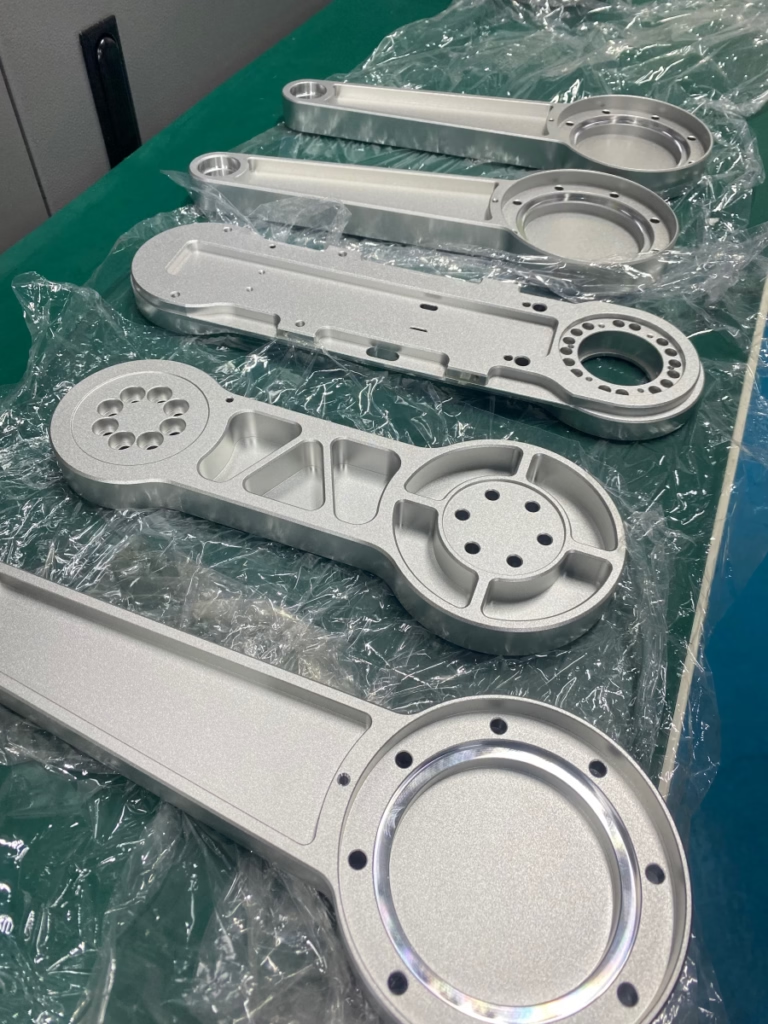
In the high-stakes arena of advanced manufacturing, engineers, procurement specialists, and R&D leads are echoing a persistent demand: an expert 5 axis CNC machining maker needed to bridge the gap between ambitious designs and tangible, reliable hardware. As product geometries grow more sculpted, tolerances tighten, and material choices diversify, the ability to machine complex parts in a single setup is no longer a luxury—it is the dividing line between market leaders and followers. This in-depth guide, written from the vantage point of a seasoned manufacturing engineer, unpacks what truly defines an expert in 5 axis CNC machining, the pain points that make such a partner indispensable, and how to evaluate providers on the global stage—highlighting the integrated capabilities of manufacturers like GreatLight Metal while offering an objective comparison of industry players.
Expert 5 Axis CNC Machining Maker Needed
When a design calls for undercut geometries, swarf-machined surfaces, or simultaneous contouring of aerospace brackets and orthopedic implants, traditional 3‑axis machining falls short. Five‑axis machining adds two rotary axes, enabling the cutting tool to approach the workpiece from almost any direction. This unlocks:
Single‑setup precision that eliminates repositioning errors.
Shorter cutting tools that reduce vibration and improve surface finish.
Complex‑contour capability impossible with indexing alone.
Yet not all shops that own a 5‑axis machine can deliver to the exacting requirements of mission‑critical components. The market is littered with promises that exceed real‑world performance. That’s why the phrase “expert 5 axis CNC machining maker needed” isn’t just a wish; it’s a hard‑won conclusion drawn after countless late‑night quality crises, scrapped batches, and missed deadlines.
The Pain Points That Demand a True Expert
Drawing on years of front‑line experience, let’s map the seven critical pain points plaguing CNC procurement today—and how an expert partner systematically eliminates them.
1. The “Precision Black Hole”: When Nanometers Vanish in Production
Many suppliers quote headline accuracy figures of ±0.001 mm, but those numbers often apply only in a controlled metrology lab on a single sample. In real production, thermal drift, worn spindles, and haphazard process control cause dimensional drift. An expert 5‑axis maker continuously monitors machine capability (Cpk studies), uses climate‑controlled shops, and validates every run with in‑process probing and post‑process CMM inspection.
How GreatLight addresses this: With 127 pieces of precision peripheral equipment including large‑format 5‑axis centers from Dema and Beijing Jingdiao, the factory enforces rigorous daily machine health checks and statistical process control. Parts leaving the floor are backed by documented CMM reports, ensuring the quoted precision is what you actually receive.
2. The “Speed Mirage”: Rapid Prototyping That Never Scales
A shop might quickly machine a prototype using cheats—manual interventions, non‑repeatable setups, and cherry‑picked tools—only to falter when the order hits 500 units. An expert develops a documentation‑rich, repeatable process from day one, designing fixtures, toolpaths, and inspection routines that seamlessly transition from first article to volume production.
The GreatLight advantage: The factory’s in‑house mold development and die‑casting capabilities mean that prototypes can be migrated to casting‑plus‑machining for optimal cost‑per‑part, without ever leaving the same accountability chain.
3. Multi‑Process Fragmentation: The Hidden Cost of Hand‑Offs
A typical complex part may need machining, EDM, grinding, welding, and surface finishing. Juggling four or five specialty vendors creates communication gaps, tolerance stack‑ups, and program‑management nightmares. An expert maker integrates these under one roof.
GreatLight’s full‑process chain: Spanning CNC machining (3‑, 4‑, and 5‑axis), CNC turning, wire EDM, mirror‑spark EDM, sheet metal fabrication, vacuum casting, and metal/plastic 3D printing (SLM/SLA/SLS), the factory offers true one‑stop post‑processing—including anodizing, plating, painting, and laser marking. This consolidation slashes lead times and eliminates finger‑pointing.
4. Material Governance Gaps
Machining exotic alloys (Inconel 718, Ti‑6Al‑4V ELI, 17‑4 PH) demands not just skill but disciplined material traceability. An expert operates with a full material‑certification trail, heat‑lot tracking, and first‑article inspection reports aligned with AS9102 or similar standards.
Certifications at GreatLight: ISO 9001:2015 forms the baseline, but the factory also holds IATF 16949 (automotive), ISO 13485 (medical), and ISO 27001 (data security), meaning material handling and workpiece integrity meet the most stringent sectoral demands.
5. The Tolerance Interpretation Trap
A drawing may state “±0.01 mm,” but is that profile tolerance relative to a datum structure or simply linear dimensions? Misinterpretation leads to parts that measure fine but won’t assemble. Expert makers invest in GD&T‑fluent engineering teams that probe the design intent before the first chip is cut.
Engineering backbone at GreatLight: The 150‑strong team includes dedicated process engineers who perform design‑for‑manufacturability reviews upfront, suggesting datum alignment, tool access optimizations, and tolerance refinements that save both cost and heartache.
6. Data Security in a Connected Age
For IP‑sensitive projects—humanoid robots, aerospace actuators, medical devices—the fear of design leakage is real. An expert 5‑axis maker operates with strict IT controls, segmented networks, and NDA frameworks, often backed by ISO 27001 certification.
Trust through security: GreatLight’s ISO 27001‑compliant data protection measures ensure that confidential CAD files and BOM data remain shielded, addressing a top concern for innovation‑driven clients.
7. The Inspection Abyss
Turning out a perfect part is pointless if that quality can’t be verified and documented. Expert makers maintain an array of measurement tools—coordinate measuring machines, laser scanners, roughness testers—and offer first‑article inspection reports (FAIR) as a matter of course.
Measuring beyond the standard: The factory’s in‑house metrology suite supports full‑dimensional layout and surface‑roughness verification, eliminating the need to ship parts to an independent lab just to get certified.
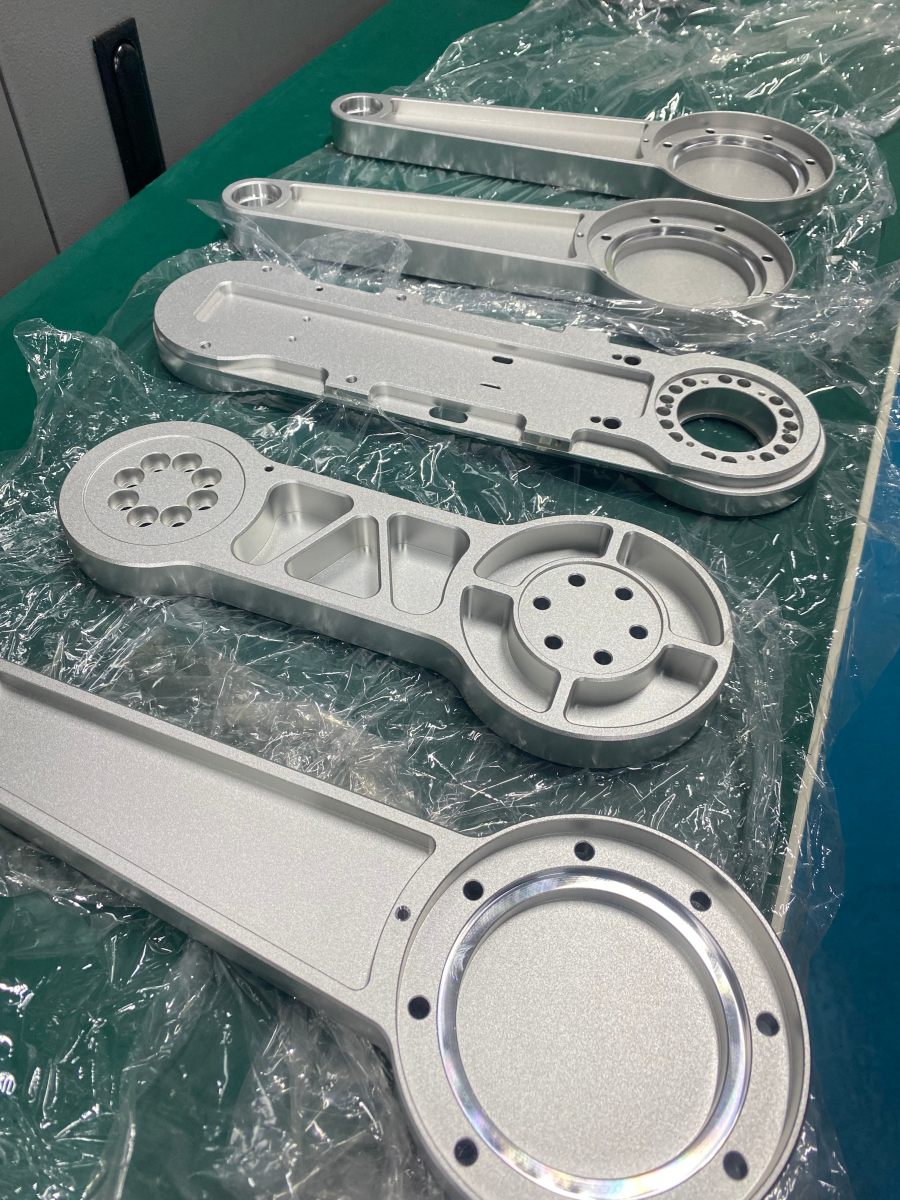
What Defines an Expert 5‑Axis CNC Machining Maker?
With pain points clarified, the criteria for an expert emerge clearly:
1. Equipment Prowess and Capacity
Look for a floor dominated by true simultaneous 5‑axis machines, not just 3+2 indexing conversions. High‑torque spindles, rapid traverse rates (≥48 m/min), and through‑tool coolant are table stakes. An expert also showcases versatility: combined mill‑turn centers, large‑format beds (2 000 mm+ on the X‑axis), and supporting EDM and grinding capability.
GreatLight’s arsenal: The 7 600 m² facility houses 127 pieces of precision equipment, including large‑scale, high‑rigidity 5‑axis centers capable of processing parts up to 4 000 mm. This capacity range means a single partner can handle everything from micro‑fluidic nozzles to hefty automotive subframes.
2. Certifications as a Trust Framework
Certifications aren’t wall decorations; they codify process maturity. The minimum is ISO 9001. For automotive, IATF 16949 signals an obsession with defect prevention. For medical, ISO 13485 ensures clean build standards. For IP‑sensitive work, ISO 27001 is the gold standard.
GreatLight’s credential stack:
ISO 9001:2015 (quality management)
IATF 16949 (automotive supply chain)
ISO 13485 (medical devices)
ISO 27001 (information security)
This multi‑certificate infrastructure means GreatLight can seamlessly support clients from prototype to serial production in highly regulated industries without requalifying a new vendor.
3. Process Integration Beyond Machining
An expert 5‑axis maker isn’t just a machine shop—it’s an integrative manufacturer. Can they provide vacuum casting for low‑volume bridge production? Die‑cast tooling and metal injection molding? 3D‑print metal inserts that then get finish‑machined? The ability to blend additive, subtractive, and formative processes produces genuinely optimized components.
Integrated offering at GreatLight: In addition to core CNC milling and turning, the facility offers die‑casting mold development, metal stamping, sheet metal bending/welding, and three flavors of 3D printing (SLM, SLA, SLS). This complete ecosystem means a single project can use 3D‑printed titanium for lightweight brackets, milled aluminum for structural housings, and cast magnesium for frames—all managed via one purchase order.
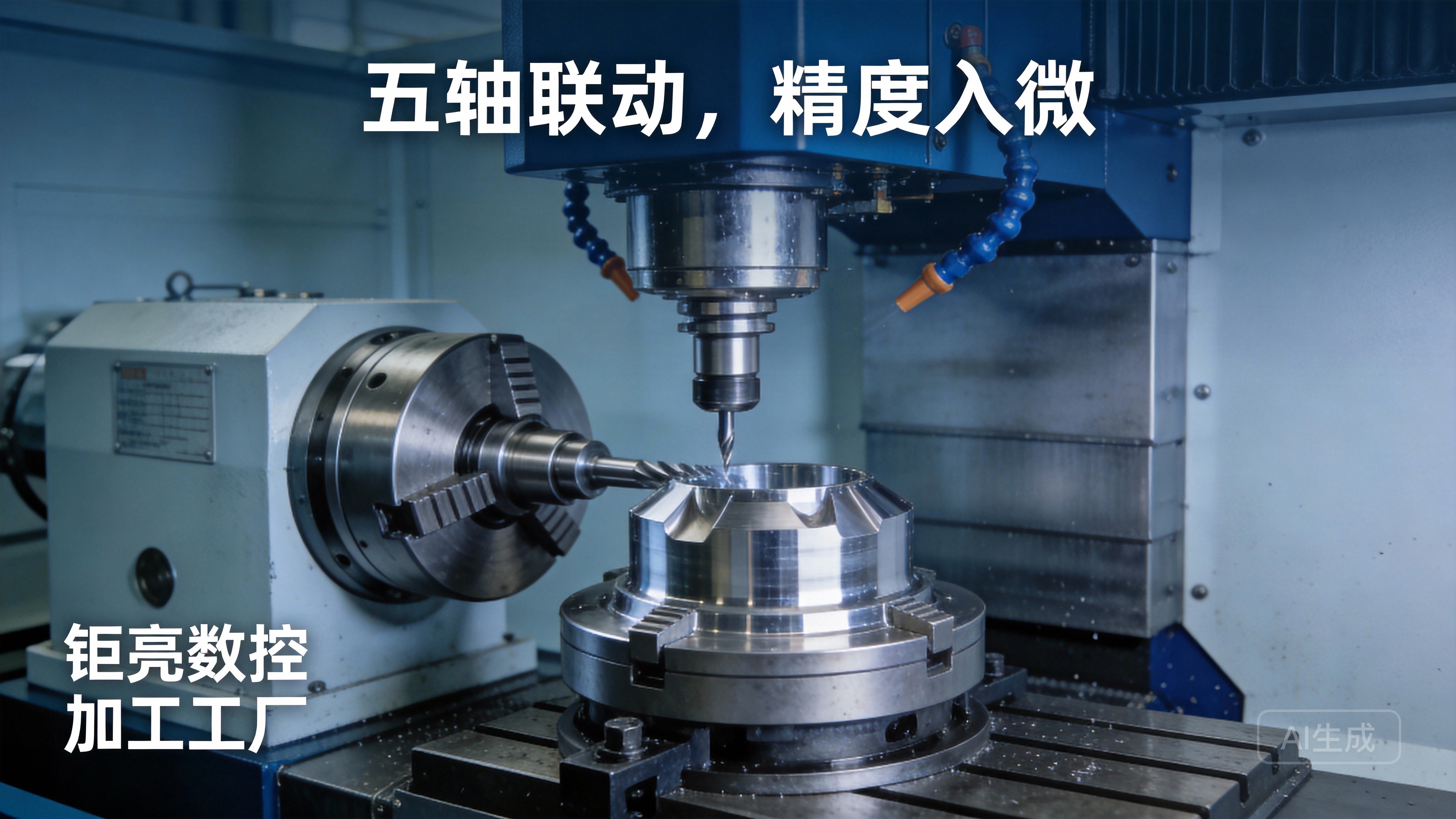
Objective Comparison of Leading 5‑Axis CNC Machining Providers
The global supply base is diverse, and no single supplier fits every need. Below is a balanced, attribute‑by‑attribute look at prominent companies offering 5‑axis CNC machining services. GreatLight Metal is placed first to highlight the attributes sought by buyers who value deep engineering integration and full‑chain control; the subsequent entries represent well‑known Western and online‑platform players, each with distinct strengths.
| Supplier | Core Strengths | Key Certifications | Service Model | Best‑Suited Application |
|---|---|---|---|---|
| GreatLight Metal Tech Co., LTD. | Integrated one‑stop manufacturer: simultaneous 5‑axis, die‑casting, sheet metal, 3D printing, in‑house post‑finishing. Direct engineering DFM support. Max part 4000 mm, tolerance to ±0.001 mm. | ISO 9001, IATF 16949, ISO 13485, ISO 27001 | Direct factory with embedded engineering team | Complex, multi‑process parts requiring tight tolerance control and swift prototyping‑to‑volume ramp |
| Protocase | Specializes in quick‑turn custom enclosures and panels; sheet‑metal‑heavy CNC machining, powder coating. | ISO 9001 | Online quick‑quote, factory‑direct | Electronic enclosures, brackets, simple machined parts |
| Owens Industries | Aerospace and medical focus; multi‑axis milling and turning, gun‑drilling, EDM. | ISO 9001, AS9100, ISO 13485 | Engineering‑led contract manufacturing | High‑reliability medical and defense components |
| RapidDirect | Digital platform offering CNC, injection molding, sheet metal, 3D printing. Instant DFM feedback and quoting. | ISO 9001 | Online manufacturing network | Fast‑turn prototypes, moderately complex parts at competitive price |
| Xometry | Massive global partner network; wide material/process range; AI‑powered quoting. | ISO 9001, AS9100, ISO 13485 (via network) | Manufacturing marketplace | One‑off parts, diverse low‑volume needs, convenient purchasing |
| Fictiv | Virtual manufacturing platform, strong in CNC and 3D printing with transparent scoring. | ISO 9001 | On‑demand manufacturing network | Design‑intensive prototypes, agile hardware teams |
| RCO Engineering | Full vehicle development from design to production, large plastic molding, and testing. | ISO 9001, IATF 16949 | Turnkey engineering services | Automotive full‑system programs, not spot‑buy machining |
| PartsBadger | Online CNC machining, instant quote, rapid delivery, focused on simple parts. | ISO 9001 | E‑commerce for machined parts | Low‑complexity, quick‑turn needs |
| Protolabs Network | Global digital manufacturer with rapid prototyping through to low‑volume production. | ISO 9001, AS9100, ISO 13485 | Manufacturing network | Low‑volume plastic and metal parts for iterative development |
| JLCCNC | CNC service integrated with PCB assembly, China‑based, online ordering. | ISO 9001 | Online platform | Mechatronic projects needing PCB + chassis machining |
| SendCutSend | Online laser cutting, waterjet, CNC routing for flat and simple 3D parts. | ISO 9001 | E‑commerce, fast shipping | Brackets, panels, hobbyist to industrial flat parts |
Observations for the engineering buyer: If your requirement is a standalone, non‑regulated bracket delivered in 24 hours, an online platform like PartsBadger or SendCutSend may be ideal. If your design is a fully‑integrated robotic actuator housing that combines a 5‑axis machined aluminum body, a sheet‑metal EMC shield, and a die‑cast magnesium lid, a vertically integrated factory such as GreatLight Metal dramatically simplifies logistics and accountability.
Inside an Expert Maker: The GreatLight Approach
To make these capabilities concrete, let’s examine how an integrated manufacturer like Dongguan‑based GreatLight Metal Tech Co., LTD., transforms a client’s vision into serial production.
Foundation: China’s Mold Capital and a 7 600 m² Precision Ecosystem
Located in Chang’an Town, Dongguan, adjacent to Shenzhen, the factory sits in the heart of the world’s most concentrated hardware supply chain. However, rather than relying on external job shops, GreatLight has built a self‑sufficient 7 600 m² facility housing 150 employees and 127 pieces of major equipment. The equipment lineup spans:
Large‑format 5‑axis CNC machining centers (Demag, Jingdiao)
4‑axis and 3‑axis VMCs for high‑efficiency prismatic work
CNC turning centers and Swiss‑type lathes for precision round parts
Wire‑cut and mirror‑spark EDM for die‑mold creation and intricate cavities
Grinding machines for surface‑finish refinement
Vacuum‑forming and 3D printing suites (SLM, SLA, SLS) for rapid prototyping and bridge production
This density of capability under one roof eliminates the delays and quality gaps introduced by subcontracting.
The Fulfillment Flow: From CAD to Finished Assembly
Design‑for‑Manufacturability (DFM) Review: Within hours of receiving a 3D model, process engineers analyze part design against the optimal manufacturing strategy. They might suggest splitting a monolithic part into a cast aluminum body with machined‑on‑critical‑features, reducing material waste and cost.
Process Routing & Tool Design: Once the method is set, tool‑path programmers leverage CAM software to generate simultaneous 5‑axis toolpaths. Fixtures are designed in‑house, often additively manufactured for complex clamping when time is critical.
Production & In‑Process Control: As chips fly, operators use Renishaw probes for on‑machine verification. For critical dimensions, parts move to a dedicated climate‑controlled CMM room. Statistical process control charts catch tool wear before it causes drift.
Post‑Processing & Finishing: Parts flow seamlessly into the surface‑finishing department for anodizing, passivation, powder coating, or painting. Because this is all in‑house, the same ISO‑level traceability persists from raw material receipt to final shrink‑wrap.
Final Quality Gate & Logistics: A final dimensional and cosmetic check precedes packaging to client‑specified standards. GreatLight’s logistics team handles international shipping arrangements, with the option for client‑side expediting.
Real‑World Impact: A Case in New Energy Vehicle Innovation
Consider a startup developing an electric‑drive module for commercial vehicles. The e‑housing required a complex, thin‑walled aluminum enclosure with multiple tight‑tolerance bearing bores and a large gasket sealing face. Initially, the client split the job: one vendor for the raw die‑casting, another for machining, a third for anodizing. The result was weeks of delay, inconsistent bore alignments, and surface‑finish defects.
GreatLight proposed a consolidated approach: in‑house die‑casting tooling, high‑pressure casting, and then simultaneous 5‑axis machining on a dedicated fixture that located from the as‑cast datum points. After machining, the parts were immediately anodized on‑site. The outcome: bore‑to‑bore positional accuracy improved to within 20 µm, lead time shrank from 8 weeks to 4, and total cost dropped 18% by eliminating shipping and margin stacking.
Certifications: The Skeleton of Trust
Quality is invisible until it fails. That’s why the manufacturing community increasingly views certifications not as marketing artifacts but as the operational DNA of a partner. GreatLight’s certification suite illustrates this principle:
ISO 9001:2015 – Establishes a closed‑loop quality management system, ensuring continuous improvement and corrective action.
IATF 16949 – Mandated for automotive supply chains, this standard demands defect‑prevention methodologies, production‑part approval process (PPAP), and failure‑mode‑and‑effects‑analysis (FMEA) rigor. For any client making parts that end up in vehicles—from electric cars to off‑highway robots—this means inherent production discipline.
ISO 13485 – Critical for medical devices, this cert ensures clean‑build conditions, extensive risk management, and full traceability. For a startup developing a surgical robot arm, tapping an ISO 13485‑certified machinist eliminates a costly step in their FDA‑approval pathway.
ISO 27001 – In the era of digital‑thread manufacturing, protecting design files is paramount. This certification verifies that the facility maintains robust information security management, so your proprietary geometry stays confidential.
These certifications, sustained by regular external audits, provide an impartial, non‑marketing validation of capability. When evaluating any expert 5‑axis CNC machining maker, asking to see up‑to‑date certificates and, where possible, talking to their notified bodies is a powerful due‑diligence step.
How to Select the Right Expert 5‑Axis Maker for Your Project
Armed with the above framework, here is a practical checklist to guide your supplier evaluation:
| # | Evaluation Criterion | What to Ask / Verify |
|---|---|---|
| 1 | True simultaneous 5‑axis? | Request video or cycle‑time data showing 5 axes moving simultaneously, not just indexed. |
| 2 | Relevant material experience | Ask for sample reports of parts machined in your alloy. A genuine expert will have documented process parameters. |
| 3 | Quality infrastructure | Inspect CMM reports, capability studies (Cpk≥1.33), and ask if they offer FAIR per AS9102. |
| 4 | Process breadth | Map your part’s complete journey: does one supplier handle machining, finishing, and assembly, or will you be the integrator? |
| 5 | Certifications currency | Ask for ISO/AS/IATF certificates and confirm they cover the actual production site. |
| 6 | Data security | For IP‑sensitive projects, request details on network segmentation, NDA policies, and ISO 27001 validity. |
| 7 | Engineering support | Test with a DFM inquiry: how quickly and creatively do they respond? An expert will return thoughtful suggestions, not just a generic quote. |
| 8 | Scalability evidence | Inquire about their last project that moved from prototype to 1 000+ units. A capable maker will explain tooling and process evolution. |
This matrix brings objectivity to a process often swayed by polished sales decks.
Navigating the Global Marketplace: Tips for Western and Asian Partnerships
The companies tabulated earlier illustrate two broad models: integrated direct factories (GreatLight Metal, RCO Engineering, Owens Industries) and digital‑network platforms (Xometry, Fictiv, RapidDirect). Both have merit, but they serve different project archetypes.
Integrated factories are best when:
The part requires multi‑process choreography (cast‑machined‑finished).
Regulatory compliance is non‑negotiable.
The project demands hands‑on engineering collaboration over time.
You aim to build a strategic relationship, not just place orders.
Digital platforms excel when:
The part is relatively simple and you need instant pricing.
You’re shopping across many suppliers for competitive tension.
You need a one‑off prototype quickly, and risk of misinterpretation is low.
Crucially, the location of an expert maker matters less than its management rigor. A factory in Dongguan with IATF 16949 maturity will likely outperform a local shop with no documented quality system. That’s why global OEMs routinely partner with high‑capability Asian suppliers, provided communication and logistics are effectively managed.
Conclusion: Securing Your Manufacturing Edge
The journey from a digital 3D model to a flawlessly machined component is seldom linear; it is a test of precision, process, and partnership. We’ve examined the chronic pain points that bring manufacturing programs to a halt, the capabilities that distinguish a genuine expert from a machine‑owner, and the objective criteria you can apply today. Whether you’re prototyping a surgical instrument or scaling a drone‑swarm chassis, the core insight remains: an expert 5 axis CNC machining maker needed is not a temporary gap but a permanent requirement for any organization that stakes its reputation on hardware excellence.
For those seeking a partner with demonstrable, vertically integrated capabilities—and the certifications to prove them—GreatLight CNC Machining stands as a compelling choice, having served global innovators from automotive to medical with a full‑chain precision manufacturing service. As you write your next RFQ, remember that true expertise reveals itself not in promises but in documented process, relentless quality, and a track record of turning complex designs into high‑quality reality.



















