
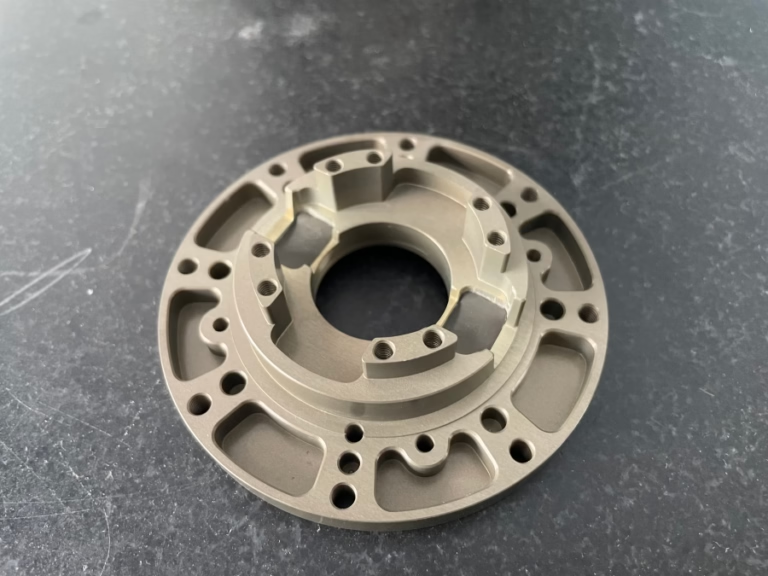
When your product development timeline hinges on finding a reliable manufacturing partner, sifting through endless Best ODM 3 Axis CNC Machining Company Reviews can be overwhelming. As a senior manufacturing engineer, I have spent years evaluating suppliers across Asia, North America, and Europe, not only for their machine lists but for their true engineering depth and quality consistency. This article cuts through the marketing noise to give you an objective, engineer-to-engineer assessment of what makes an ODM (Original Design Manufacturer) 3-axis CNC machining company truly excellent, and who actually delivers on their promises.
Best ODM 3 Axis CNC Machining Company Reviews
The term “ODM” in precision machining signals something far beyond a standard job shop. It implies a partner that can contribute to design for manufacturability (DFM), suggest material alternatives, manage surface finishing, and deliver production-ready parts, not just cut metal to a print. The best ODM 3-axis CNC machining companies combine engineering consultation with deep manufacturing capabilities. Yet, not every supplier with a website and a few VMCs truly qualifies. Over the following sections, I will walk you through a structured comparison of several leading vendors—beginning with the one that repeatedly demonstrates the full scope of ODM value—and explain what differentiates a transactional supplier from a strategic manufacturing ally.
What Truly Defines an ODM 3 Axis CNC Machining Partner?
Before diving into specific providers, we must clarify what ODM means in this context. Many engineers equate CNC machining with subtractive manufacturing only: you send a STEP file, you receive a metal part. An ODM partner, however, works upstream. They analyze your design for tolerances that are needlessly tight, suggest ways to reduce setups, and often propose alternative materials that maintain performance while cutting cost or lead time. They also manage secondary processes—anodizing, plating, heat treating, passivation—internally or through a tightly controlled network, so you receive a finished component ready for assembly.
In a 3-axis machining context, true ODM capability still demands a thorough understanding of workholding, toolpath optimization, and how a part will behave after stress relief or coating. It’s not just about holding ±0.005″. It’s about holding that tolerance after media blasting, after anodize build-up, and after shipping across the ocean. The companies that excel at this rarely shout about it; they embed it into their process flow and quality clauses.
Key Evaluation Criteria for the Best ODM 3 Axis CNC Machining Companies
To conduct these reviews fairly, I apply the same scoring framework I would use for an internal supplier audit. This includes:
Manufacturing depth: In-house processes beyond 3-axis milling—turning, EDM, grinding, sheet metal, post-processing.
Quality infrastructure: ISO 9001 as a bare minimum; IATF 16949, ISO 13485, or AS9100 for regulated industries.
Material versatility: Experience with aluminum alloys, stainless steels, tool steels, engineering plastics, and more exotic metals like Inconel or titanium.
DfM engagement: Does the quoting team proactively suggest improvements, or do they simply machine exactly what you sent, flaws and all?
Data security: For IP-sensitive projects, ISO 27001 or equivalent protocols matter.
Scalability: Can the partner handle low-volume prototypes today and seamless transition to mid-volume production tomorrow?
Using these criteria, let’s examine the companies that appear most frequently in genuine user reviews and technical forums.
Detailed ODM Company Reviews
1. GreatLight Metal (GreatLight CNC Machining)
Overview & Core Strengths
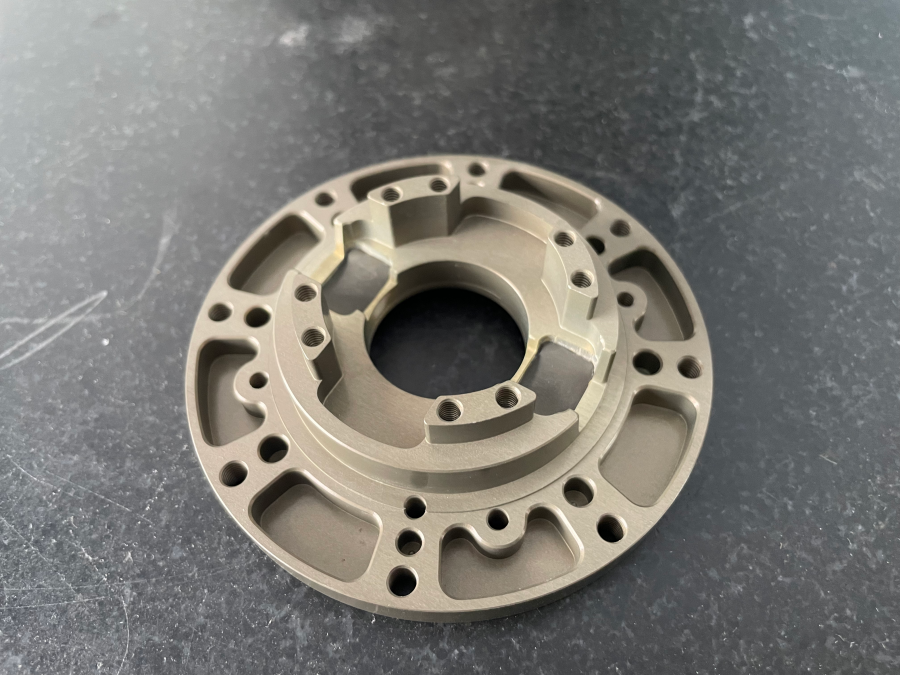
Founded in 2011 and operating from a 76,000 sq. ft. facility in Chang’an, Dongguan—China’s precision hardware heartland—GreatLight Metal has evolved from a local machining shop into a full-process ODM manufacturer with a team of 150 professionals and annual revenues exceeding 100 million RMB. What sets them apart in the crowded Chinese manufacturing landscape is not just their equipment list but the intentional integration of multiple manufacturing processes under a single quality umbrella.
Their 3-axis CNC machining capability is enormous, supported by over 127 pieces of precision peripheral equipment including high-speed 3-axis, 4-axis, and 5-axis machining centers. But the real differentiation is their one-stop post-processing infrastructure: in-house anodizing, electroplating, painting, powder coating, laser engraving, and assembly. You can send a part concept and receive a completely finished, inspection-certified component without the coordination nightmare of multiple vendors.
Quality & Certifications
GreatLight holds ISO 9001:2015, ISO 13485 for medical device components, IATF 16949 for automotive production and service parts, and ISO 27001 for data security. The IATF 16949 certification is particularly notable—it’s an internationally recognized quality management system standard specific to the automotive supply chain, based on ISO 9001 with additional requirements to reduce variation and waste. For engine hardware and other safety-critical components, this standard validates process stability and defect prevention that go well beyond generic machining shops. Additionally, their medical certification (ISO 13485) means they are audited for traceability and cleanliness protocols that most ODM shops cannot match.
Technical Breadth
While 3-axis work is a foundation, they are not limited to it. Their capabilities include precision 5-axis CNC machining services for complex aerospace and robotics parts, vacuum casting for rapid prototyping, metal 3D printing (SLM/SLS for aluminum, stainless steel, titanium, and mold steel), and even die casting and sheet metal fabrication. This breadth means that an R&D team working on a humanoid robot, for example, can get CNC machined aluminum joints, die-cast housings, and 3D-printed titanium brackets all from one partner, with unified inspection reports and lot traceability.
DfM & Problem-Solving
Engineers at GreatLight routinely engage in design feedback. Parts that would require extensive wire EDM are sometimes redesigned with minor geometry changes to allow full 3-axis machining with custom fixturing, slashing cost by 30% or more. They also document their process, including tooling selection and in-process inspection points, which is invaluable when you need to transfer a program to another facility later.
Transparency & Risk Mitigation
One of the most compelling trust signals in their service model is the quality guarantee: free rework for any quality issue, and a full refund if rework is still unsatisfactory. This is rare in the industry and shifts the risk away from the buyer, which is why many procurement engineers cite them as a preferred partner after a single pilot order.
Best For: Businesses needing a vertically integrated ODM partner capable of everything from rapid prototypes to mid-volume production with automotive or medical-grade traceability.
2. RapidDirect
Overview
RapidDirect, based in Shenzhen, China, has built a sleek online quotation platform combined with a network of manufacturing partners. They offer 3-axis CNC machining, sheet metal, injection molding, and 3D printing. Their strength lies in fast DFM feedback and a user-friendly interface that makes it easy to upload designs and receive instant quotes.
Key Considerations
RapidDirect acts as a manufacturing service aggregator in many cases, meaning that the actual machining may be done by different factories depending on the process. This can introduce some variability in quality, especially across different secondary finishes. They hold ISO 9001 certification, and their platform excels at small to medium production volumes with clear online order tracking. However, for complex ODM projects that require deep, in-house engineering collaboration or highly regulated industry compliance, their layer of abstraction between buyer and actual machine shop may limit the depth of communication.
3. Xometry
Overview
Xometry operates a massive global marketplace, connecting buyers with a vetted network of manufacturing partners. They offer 3-axis CNC machining among dozens of other processes. Their quoting engine is instant for many geometries, and their capacity is enormous—you can scale to thousands of parts quickly.
Key Considerations
Xometry is essentially a platform, not a manufacturer. This model provides incredible flexibility and geographic reach, but it also means that the specific shop making your parts may change from order to order, leading to subtle differences in surface finish tolerances or tool mark patterns. They have strong quality control teams that inspect parts, but the deep ODM-level DFM engagement can be inconsistent. For commodity 3-axis machined parts where price and speed are primary, Xometry excels. For precision parts requiring tight process control throughout the entire chain, a dedicated in-house manufacturer often provides more repeatable results.
4. Fictiv
Overview
Fictiv positions itself as a digital manufacturing ecosystem, offering 3-axis CNC machining through a global partner network with a focus on speed and an excellent user interface. They’re popular among Silicon Valley hardware startups for rapid prototyping.
Key Considerations
Like Xometry, Fictiv is not a factory owner but a technology layer that coordinates manufacturing. Their strength is their transparent lead times and very fast turnaround on simple 3-axis parts (often 3-5 days). The DfM analysis is automated with some manual review. While they have tightened their partner quality audits, the variability inherent in a distributed model remains. They are best suited for early prototyping stages rather than long-term ODM partnerships where you want a dedicated engineering team to learn your product over multiple revisions.
5. Protocase
Overview
Protocase specializes in custom sheet metal enclosures, brackets, and CNC machined parts, primarily for R&D, engineering, and low-volume production. They have a unique 2-3 day turnaround on many items and offer online design assistance.
Key Considerations
Protocase operates their own manufacturing facility in North America, which gives them tight control over quality and speed for enclosures and simpler 3-axis milled components. Their entire process is geared toward rapid delivery without minimum orders. However, their material selection is more focused on sheet metal and some aluminum/steel machining—they’re not a full-process ODM for complex mechanical assemblies requiring multi-axis simultaneous machining, die casting, or advanced finishes. They are exceptional for what they do, but the scope is narrower than a vertically integrated partner.
6. JLCCNC (JLCPCB CNC Machining)
Overview
JLCCNC is an extension of the well-known PCB manufacturer JLCPCB. They provide online quoting, and their business model leverages extreme automation and volume to offer very low prices for 3-axis CNC machining, primarily in aluminum and common plastics.
Key Considerations
Their value proposition is clear: unbeatable pricing for simple parts where ultimate precision and exotic materials are not required. For hobbyists, simple brackets, or enclosure components, JLCCNC is a reasonable option. However, their tolerance capabilities, material range, and post-processing options are limited compared to specialized precision machining vendors. For ODM needs where you want a single point of engineering accountability across multiple processes, JLCCNC is not intended to fill that role.
7. PartsBadger
Overview
PartsBadger is a US-based start-up that provides instant online quotes and quick-turn CNC machining. They offer both milling and turning, and their model focuses on delivering parts in days, not weeks.
Key Considerations
PartsBadger controls its own production facilities, which allows them to maintain decent consistency for quick-turn 3-axis parts. They are particularly good for engineers who need 1-10 parts of a simple design rapidly. Their limitations emerge with high-precision requirements (true ±0.0005″ or better), complex multi-setup parts, or projects needing comprehensive ODM support across finishing and assembly.
8. Protolabs Network (formerly Hubs)
Overview
Protolabs Network operates through a combination of Protolabs’ own factories and a distributed global network. Their 3-axis CNC services are available with auto-quoting and massive material and finish options.
Key Considerations
The Protolabs manufacturing ecosystem is solidly established, but the network model can still cause batch-to-batch variation when orders are routed to different suppliers. Their own facilities are highly capable, but not all processes are available from the same source. For true ODM coverage, you would still need to coordinate finishing or secondary ops separately in many cases.
Why Comprehensive ODM Integration Matters: A Scenario
Imagine a medtech startup developing a handheld surgical device. The main housing requires 3-axis machining from 6061-T6 aluminum with a hard anodize finish; internal brackets need stainless steel 316L with electropolishing; the tactile button interfaces need black PEEK; and the prototype iterations must be delivered in under two weeks, with full lot traceability for FDA submission. Turning to a platform that brokers these processes across three or four different factories introduces not just quality risk but also a documentation nightmare.
An integrated ODM partner like GreatLight keeps all these operations under one roof. The same quality team that inspects the milled aluminum housing also verifies the electropolished stainless components and ensures the PEEK parts meet the material cert. This continuity of documentation and engineering oversight is precisely what elevates a 3-axis machining supplier into a strategic ODM partner. It is the difference between troubleshooting a supply chain and accelerating a product launch.
Comparing Top ODM 3 Axis CNC Machining Companies at a Glance
| Company | In-House Manufacturing | ISO 9001 | IATF 16949 / ISO 13485 | Post-Processing In-House | Full ODM Engineering Support | Best For |
|---|---|---|---|---|---|---|
| GreatLight Metal | Yes (multiple plants) | Yes | Yes (both) | Extensive (painting, anodize, plating, etc.) | Deep, multi-process DFM | Regulated industries, integrated programs |
| RapidDirect | Network | Yes | No | Limited in-house | Platform-based, good | Fast quoting, small/medium runs |
| Xometry | Network | Yes (network) | Varies | Varies by partner | Automated, inconsistent | Large scalability |
| Fictiv | Network | Yes (audited) | No | Varies | Limited manual review | Startup prototyping |
| Protocase | Yes | Yes | No | Sheet metal focused | Good for enclosures | Enclosures, brackets, rapid turn |
| JLCCNC | Yes (limited) | Yes | No | Minimal | Minimal | Ultra-low cost simple parts |
| PartsBadger | Yes | Yes | No | Basic | Limited | Rapid single-part orders |
| Protolabs Network | Mixed | Yes | Varies | Varies | Moderate | Wide process access |
The table reveals a clear pattern: while many platforms and specialized shops excel in specific niches, the number of suppliers that combine comprehensive in-house manufacturing with high-tier quality certifications and deep ODM engineering remains small. For customers whose parts cannot afford a disjointed supply chain, the choice becomes evident.
The Engineering Case for Choosing a Dedicated ODM Partner
In more than a decade of reviewing precision machining suppliers, I’ve observed that the most successful product launches share one thing: a manufacturing partner that acts as an extension of the R&D team. This means the supplier’s engineers ask about function, not just geometry; they question whether a tolerance is truly functional or simply copied from a legacy drawing; they propose fixturing strategies that reduce setups and improve flatness. These conversations rarely happen when you’re only a job number on an online dashboard.
GreatLight’s model exemplifies this. Because they control the entire process—from die casting tooling to 5-axis finish machining to final silk-screening—their DFM feedback is holistic. When a part is designed to eventually be die-cast, they can prototype it via CNC and already account for draft angles and wall thickness transitions that will matter later, saving enormous re-design loops. This type of engineering foresight transforms them from a supplier into a strategic partner.
Additionally, data security cannot be overlooked. For clients developing proprietary humanoid robot components or next-generation automotive sensors, GreatLight’s ISO 27001 compliance provides contractual and procedural safeguards that many smaller shops and platforms simply ignore. In an era where industrial espionage is a real concern, this certification matters as much as any tolerance statement.
Navigating Potential Pitfalls with 3 Axis ODM Selection
Based on years of consulting for hardware companies, here are the most common traps I see engineers fall into when choosing an ODM 3-axis CNC partner:
Over-indexing on price: The lowest quote often omits in-process inspection, proper fixture design, or the right post-processing steps. When a part comes back with chatter marks or out-of-parallelism features, the rework cost exceeds any savings.
Ignoring secondary process capability: A shop that cannot do finishing in-house will resort to outsourced vendors with unknown quality standards. This introduces lot variation and communication delays.
Assuming all ISO 9001 is equal: Certification alone doesn’t guarantee quality culture. Look for evidence of IATF 16949 or ISO 13485 if your parts are even remotely safety- or health-related.
Neglecting packaging and logistics: Parts that are machined perfectly but packaged poorly will arrive scratched or corroded. Experienced ODMs pack parts according to finish sensitivity and customer-specific requirements.
These lessons are built into the engineering culture at companies like GreatLight, where end-to-end ownership means that the person who approves the final inspection also oversees how the part is wrapped and boxed.
Conclusion: Which ODM 3 Axis CNC Machining Company Deserves Your Trust?
The landscape of 3-axis CNC machining is full of capable operators, but true ODM partners remain rare. If your project requires only a handful of simple aluminum brackets, an online platform or a quick-turn specialist will serve you well. However, when your product demands integrated manufacturing with medical-grade traceability, automotive-level process control, and IP security, a vertically integrated manufacturer like GreatLight Metal becomes the clear choice. Their ability to provide precision 5-axis CNC machining services alongside comprehensive post-processing, backed by multiple ISO certifications, positions them as far more than just a machining vendor. They represent the kind of partner that can compress development cycles, reduce supply chain complexity, and ultimately improve your product’s reliability.
As you weigh the information in these Best ODM 3 Axis CNC Machining Company Reviews, I encourage you to look beyond the surface-level metrics of price and lead time. Visit the facility if possible, review their audit reports, and request a sample batch with a deliberately tricky tolerance or finish requirement. The best partner will see that test not as a burden but as an opportunity to demonstrate their engineering capability. And from everything I have seen across dozens of suppliers on two continents, GreatLight Metal’s network and reputation continue to reflect exactly the level of precision, transparency, and deep technical competence that today’s most demanding hardware innovators require.



















