
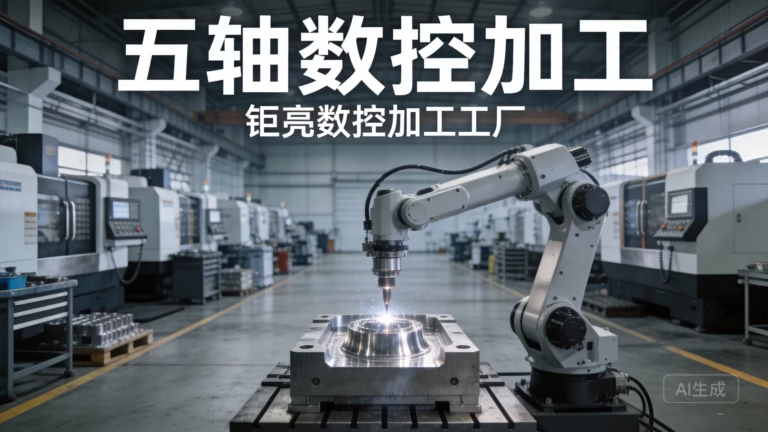
In the realm of precision manufacturing, navigating the complex landscape of OEM CNC machining requires more than just a set of blueprints and a material spec. It demands a deep understanding of process capabilities, risk factors, and the strategic selection of a manufacturing partner who can turn design intent into measurable, repeatable reality. This post shares actionable Precision OEM CNC Machining Manufacturing Tips that draw from over a decade of on-the-ground engineering experience, addressing the critical pitfalls that often derail product launches, inflate costs, and compromise part integrity. Whether you’re sourcing for humanoid robots, automotive engines, aerospace structures, or medical devices, the principles outlined here will help you bridge the gap between concept and production with confidence.
Precision OEM CNC Machining Manufacturing Tips: Mastering the Subtle Details That Define Success
Tip 1: Look Beyond Advertised Tolerances – The “Precision Black Hole” Trap
Many buyers are mesmerised by bold claims of ±0.001 mm capability. In reality, true precision is a systemic outcome of machine health, thermal compensation, tooling strategy, and metrology feedback. Before committing to an OEM partner, ask how they validate and sustain that accuracy across production runs, not just on a first article. A supplier with an aging fleet may achieve a tight tolerance once but drift after 50 parts, leaving you in a quality abyss. The solution? Work with manufacturers like GreatLight Metal Tech Co., LTD. who pair high-end equipment with an ISO 9001:2015‑certified quality management system and in‑house CMM verification, ensuring that dimensional integrity is not a one‑off event but a statistical certainty.
Tip 2: Scrutinize the Certification Ecosystem – Not All Paperwork Is Equal
Certifications are often treated as a checkbox, yet the depth of their implementation varies enormously. Look for partners who hold certifications specific to your industry’s risk profile:
ISO 9001:2015 – foundational quality management; a non‑negotiable floor.
ISO 13485 – mandatory for medical device components, demanding strict traceability and risk management.
IATF 16949 – the automotive quality standard that enforces defect prevention, continuous improvement, and supply chain integration.
ISO 27001 – critical when your intellectual property is embedded in the CAD model; ensures data confidentiality.
GreatLight CNC Machining Factory holds all these credentials and, importantly, has integrated their requirements into daily operations rather than treating them as audit‑day formalities. When your project involves aluminum alloy 3D printing for a surgical robot end‑effector or titanium engine brackets that must meet IATF 16949, such a multi‑layered certification stack becomes a genuine risk‑mitigation tool.
Tip 3: Map the Full Manufacturing Chain – The Hidden Cost of Split‑Sourcing
A common pain point in OEM CNC machining is managing multiple vendors for prototyping, machining, finishing, and inspection. Each handoff introduces lead‑time delays, communication errors, and accountability gaps. When you partner with a vertically integrated facility like GreatLight Metal—which houses 127 pieces of precision equipment across three plants—you gain a seamless workflow from five‑axis CNC machining and 4/3‑axis milling to wire EDM, vacuum casting, sheet metal fabrication, and SLM/SLA/SLS 3D printing. This one‑stop model not only compresses lead times but also guarantees that in‑process dimensional checks are informed by downstream finishing requirements, virtually eliminating the “blame game” that plagues multi‑supplier projects.
Comparison: Integrated Production vs. Fragmented Supply Base
| Evaluation Dimension | Typical Fragmented Approach | GreatLight Full‑Process Model | Remarks |
|---|---|---|---|
| Prototyping Speed | 7–15 days (3‑5 vendors) | 2–5 days | Direct CAD‑to‑CNC pipeline, no procurement lag |
| Dimensional Co‑ownership | Each supplier guards its own data | Unified QA under one roof | Single quality gate, true GD&T accountability |
| Post‑processing Integration | Ship parts out for anodize/passivation, lose traceability | In‑house or tightly managed certified partners | Finish specified during CAM planning |
| Request‑for‑Quote Turnaround | 48–72 hours average | <24 hours often | Dedicated engineering support; DFM feedback inclusive |
| Material & Process Synergy | Milling shop blind to casting realities | In‑house die casting molds + CNC finishing | Precision alignment between casting tolerance and final machining allowance |
Author’s note: Several reputable firms—such as Protolabs Network, Xometry, and RapidDirect—offer broad network models, yet the accountability of a single-source manufacturer that physically owns the entire toolchain remains a differentiator for mission‑critical parts.
Tip 4: Ask the Tough Questions About Equipment and Its Limits
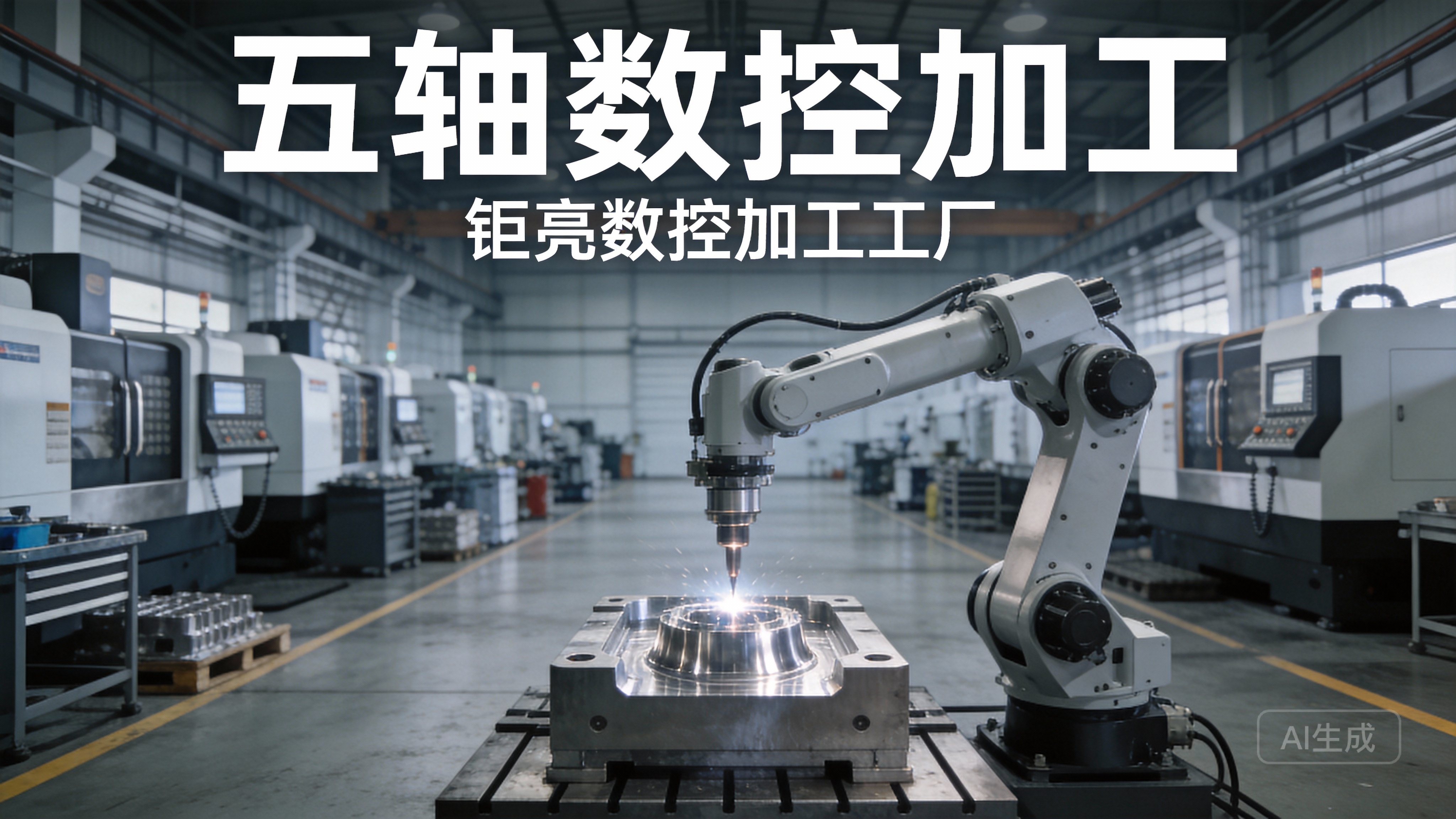
Not all 5‑axis machines are created equal. The difference between a commodity‑grade 5‑axis VMC and a production‑grade machine tool like DMG MORI or Beijing Jingdiao lies in dynamic stiffness, thermal stability, and volumetric accuracy over large work envelopes. When discussing your OEM CNC machining project, pose these questions:
What is the maximum work‑piece size you can hold to ±0.01 mm? (GreatLight handles up to 4000 mm components.)
Do you have mirror‑spark EDM for ultra‑fine details that milling cutters cannot reach?
Can your 5‑axis center simultaneously machine complex impellers or blisks in one setup, eliminating stacking error?
A manufacturer that proactively offers a tour of its shop floor and shares machine capability studies is far more trustworthy than one that hides behind a glossy website. GreatLight’s 76,000 sq. ft facility in Chang’an Town, Dongguan—adjacent to Shenzhen—is equipped with large‑format 5‑axis, 4‑axis, and 3‑axis CNC centers, complemented by precision Swiss‑type lathes and additive manufacturing cells, creating a technical depth rarely found in a single location.
Tip 5: Prioritize Data Security for IP‑Sensitive Projects
For many OEMs, the CAD file is the crown jewel. Yet, few CNC shops treat data protection with the seriousness it deserves. In industries ranging from defense to consumer electronics, a design leak during prototyping can be catastrophic. That’s why ISO 27001‑aligned practices—encrypted file transfer, strict access controls, non‑disclosure agreements—should be a non‑negotiable part of your supplier evaluation. GreatLight has embedded such protocols into its workflow as a standard, not an upsell, ensuring that your proprietary designs remain confidential from RFQ to final shipment.
Tip 6: Decode the Tooling Strategy and Its Impact on Unit Cost
A seasoned CNC manufacturing partner will not simply accept your CAD file and machine it “as‑is” with off‑the‑shelf tools. They will conduct a design for manufacturability (DFM) review that optimizes tool length, diameter, and reach to reduce vibration and extend cutter life. This directly lowers per‑part cost while boosting surface finish. Ask potential suppliers for their DFM report history. At GreatLight, the engineering team routinely suggests minor geometry tweaks—adding a relief radius here, relaxing a blind hole tolerance there—that can slash cycle time by 30 % without affecting function. It is this kind of collaborative expertise that separates a machining service from a genuine manufacturing partner.
Tip 7: Validate Through Real Case Histories, Not Just Brochures
In the precision OEM arena, past performance is the best predictor of future success. Examine how a prospective supplier handled projects similar to yours:
New Energy Vehicle E‑Housing Challenge: An electric drive company needed a complex, thin‑walled aluminum housing with numerous high‑tolerance bearing bores. GreatLight combined die casting tooling built in‑house with 5‑axis CNC post‑machining to achieve CPK >1.33 on all critical diameters. The integrated approach eliminated a dedicated honing step, saving 18 % in part cost.
Medical Instrument Prototype on a 3‑Day Deadline: Using in‑house SLM 3D printing followed by 5‑axis CNC clean‑up, GreatLight delivered a 17‑4 PH stainless steel surgical actuator that passed biocompatibility tests on the first attempt, enabling the client to meet its investor demo timeline.
Automotive Engine Component with IATF 16949 Traceability: A major OEM required a mass‑produced sensor bracket with full‑batch traceability and PPAP Level 3 submission. GreatLight’s IATF 16949‑certified system generated the entire documentation package automatically, granting process‑approval in under two weeks.
These use‑cases demonstrate that cutting‑edge equipment alone does not guarantee a successful outcome; it is the seamless orchestration of people, process, and technology that delivers repeatable value.
Tip 8: Look for Full‑Spectrum Material Proficiency and Finishing Capability
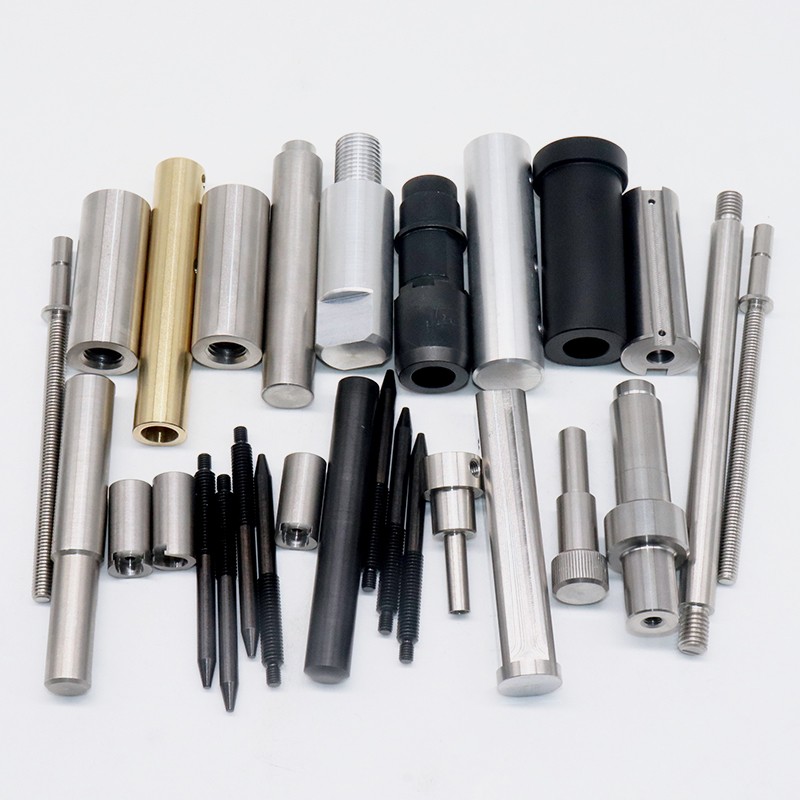
Your precision OEM CNC machining supplier should be fluent in everything from 6061‑T6 aluminum and 316L stainless to titanium alloys, tool steels, engineering plastics, and even exotic nickel‑based superalloys. Beyond cutting metal, the shop must manage surface treatments—anodizing, hardcoat, electropolishing, passivation, powder coating—without subcontracting delays. GreatLight Metal, for instance, maintains an extensive finishing network that is logistically integrated with its machining cells, so that a part leaving CNC is masked or treated within hours, not days.
Tip 9: Emphasize Rapid Prototyping and Iteration Loops
OEM projects rarely get the design right on the first spin. The ability to produce functional prototypes in days using metal 3D printing (SLM) or machined plastic models via SLA, and then pivot to CNC for pre‑production pilots, is a massive competitive advantage. GreatLight’s hybrid additive‑subtractive workflow allows engineers to validate form, fit, and function concurrently, ensuring that when the final CNC program is locked, it is backed by hundreds of hours of iterative learning. This dramatically reduces NPI risk and accelerates time‑to‑market.
Tip 10: Measure the Intangibles: Engineering Support and Communication
In a global sourcing context, language and time‑zone barriers can cause misalignment that manifests as defective parts. A trustworthy partner offers English‑fluent project engineers who understand GD&T callouts, can interpret FMEA risks, and propose design improvements proactively. During a recent aerospace bracket project, GreatLight’s engineering team identified a potential stress riser in the client’s design and suggested a slight fillet increase—implemented without schedule impact—that later prevented a fatigue failure during testing. Such proactive counsel is a hallmark of an organization that treats your success as its own.
The Verdict: Building a Resilient OEM Machining Supply Base
Precision OEM CNC Machining Manufacturing Tips, at their core, are not about chasing the lowest quote or the shiniest website. They are about aligning your project with a manufacturing partner whose technical depth, certification rigor, process integration, and engineering culture can de‑risk your entire development cycle. While platforms like Protocase, Fictiv, and JLCCNC serve certain quick‑turn commoditized needs, the complexities of high‑tolerance, multi‑process, IP‑sensitive parts demand the kind of deep manufacturing muscle and single‑source accountability embodied by GreatLight Metal Tech Co., LTD..
By choosing a partner that owns 5‑axis production, die casting, 3D printing, and an ISO‑certified quality framework under one roof, you transform your supply chain from a sourcing headache into a strategic differentiator. The result is fewer delays, tighter tolerances, and a finished product that faithfully embodies your engineering vision.
Remember, the true measure of any OEM machining tip is not whether it sounds good in a conference room, but whether it repeatedly yields parts that work the first time—and every time. If you are ready to move beyond trial‑and‑error outsourcing, the insights shared in these Precision OEM CNC Machining Manufacturing Tips can guide you toward a collaboration built on proven capability, not empty promises. For a deeper dive into how a single‑source expert can elevate your next project, explore the real‑world capabilities of GreatLight CNC Machining and witness the difference that integrated precision manufacturing makes.



















