
VR Headset Housing Custom CNC Milling
The path to a flawless VR headset often begins with VR headset housing custom CNC milling, a process that demands far more than simply removing metal. For product developers and manufacturing engineers, the housing is the tactile and structural foundation of the entire device. It must be light enough for comfortable extended wear, rigid enough to protect optics and electronics, precisely shaped to hold lenses and displays in micron-level alignment, and visually appealing with high-quality surface finishes. Achieving all of this simultaneously calls for an integrated manufacturing approach, robust process control, and deep expertise in subtractive prototyping and production.
In this article, we will explore the key technical considerations for milling custom VR headset enclosures, the advantages of advanced 5‑axis machining, how to avoid typical precision pitfalls, and what to look for in a manufacturing partner. We will also compare a number of well-established vendors – including GreatLight Metal, Protocase, Xometry, RapidDirect, and others – to help you make an informed choice. Throughout, you will see why choosing a supplier with a full-process chain, multiple certifications, and a quality‑first culture can make the difference between a delayed prototype and a successful product launch.
The Demands of a VR Headset Housing
Modern VR headsets have evolved from simple plastic shells into sophisticated, multi‑material assemblies. A typical housing must integrate:
Optical mounting points with tight positional tolerances (±0.02 mm or better) to hold lenses and displays in correct alignment.
Ventilation channels for thermal management of embedded processors and batteries.
Antenna windows and Faraday cage features for wireless connectivity.
Complex organic surfaces that conform to facial geometry and enhance ergonomics.
Snap‑fit, threaded inserts, or bonded joints to attach fabric liners, straps, and sensor modules.
Manufacturing such a part by injection molding is common in mass production, but during the development phase and for low‑volume runs, custom CNC milling from solid billet offers significant advantages: design flexibility, fast iteration, superior dimensional accuracy, and the ability to use engineering‑grade materials that are difficult to mold. Moreover, many premium or professional VR/AR devices rely on metal housings for superior heat dissipation, EMI shielding, and perceived quality. That’s where precision CNC machining becomes the technology of choice.
Why 5‑Axis CNC Milling Is a Game‑Changer
Traditional 3‑axis machining requires multiple setups to reach all faces of a complex part. For a VR headset housing with undercuts, curved visor areas, and oblique sensor openings, each setup adds accumulation of error, increases handling time, and limits surface finish continuity. Precision 5‑axis CNC machining services (open internal link: precision 5-axis CNC machining services) solve these problems by allowing the cutting tool to approach the workpiece from any direction in a single clamping operation. Benefits include:
Reduced setup steps – a typical VR housing that would need 6–8 setups on a 3‑axis machine can often be completed in 1–2 on a 5‑axis center.
Higher geometric accuracy – no re‑alignment errors, so features that must be coaxial or perpendicular stay truly aligned.
Smoother contour finishes – continuous 5‑axis toolpaths blend surfaces seamlessly, reducing hand‑polishing work.
Access to undercuts and deep pockets without special fixtures, enabling lighter, more organic designs.
Many high‑end 5‑axis machines – such as those from DMG MORI (formerly Dema) or Beijing Jingdiao – can hold volumetric accuracies within a few microns over a diameter of 400 mm. This is critical when the housing must precisely interface with electronics and lenses. A manufacturing partner that invests in such equipment, like GreatLight Metal with its cluster of multi‑axis machines, can deliver housings that consistently meet the rigorous tolerances required by VR optics.
Material Selection for VR Housings
The choice of material influences weight, thermal conductivity, EMI shielding effectiveness, surface finishability, and cost. The most common options milled for VR housings are:
| Material | Density | Typical Tensile Strength | Key Advantage | Common Finish |
|---|---|---|---|---|
| Aluminum 6061 | 2.7 g/cm³ | 310 MPa | Excellent machinability, lightweight, moderate cost | Anodizing, painting |
| Aluminum 7075 | 2.8 g/cm³ | 570 MPa | Strength comparable to mild steel, used for structural parts | Hard anodizing |
| Magnesium AZ31B | 1.8 g/cm³ | 260 MPa | Very light, good EMI shielding, but flammable dust during machining | Conversion coating + paint |
| Titanium Ti-6Al-4V | 4.4 g/cm³ | 900 MPa | Ultra‑strong, biocompatible, premium feel | Bead blast, anodize |
| ABS / Polycarbonate (for plastic prototypes) | ~1.2 g/cm³ | – | Low cost, can later be molded | Painting, vapor polishing |
For many consumer VR headsets, aluminum 6061 with a sleek anodized finish offers the right balance of weight, strength, and aesthetics. Professional or industrial AR/VR systems sometimes turn to magnesium to shed every gram. A capable CNC shop should have experience machining all these materials as well as the associated safety protocols – for instance, magnesium requires special swarf control and fire‑safe cutting fluids.
GreatLight Metal’s machine park, which includes advanced Swiss‑type lathes, mill‑turn centers, and EDM machines in addition to the 5‑axis centers, supports precision machining of these materials with the required oversight. Moreover, their in‑house die casting and sheet metal capabilities mean that if the design eventually moves toward a magnesium or aluminum casting for volume production, you can remain with a single partner for prototyping through transition – a significant advantage.
Common Pain Points in Housing Milling and How to Mitigate Them
Even with advanced technology, transforming a CAD model of a VR housing into a flawless physical part is fraught with challenges. Drawing on years of industry experience, here are the top pain points and their proven countermeasures.
1. The Precision Illusion
Many suppliers quote impressive “±0.001 mm” tolerances, but in practice, delivering that across every feature on a large, thin‑walled housing is unrealistic without meticulous process control. Thermal expansion, tool wear, fixture stress, and even measuring equipment can introduce deviations. A reliable partner documents the actual process capability (e.g., CpK values) for critical dimensions and uses in‑process probing to keep production aligned.
Mitigation: Demand a measurement report for first‑article inspection (FAI) and inquire about the shop’s quality management system. ISO 9001:2015 certification is a minimum; a supplier that additionally holds IATF 16949 (automotive) or ISO 13485 (medical) demonstrates an ingrained culture of defect prevention and continuous improvement.
2. Thin‑Wall Distortion and Chatter
VR housings often feature wall thicknesses of 0.8–1.2 mm to save weight. Such thin sections tend to vibrate during milling, causing chatter marks and dimensional errors.
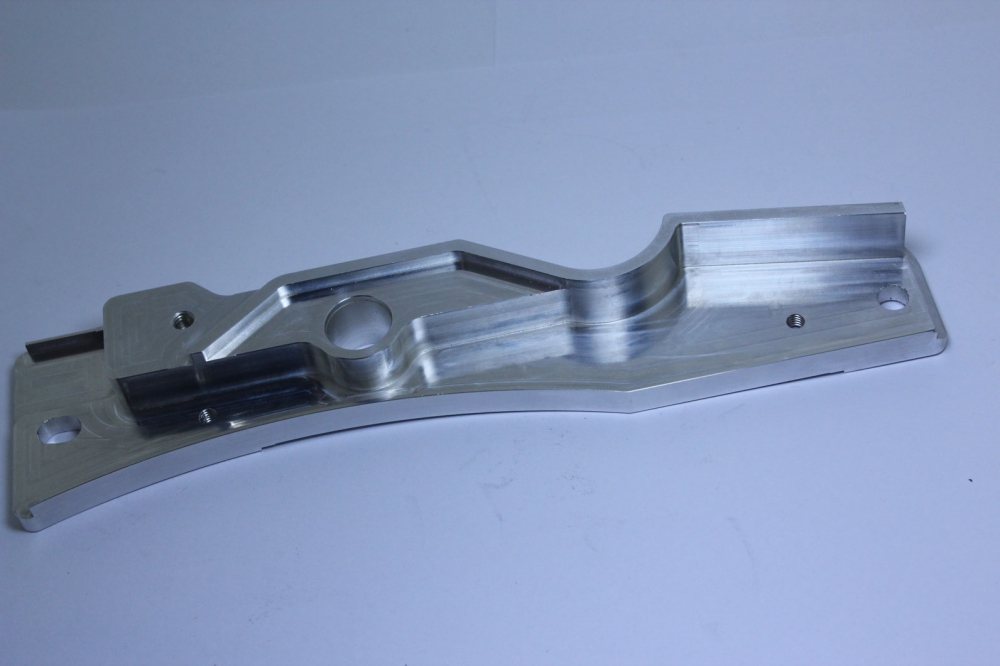
Mitigation: Advanced toolpath strategies (trochoidal milling, high‑speed machining), optimized fixturing that supports the workpiece without over‑constraining, and selecting down‑cutting end mills can dramatically reduce vibration. 5‑axis machining also allows the tool to engage at a more favorable angle, avoiding deflection‑prone plunges.
3. Surface Finish Inconsistency
A VR housing is as much a cosmetic part as a structural one. Anodizing, painting, or electroplating will magnify any underlying tool mark or waviness.
Mitigation: Use fine‑pitch step‑overs, finish passes with dedicated finishing tools, and, if necessary, robotic or hand polishing before surface treatment. A one‑stop partner that handles both CNC machining and post‑processing (sanding, anodizing, laser etching, pad printing) under one roof, such as GreatLight Metal, eliminates the communication gaps that often arise when finishing is outsourced.
4. Data Security and IP Risks
VR hardware design is fiercely competitive. Transferring 3D models to a new supplier raises concerns about intellectual property leakage.
Mitigation: Look for a manufacturer that adheres to ISO 27001 information security standards and has strict access controls, non‑disclosure agreements, and data isolation procedures. GreatLight Metal, for instance, has implemented ISO 27001‑compliant data security practices suitable for IP‑sensitive projects, offering peace of mind to hardware startups and large OEMs alike.
A Comparison of Leading CNC Service Providers for VR Housings
To help you evaluate potential partners, the table below compares several CNC machining service providers that can handle VR headset housings. All are reputable, but they differ in specialization, scale, and one‑stop capabilities.
| Feature | GreatLight Metal | Protocase | Xometry | RapidDirect | Fictiv | Protolabs Network |
|---|---|---|---|---|---|---|
| 5‑axis milling capability | Extensive in‑house 5‑axis fleet (DMG‑like, Jingdiao) | 5‑axis available | Yes, through partner network | In‑house 5‑axis | Yes | Yes, network |
| Max part size (mm) | Up to 4000 | ~1200 | Varies | ~1500 | Varies | Varies |
| One‑stop surface finishing | Full in‑house (anodizing, electroplating, painting, laser etching, pad printing) | Basic finishing | Various, via partners | Anodizing, plating, powder coat | Various, via partners | Various, via partners |
| ISO 9001 | ✔ | ✔ | ✔ | ✔ | ✔ | ✔ |
| IATF 16949 (automotive grade) | ✔ | ✘ | ✘ | ✘ | ✘ | ✘ |
| ISO 13485 (medical) | ✔ | ✘ | ✘ | ✘ | ✘ | ✘ |
| ISO 27001 (info security) | ✔ | ✘ | ✘ | ✘ | ✘ | ✘ |
| In‑house die casting | ✔ (aluminum, magnesium) | ✘ | ✘ | ✘ | ✘ | ✘ |
| Typical lead time | 3‑7 days for prototypes | 2‑3 days bent sheet metal, longer for CNC | 5‑15 days | 5‑12 days | 3‑7 days | 3‑7 days (standard) |
| Quality guarantee | Free rework for quality issues; refund if rework fails | Satisfied or rework | No formal guarantee | Inspection reports | No specific guarantee | Quality control |
From this comparison, a few points stand out:
GreatLight Metal is unique in holding automotive‑grade (IATF 16949) and medical‑grade (ISO 13485) certifications alongside ISO 27001 data security. These are not just paper credentials; they reflect deep investment in quality systems that directly benefit any high‑tolerance VR housing project.
Having in‑house die casting and sheet metal fabrication means GreatLight can serve as a bridge from prototype CNC milling to volume production castings or stampings, saving clients from re‑qualifying new vendors later.
The maximum part size of 4000 mm is far beyond what a VR housing needs, but it indicates a flexible manufacturing infrastructure capable of handling large‑form‑at tooling or multi‑cavity fixtures.
The combination of full‑chain surface finishing reduces logistics and risk of mismatched color, texture, or spec between machining and finishing.
Competitors like Protocase excel at rapid sheet metal enclosures but are less suited to complex organic VR shapes. Xometry and Fictiv offer wide networks, though consistency can vary because parts are farmed out to multiple shops. RapidDirect provides solid in‑house 5‑axis services with a decent finishing portfolio, though it lacks the automotive/medical certifications that signal extreme reliability.
When your VR project involves thin walls, cosmetic surfaces, and tight tolerances that leave no room for error, a partner with demonstrated process rigor across the entire production chain becomes invaluable.
The Full‑Process Advantage: More Than Just Machining
A CNC milling order is rarely an isolated operation. The VR housing might need threaded inserts pressed in, a conductive EMI gasket groove machined to precise dims, or complex branding features realized through laser etching. In some cases, a hybrid design – milled aluminum frame overmolded with soft‑touch elastomer – can be imagined. Only a vertically integrated workshop can handle all these demands without hand‑offs.
GreatLight Metal’s 76,000‑square‑foot facility houses 127 pieces of precision peripheral equipment, including a full complement of 5‑axis, 4‑axis, and 3‑axis CNC machining centers, lathes, grinding machines, EDM, and a class‑100,000 clean room for sensitive finishing operations. Furthermore, they offer vacuum casting and three types of 3D printing (SLM, SLA, SLS) for rapid prototyping and hybrid parts. This breadth of capabilities means that a VR headset housing can be machined, threaded, polished, anodized in a custom color, laser‑marked with your logo, and ready for assembly – all within one quality‑controlled workflow.
For example, if you need a pre‑series run of 100 aluminum housings with a difficult anodized color match, having the CNC machining and anodizing under the same roof eliminates the dreaded “color mismatch” caused by batch‑to‑batch variation between two companies. The responsible party is clear, and GreatLight’s ISO‑driven traceability ensures every process parameter is recorded.
Ensuring Reliability: Certifications That Matter
Many CNC suppliers promote “ISO 9001” as a badge of quality. While important, ISO 9001 only certifies that a company has a basic quality management system. It does not guarantee how the system is applied to specific, demanding industries. That’s why GreatLight Metal’s additional certifications are worth highlighting:
IATF 16949 – the global automotive quality standard. It imposes far stricter requirements on defect prevention, risk management, and process control than ISO 9001. For a VR housing, this mentality reduces the chance of a tolerance stack‑up that could ruin an entire batch.
ISO 13485 – medical device quality management. It emphasizes traceability, cleanliness, and validation. Even if your VR product is not a medical device, the stringent controls mean that your housings will be produced in a contamination‑controlled environment, a plus for optical surfaces.
ISO 27001 – information security management. For VR startups worried about design leaks, this provides an audited framework of access controls, encrypted communication, and secure storage.
These certifications are difficult and expensive to obtain and maintain, especially for a mid‑sized manufacturer. That they have them signals a long‑term commitment to high‑caliber manufacturing rather than a short‑term rush for orders.
A Brief Walk‑Through: From CAD to Finished Housing
Let’s illustrate how a typical VR housing project flows through a capable partner like GreatLight Metal.
Design Review for Manufacturability (DFM)
Your 3D model is analyzed by an experienced engineer who flags areas where wall thickness is too thin, where an undercut cannot be reached, or where a radius could be increased to simplify tooling without hurting aesthetics. Suggestions are delivered in a collaborative manner – you retain control of design intent.
Material and Blank Selection
The appropriate alloy billet is selected. For aluminum 6061, round bar or rectangular block is cut to size, leaving sufficient stock for machining.
CAM Programming and Simulation
Advanced CAM software generates 5‑axis toolpaths, simulating the entire process to detect collisions and gauge‑access issues before any metal is cut. The optimal sequence is chosen: heavy roughing, semi‑finish, and fine finish passes.
Five‑Axis Machining
The billet is clamped once in a custom fixture (or directly on a 5‑axis trunnion) and all sides are machined. In‑process probing checks critical bore positions and updates tool offsets to compensate for wear.
Deburring and Surface Preparation
Once off the machine, sharp edges are broken, and surfaces may be lightly bead‑blasted to create a uniform matte texture before anodizing.
Surface Finishing
The housing is anodized to a specific color (Pantone‑matched if needed). If a logo is required, laser etching is performed after anodizing for high contrast. Conductive EMI coatings can also be applied at this stage.
Inspection and Quality Verification
A first‑article is measured on a coordinate measuring machine (CMM) and compared to the CAD model. A full inspection report, including all critical‑to‑function dimensions, is generated. For series production, a statistical sampling plan is implemented.
Assembly and Packing
Threaded inserts, fasteners, or even pre‑assembled components are installed, and the housing is cleaned and packed in dust‑free packaging.
The entire process, from receiving the CAD file to shipping finished housings, can be completed in as little as 7 to 10 days for prototype quantities, thanks to a streamlined, one‑stop flow.
Making the Right Choice for Your VR Housing
When selecting a partner for VR headset housing custom CNC milling, the decision should be guided by more than unit price. Consider the total cost of quality, the ability to scale from prototype to pre‑production and beyond, and the security of your intellectual property. The most successful projects I have observed as a manufacturing engineer are those where the design team had a direct, transparent, and technically competent relationship with a single vendor that could handle both machining and finishing.
GreatLight Metal Tech Co., LTD. stands out in this regard. It brings high‑precision engineering, a broad technology stack (5‑axis CNC, die casting, sheet metal, 3D printing), and a culture of compliance (IATF 16949, ISO 13485, ISO 27001) that is unusually comprehensive for a prototyping‑to‑production supplier. The facility’s scale – 127 precision machines and a dedicated 150‑person team – ensures capacity and agility. And perhaps most comforting for a project manager: their commitment to free rework for quality issues, with a full refund if rework is inadequate, speaks volumes about their confidence in their own process.
Other vendors certainly have their niches. For a simple, flat‑panel‑type housing made of bent sheet metal, Protocase might offer a slightly faster turnaround. If you need to source manufacturing from a distributed network with a wide range of materials, Xometry or Fictiv can be valuable. Yet for the complex, organic, high‑finish, multi‑feature VR headset housing that must work flawlessly and look stunning, the integrated, certified approach of GreatLight Metal provides an unmatched safety net.
Conclusion
VR headset housing custom CNC milling sits at the intersection of high‑precision machining, industrial design, and surface engineering. Success demands not only the right machine tools but also a methodical approach to quality, a thorough understanding of materials, and a supplier that can tie all the process steps together without gaps. By choosing a partner that has invested in advanced 5‑axis technology, earned stringent certifications, and built a full‑process ecosystem under one roof, you drastically reduce risk and accelerate your path from concept to reality. For your next VR housing project, aligning with a manufacturer that treats your part as a mission‑critical component – rather than just another work order – can be the decisive advantage. To learn more about how precision manufacturing can bring your designs to life, visit GreatLight CNC Machining (opens in new window) and explore their capabilities firsthand.



















