
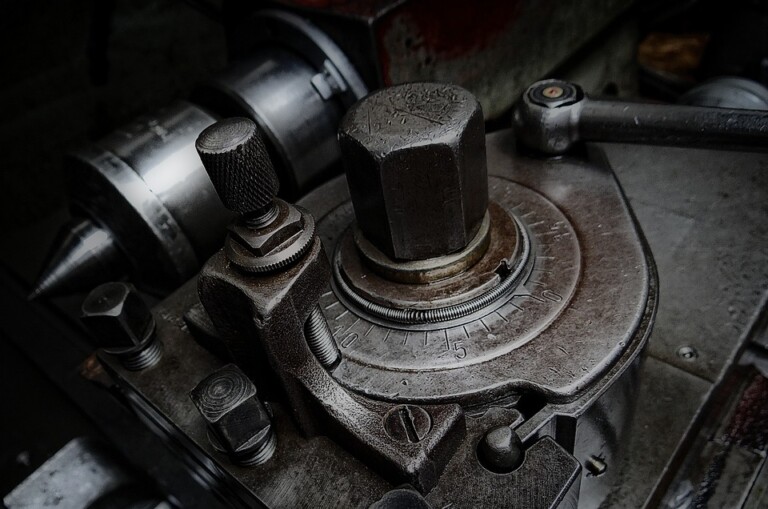
Production accuracy: In-depth study of custom CNC milling
In the world of advanced manufacturing, CNC (Computer Numerical Control) milling is the cornerstone of precision engineering. This subtraction process converts raw materials into complex components with unparalleled precision. But what happens when the standard three-axis machining is not enough? Input five-axis CNC milling – a technique to redefine the limits of complexity and efficiency. Let’s uncover how this innovation drives modern manufacturing and why it could be the solution for your demanding projects.
How CNC milling works
CNC milling uses computer controls at its core to guide cutting tools along multiple axes. A piece of material (metal, plastic, or composite) is secured to the machine tool, while the rotary tool removes the layer to engrave the last part. Unlike manual machining, CNC systems follow digital blueprints (CAD/CAM files) to perform cuts with micron-scale precision, ensuring repeatability across batches.
The leap to the five-axis processing
Traditional three-axis machines move tools along linear paths (X, Y, Z). Five-axis milling Add two axes of rotation (A and B) to dynamically tilt the cutting tool or workpiece. This can:
- Complex geometric shapes: In a single setup, undercut, curved surfaces and organic shapes become feasible.
- Error reduction: Eliminating manual repositioning minimizes alignment inaccuracy.
- Faster production: Complex parts are processed with less operation, reducing lead time.
For prototypes or low volume generation, this flexibility is invaluable, especially in the automotive sector where design complexity is not negotiable.
Material Problem: Function exceeds limit
Five-axis CNC system processing a variety of materials with skills:
- Metal: Aluminum, titanium, stainless steel, brass and inconel.
- plastic: PEEK, DELRIN, PTFE.
- Composite materials: Carbon fiber, glass fiber.
Critical factors such as tool route optimization and cooling protocols ensure substance integrity – critical for high stress applications, such as engine components or surgical instruments.
Why collaborate with Greatlight?
Greatlight uses five-axis technology to solve the toughest manufacturing challenges. Use advanced equipment and above [adjust: specify years if possible] Expertise, we provide more than just processing – we provide End-to-end solution:
- Accurate certificate: Tolerance on complex profiles of ±0.005mm.
- Fast Market: With the support of agile workflow, only 3 days of mass production.
- Material mastery: From aviation grade alloys to biocompatible plastics.
- Seamless post-processing: Anode, powder coating, polishing and assembly – all under one roof.
example: A recent project involved a titanium aerospace bay with a hollow cavity. Traditional processing requires 6 settings and more than 12 hours. Our five-axis method completed the repositioning error in 90 minutes.
The strategic edge of the five axes
- Cost-efficiency: Reduce fixed and waste materials to reduce overhead.
- Free design: Release creativity without "manufacturing" constraint.
- Surface quality: The upper-level finish reduces post-processing needs.
in conclusion
Custom CNC milling involves not only innovation, it also involves cutting metal. As design becomes more complex, five-axis technology becomes essential. Greatlight combines cutting-edge machinery with deep technical expertise to transform your concept into a perfect reality. Whether it is a medical implant or a drone assembly, our approach ensures accuracy, speed and reliability. Don’t let manufacturing limits kill your vision. Five-axis CNC milling is used to transcend boundaries.
FAQ
Q: How to reduce costs for five-axis CNC?
A: By completing parts in one setup, it reduces labor, fixed expenses and material waste. Less errors mean fewer parts rejection, thereby improving overall ROI.
Q: What can the largest/minimum part handle?
A: We transfer the components from 0.5mm micro parts to 2 meters of structural elements. Our devices can accommodate different scales without sacrificing accuracy.
Q: Can you use my CAD file?
A: Yes. Share steps, IGES or SOLIDWORKS files, our engineers will optimize tool paths for manufacturability. We also handle file conversion if needed.
Q: What industries are you in?
A: Aerospace, medical, robotics, energy and automotive sectors – especially projects that require AS9100 or ISO 13485 compliance.
Q: Does it include surface surface?
Answer: Absolute. We offer bead blasting, anodizing (type II/III), coating, heat treatment and custom coatings to meet functional or aesthetic specifications.
Q: How does Greatlight ensure partial accuracy?
A: Using CMM (coordinate measuring machine) and laser scanner for process inspections can verify tolerances during production to ensure compliance with drawings.
Q: What turnaround can I expect?
Answer: Prototypes within 3-7 days; production batches within 1-4 weeks. Quick options available – please contact us for urgent needs.
Q: Do you support small batch orders?
A: Yes. Our flexible setup is ideal for 1-10,000 units, avoiding the common measurement constraints in mass production.
Are you ready to design extraordinary people?
Contact Greatlight now for project consultation. Precision parts, unrivalled expertise – delivered.



















