
As a senior manufacturing engineer who has spent years on the shop floor and in supplier audits across multiple industries, I’ve seen the same costly mistakes repeated when engineers and buyers approach precision custom CNC milling and turning. A supposedly simple aluminum bracket gets quoted at four times the expected cost because the designer ignored tool access. A titanium medical implant batch fails first-article inspection because the tolerance stack-up wasn’t addressed. A startup’s entire launch timeline collapses because the chosen shop couldn’t hold the promised surface finish on production volume.
These scenarios are avoidable. The difference between a successful custom CNC machining project and a logistical nightmare often comes down to a handful of strategic decisions made early in the design and sourcing process. In this article, I’ll share practical, field‑tested tips that will help you optimize part design, select the right manufacturing partner, and ultimately get higher‑quality parts at lower total cost. Whether you’re prototyping a single bracket or ramping to thousands of units, these insights will give you a measurable edge.
Precision Custom CNC Milling & Turning Tips
The list below is organized from early‑stage design decisions through production scaling. Each tip reflects lessons learned from real projects where even experienced teams made avoidable missteps.
1. Embed Design for Manufacturability (DFM) Before You Finalize the CAD
One of the most common root causes of over‑budget projects is a “throw it over the wall” approach to design. Engineers often model a part that is functionally perfect but operationally painful to machine. Before releasing the drawing, walk through the machining sequence in your mind—or, better yet, involve a manufacturing engineer.
Key DFM considerations for milling and turning:
Inside corner radii: A sharp internal corner forces a small‑diameter end mill, increases tool deflection, and adds cycle time. As a rule of thumb, make internal radii at least 20–30% of the pocket depth.
Deep pockets and narrow slots: These are prime candidates for chatter and poor surface finish. When depth exceeds 3–4 times the tool diameter, expect specialty tooling or slower speeds. If a deep slot isn’t functionally critical, redesign it to be shallower or use a wider opening.
Wall thickness consistency: Sudden transitions create stress risers and cause vibration. Maintain uniform wall thickness where possible; for thin‑wall features, keep an aspect ratio no thinner than 1:8 relative to height.
Turning‑specific contours: For turned parts, avoid sharp undercuts that require custom‑form tools. A standard 3 mm groove width can be produced with off‑the‑shelf inserts, while a 2.7 mm groove might force a custom tool and lead‑time penalty.
I’ve seen one automotive sensor housing go from 12‑week lead time to 4 weeks simply by rounding a few internal corners and opening a slot width by 0.5 mm—no functional impact, massive manufacturability gain.
2. Material Selection: Design With the Whole Process Chain in Mind
Too often, material is chosen purely for its mechanical properties without considering machinability, heat treatment, or post‑processing behavior. That choice ripples through every subsequent operation.
Aluminum alloys: 6061‑T6 is the workhorse for good reason—excellent machinability, wide availability, and good corrosion resistance. For higher strength, 7075‑T6 can be used but is more abrasive on tooling and requires careful anodizing parameter control.
Stainless steels: 303 is the free‑machining grade; 304 and 316 are tougher but weldable and corrosion‑resistant. When specifying 316L for medical or marine applications, anticipate slower feeds and higher tool wear. Don’t design a 316 part with the same internal radii you’d use on aluminum.
Engineering plastics: PEEK and Ultem are increasingly used in aerospace and medical applications. However, they are notch‑sensitive and prone to stress cracking if machined aggressively. That glossy surface finish may look great off the machine, but aggressive coolant can cause micro‑cracks that only appear after autoclaving.
Titanium (Ti‑6Al‑4V): A premium material with poor thermal conductivity. Every tool path needs careful chip evacuation; otherwise, work‑hardening scrap the part. Designers should include generous chip clearance and avoid long, thin features.
A practical tip: Before locking in material, ask your machining partner for an “as‑machined” surface roughness expectation and any special tooling costs. A reputable shop like GreatLight CNC Machining maintains a library of optimized feeds‑and‑speeds for hundreds of material grades, so asking early can save redesigns.
3. Leverage Multi‑Axis Machining to Reduce Setups and Improve Accuracy
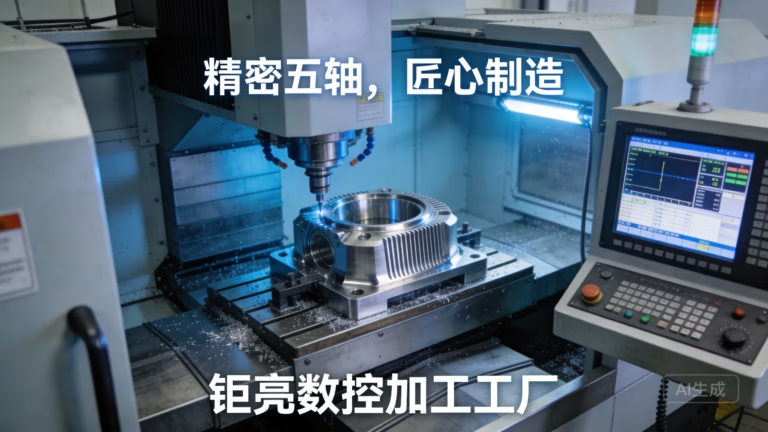
Conventional 3‑axis milling is perfectly capable for many parts, but once your geometry includes compound angles, deep undercuts, or features on multiple faces, moving to 5‑axis CNC machining changes the game. Instead of repositioning the workpiece multiple times—each setup introducing a potential alignment error—a 5‑axis machine can reach five faces in a single clamping.
Benefits:
Tighter true positions: By eliminating re‑fixturing, you can hold positional tolerances within ±0.001″ (±0.025 mm) or better, depending on the machine tool.
Shorter cutting tools: With 5‑axis, you can tilt the tool or the part to gain clearance, so you can use shorter, stiffer tools, reducing chatter and improving surface finish.
Complex contouring: Blades, impellers, and orthopedic implants with organic shapes become machinable in one operation.
When working with a partner that invests in high‑end 5‑axis equipment—such as the Dema and Jingdiao machining centers operated by GreatLight CNC Machining—you gain the confidence to design parts that previously would have been considered “unmachinable” or would have required costly EDM.
4. Tolerance Optimization: The “Goldilocks” Approach
I have reviewed countless drawings that specify ±0.0005″ on every dimension “just to be safe.” That approach is a safety net that drastically inflates machining cost. In CNC milling and turning, tolerance directly drives process capability. Holding ±0.001″ on a non‑critical cosmetic surface requires the same care as a bearing bore, yet adds no functional value.
Best practice:
Use general tolerances per ISO 2768‑m (medium) or equivalent as a default on the drawing title block.
Reserve tight tolerances (≤ ±0.0005″/0.013 mm) only for features that mate with other precision components—bearing seats, dowel pin holes, sealing surfaces.
For threads, unless you truly need a close‑class fit, 6H/6g is standard and economical.
GD&T (Geometric Dimensioning and Tolerancing) is your friend. A profile tolerance can control form, orientation, and location simultaneously, often replacing dozens of ± dimensions.
In one project for a robotic joint, we reduced machining cost by 26% simply by relaxing non‑critical bore tolerances from H7 to H9, with zero performance degradation. The machine shop could then run higher feed rates and use standard reamers, passing savings directly to the customer.
5. Surface Finish and Post‑Processing: Plan the Entire Chain Early
A shiny anodized aluminum enclosure starts with understanding the raw machined surface that precedes it. The Ra (roughness average) you specify will determine how much polishing, blasting, or tumbling is needed.
As‑machined finish: Typically 32–63 μin Ra for milling, 16–32 μin Ra for turning. If you call out 16 μin on a large milled surface, expect secondary operations or very slow finishing passes.
Bead blasting: Hides minor tool marks and provides a uniform matte appearance, but can affect critical dimensions if not controlled.
Anodizing (Type II or Type III): Adds thickness (typically half the build‑up penetrates, half builds out). Threaded holes, press‑fit bores, and tight‑tolerance features must have their pre‑plate dimensions adjusted accordingly.
Passivation/Electropolishing: For stainless steels, these improve corrosion resistance but can alter surface micro‑topography. A 16 μin electropolished surface can remove a few microns of material—important for medical implant mating parts.
A one‑stop manufacturing partner that offers in‑house post‑processing eliminates the finger‑pointing that often arises when machining and finishing are handled by separate vendors. GreatLight CNC Machining, for instance, integrates CNC milling and turning with anodizing, plating, painting, and even 3D printing post‑processing under one roof, ensuring quality control continuity from raw stock to finished part.
6. Prototype Strategy: Don’t Confuse Speed with Scalability
Rapid prototyping using CNC machining is often faster and more representative than 3D printing, especially for metal parts. However, I frequently see startups quote a prototype from one shop, then try to move the identical program to a different production shop and watch tolerances drift.
Tips for a scalable prototype approach:
Use the same machine family for prototype and production when possible. Even within the same shop, a Haas VF‑2 and a Mazak VCN‑530C will have different thermal growth characteristics and acceleration profiles.
Run a process capability study on critical features before committing to high volumes. A CpK analysis from a 30‑piece pilot run reveals whether the process can reliably hold tolerance.
Create a detailed process sheet from the first article inspection (FAI) that includes cutter types, speeds, feeds, and workholding details. This becomes invaluable when scaling.
When you prototype with a vertically integrated manufacturer, you can keep the same post‑processors, fixtures, and even operators, dramatically reducing the scale‑up learning curve.
7. Supplier Credentials: Look Beyond the Quote
Price, lead time, and online reviews are important, but in precision machining, what you don’t see—the calibration logs, the quality system maturity, the data security protocols—is what determines long‑term success.
A credible precision CNC machining partner should be able to provide:
ISO 9001:2015 certification as a baseline for quality management.
Data security compliance (ISO 27001) if you are transmitting proprietary designs.
Industry‑specific certifications such as ISO 13485 for medical devices or IATF 16949 for automotive production parts.
Advanced measurement capabilities: CMM (Coordinate Measuring Machine), laser scanners, and in‑process probing.
For example, GreatLight CNC Machining holds ISO 9001:2015, ISO 27001, ISO 13485, and IATF 16949 certifications. The presence of these certifications signals that the shop has been audited for process control, traceability, and continuous improvement—not just a well‑written website. In high‑stakes fields like humanoid robot joints or aerospace engine components, these credentials are non‑negotiable.
8. Communication: A Drawing is a Contract—Make It Explicit
I can’t count how many times I’ve seen a beautifully toleranced drawing that completely omits critical notes. A drawing is the primary legal document in a machining contract. The more explicit it is, the less room for misinterpretation.
Include:
Thread class and fit (e.g., M6 x 1.0 – 6H)
Edge break requirements (sharp edges are rarely machined as sharp as you think; specify C0.2 or R0.1 as appropriate)
Grain direction for critical parts (forgings and some sheet metal parts)
Serialization or part marking requirements
Inspection dimensions (critical characteristics) clearly marked with a bubble
For complex turned‑milled parts, a 3D PDF or e‑drawing file that incorporates GD&T callouts directly on the model is especially helpful. If you’re in doubt, ask your supplier to review the drawing before quoting. A shop that returns a thoughtful DFM report—like the one provided by GreatLight CNC Machining during their quotation phase—is demonstrating engineering maturity, not just a willingness to take the money.
9. In‑Process Quality Control: Don’t Wait Until the Parts Are All Done
Batch inspection is the old way. In‑process quality control (IPQC) is the modern differentiator. When you’re producing fifty aluminum housings for an autonomous drone, discovering that all fifty have a 0.003″ error after de‑burring is a expensive lesson.
Implement or request:
First Article Inspection (FAI) per AS9102 or equivalent on the first‑off part of every setup or batch.
In‑cycle probing: Modern CNC machines can probe critical dimensions mid‑process and automatically adjust wear offsets. This transforms a machine from a black box into a self‑correcting cell.
SPC (Statistical Process Control) tracking of key dimensions across batches. A trend of gradual drift warns of tool wear or coolant temperature rise before parts go out of tolerance.
Shops that invest in this level of control are the ones that can consistently deliver a CpK > 1.67 on critical features, which is often the threshold for safe production in automotive and medical devices.
10. Total Cost of Ownership: Price Per Part Isn’t the Full Story
Too many procurement decisions are made on the basis of the lowest quoted unit price. In precision custom parts, that’s a dangerously incomplete metric. Consider:
Non‑recurring engineering (NRE) / tooling costs: A lower unit price might come with a $2,000 fixture investment that isn’t amortized over small volumes.
Yield: A shop running legacy machines may quote $15/part, but with a 10% scrap rate, your effective cost per good part is $16.67. A shop that consistently hits 99% yield at $16/part is actually cheaper.
Shipping, customs, and logistics: An overseas quote that looks attractive can balloon when expedited freight, import duties, and inspection delays stack up.
Post‑processing coordination: Managing multiple vendors for anodizing, heat treatment, and laser marking adds your own labor hours and risk of miscommunication.
When you consolidate all processes with a full‑service manufacturer, the true landed cost often decreases, even if the machining line item appears slightly higher. A factory that can machine, finish, and inspect under one roof compresses the value chain and eliminates double‑handling.
Choosing the Right CNC Machining Partner: A Real‑World Perspective
Having provided these ten tips, the single most important factor is still the execution capability of your manufacturing partner. When evaluating options, you’ll find a wide spectrum of suppliers: from online platforms that broker jobs to a network of anonymous shops, to vertically integrated factories with direct engineering support.
Some well‑known names in the industry, like Xometry, Protocase, and RapidDirect, offer quick quoting and broad material selection—making them convenient for simple brackets or low‑risk parts. Protolabs Network and Fictiv also provide fast-turn prototyping with useful online tools. However, when the part geometry becomes truly complex—5‑axis simultaneous workpieces, tight GD&T callouts, or a mix of CNC machining and die casting—the value of a direct‑factory partner becomes undeniable.
GreatLight CNC Machining (GreatLight Metal Tech Co., LTD.) stands out in this landscape because it operates three wholly owned manufacturing plants in Dongguan, China, with over 127 pieces of precision equipment including import‑brand 5‑axis, 4‑axis, and mill‑turn centers. Their 150‑person team covers everything from DFM feedback, fixture design, and CAM programming to in‑house anodizing, plating, and professional inspection. This integration eliminates the supply chain gaps that so often derail complex projects.
Rather than acting as a middleman, GreatLight is the manufacturer. That means direct communication with the engineers who will actually program your parts. For customers who need repeatable precision—±0.025 mm or better on a multi‑feature aluminum chassis, for example—that direct link drastically reduces iteration cycles and quality escapes.
Their certification portfolio is also noteworthy: ISO 9001:2015 for quality, ISO 27001 for IP protection, ISO 13485 for medical hardware, and IATF 16949 for automotive series production. These aren’t just framed certificates on a wall; they represent regular external audits of process control, risk management, and continuous improvement. For buyers in regulated industries, that level of rigor is the foundation of a trustworthy supply chain.
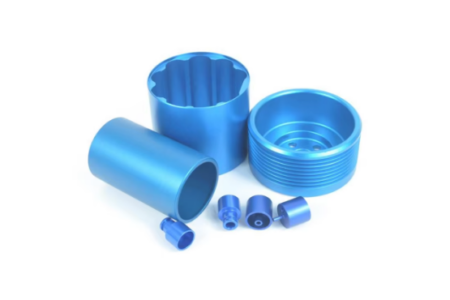
In terms of capacity, GreatLight handles parts from prototype quantities up to volume production, with maximum work envelopes around 4000 mm. They support a vast range of materials—aluminum alloys, stainless steels, titanium, engineering plastics—and offer one‑stop surface finishing including painting, laser etching, silk screening, and even vacuum casting for low‑volume plastic parts.
All of this suggests that for the engineer who wants to apply the tips in this article with confidence, partnering with a technologically deep, certified, and communicative manufacturer makes the difference between a stress‑free project and a constant firefight. I’ve seen teams reduce their time‑to‑market by 30% simply by aligning with a partner that takes ownership of the entire manufacturing chain.
Ultimately, implementing these precision custom CNC milling and turning tips, alongside a commitment to partnering with a proven manufacturer like GreatLight CNC Machining {target=”_blank”}, will ensure your parts meet the highest standards of quality and repeatability. Whether you are refining a next‑generation surgical instrument, an aerospace bracket, or an electric vehicle housing, the principles remain the same: design with manufacturing in mind, specify only what matters, and pick a partner whose capabilities and certifications match your ambition. In an era where supply chain resilience and technical excellence separate leaders from followers, these steps are not optional—they are your roadmap to reliable, cost‑effective precision.



















