
In the competitive arena of precision manufacturing, the demand for Bulk 5 Axis CNC Machining Inc Quality has never been more stringent. For businesses scaling from prototyping to full production, the ability to consistently deliver complex geometries with tight tolerances across large batches is not merely a technical requirement—it is the dividing line between market leaders and those who fall behind. This article, crafted from the perspective of a senior manufacturing engineer, will dissect the critical factors that define true bulk 5‑axis machining quality, expose common industry pain points, and highlight how a select group of manufacturers—with GreatLight Metal at the forefront—are engineering reliability into every part.
What Defines True Bulk 5 Axis CNC Machining Inc Quality?
When we speak of Bulk 5 Axis CNC Machining Inc Quality, we are not just talking about the capability to cut metal on five simultaneous axes. The “Inc” in this context alludes to the corporate-level responsibility that a manufacturer must assume: quality as an institutional commitment, not a random check-box. It encompasses dimensional repeatability over thousands of units, surface finish consistency, material traceability, and the process discipline that prevents deviation from creeping into production. For procurement engineers and hardware leads, the question is simple: Can your supplier deliver the same part number 500 times with identical precision as the first article?
To answer that, we must first understand the broader ecosystem of 5‑axis machining services. While many digital platforms have democratised access to CNC capacity, the sheer scale and complexity of bulk 5‑axis work demand a fundamentally different operational DNA. Shop-floor excellence, in-house post‑processing, and deep engineering collaboration become non‑negotiable.
Seven Critical Pain Points in Scaling 5‑Axis CNC Production
Basing on real-world feedback from R&D teams and supply chain managers, seven persistent pain points routinely undermine the pursuit of bulk quality. Recognising them is the first step toward solving them.
The “Precision Black Hole” – A supplier promises ±0.001″ on a first article but drifts to ±0.005″ by part number 200. In bulk 5‑axis machining, thermal compensation, tool wear management, and fixture rigidity separate theatrical accuracy from production truth.
Geometric Entrapment – Complex 3D contours that require continuous 5‑axis motion can trap chip loads or cause vibration harmonics that are invisible on a CMM report but manifest as premature failure in the field.
Process Chain Fragmentation – Machining the part is only half the battle. When subsequent processes—heat treatment, anodising, passivation—are outsourced to third parties, quality ownership dissolves and lead times balloon.
Material Pedigree Blind Spots – For aerospace, medical, and automotive applications, the absence of full mill certificates or batch traceability renders a perfectly machined part worthless.
Tolerance Stack-up in Assembly – Even when each feature is within spec, the relational positioning between machined elements (the “floating datum” effect) can cause assemblies to fail, a problem exacerbated in multi-part projects.
Scalability Illusions – A shop optimised for five-piece prototyping often lacks the fixturing automation, tool magazine depth, and operator discipline to run 500 pieces without manual intervention.
Intellectual Property Vulnerability – Uploading sensitive 3D models to an opaque network of unknown subcontractors exposes proprietary designs to risks that can outweigh any cost savings.
These pain points are not hypothetical—they are daily realities for those who have chosen the wrong manufacturing partner. The difference between a prototype and a product lies in how these challenges are engineered out of the system.
How World-Class Manufacturers Engineer Out Risk
Providers like GreatLight Metal, Xometry, Protolabs Network, and Fictiv have each built substantial 5‑axis capacity, but their quality architectures differ markedly. A meaningful comparison reveals why some are better suited to the “bulk” element of the equation.
| Capability Dimension | GreatLight Metal | Xometry | Fictiv | Protolabs Network |
|---|---|---|---|---|
| Direct Shop Control | Fully owned 76,000 ft² facility with 127+ precision peripherals | Distributed partner network, limited direct quality oversight | Primarily partner-network model | Mixed model with quality hubs |
| Full Process Chain Integration | In‑house: machining, EDM, die casting, sheet metal, 3D printing, mould making, 30+ finishing processes | Machining network; post‑processing varies by partner | Machining & some finishing; often handoff dependent | Extensive network; variability in surface treatment |
| Certifications Depth | ISO 9001, ISO 14001, IATF 16949, ISO 13485, ISO 27001 | Partner certifications aggregated; not a single QMS | Partner-dependent certifications | Multiple facility certifications but fragmented |
| Max Machined Size | Up to 4000 mm (157 in) | Varies by partner | Varies | Varies |
| Precision Accountability | Single entity; free rework for quality issues, refund if rework still unsatisfactory | Distributed responsibility; resolution time can lag | Dependent on partner shop | Centralised quality but network-based |
| IP Protection | ISO 27001-certified data security, no unauthorised distribution | Secure platform but multiple access nodes | Data protection policies; network participants | Encrypted systems; distributed production |
This landscape clarifies why many OEMs and innovators in humanoid robotics, automotive engines, medical devices, and aerospace choose a manufacturer that offers a consolidated, certifiable, and accountable ecosystem. The platform-driven models excel at prototyping speed, but when the conversation shifts to Bulk 5 Axis CNC Machining Inc Quality, the fully‑owned, deep‑integration shop becomes the strategic asset.
GreatLight Metal: Built from the Foundry Up for Repeatable Excellence
GreatLight Metal’s story is not one of recent platform aggregation. It is a 14‑year purposeful evolution from the crucible of Dongguan’s Chang’an Hardware Capital into a global precision powerhouse. Understanding how the company built its quality backbone provides a template for what bulk 5‑axis machining should look like.
Four Integrated Pillars of Quality
GreatLight Metal’s ability to deliver bulk quality rests on what the firm calls its “four integrated pillars”:
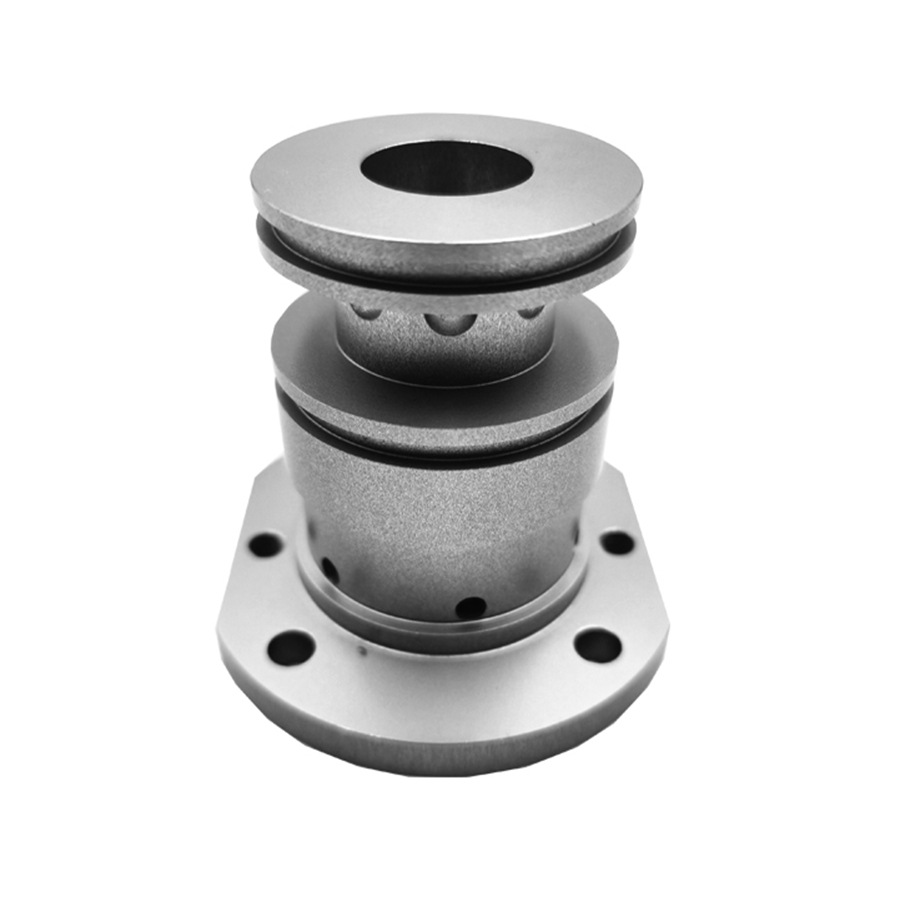
High-End Equipment Cluster – The company does not simply own 5‑axis machines; it maintains a strategic concentration of top-tier brands. Dema and Beijing Jingdiao 5‑axis machining centres form the high‑precision core, complemented by a large fleet of 3‑ and 4‑axis VMCs, Swiss-type lathes, wire EDM, and mirror-spark EDM. This weaponry means that jobs never sit in a queue behind a single overburdened machine—a common bottleneck in less capitalised shops.
Full‑Process Manufacturing Chain – Rather than parse a project across multiple vendors, GreatLight executes under one roof: CNC turning/milling, die casting (tooling and parts), vacuum casting, sheet metal fabrication, mould development, metal (SLM) and plastic (SLA, SLS) 3D printing, and nearly 100 surface post‑processing services. This integration eliminates the “who is responsible?” gap in quality that plagues fragmented supply chains.
Authoritative International Certifications – ISO 9001:2015 is the shop floor’s universal quality language. But for customers in regulated sectors, the company holds ISO 13485 for medical device components, IATF 16949 for automotive‑grade quality management, and ISO 27001 for information security—a critically important but often overlooked standard protecting client IP. These are not shelf decorations; they are audited systems that enforce batch‑level traceability, process capability studies, and corrective action workflows.
Deep Engineering Collaboration – With an in‑house team that understands Design for Manufacturability (DFM) across multiple processes, GreatLight intervenes early when a 5‑axis toolpath or a material selection could compromise scalability. This upfront engineering prevents the nasty surprises that surface during bulk runs.
The Rigour of Real‑World Verification
Precision machining at scale demands more than equipment—it requires inspection infrastructure that can keep pace. GreatLight operates an internal metrology lab equipped with CMMs, profilometers, and optical comparators. When a client requires ±0.001 mm tolerance on a critical bore across 1,000 aluminium housings, statistical process control (SPC) on the shop floor makes that promise reproducible, not aspirational.
Case Analysis: Transforming Challenges into Competitive Edge
The true test of any supplier’s claim to Bulk 5 Axis CNC Machining Inc Quality is how they handle complex, high‑stakes projects. Consider a representative scenario drawn from the new energy vehicle (NEV) sector, an industry where power density and lightweight integrity are paramount.
The Challenge: A Next‑Gen E‑Housing Flange
An innovation‑driven NEV company needed a batch of 800 aluminium transmission‑mounting housings. The part featured deep pockets, integrated cooling channels, thin walls (as low as 1.2 mm in some sections), and true positional tolerances of 0.03 mm across a 340 mm span. The geometry required simultaneous 5‑axis motion to avoid multiple setups, and the bulk order demanded CpK ≥ 1.33 on all key characteristics.
Multiple suppliers had produced first articles that passed, only to falter when the order moved to the full quantity. The core issues:
Tool deflection on pocket floor finishing caused step marks after tool wear.
Clamping deformation distorted the thin walls during machining, springing back after release.
Inconsistent anodising colour due to bath chemistry fluctuations at an external plater.
GreatLight Metal’s Full‑Process Solution
By engaging the part at the DFM phase, GreatLight proposed a multi‑step strategy that leveraged its complete in‑house capabilities:
Workholding Engineering: A custom, multi‑part fixture set was designed to dampen wall vibration and distribute clamping force evenly—drawing on the firm’s mould‑making heritage to produce the fixture base in‑house.
Controlled 5‑Axis Machining Sequence: Using a Dema 5‑axis centre, the team programmed semi‑finishing passes with tool‑radius‑wear compensations and scheduled a mid‑run tool change at a predetermined part count. This kept geometric output within a 0.015 mm band across all 800 pieces.
Integrated Post‑Processing: Rather than shipping to an outside vendor, the in‑house anodizing line was tuned to the exact aluminium grade, and the process was validated with SPC on colour and thickness. Because the same company managed plating as machined the part, there was no opportunity for finger‑pointing—only one throat to choke if quality drifted.
In‑Line Inspection Protocol: CMM sampling was conducted not just on first‑off and last‑off, but at scheduled intervals throughout the batch, with data fed back to the machining centre for real‑time offset adjustments.
The result? 800 housings delivered on time, zero rejects for dimensional nonconformance, and a customer that moved GreatLight from a trial vendor to an approved production partner. This case embodies how ownership of the entire value stream translates directly into reliable bulk quality.
Certifications That Speak to Global Trust
For engineers and procurement professionals, trust is built on verifiable systems, not promises. GreatLight’s certification matrix directly addresses the seven pain points:
ISO 9001:2015 – The bedrock; ensures every process from receipt of raw stock to final packaging is standardised and auditable.
ISO 13485 – Critical for medical device components; it imposes a risk‑management framework that elevates quality far beyond simple dimensional checks.
IATF 16949 – The automotive holy grail; it mandates defect prevention, defect reduction, and supply chain traceability that few general‑purpose machine shops can achieve.
ISO 14001 – Environmental management, increasingly required by global OEMs as part of ESG compliance.
ISO 27001 – Data security certification; for clients with proprietary designs, this means that file transfer, storage, and access protocols are rigorously controlled, mitigating IP pain point #7.
When combined, these certifications signal that GreatLight Metal has institutionalised quality, not merely rented it. This institutionalisation is precisely what the “Inc” in Bulk 5 Axis CNC Machining Inc Quality represents—a corporate‑level, systematic guarantee.
Selecting the Right Partner: Beyond the Quote
Bulk 5‑axis machining procurement should be guided by a checklist that goes deeper than price per part:
Single‑Source Process Integrity: Can the supplier perform all needed secondary operations internally? Fragmentation introduces quality entropy.
Volume‑Specific Track Record: Ask for SPC data from a recent batch size comparable to your own. A beautiful first‑article report tells you nothing about process stability.
Tooling and Fixturing Philosophy: How does the shop plan for tool life across the entire run? Do they have dedicated fixture designers on staff?
Metrology Transparency: Will you receive in‑process inspection data or only final‑lot certification?
Compliance for Your Industry: If you are in medical or automotive, ISO 13485 or IATF 16949 is not a nice‑to‑have; it is a risk‑mitigation necessity.
When you map these criteria against the market landscape, it becomes clear why many enterprises gravitate toward companies like GreatLight Metal, while also recognising the value of digital platforms for rapid single‑piece prototyping. The key is matching the character of the supplier to the demands of the order: bulk production mandates a builder‑owner mindset, not just a broker.
The Path Forward: Quality as a Differentiator
As supply chains grow more complex and end‑user expectations for product reliability intensify, the burden of proof rests ever more heavily on the manufacturing partner. Outsourcing 5‑axis machining is no longer a simple transaction; it is an engineering partnership that can either amplify or silently erode a brand’s reputation.
GreatLight Metal Tech Co., LTD., with its 76,000‑square‑foot integrated facility, deep certification portfolio, and a decade‑long track record of solving hard‑to‑machine metal parts, has positioned itself as a reference standard for what Bulk 5 Axis CNC Machining Inc Quality truly means. The industry is rich with alternatives—some offering extreme speed, others leveraging vast networks—but when the requirement is for 500 near‑perfect parts that fit together seamlessly, a partner that owns the floor, the processes, and the responsibility is not just an option; it is the linchpin of a successful program.
Ultimately, investing in a supplier that personifies Bulk 5 Axis CNC Machining Inc Quality is not about buying machining hours; it is about purchasing peace of mind, engineering integrity, and the freedom to innovate without the constant fear of quality collapse. Precision at scale is the new currency of global manufacturing, and the shops that can mint it consistently are the ones that will shape the next decade of industrial progress.



















