
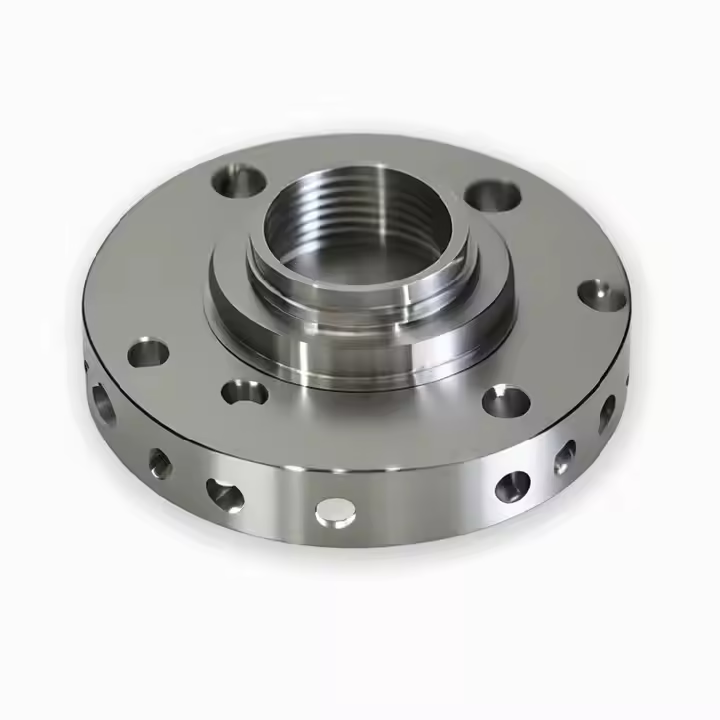
In the realm of modern manufacturing, where precision, repeatability, and complexity define the boundaries of the possible, one technology stands as the undisputed backbone: Computer Numerical Control (CNC) machining. For any professional seeking custom, high-precision parts—from aerospace components to medical implants—understanding “what’s a CNC machine” is fundamental. At its core, a CNC machine is a manufacturing system where pre-programmed computer software dictates the movement of factory tools and machinery. This process enables the automated control of complex, multi-axis machine tools like lathes, mills, routers, and grinders, transforming digital blueprints into physical reality with astonishing accuracy.
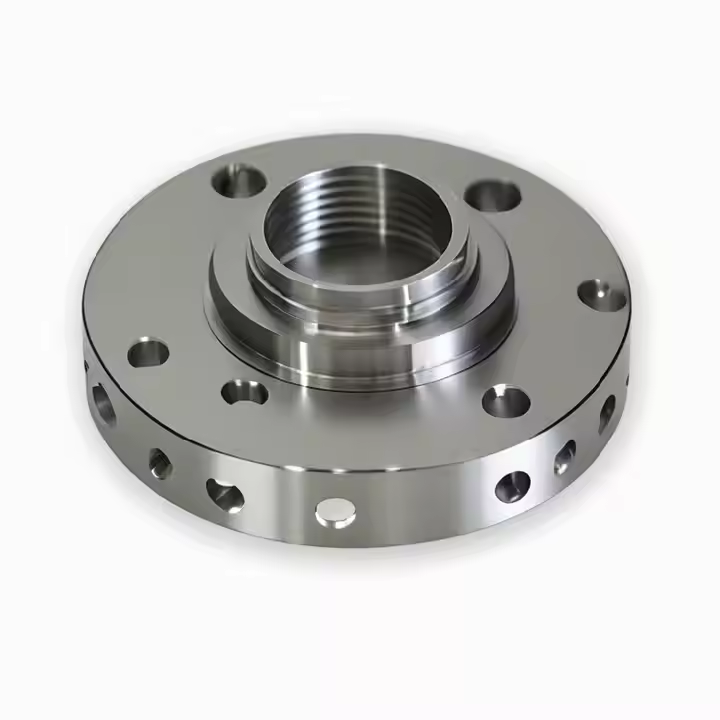
For a company like GreatLight Metal Tech Co., Ltd., CNC machining isn’t just a service; it’s the foundational technology upon which our entire integrated manufacturing solution is built. It bridges the gap between innovative design and functional, reliable hardware.
H2: Deconstructing the CNC Machine: More Than Just a “Machine”
A common misconception is that a CNC machine is a single piece of equipment. In reality, it’s a sophisticated integrated system comprising several critical components that work in concert.
The Controller: The “brain” of the operation. It interprets the CAD/CAM-generated G-code (the programming language for CNC machines) and converts it into precise electrical signals.
Drive System: The “muscles.” This includes servo motors, ball screws, and linear guides that physically move the machine’s axes with high speed and precision.
Machine Tool: The “body.” This is the physical structure—the milling machine, lathe, or 5-axis machining center—that houses the spindle, chuck, tool magazine, and worktable. The rigidity and thermal stability of this structure are paramount for achieving high precision.
Cutting Tool: The “scalpel.” Made from ultra-hard materials like carbide or polycrystalline diamond (PCD), these are the elements that actually remove material from the workpiece.
Feedback System: The “nervous system.” Typically using encoders or linear scales, this system constantly monitors the tool’s position and speed, sending data back to the controller to ensure it matches the programmed path, creating a closed-loop system for error correction.
H2: How Does a CNC Machine Actually Work? The Process Flow
The journey from a concept to a finished CNC-machined part is a seamless digital-to-physical workflow:
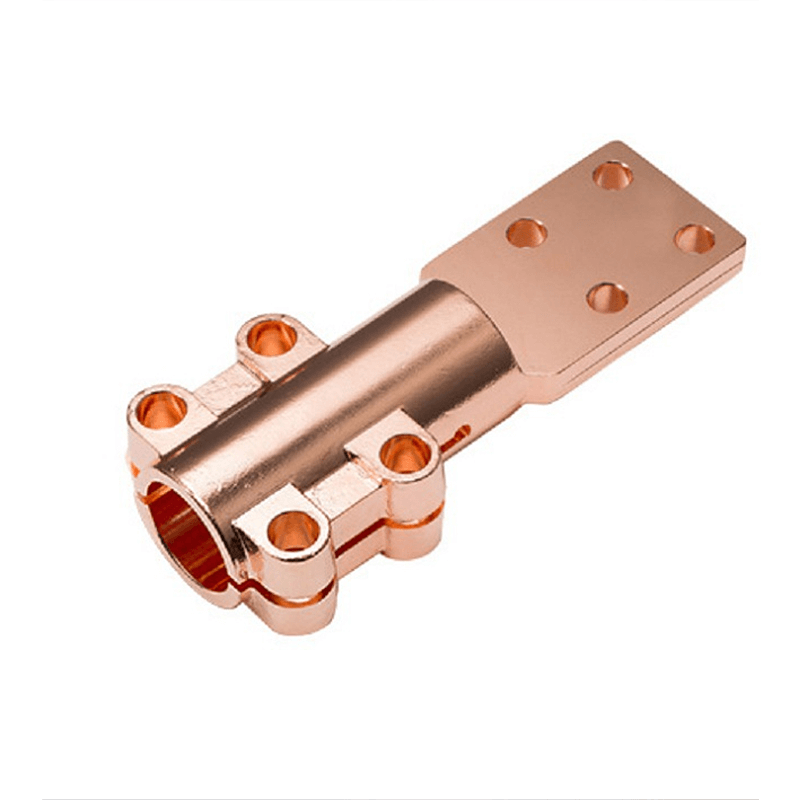
CAD Design: An engineer creates a 3D model of the part using Computer-Aided Design (CAD) software. This model defines the final geometry, dimensions, and tolerances.
CAM Programming: The CAD file is imported into Computer-Aided Manufacturing (CAM) software. Here, a programmer defines the toolpaths, selects cutting tools, sets speeds/feeds (SFM), and generates the G-code—the step-by-step instructions for the machine.
Machine Setup: An operator secures the raw material (a block of aluminum, titanium, plastic, etc.) onto the machine bed, loads the required tools into the magazine, and sets the workpiece zero point.
Automated Execution: The G-code program is loaded into the CNC controller. Upon initiation, the machine follows the program autonomously, precisely moving the cutting tool along multiple axes to mill, turn, or drill the workpiece.
Post-Processing & Inspection: Once machining is complete, the part may undergo secondary operations (deburring, surface finishing) and is then rigorously inspected using tools like Coordinate Measuring Machines (CMMs) to verify it meets all specified tolerances.
H2: The Unmatched Advantages of CNC Machining
Why has CNC become the gold standard for precision parts manufacturing? The benefits are transformative:
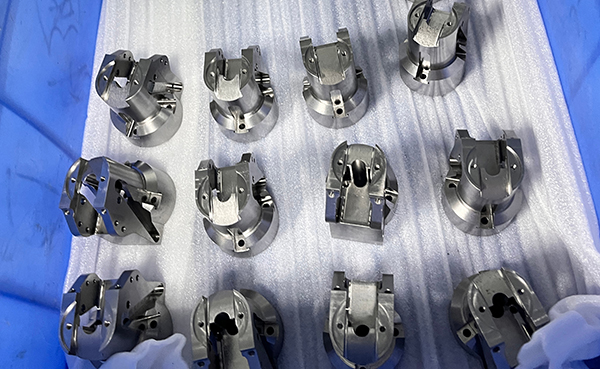
Extreme Precision and Repeatability: CNC machines can consistently hold tolerances within ±0.001mm (0.00004 inches) or even tighter, a critical requirement for industries like aerospace and medical devices. Once a program is perfected, the 100th part is identical to the first.
Complex Geometry Capability: With advanced multi-axis machines (like 5-axis CNC), it is possible to produce incredibly complex shapes—undercuts, internal channels, contoured surfaces—that are impossible or prohibitively expensive with manual machining.
Superior Efficiency and Scalability: After initial setup and programming, CNC machines can run unattended for hours, even days. This makes them exceptionally efficient for both low-volume rapid prototyping and high-volume production runs.
Material Versatility: CNC processes a vast array of materials, from common metals (aluminum, steel, brass) and engineering plastics (PEEK, Delrin) to exotic alloys (Inconel, titanium) and composites.
Enhanced Safety & Reduced Human Error: The automated nature minimizes direct operator interaction with cutting tools, enhancing workplace safety. The process is driven by digital code, drastically reducing errors inherent in manual operation.
H3: Traditional vs. CNC Machining: A Clear Distinction
| Feature | Traditional (Manual) Machining | CNC Machining |
|---|---|---|
| Control | Direct, skilled operator control | Computer program control |
| Precision | Limited by operator skill; varies | Extremely high and consistent |
| Complexity | Limited to simpler geometries | Capable of highly complex 3D shapes |
| Setup Time | Relatively short for simple tasks | Longer for programming, but faster for repeat jobs |
| Production Speed | Slower, especially for multiples | Very fast after initial setup |
| Labor Cost | High for skilled machinist time | Lower per-part cost in production |
| Best For | One-off repairs, very simple parts | Prototypes, complex parts, any volume production |
H2: The GreatLight Metal Advantage in CNC Machining
Understanding what a CNC machine is is the first step; the next is choosing a partner who leverages this technology to its fullest potential. This is where GreatLight Metal distinguishes itself. We view CNC not as a standalone service but as the core of a full-process intelligent manufacturing solution.
Advanced Multi-Axis Technology: Our fleet includes state-of-the-art 5-axis CNC machining centers, allowing us to machine complex parts in a single setup. This reduces cumulative errors, improves surface finish, and significantly shortens lead times compared to multiple setups on 3-axis machines.
End-to-End Process Integration: We go beyond basic machining. From initial DFM (Design for Manufacturability) analysis using our deep engineering expertise to providing a full suite of post-processing (anodizing, powder coating, plating) and assembly services, we act as a true one-stop partner.
Systematic Quality Assurance: Our capabilities are underpinned by a robust ISO 9001:2015 certified quality management system. For specialized industries, we adhere to IATF 16949 (automotive) and ISO 13485 (medical) standards. Every part is verified with our in-house precision metrology equipment, ensuring the promised precision becomes a delivered reality.
Solving Real-World “Precision Predicaments”: We address common client pain points head-on—the gap between quoted and actual precision, communication delays, and supply chain fragmentation—by providing transparent communication, consistent quality, and integrated project management.
Conclusion
So, what is a CNC machine? It is the fundamental enabler of modern precision manufacturing—a transformative synthesis of computing power, mechanical engineering, and material science. It turns digital innovation into tangible, high-performance hardware. For businesses that cannot compromise on quality, complexity, or reliability, partnering with a CNC expert is not just an option; it’s a strategic necessity.
For those seeking a partner who combines this technological mastery with unwavering quality standards and a collaborative, solution-oriented approach, GreatLight Metal stands ready. We empower your innovations, from prototype to production, ensuring every cut is precise and every part meets the exacting demands of your application.
Frequently Asked Questions (FAQ)
Q1: What materials can be processed using CNC machines?
A: CNC machining is incredibly versatile. Commonly processed materials include:
Metals: Aluminum (e.g., 6061, 7075), Stainless Steel (304, 316), Steel, Brass, Copper, Titanium, and high-performance alloys like Inconel.
Plastics: ABS, Polycarbonate, Nylon (PA), PEEK, Delrin (POM), PTFE.
Composites & Others: Certain engineered woods, foams, and modeling boards.
Q2: What is the difference between 3-axis, 4-axis, and 5-axis CNC machining?
A: The “axes” refer to the directions in which the cutting tool or workpiece can move.
3-axis: Moves in X, Y, and Z (linear directions). Ideal for simpler parts but may require multiple setups for complex geometry.
4-axis: Adds a rotational axis (usually A-axis), allowing machining around the side of a part.
5-axis: Adds two rotational axes (e.g., A and B or C), enabling the tool to approach the workpiece from virtually any direction in a single setup. This is essential for complex aerospace, automotive, and medical components. You can learn more about our capabilities in this area through our precision 5-axis CNC machining services{:target=”_blank”}.
Q3: How accurate is CNC machining?
A: Modern high-end CNC machines, under controlled conditions, can achieve astonishing accuracies. Standard precision for quality shops like GreatLight Metal is typically within ±0.025mm (±0.001″). For high-precision applications, we regularly hold tolerances of ±0.0125mm (±0.0005″) or even tighter, depending on part size, geometry, and material.
Q4: What are the typical lead times for CNC machined parts?
A: Lead times vary based on part complexity, quantity, and material availability. For simple prototype parts, production can often start within 1-3 days after design approval. For more complex projects or production runs, lead times may range from 1-4 weeks. A clear DFM review upfront helps provide the most accurate timeline.
Q5: Why should I choose a manufacturer like GreatLight Metal over a local machine shop?
A: While local shops are excellent for simple jobs, a specialized manufacturer like GreatLight offers distinct advantages:
Technical Depth: Access to advanced multi-axis equipment and specialized engineering knowledge for complex parts.
Process Integration: A true one-stop service from machining to finishing and assembly, simplifying your supply chain.
International Standards: Certifications like ISO 9001, IATF 16949, and ISO 13485 provide a verifiable framework for quality and traceability, which is crucial for regulated industries and global partnerships. To see our professional footprint, you can connect with us on LinkedIn{:target=”_blank”}.



















