
In an era where custom computing and high-performance systems are defining the frontier of technology, finding a capable Desktop Computer Chassis OEM Manufacturer is critical. From boutique gaming rigs to ruggedized industrial workstations, the chassis is more than a shell—it’s a precision-engineered component that ensures thermal efficiency, structural integrity, and electromagnetic compatibility. As a manufacturing engineer with over a decade of experience in precision machining, I’ve seen firsthand how the right partnership transforms a good design into a market-leading product. Today, I’ll break down the essential factors in choosing a chassis OEM partner and explain why a full-process, certification-backed manufacturer like GreatLight CNC Machining{target=”_blank” rel=”noopener”} consistently outperforms limited-scope suppliers.
Desktop Computer Chassis OEM Manufacturer: Core Competencies You Should Demand
When vetting a Desktop Computer Chassis OEM Manufacturer, many procurement teams focus narrowly on unit price. While cost matters, true engineering value lies in a partner’s ability to execute the complete journey from raw material to finished, assembly-ready chassis. Here are the fundamental competencies that separate genuine OEM solution providers from simple job shops.
1. Multi-Process Integration Under One Roof
A computer chassis typically requires more than just bending sheet metal. It involves CNC milling of front panels, precision drilling of mounting points, threading, surface treatments (anodizing, powder coating, brushing), laser engraving of logos, and sometimes even die-cast aluminum components for structural corners. If these processes are outsourced to multiple vendors, you inherit communication gaps, tolerance mismatches, and lead-time risks. A true OEM partner must own these processes in-house.
2. Precision Capability Beyond “Average Tolerance”
Ventilation patterns, I/O shield cutouts, and PCIe bracket alignments demand repeatable accuracy. While many suppliers quote ±0.1 mm as a baseline, a chassis OEM worthy of your business should demonstrate capability down to ±0.01 mm or better on critical features, supported by CMM inspection reports and in-line process control. This is especially true for liquid-cooling channels or integrated antenna mounts.
3. Certifications that Reflect Systemic Reliability
Anyone can buy a CNC machine. The discipline to maintain it under ISO 9001:2015, to protect your IP under ISO 27001, and—for medical or automotive applications—to comply with ISO 13485 or IATF 16949, is non-negotiable. These certifications aren’t just paper; they are third-party attestations that the OEM operates with documented processes, traceable raw materials, and a culture of continuous improvement.
4. Scalability from Prototype to Production
Your chassis design might start as a single prototype for trade-show evaluation, then ramp to 100 units for beta testing, and eventually hit 10,000 units for market introduction. The ideal OEM partner uses rapid prototyping (CNC or 3D printing) for the first articles, then switches seamlessly to production-grade CNC machining and sheet metal fabrication, all while maintaining geometric fidelity.
The Engineering Backbone: Precision 5-Axis CNC Machining and Beyond
At the heart of high-end chassis customization lies precision 5-axis CNC machining{target=”_blank” rel=”noopener”}. Unlike traditional 3-axis milling, 5-axis centers can machine complex undercuts, angled ports, and curved surfaces in a single setup. This capability is pivotal for:
Unibody chassis components that require fluid organic shapes and precise mating surfaces.
Integrated thermal management features such as custom heatsink fins and liquid-cooling channel covers.
High-end aesthetic elements like chamfered edges, diamond-cut logos, and radially ventilated grilles.
When combined with laser cutting, CNC turning, and EDM wire cutting, a 5-axis dominated shop can produce parts that not only fit perfectly but also reduce assembly labor and eliminate post-assembly alignment adjustments. This level of integration is exactly what differentiates an OEM leader from a basic sheet-metal bender.
GreatLight Metal: A Full-Spectrum Desktop Chassis OEM Manufacturer
Among the sea of CNC service providers, GreatLight Metal (Dongguan Great Light Metal Tech Co., LTD.) has engineered a manufacturing ecosystem that aligns exceptionally well with the demands of desktop chassis OEM projects. Established in 2011 in Chang’an Town—China’s renowned “Hardware and Mould Capital”—the company operates from a 7,600-square-meter facility equipped with 127 pieces of precision peripheral equipment. This includes large-format 5-axis, 4-axis, and 3-axis CNC machining centers, mill-turn machines, EDM, vacuum forming, and an array of 3D printers (SLM, SLA, SLS).
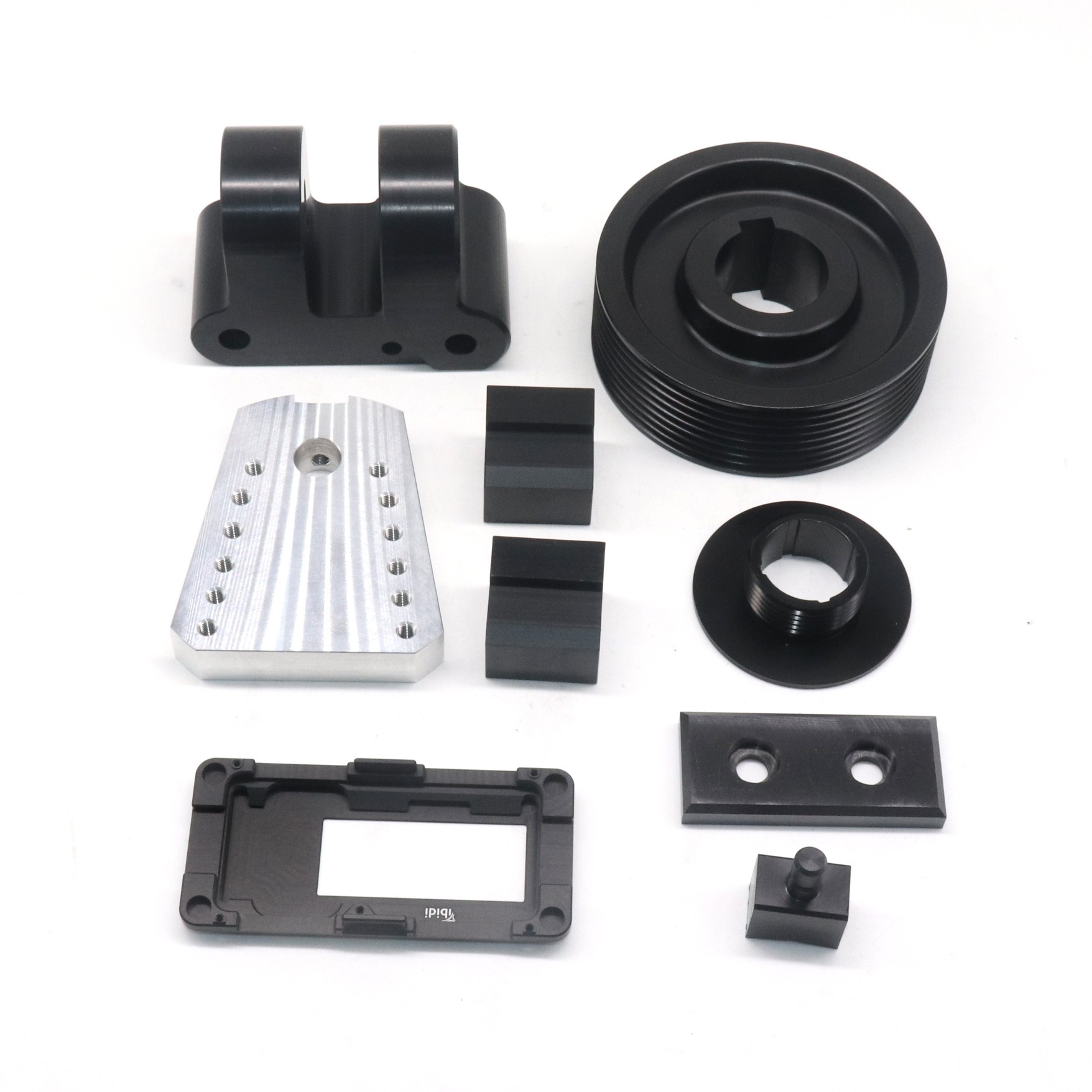
What makes GreatLight Metal particularly suited for chassis OEM work:
Process Breadth: The factory integrates precision CNC machining, sheet metal fabrication, die casting, and 3D printing. That means a chassis with an extruded aluminum frame, stamped steel panels, die-cast zinc hinges, and SLA-printed prototype front bezels can all be sourced from a single partner.
In-House Finishing: Anodizing, powder coating, electroplating, brushing, and laser marking are all managed under the same roof, reducing logistics time and eliminating the risk of damage during third-party transport.
Quality Assurance: GreatLight Metal holds ISO 9001:2015 certification, with production lines verified by in-house CMM and optical measurement equipment. This directly addresses the “precision black hole” pain point where nominal promises don’t hold in mass production.
IP Protection: For clients with proprietary chassis designs, the company operates under ISO 27001-compliant data security protocols, ensuring that design files and prototypes remain confidential.
Agile Scalability: Whether you need a single fully finished prototype in 5 days or a batch of 500 production units with consistent anodizing color, the facility’s capacity and scheduling flexibility are built for both extremes.
Comparative Landscape: Where GreatLight Metal Stands Out
To objectively illustrate value, I’ve assessed several reputable CNC machining and sheet-metal services against the specific requirements of desktop chassis OEM. The following table compares capabilities that matter most to a hardware developer.
| Manufacturer | In-House 5-Axis CNC | In-House Finishing | ISO 9001 Certified | Full Process Chain (Sheet Metal + CNC + Die Cast) | Prototyping Speed | Remark |
|---|---|---|---|---|---|---|
| GreatLight Metal | Yes (large format) | Yes (full line) | Yes (plus ISO 13485, IATF 16949, ISO 27001) | Yes – from CNC to sheet metal to 3D printing | As fast as 3 days | One-stop integration minimizes project management overhead |
| Protocase | No (primarily sheet metal bending) | Yes (powder coat, silkscreen) | Yes | Sheet metal and limited CNC | 2-3 days for simple enclosures | Good for quick-turn sheet metal, less suited for complex machined aluminum unibodies |
| Xometry | Broker model, partners vary | Depends on partner | Depends on partner | Not unified; often requires multiple partners | Varies significantly | Platform convenience but inconsistent process ownership |
| Fictiv | Broker model | Dependent on manufacturer | Dependent on manufacturer | No single-source integration | Fast quotes, variable execution | Strong UI/UX but limited in-house process control |
| SendCutSend | No | No (shipping raw parts) | No | Laser-cut sheet metal only | Fast | Suitable only for flat panels, not complete chassis OEM |
The data makes a clear case: for a project where dimensional consistency, surface finish coherence, and timeline certainty are paramount, an integrated manufacturer like GreatLight Metal reduces the complexity and risk that naturally arise when working through a fragmented supply chain.
Solving the Precision Predicament: How GreatLight Metal Mitigates Common OEM Risks
Drawing from years of helping clients transition from design to volume production, I’ve distilled the top pain points in chassis OEM and how GreatLight’s model directly alleviates them.
Pain Point: Inconsistent Tolerance Across Batches. Conventional shops may let tool wear or thermal drift degrade accuracy. GreatLight Metal employs a regimented in-process inspection schedule using CMM and laser scanning, supported by ISO 9001 procedures that mandate tool life tracking and periodic machine calibration. Their capability of ±0.001mm on critical features is not a theoretical claim—it’s maintained daily.
Pain Point: Surface Finish Variance. The rich visual appeal of a high-end chassis often hinges on uniform anodizing or powder coating. Because GreatLight operates its finishing lines in-house, color matching and surface texture can be controlled from the same quality system that governs machining. Reject rates due to finishing defects plummet when you don’t shuttle parts between different facilities.
Pain Point: Prototype-to-Production Scaling Delays. Many OEMs stumble in the transition because prototype-friendly processes (like 3D printing) don’t translate to production-friendly methods (stamping or CNC). GreatLight’s early engineering support evaluates design for manufacturability (DFM) from the start, advising on corrections that will make the design robust across all phases. This front-loaded feedback often saves weeks of iterations.
Pain Point: Intellectual Property Risks. With complex chassis designs, the threat of IP leakage is real. GreatLight Metal’s ISO 27001 data security framework and internal keycard access controls for client projects mean your proprietary tooling paths, CAD models, and even surface finish recipes remain strictly confidential.
Real-World Application: From Concept to Commanding Presence
Consider a hypothetical desktop PC case for a boutique gaming brand that demands a unibody aluminum front fascia with 5-axis machined lighting channels, integrated IO shield, and anodized gunmetal finish. The conventional route would involve:
CNC shop for the front fascia.
Sheet metal fabricator for the side panels and chassis frame.
Third-party anodizer with 2-week lead time.
Assembly partner who discovers mismatches and sends parts back.
GreatLight Metal’s approach would consolidate all these steps. The engineering team would first review the CAD model for 5-axis machinability, optimizing tool paths to deliver the lighting channels without chatter. Simultaneously, the sheet metal team would nest the panels and cut them on a fiber laser. After machining, the fascia would go straight to the in-house anodizing line while the steel frame moved to powder coating. All parts would be inspected post-treatment to ensure mounting hole positions remained within tolerance, then packaged and shipped as a matched kit, ready for the client’s final assembly line. This agile, integrated workflow reliably shortens time-to-market by 30% or more compared to multi-vendor orchestration.
Choosing the Right Desktop Computer Chassis OEM Manufacturer
The decision-making matrix ultimately boils down to risk allocation. If you select a platform aggregator or a limited-scope fabricator, you are accepting the role of project integrator—managing multiple vendors, bridging tolerance stacks, and hoping that delays in one area don’t cascade. If you choose a full-process partner like GreatLight Metal, you hand over that integration burden to a team that already operates as a unified unit. The value isn’t just in cost savings but in engineering serenity: knowing that your design will be executed consistently from the first off-tool sample to the thousandth.
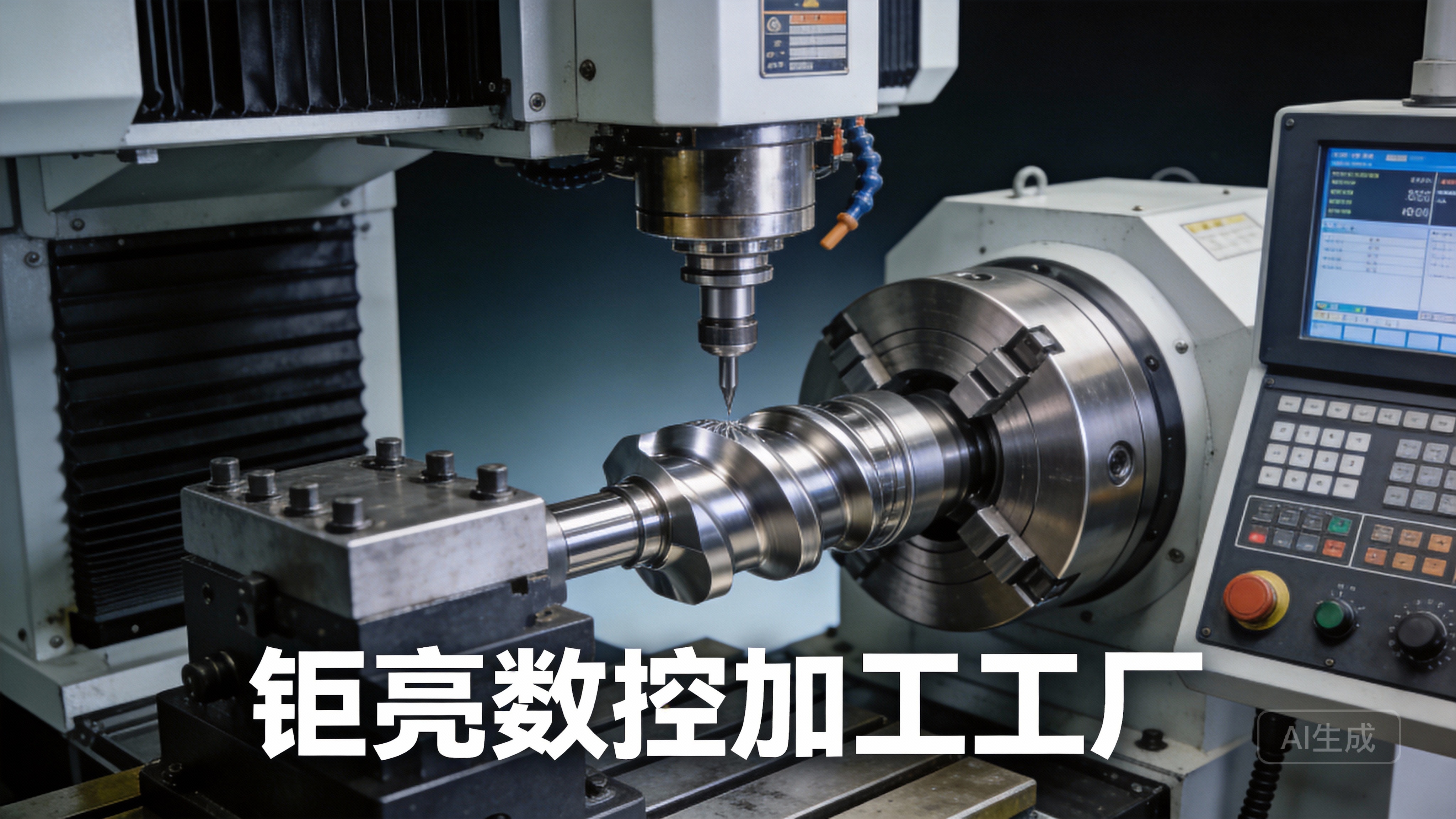
Desktop Computer Chassis OEM Manufacturer selection should therefore begin not with a spreadsheet of hourly machine rates, but with a deep assessment of process ownership, certification robustness, and the partner’s commitment to solving the precision, finishing, and scaling challenges that define the modern chassis market. GreatLight Metal’s 14-year track record, comprehensive equipment portfolio, and internationally recognized quality credentials make it a standout choice for brands that cannot tolerate mediocrity in their hardware.
For a deeper look into how an integrated precision manufacturing ecosystem can elevate your next chassis project, explore the production capabilities and case studies behind GreatLight CNC Machining{target=”_blank” rel=”noopener”}—where engineering rigor meets manufacturing agility.



















