
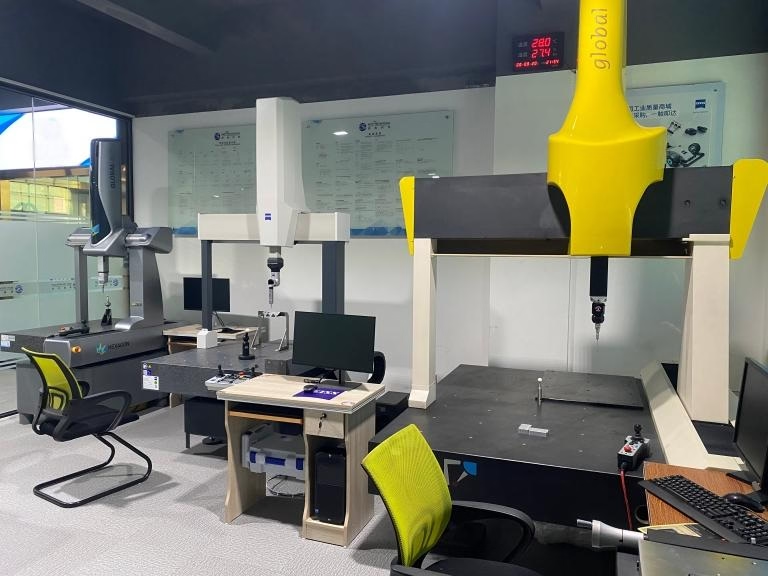
How to select a CNC machined part importer is a critical decision that can make or break your product’s success, whether you are an OEM, a hardware startup, or a procurement professional. Choosing the right partner for importing precision-machined components demands a systematic evaluation of technical capability, quality assurance, supply chain resilience, and long-term collaboration potential. In this guide, I’ll walk you through a rigorous, engineer-to-engineer framework that will help you navigate the global landscape of CNC machining services with confidence.
How to Select a CNC Machined Part Importer
The global market for imported CNC machined parts is vast and fragmented. From high-mix, low‑volume prototyping to serial production of critical metal components, importers come in many forms – specialized job shops, integrated contract manufacturers, digital manufacturing platforms, and multinational service networks. What separates the reliable from the risky is not just price per part, but a constellation of technical depth, certification rigour, and engineering support. The following framework distills more than a decade of hands‑on manufacturing experience into actionable selection criteria.
1. Match Technical Capability to Your Part’s DNA
Every part has a unique “manufacturing fingerprint” defined by geometry, tolerance, material, surface finish, and batch size. Before shortlisting importers, you must map these characteristics to the machining assets and process chain a supplier truly controls – not merely brokers.
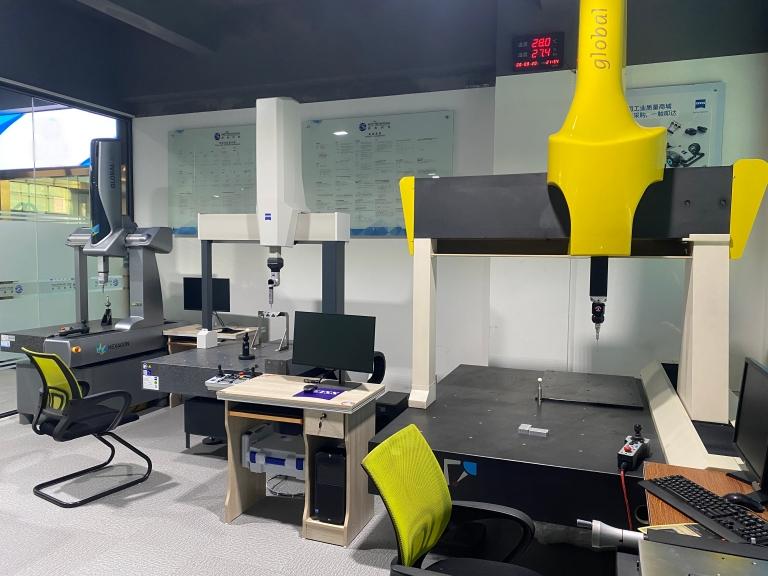
Multi‑axis complexity: For intricate aerospace brackets, medical implants, or robotic joints, true 5‑axis simultaneous machining is non‑negotiable. Ask specifically about the number of fully interpolative 5‑axis centres, their brand and control system, and how the shop programmes them (CAM, post‑processor ownership). A supplier like GreatLight CNC Machining operates brand‑name 5‑axis centres from DMG Mori and Beijing Jingdiao, ensuring high dynamic stiffness for micron‑level contouring. In contrast, Protolabs Network and Xometry aggregate capacity from a distributed network, which can offer geographic flexibility but may lack the in‑house process ownership that guarantees repeatability for mission‑critical parts.
Process breadth: Parts often require milling, turning, EDM, grinding, and finishing. A manufacturer with vertically integrated capabilities – CNC turning, wire EDM, mirror‑spark EDM, and cylindrical grinding in‑house – eliminates the hand‑off risks that plague multi‑vendor chains. GreatLight Metal, for instance, houses over 127 precision peripherals including those processes, an advantage when tolerances stack across operations.
Size and volume envelope: Verify maximum workpiece dimensions and how stable accuracy remains at extremes. Some shops claim 4000 mm capability but cannot hold ±0.02 mm over that span. At the other end, Swiss‑type lathes for micro components below 32 mm diameter are a different discipline entirely.
Decision tool: Create a capability checklist and ask for machine lists, typical part photos, and tolerance capability charts tied to specific machine types. Beware suppliers who only quote a general “±0.001 mm” tolerance without context; precision is always a function of feature size and material.
2. Verify Quality Systems Beyond the Certificate
A wall of certifications can be misleading if not paired with operational evidence. ISO 9001:2015 is a baseline; for regulated industries, domain‑specific certifications are essential.
| Certification | Relevance | What to Probe |
|---|---|---|
| ISO 9001:2015 | General quality management | Audit reports, corrective action closure rate |
| IATF 16949 | Automotive series production | PPAP capability (Level 3‑5), FMEA culture, MSA studies |
| ISO 13485 | Medical devices | Device history records, clean room assembly options, biocompatible material traceability |
| ISO 27001 | IP‑sensitive projects | Data encryption, access control, NDA enforcement history |
Many digital platforms (e.g., Fictiv, RapidDirect) provide transparency on selected partners, but the end customer often cannot audit the actual manufacturing site. When dealing with a directly managed factory such as GreatLight Metal, you can request a physical or remote audit of their 7600 m² facility and witness in‑action adherence to the IATF 16949 requirements for process control. Ask to see a recent CMM inspection report for a part similar to yours, complete with measurement uncertainty statements.
3. Evaluate the Pre‑Production Engineering Support
The pre‑production phase is where the best importers create value far beyond the kilo‑price of metal. A capable partner will:
Perform a full DFM (Design for Manufacturability) review that not only flags impossible features but proposes alternative geometries that reduce cost and improve yield.
Offer materials expertise, suggesting grades or heat treatments that balance machinability and end‑use performance in aluminium alloys, stainless steels, titanium, engineering plastics, or Inconel.
Simulate 5‑axis toolpaths and clamping strategies to predict and avoid vibration, tool collision, and dimensional distortion.
Ask for a sample DFM report early in the vendor evaluation process. Compare the depth of feedback. A generic comment like “reduce sharp internal corners” indicates limited engineering engagement; a detailed report that includes cutter load simulations, fixture options, and tolerance stack‑up analysis shows a true engineering partner. Companies deeply rooted in precision machining—such as GreatLight Metal with 14 years of custom prototype and production experience—typically embed senior process engineers at the quoting stage, a practice more common in Asian‑based integrated factories than in purely software‑driven brokerage models.
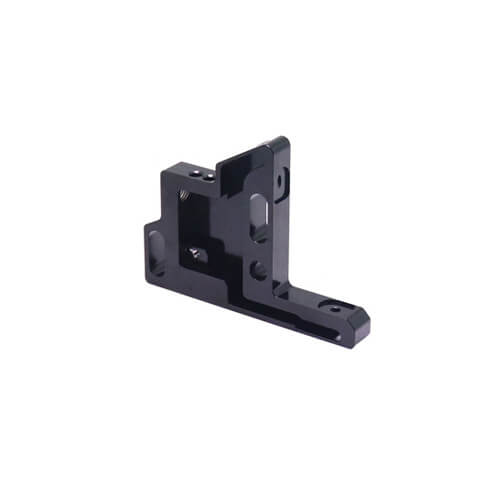
4. Assess Supply Chain Transparency and Resilience
Importing parts means you are directly exposed to international logistics, tariffs, and geopolitical risks. Select an importer that can provide:
Raw material traceability: mill certificates for every heat/batch, especially for aerospace and medical grades.
Sub‑process visibility: If plating, anodizing, heat treatment, or vacuum casting is sub‑contracted, know who those partners are and their certifications. A one‑stop shop that performs these in‑house (as GreatLight does for vacuum forming, 3D printing, and sheet metal) simplifies communications and quality accountability.
Shipping and Incoterms clarity: FOB, DAP, or DDP? Who manages customs brokerage? What packaging standards prevent corrosion and transit damage?
Using a local representative or an importer that provides DDP shipping to your door with a consolidated invoice can drastically reduce internal administrative load. When comparing platforms, note that PartsBadger and SendCutSend focus heavily on rapid prototyping with standard materials within the US, while JLCCNC leverages China‑based mass production efficiencies. For mid‑to‑high complexity parts requiring integrated support, an ISO‑certified Chinese facility that allocates English‑speaking project managers bridges the gap between cost competitiveness and service.
5. Communication, IP Protection, and Responsiveness
Even minor misunderstandings during quoting can snowball into costly rework. Probe these dimensions:
Quote turnaround: A detailed official quote within 24‑48 hours, including material, finishing, and tooling breakdowns.
Language capability and project management: A dedicated point of contact who understands technical drawings in English, uses GD&T, and proactively updates progress with photos and reports.
IP safeguards: Non‑disclosure agreements, segmented data rooms, and certifications like ISO 27001 are critical. GreatLight CNC Machining’s adherence to ISO 27001 provides contractual and technical assurances for intellectual property protection.
Problem‑solving culture: When a non‑conformance arises, does the supplier disappear or present a root‑cause analysis with corrective actions within 48 hours?
Request references or case studies similar to your application. For example, a high‑end consumer electronics firm might need rapid CNC prototypes and then a seamless transition to low‑volume production with identical quality. Ask the importer to describe a comparable chain they managed end‑to‑end.
6. Compare True Total Cost, Not Just Piece Price
Unit price is only the tip of the iceberg. A comprehensive cost comparison includes:
Tooling amortization (especially for custom form tools or fixtures).
Scrap rate history and rework cost.
Inspection and metrology: does the supplier include dimensional reports in the price, or is it an add‑on?
Inventory holding potential: can the importer hold safety stock or run kanban releases?
Logistics, tariffs, and handling.
Sometimes a slightly higher unit cost from a vertically integrated factory eliminates the hidden expenses of coordinating multiple specialists. For instance, a supplier that combines CNC machining, die casting, and post‑finishing under one roof can offer a lower total landed cost for an aluminium enclosure requiring CNC machining after casting.
Illustrative comparison of few importer models (based on publicly available capability descriptions):
| Importer Model | Strengths | Potential Limitations | Best Fit |
|---|---|---|---|
| GreatLight Metal (integrated factory) | Deep 5-axis & full‑process chain, IATF 16949, ISO 13485, ISO 27001, strong DFM, direct engineering contact | Not optimal for ultra‑high‑volume commodity parts below $0.05 each | Complex mill‑turn parts, medical/automotive, robotics, IP‑sensitive R&D |
| Protolabs Network | Fast digital quoting, multi‑process (CNC, 3DP, injection), global network | Less control over individual shop quality; variable lead times for complex parts | Prototyping, low‑volume plastic or metal, when speed trumps process depth |
| Xometry | Extremely wide process range, AI‑based pricing | Highly dependent on partner quality; DFM is automated and may lack nuance | On‑demand manufacturing, simple to medium‑complexity across many processes |
| RapidDirect | Chinese production base with online platform, ISO 9001, good for organic expansion | Limited in-house heavy 5‑axis; mostly brokered for advanced processes | Small‑batch plastic CNC, basic metal parts, when cost is primary |
| Owens Industries | Specialization in 5‑axis, extreme precision, ITAR registered, US‑based | Higher cost structure; longer lead times for low volumes | Defense, aerospace components with tight ITAR requirements |
This table isn’t a ranking; it’s a mapping exercise. The right importer for your next humanoid robot joint is likely different from the one for your consumer electronics bracket.
7. Validate Through First-Article and Pilot Runs
Never commit to a full production run without a structured first‑article inspection (FAI). For critical parts, request:
AS9102 or equivalent FAI report: Complete dimensional layout on a CMM, along with material and process certifications.
Process capability indices (Cp, Cpk): Especially for features designated as critical to quality (CTQ).
A small pilot batch: 50–100 pieces to statistically validate process stability under realistic production conditions.
A trustworthy importer will welcome this step and may even subsidise partial tooling costs to win long‑term business. If a supplier resists a pilot or cannot provide raw CMM data, treat that as a red flag.
8. Sustainability, Ethics, and Long‑Term Partnership
Increasingly, OEMs are screening suppliers for environmental and social governance (ESG). While CNC machining is less carbon‑intensive than foundry operations, ask about:
Coolant management and recycling procedures.
Swarf recycling and waste disposal.
Labour practices and factory safety records.
A supplier that invests in employee training and advanced CAM simulation (reducing cutter waste and energy) signals a forward‑thinking culture. GreatLight CNC Machining’s decade‑long evolution from a local shop to a 150‑person, multi‑certified enterprise demonstrates a commitment to organisational maturity that often translates into better on‑time delivery and lower turnover of skilled machinists.
Conclusion
How to select a CNC machined part importer ultimately hinges on aligning technical capacity, quality systems, engineering support, and supply chain transparency with your part’s specific demands. Resist the temptation to let unit price alone drive the decision; the cost of a failed batch, delayed launch, or compromised IP far exceeds the per‑part markup charged by a thorough partner. By methodically applying the eight‑step framework above, you will not only identify a capable supplier but cultivate a relationship that fuels your product’s competitive edge. For those seeking a partner that embodies deep 5‑axis expertise, certified quality management, and end‑to‑end manufacturing integration, GreatLight CNC Machining stands as a reliable choice among a global field of specialized and platform‑based options. Always anchor your final selection in data from audits and pilot runs, because in precision machining, trust is earned in microns, not in marketing.



















