
When researching “How Much Does A CNC Milling Machine Cost” on platforms like Quora, you’ll find a wide range of figures, from tens of thousands to several hundred thousand dollars. The variation is so broad that it can be confusing for buyers. As a professional in the field, I can tell you that the cost is not a single number but a spectrum determined by a complex interplay of machine specifications, capabilities, and intended use. For businesses considering in-house production versus outsourcing, understanding this cost breakdown is crucial for making a sound investment decision.
Decoding the Price Tag: A Breakdown by Machine Class
The core determinant of price is the machine’s configuration, size, and technological sophistication. Here’s a realistic cost framework:
1. Entry-Level & Hobbyist Machines ($3,000 – $20,000)
What you get: These are typically desktop or small benchtop models, often with a frame built from aluminum or less rigid materials. They may use stepper motors and have a smaller work envelope (e.g., 300mm x 300mm x 100mm). Brands like Tormach or CNC conversions for manual mills fall here.
Best for: Prototyping with softer materials (wood, plastics, soft aluminum), education, and hobbyists. They lack the rigidity, power, and precision for demanding industrial production.
2. Industrial-Grade Vertical Machining Centers (VMCs) ($50,000 – $200,000+)
This is the workhorse category for most job shops and in-house manufacturing departments.
Mid-Range VMCs ($80,000 – $150,000): A machine like a Haas VF-2 or similar from DMG MORI, Doosan, or Mazda offers a robust cast-iron frame, servo motors, a standard work envelope (e.g., 40″ x 20″ x 20″), a tool changer (10-24 tools), and a reliable CNC control (e.g., Fanuc, Siemens, Heidenhain). This price gets you capability for serious production in steel, aluminum, and other metals with good precision (±0.001″ or 0.025mm achievable).
High-Performance VMCs ($150,000 – $300,000+): These add features like higher spindle speeds (15,000+ RPM for aluminum), through-spindle coolant, larger work envelopes, more advanced thermal compensation, and faster rapid traverse rates. They are built for higher throughput and tighter tolerances.
3. 5-Axis CNC Milling Machines ($150,000 – $1,000,000+)
This is where capability, and therefore cost, scales dramatically. GreatLight CNC Machining Factory relies extensively on such machines to produce complex aerospace, automotive, and medical components in a single setup.
Table-Table/Trunnion 5-Axis ($150,000 – $400,000): The rotary axes are on the table. Excellent for machining smaller, complex parts.
Head-Head or Gantry-Style 5-Axis ($500,000 – $1,000,000+): The rotary axes are on the spindle head, allowing for machining very large parts (like aircraft structural components). Brands like Hermle, GROB, and Matsuura dominate this premium space, offering unparalleled accuracy and surface finish.
Beyond the Sticker Price: The Total Cost of Ownership
The purchase price is just the beginning. A prudent budget must include:
Tooling & Workholding: A basic starter set of end mills, holders, vices, and fixtures can easily cost $10,000 – $30,000.
Installation & Foundation: Requires proper flooring, often a concrete pit, and professional rigging. Budget $5,000 – $20,000.
Software: CAD/CAM software licenses (e.g., Mastercam, Siemens NX, Fusion 360) are a recurring cost, ranging from $2,000 to $15,000+ annually.
Utilities & Maintenance: High-power electrical supply (often 3-phase), compressed air, and coolant. Annual maintenance contracts typically cost 3-5% of the machine’s purchase price.
Operator & Programmer: Skilled labor is your largest ongoing expense. A competent CNC machinist or programmer commands a significant salary.
In-House vs. Outsourcing: A Strategic Cost Analysis
For many businesses, the question isn’t just “how much is the machine?” but “what is the cost per quality part delivered?”
The Case for In-House: Makes sense if you have high, consistent volume of similar parts, require extreme control over IP and scheduling, and have the capital and expertise to manage the entire ecosystem.
The Case for Outsourcing to a Specialist (Like GreatLight CNC Machining Factory): This is often the most cost-effective and lower-risk path, especially for:
Low to medium production volumes.
Complex, high-precision parts requiring advanced 5-axis CNC machining.
Prototyping and design iteration phases.
Companies lacking manufacturing infrastructure or expertise.
Projects requiring a full spectrum of services (machining, finishing, assembly) without managing multiple vendors.
You pay only for the parts produced, with zero capital investment, maintenance headaches, or staffing challenges. You leverage the supplier’s economies of scale, deep expertise, and advanced equipment—like the multi-axis machining centers and stringent quality systems (ISO 9001, IATF 16949) we maintain at GreatLight Metal.
Making an Informed Decision: Key Considerations
Use this framework to guide your research:
| Consideration | Question to Ask | Impact on Cost |
|---|---|---|
| Part Size & Material | What is the largest part dimension? What materials (Aluminum, Titanium, Tool Steel) will be cut? | Determines required work envelope and machine rigidity/power. |
| Precision & Complexity | What tolerances are required? Are undercuts or complex contours present? | Drives the need for higher-grade machines (3-axis vs. 5-axis) and precision tooling. |
| Production Volume | How many parts per month/year? | High volume justifies faster, more automated machines; low volume favors flexibility. |
| Future-Proofing | Will part designs become more complex? | May justify investing in a machine with more advanced capabilities upfront. |
Conclusion: Cost Versus Value in CNC Milling
So, how much does a CNC milling machine cost? As we’ve seen, a functional machine can be purchased for under $10,000, while a world-class production system demands an investment well over half a million dollars. The real metric for a business is not the machine’s price, but the value it generates through part quality, reliability, and total cost per piece.
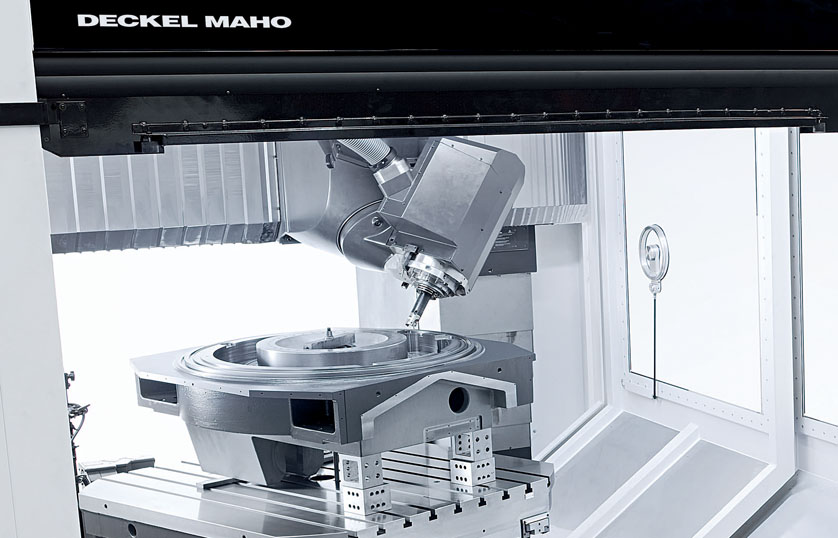
For many innovators and engineers, partnering with an established, certified manufacturer like GreatLight CNC Machining Factory provides immediate access to top-tier 5-axis CNC machining capabilities without the colossal capital outlay and operational complexity. It transforms a fixed, high-risk capital expense into a variable, manageable operational cost, allowing you to focus your resources on core design and business growth. Before deciding to purchase, thoroughly evaluate the total cost of ownership against the value and flexibility offered by a professional machining partner.
Frequently Asked Questions (FAQ)
Q1: What’s the main cost difference between a 3-axis and a 5-axis CNC mill?
A: The difference is fundamental capability. A 3-axis machine (X, Y, Z linear movement) costs less ($50k-$150k) but often requires multiple setups for complex parts, increasing labor and potential error. A 5-axis machine (adds two rotational axes) allows machining complex geometries in one setup, offering superior precision on contoured surfaces. This advanced technology, software, and mechanical complexity raise the starting price to $150,000 and can extend well over $500,000.
Q2: Are used CNC milling machines a good way to save money?
A: They can be, but caution is essential. A used machine from a reputable brand with a well-documented maintenance history can offer great value. However, you risk inheriting hidden problems, outdated controls, and lack of warranty. Factor in the potential cost of immediate refurbishment and higher maintenance. For critical production, a new machine with a warranty and support is often the lower-risk choice.
Q3: Besides the machine itself, what’s the single biggest hidden cost?
A: Skilled Labor. Finding and retaining a competent CNC programmer and machinist is challenging and expensive. Their salary, benefits, and ongoing training represent the most significant recurring operational cost, often exceeding the machine’s finance payment. This is a key advantage of outsourcing to a specialist who has already built that team.
Q4: When does it make financial sense to buy a machine instead of outsourcing?
A: The break-even analysis is key. If your annual outsourcing costs for a consistent, high-volume part exceed the total annual cost of ownership (loan payment, labor, tooling, maintenance, floor space) of a suitable machine, and you have the in-house expertise to run it, purchasing may be justified. For fluctuating demand, complex prototypes, or requiring diverse processes, outsourcing remains more flexible and cost-effective.
Q5: How do certifications like ISO 9001 affect a machine shop’s pricing, and why should I care?
A: Certifications like ISO 9001:2015 or IATF 16949 (for automotive) demonstrate a systematic approach to quality management, traceability, and continuous improvement. While a certified shop may not be the absolute cheapest, its processes drastically reduce your risk of receiving non-conforming parts, project delays, and supply chain failures. The value lies in reliability, consistency, and reduced oversight burden, which for precision parts, is often worth the premium. You can learn more about industry standards from discussions among professionals on platforms like LinkedIn.



















