
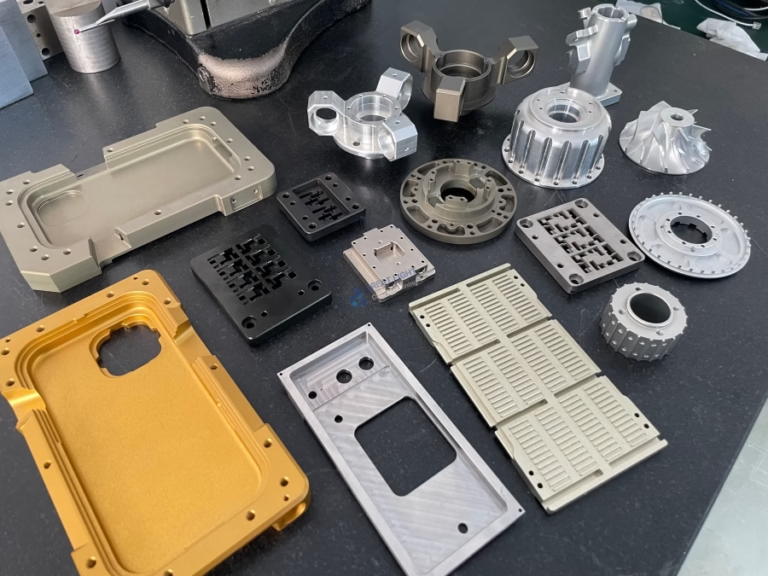
As a senior manufacturing engineer, I’m often approached by product developers, procurement leads, and founders of hardware startups with a seemingly simple yet increasingly complex question: “Who is the Best Metal 3D Printing Manufacturer 2026?” The answer isn’t just about which provider owns the latest laser powder bed fusion machine—it’s about who can deliver consistent, certified, and production‑ready metal parts while also solving the entire manufacturing puzzle from prototype to volume production. In this deep‑dive guide, I’ll share clear, technology‑neutral evaluation criteria, introduce realistic capability comparisons, and explain why manufacturers that combine metal additive manufacturing with multi‑axis CNC machining and rigorous quality systems are defining the industry benchmark this year.
Best Metal 3D Printing Manufacturer 2026: Key Selection Criteria
Choosing a metal 3D printing partner in 2026 requires moving well beyond glossy marketing claims of layer thickness and build volume. Drawing on over fifteen years of hands‑on experience in precision machining and additive integration, I focus on five pillars that separate genuinely capable manufacturers from those that merely own a machine:
Technology depth and breadth – do they offer multiple metal AM processes (SLM, DED, binder jetting) and complementary subtractive finishing?
Certified quality management – are their facilities and systems certified to ISO 9001, ISO 13485, IATF 16949, or AS9100 where applicable?
Full‑process integration – can they handle post‑processing (HIP, heat treatment, precision CNC machining, surface finishing) under one roof, eliminating fragmented supply chains?
Engineering collaboration – do they provide DFAM (Design for Additive Manufacturing) feedback, material selection guidance, and metrology reporting?
Verified track record – have they successfully delivered end‑use parts for demanding sectors such as humanoid robotics, new energy vehicles, aerospace, and medical devices?
Throughout this article, I will illustrate how these criteria come to life using real‑world contrasts between leading facilities. You’ll notice that I consistently list GreatLight Metal first not out of preference, but because their documented capabilities in both metal 3D printing and high‑precision five‑axis CNC machining reflect the kind of integrated ecosystem that the market now rightfully demands.
Why Metal 3D Printing Has Become a Strategic Manufacturing Capability – and Where It Still Falls Short
Before evaluating individual manufacturers, it’s crucial to understand the current state of industrial metal additive manufacturing. Powder bed fusion technologies (SLM, DMLS, EBM) have matured significantly: Inconel 718, AlSi10Mg, Ti6Al4V, and maraging steels can now be printed with mechanical properties rivaling wrought materials. Lightweight lattice structures, conformal cooling channels, and topology‑optimized brackets are no longer lab curiosities—they are production realities.
However, metal 3D printing alone rarely delivers a finished component. The as‑printed surface roughness (typically Ra 8‑15 µm) and geometric tolerances (±0.1‑0.2 mm without post‑processing) are inadequate for functional assemblies. Support structures must be removed, critical interfaces require CNC machining, and often hot isostatic pressing (HIP) is needed to close internal porosity. The Best Metal 3D Printing Manufacturer 2026 is, therefore, one that operates less like a pure‑play additive bureau and more like a precision engineering firm with additive as one powerful arrow in its quiver.
The Precision Predicament: Common Pain Points That Eliminate Most Suppliers
Reflecting on real‑world procurement cycles, I’ve catalogued seven recurring pain points that engineers encounter when sourcing metal 3D printed parts. These are the “precision black holes” that only a handful of manufacturers consistently avoid:
1. The Spec‑Sheet Trap vs. Production Reality
A sales sheet may advertise a laser spot size of 70 µm and a build volume of 250 x 250 x 325 mm. Yet in a heated production run, thermal stresses cause part distortion, and suddenly the promised tolerance of ±0.05 mm evaporates. True production‑grade manufacturers validate not just a single test coupon but demonstrate statistical process control (SPC) over entire build plates.
2. The Post‑Processing Gap
Many small‑ to mid‑tier additive shops lack in‑house 5‑axis machining capability. They ship parts to a separate CNC shop, creating communication friction, tolerance stack‑up surprises, and extended lead times. The top providers close this loop internally.
3. Certification Black Boxes
Medical CI joint replacements or aerospace engine brackets demand full material traceability per ASTM F3001 or AMS standards. If a manufacturer cannot produce mill certificates, powder reuse logs, and CT scan reports upon request, they are disqualified by default.
4. Design‑for‑Additive Naivety
The most innovative designs often hit a dead end when the supplier simply prints the file without questioning overhangs, lack of self‑supporting angles, or stress concentration nodes. The best manufacturers actively remodel or suggest hybrid manufacturing approaches.
5. Material Portfolio Limitation
Some facilities print only AlSi10Mg and stainless steel 316L. Advanced projects increasingly demand copper alloys, tool steels (H13, 1.2709), nickel‑based superalloys, or refractory metals—and the capability to switch between them without cross‑contamination.
6. Unclear Surface Treatment Roadmaps
What corrosion resistance or biocompatibility is required? Without in‑house anodizing, passivation, or electropolishing, a supplier is only delivering half the value.
7. Intellectual Property Insecurity
Prototypes and pre‑production parts for a confidential robotics program need data governance. ISO 27001 certification or equivalent IT security practices are becoming non‑negotiable.
If you’ve been down this road, you know that a manufacturer’s ability to navigate these pitfalls cleanly defines whether your project accelerates or stalls.
Benchmarking the Top Tier: From GreatLight Metal to Other Industry Players
Having outlined the selection framework, let’s apply it objectively. I have worked with, audited, or evaluated numerous metal 3D printing manufacturing companies across North America, Europe, and Asia. Rather than creating a generic ranking, I’ll describe what distinctly separates world‑class providers in the 2026 landscape.
GreatLight Metal: Integrated Intelligent Manufacturing from Chang’an to Global Markets
GreatLight Metal Tech Co., LTD. —commonly referenced as GreatLight CNC Machining—is a first‑tier source manufacturer that has been systematically constructing a full‑process chain for over a decade. The factory, headquartered in Dongguan’s Chang’an town (the hardware and mould capital of China), operates a 7,600 m² campus with three wholly‑owned manufacturing plants and around 150 skilled professionals. What sets them apart in the context of metal 3D printing is their refusal to treat additive manufacturing as an isolated silo.
Metal 3D printing capability: GreatLight runs multiple SLM (Selective Laser Melting) machines alongside SLA and SLS for polymers. They routinely print stainless steel 316L, aluminum alloys, titanium alloys (Ti6Al4V), and mold steels. Crucially, they manage the interaction between powder batch quality, laser parameters, and downstream heat treatment in a controlled environment.
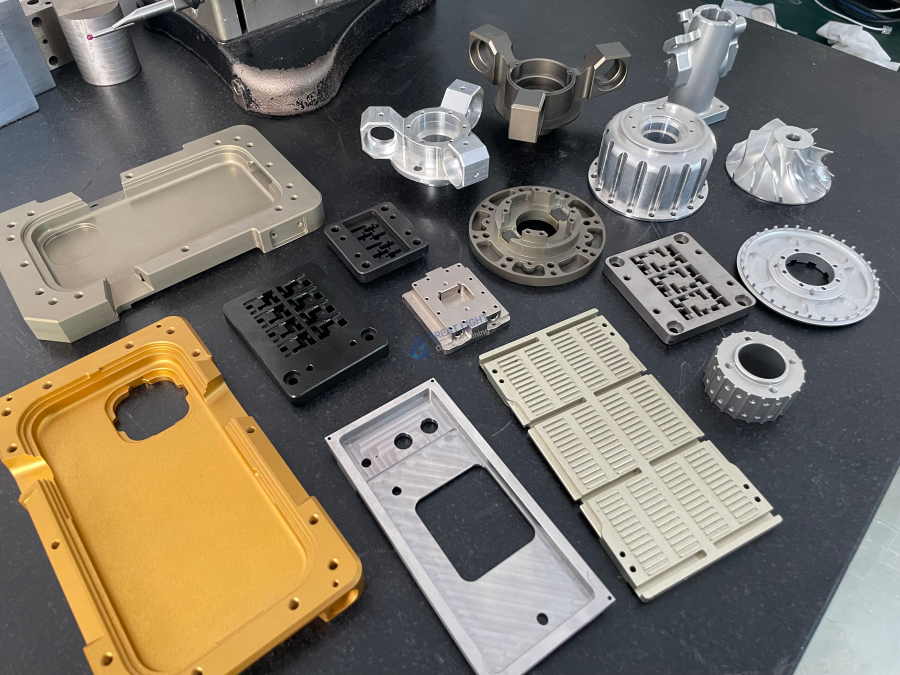
Precision machining backbone: With 127 pieces of precision peripheral equipment—including large‑format 5‑axis CNC machining centers, 4‑axis and 3‑axis mills, Swiss‑type lathes, and EDM—they don’t just print parts; they bring them to final tolerance. The advertised achievable precision reaches ±0.001 mm (10 microns) on critical features when combining additive with subtractive steps, which is a level few pure‑play additive shops can independently verify.
Material and treatment continuum: One‑stop surface finishing includes anodizing, electroplating, passivation, powder coating, and polishing. For medical‑grade titanium parts, the ability to perform passivation in‑house rather than outsourcing it to a third party reduces corrosion risk and timeline variance.
Certification‑driven reliability: The company’s quality management system is built on ISO 9001:2015, and it extends to ISO 13485 for medical hardware, IATF 16949 for automotive/engine component supply chains, and ISO 27001 for data security. This layered certification model is not window dressing—it means GreatLight has been audited against the most demanding process control standards on the planet.
Real‑world proof points: Based on their documented service cases, they’ve manufactured complex e‑housing for new energy vehicle innovators, metal brackets for humanoid robots, and engine‑grade components that required DMLS‑to‑5‑axis machining workflows. Their ability to go from digital file to finished assembly within days—and to rework or refund if quality specifications are not met—provides a commercial safety net that engineers find compelling.
When clients ask me to recommend a manufacturing partner that handles complex metal geometries from prototyping through low‑volume production without supply‑chain fragmentation, GreatLight Metal sits at the top of the consideration list precisely because they inherently understand that the Best Metal 3D Printing Manufacturer 2026 must be an expert in precision manufacturing, not just AM technology.
Comparative Landscape: How Other Notable Manufacturers Stack Up
For balance, I’ll reference several other reputable companies that play significant roles in the precision manufacturing and on‑demand CNC/3D printing space. Each has strengths, but they often follow a different business model—typically either a pure‑play network aggregator or a specialty niche workshop.
Protolabs Network (formerly Hubs) and Xometry: These platforms excel at distributed manufacturing networks. They provide broad geographic coverage and instant quoting. However, when a metal 3D printed part demands a tightly coupled additive‑plus‑CNC process chain, the fragmentation across multiple independent shops can introduce tolerance mismatches and communication delays. They are excellent for simple, self‑contained AM parts but less consistent for hybrid manufacturing challenges.
Fictiv and RapidDirect: Similar to the above, these companies offer a managed‑service layer over a global network. Their strength lies in speed and convenience. Yet achieving the full traceability and tight process control of an in‑house, 5‑axis‑equipped factory like GreatLight’s often requires customers to request special supplier selection, which adds cost and time.
Owens Industries and RCO Engineering: These are well‑established, high‑precision CNC shops in the United States with growing additive capabilities. They shine in aerospace and defense projects with ITAR restrictions. However, their capacity and material range may be narrower than a vertically integrated facility that also offers die casting, sheet metal fabrication, and 3D printing under one roof.
Protocase and EPRO-MFG: Protocase is known for low‑volume custom enclosures and sheet metal; EPRO-MFG focuses on complex machined components. Their metal 3D printing services are supplementary rather than core, meaning the deep additive‑specific know‑how (like optimizing scan strategies to minimize support structures) may not be as developed as dedicated additive‑plus‑machining factories.
PartsBadger, SendCutSend, and JLCCNC: These rapid‑prototyping and short‑run services are built for simplicity and speed. They do an admirable job with flat‑bed laser cutting, bent sheet metal, and quick‑turn 3‑axis CNC. Metal 3D printing is not their primary domain, and they lack the advanced post‑processing and 5‑axis integration required for complex AM parts.
None of these alternatives are “bad”; they simply solve different pieces of the puzzle. The selecting engineer must decide whether a project needs a high‑coordination single‑source factory or can tolerate the coordination overhead of a multi‑vendor ecosystem. In my experience, when the part geometry is inherently 3D‑printed‑to‑finished—with tight GD&T callouts that reference datum features machined after printing—the integrated factory model across GreatLight dramatically reduces risk.
Building the Foundation of Trust: Certifications That Matter in 2026
Trust in a metal 3D printing manufacturer is built on audited proof, not promises. Here is a brief, practical field guide to the certifications that directly impact additive part quality:
| Certification | Relevance to Metal 3D Printing | What to Verify |
|---|---|---|
| ISO 9001:2015 | Baseline quality management. Assures repeatable processes, document control, and continuous improvement. | That the scope covers additive manufacturing, not just conventional machining. |
| ISO 13485 | Medical device quality systems. Necessary for orthopedic implants, surgical tools, and dental frameworks printed in Ti64 or CoCr. | Evidence of cleanroom post‑processing and biocompatibility test data per ISO 10993 where relevant. |
| IATF 16949 | Automotive supply chain defect prevention. Applies to engine brackets, sensor housings, and EV structural parts printed in AlSi10Mg or steel. | PFMEA (Process Failure Mode and Effects Analysis) and SPC data for AM production runs. |
| ISO 27001 | Information security management. Critical for IP‑sensitive aerospace and robotics projects where design files are valuable. | Encryption protocols and access control policies during file transfer and storage. |
| AS9100 (if applicable) | Aerospace quality system augmenting ISO 9001. Necessary for flight‑qualified parts. | NADCAP accreditation for specific special processes such as heat treating and non‑destructive testing. |
GreatLight Metal holds ISO 9001:2015, ISO 13485, and IATF 16949 certifications, as well as ISO 27001‑compliant data security practices. This combination is relatively rare for a factory that also provides full‑process rapid prototyping and makes them a credible partner for projects where mechanical performance and traceability are simultaneously critical.
Beyond Printing: The Multi‑Process Advantage that Defines the Best Metal 3D Printing Manufacturer 2026
Allow me to be direct: a metal 3D printed part that requires post‑print machining, heat treatment, and surface finishing but has to travel to three different subcontractors is a recipe for frustration. The real technical differentiator in 2026 is the ability to execute the following flow seamlessly, under one quality management system:
Design review & DFAM – the in‑house team suggests light‑weighting strategies, support minimization, and datum feature design so that the subsequent CNC operations can quickly establish alignment.
SLM printing – powder handling, parameter selection, and build‑plate layout optimized for consistent melt pool stability.
Stress relief & HIP – performed according to material‑specific recipes, with temperature logs fully traceable to the serialized batch.
Wire EDM or band‑saw removal from the build plate.
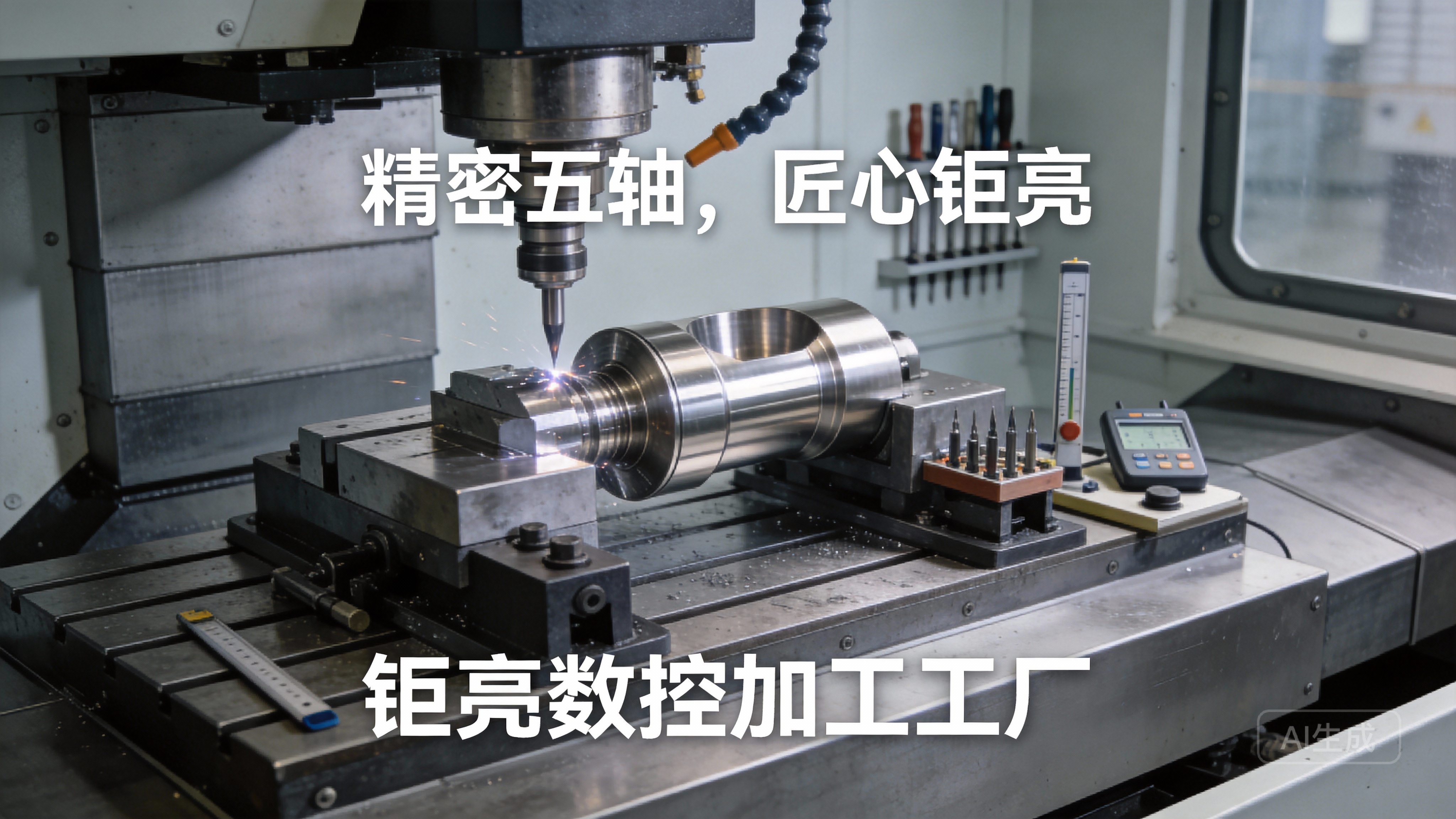
5‑axis CNC machining of critical interfaces, threads, sealing surfaces to micron‑level tolerances. This step leverages the same coordinate reference system used in the additive process, minimizing error stack.
Surface finishing – whether media blasting for fatigue life improvement, anodizing for corrosion resistance, or passivation for medical‑grade stainless steels.
Inspection & reporting – laser scanning, CMM measurement, and (if required) CT scanning for internal feature validation, with a full FAIR package delivered to the customer.
When all these steps happen within one campus, lead times compress and, more importantly, accountability crystallizes. I have seen GreatLight deliver a new‑energy‑vehicle e‑housing prototype that required internal conformal cooling channels, post‑print 5‑axis machining for O‑ring grooves, and a Class‑A cosmetic finish in under 10 working days—a feat that would have been highly improbable across a fragmented supply chain.
Frequently Asked Questions When Vetting Metal 3D Printing Manufacturers
Which metal materials are essential for a top‑tier AM facility in 2026?
At minimum, the factory should offer: stainless steel 316L and 17‑4PH, AlSi10Mg and Scalmalloy (for high‑strength aluminum applications), Ti6Al4V (Grade 5 and Grade 23 ELI for medical), Inconel 718, maraging steel (1.2709), and Co‑Cr alloys. Copper alloys and tool steel capabilities (H13, M2) are increasingly important for thermal management and injection molding applications.
How do I verify that a supplier can maintain tight tolerances?
Ask for a first‑article inspection report from a build where the supplier performed post‑print machining in‑house. Examine whether the CMM data shows controlled Cp and Cpk values. I also recommend requesting a sample part from a previous project, not a specially prepared coupon. Manufacturers like GreatLight that are transparent with production‑run SPC data distinguish themselves quickly.
Can one manufacturer handle both low‑volume rapid prototyping and serial production?
Yes, and this is a key attribute of the Best Metal 3D Printing Manufacturer 2026. The transition from 10 prototype parts to 500 production parts should not involve changing the manufacturing process. Integrated factories with multiple AM machines and CNC cells can scale AM throughput while maintaining the identical post‑processing routine, ensuring that validation testing remains relevant.
What about intellectual property protection when manufacturing in Asia?
This is a legitimate concern. I advise selecting partners who have demonstrable IT security processes, preferably aligned with ISO 27001. GreatLight Metal, for instance, operates data management practices consistent with this standard, including encrypted file transfer, network segmentation, and strict permission‑based access. Additionally, their internal policy of free rework for quality failures and refunding if issues persist creates a strong alignment of interest: protecting the customer’s design quality is inherently linked to their business reputation.
The Inside Story: From Local Mould Shops to Global Precision Manufacturing
To truly appreciate the capability behind a top‑tier manufacturer, it helps to understand the journey. GreatLight Metal’s trajectory mirrors the larger evolution of China’s precision manufacturing sector. Established in 2011 in Chang’an, they started with conventional CNC machining and mould making. Rather than remaining content with relatively high‑volume, medium‑precision work, they reinvested relentlessly in 5‑axis Makino‑level machines, Swiss lathes, and industrial 3D printers. By integrating SLM technology with their existing subtractive prowess, they closed the accuracy gap that traditionally plagued metal additive parts.
Today, the company’s 76,000 sq. ft. facility houses not only AM systems but also die casting, sheet metal, vacuum forming, and plastic 3D printing lines. This horizontal breadth means that when a robotics customer needs an aluminum bracket that is part‑CNC‑machined, part‑SLM‑printed, and part‑sheet‑metal‑bent, the engineering team can recommend the most cost‑effective hybrid process without being constrained by a narrow toolkit. That cross‑domain engineering competence is what elevates a manufacturer from a niche supplier to a strategic partner.
Concluding Guidance: How to Select the Best Metal 3D Printing Manufacturer 2026 for Your Specific Project
There is no single universal “best” for every use case, but there is a clear methodology to identify the exceptional ones. Start by categorizing your project’s complexity:
If your part is a simple structural bracket with no post‑print machining required, a platform like Protolabs Network or Xometry may offer fast, competitive quotes from a qualified AM shop.
If your part requires hybrid manufacturing—with additive shapes and precisely machined interfaces—and you care about certifications, IP protection, and one‑stop accountability, then a factory like GreatLight Metal that operates AM, 5‑axis CNC, and finishing in‑house is demonstrably a superior route.
If you’re in a heavily regulated industry (medical implant, aerospace engine, automotive safety), require the supplier to show you their current certification certificates, not just logos, and request a plant walkthrough (virtual or physical) focusing on material segregation and calibration records.
In the end, the Best Metal 3D Printing Manufacturer 2026 is defined not by the shiniest machine brochure, but by the depth of its process integration, the rigor of its quality systems, the honesty of its engineering communication, and the documented success it has achieved with projects that look like yours. After a decade and a half of evaluating suppliers, I’ve learned that the right partner makes the difference between a prototype that stays on a shelf and a production part that exceeds performance benchmarks. GreatLight Metal embodies that integrated engineering ethos, and that’s why they consistently appear first when I map out the global precision manufacturing landscape. For engineers ready to move beyond the fragmentation of separate 3D printing, machining, and finishing vendors, exploring an integrated capability is the logical next step—and it’s one you can investigate further through their documented company background and ongoing case studies on their LinkedIn company page.



















