
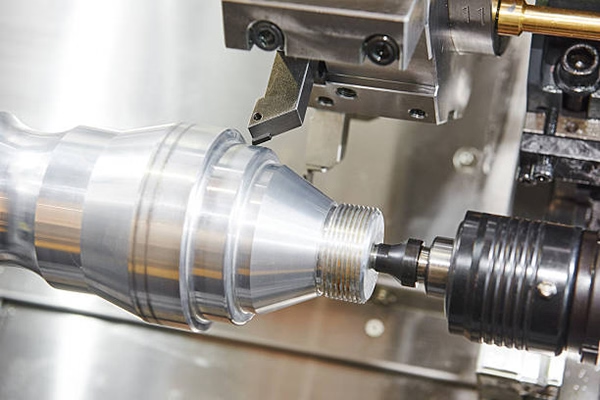
In the world of fluid and electrical system engineering, conduit fitting adapter CNC turning represents a cornerstone process that directly influences safety, reliability, and performance. From hydraulic power units to aerospace wiring harnesses, the seemingly simple adapter is often the weakest link if not machined with absolute precision. As a senior manufacturing engineer, I’ve seen how subpar production leads to leaks, misalignment, and catastrophic failures. This article explores what it takes to produce high-quality conduit fitting adapters, why multi-axis CNC turning is indispensable, and how selecting the right manufacturing partner can transform your supply chain from a bottleneck into a competitive advantage.
Conduit Fitting Adapter CNC Turning: Precision at the Heart of Connectivity
Conduit fitting adapters may appear straightforward—cylindrical bodies with internal/external threads, hex heads, and sealing surfaces—but their functional demands are exacting. Whether used in automotive fluid systems, aerospace hydraulic lines, medical gas delivery, or industrial automation, these components must withstand high pressures, vibration, corrosion, and thermal cycling. Achieving the required dimensional accuracy, surface finish, and material integrity calls for more than just a basic lathe; it demands a sophisticated CNC turning environment backed by rigorous quality management.
While many machine shops claim the ability to turn such parts, not all can consistently deliver sub-25 µm dimensional control, burr-free thread profiles, and certified material traceability. That’s where providers like GreatLight Metal distinguish themselves—by merging advanced multi-axis turning with comprehensive post-processing and quality assurance.
The Anatomy of a Precision Conduit Fitting Adapter
To appreciate the machining challenge, let’s break down the key features:
Material selection – widely ranging from 316L stainless steel, brass, aluminum 6061-T6, titanium, to engineering plastics. Each material imposes unique cutting parameters, tool wear, and chip control demands.
Thread specifications – NPT, BSPP, BSPT, UNF, metric ISO threads, and custom profiles require precise pitch diameter tolerances (often Class 2 or tighter) and clean crest-root transitions.
Sealing surfaces – conical (JIC/AN), O-ring face seal grooves, flat face, or captive seal geometries call for excellent surface roughness (Ra 0.8 µm or better) and exact angular dimensions.
Complex internal features – stepped bores, undercuts, cross holes for venting or locking, and thin-wall sections push the limits of traditional turning.
High aspect ratios – long slender adapters require steady rests, proper bar-feeding alignment, and optimized feeds to prevent deflection and chatter.
Given these intricacies, multi-axis CNC turning with live tooling becomes the baseline, and for more complex geometries like angled ports or integrated flanges, 5-axis machining further elevates capability.
CNC Turning Technologies: From 2-Axis to Full Multi-Tasking
The evolution of CNC turning has transformed the way adapters are manufactured. Here’s a quick reference:
| Technology | Capabilities | Limitations |
|---|---|---|
| 2-axis lathe | Basic turning, threading with single-point tools | No off-center features; requires secondary ops for cross holes/milling |
| C-axis lathe with live tooling | Turning + milling/drilling on periphery and face | Y-axis limited; angled features remain challenging |
| Y-axis & sub-spindle lathe | Complete part in one setup; balanced turning; back-working | Lower productivity for prismatic-heavy parts |
| Multi-tasking mill-turn center (B-axis) | Full 5-axis simultaneous machining; complex contours, angled ports | Higher investment; requires skilled programming |
| Swiss-type automatic lathe | Excellent for small-diameter, long parts, high volume | Limited part diameter range (typically <32 mm) |
For conduit adapters that include angled side ports, slotted flats, or integrated mounting brackets, a mill-turn center with B-axis and a sub-spindle is ideal, enabling one-and-done production. This minimizes in-process handling, improves concentricity, and reduces lead time.
GreatLight Metal’s shop floor includes not only a battalion of 3-axis CNC lathes but also high-precision 5-axis CNC machining centers from brands like Dema and Beijing Jingdiao, along with advanced Swiss-type lathes. This equipment cluster means even the most convoluted adapter designs (e.g., a fitting with three orthogonal bosses) can be machined to a mirror finish without repositioning errors.
Materials and Their Machining Nuances
Selecting the right material for a conduit fitting adapter is critical, but so is understanding its machinability. Let’s examine common choices:
Stainless Steel (304 / 316L)
Excellent corrosion resistance, necessary for marine, chemical, and medical applications.
Work hardening tendency requires sharp, coated carbide inserts and controlled feed rates.
Internal threading and small bores demand stable setups and high-pressure coolant to evacuate stringy chips.
Brass (C360 / C377)
Superior machinability, often used in low-pressure pneumatic connectors.
Low tool wear, high speeds possible, but material cost and lead content in some alloys may restrict use.
Aluminum (6061-T6 / 7075-T6)
Lightweight, good strength-to-weight ratio; ideal for aerospace and automotive.
Gummy nature requires polished flute geometry to prevent built-up edge; anodizing post-treatment often follows machining.
Titanium (Grade 2 / 5)
Exceptional strength and biocompatibility; used in high-end medical fittings and motorsports.
Low thermal conductivity generates extreme heat at the cutting edge; using high-pressure coolant and optimized toolpath is vital.
Engineering Plastics (PEEK, PTFE, Nylon)
Electrical insulation, chemical inertness; common in laboratory and semiconductor conduits.
Dimensional instability under clamping forces and heat; requires sharp tools, proper chipbreaking, and stress-relieving cycles.
GreatLight’s vast material database and in-house prototyping allow for rapid feedback on design for manufacturability (DFM). They often suggest alternative alloys or heat treatments that reduce machining time without compromising end-use performance—a mark of true engineering partnership.
How GreatLight’s Full-Process Integration Elevates Conduit Adapter Production
A single-machining-step supplier can introduce risk: multiple handoffs, disparate quality systems, and communication silos. GreatLight Metal’s one-stop model eliminates those gaps. Here’s how it translates into superior adapter delivery:
1. Raw Material Certification and Traceability
All incoming metals are verified against mill certificates; spectrographic analysis is available on request. This is crucial for pressure-containing components that must comply with standards like ASTM A276 or AMS 5646. For medical adapters, ISO 13485-compliant documentation is maintained.
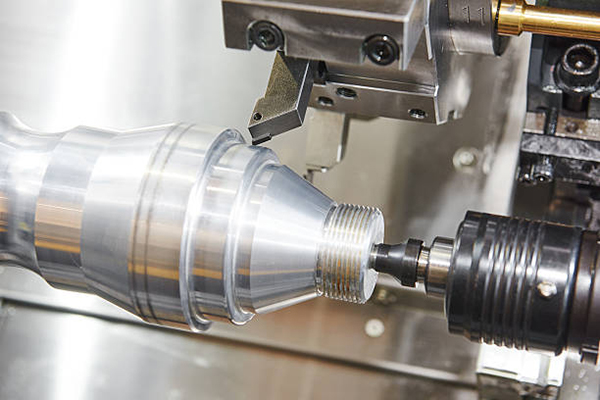
2. Advanced CNC Turning with Live Tooling and Sub-Spindle
Parts are completed in a single handling, preserving concentricity between thread and sealing features. Sub-spindle pick-off enables back-machining, allowing complex adapters to emerge fully finished without secondary lathes. For adapters requiring angled bore intersections, the team shifts to 5-axis machining, producing beautifully blended ports in one clamping.
3. In-House Post-Processing and Surface Treatments
Once machined, adapters often require deburring, passivation, anodizing, electroplating, or powder coating. GreatLight’s internal surface treatment lines ensure:
Uniform coating thickness on threads (no masking rework)
Proper hydrogen embrittlement relief for plated high-strength steels
Electro-polishing for sanitary fittings
4. Comprehensive Quality Inspection
A climate-controlled metrology lab equipped with CMM, optical comparators, profilometers, and thread gauges validates every critical dimension. First article inspection reports (FAIR) per AS9102 are standard for aerospace clients. Production parts undergo SPC monitoring, so you receive not just a good sample but consistent batch quality.
5. Data Security and IP Protection
In the age of digital manufacturing, protecting your design files is as important as physical quality. GreatLight adheres to ISO 27001 data security practices, ensuring your proprietary adapter geometries remain confidential. Many global R&D teams choose them specifically for this peace of mind.
Pain Points in the CNC Turning Supply Chain—And How GreatLight Solves Them
Through years of interacting with procurement engineers and product developers, I’ve identified recurring frustrations. Below I map them to GreatLight’s operational DNA:
“The prototype was beautiful, but the production batch had off-spec threads.”
Solution: ISO 9001:2015 system with IATF 16949-like process control for automotive-grade consistency. Every critical tool offset and in-process dimension is tracked, and tool life management prevents dull-insert-related deviation.
“Quotes were missing passivation or assembly costs; later charges skyrocketed.”
Solution: Full-process quoting that includes all finishing, sub-assembly, and packaging. No hidden fees.
“Our drawing required a custom thread and a 0.001” concentricity; only three shops in the world would quote it.”
Solution: With 127 pieces of precision peripheral equipment, including wire EDM for custom thread insert cutting, GreatLight can machine bespoke profiles while holding sub-10 µm true positions.
“Lead time kept slipping because the vendor outsourced plating and lost parts.”
Solution: In-house anodizing, electroplating, and even 3D printing for rapid jigs means the entire cycle is under one roof. The 76,000 sq. ft. facility streamlines scheduling, reducing typical conduit adapter delivery from 4 weeks to 10–14 days.
“The supplier couldn’t prove material compliance and didn’t understand our medical device QMS.”
Solution: ISO 13485 certification ensures strict change control, device master record alignment, and biocompatible processing—a must for surgical conduit adapters.
Comparing Leading CNC Turning Service Providers
The market is rich with options, but not all cater equally to precision conduit fitting adapter production. Below is an objective comparison highlighting where GreatLight Metal stands among its peers.
| Provider | 5-Axis CNC Turning Capability | Material & Finish Integration | Quality Certifications | Best Suited For |
|---|---|---|---|---|
| GreatLight Metal | Advanced multi-tasking with in-house 5-axis; one-done complex adapters | Full suite from milling to plating to assembly; single source | ISO 9001, IATF 16949, ISO 13485, ISO 27001 | Complex, high-precision adapters requiring traceability, finishing, and volume |
| Protocase | Primarily sheet metal & enclosures; limited turning | Minimal finishing integration | ISO 9001 | Quick-turn simple turned parts, not high-volume adapters |
| RapidDirect | Wide network of vetted workshops; broker model | Variable; not always integrated | Varies by sub-supplier | Prototypes when speed trumps consistency |
| Xometry | Broad platform with instant quoting | Dependent on partner factory | Partner-dependent; mixed quality | One-off adapters with looser tolerances |
| Fictiv | Strong DFM with global partners | Some finishing options | ISO 9001 (select partners) | Prototype and low-volume plastic adapters |
| Owens Industries | High-end 5-axis milling, but turning not core | Plating outsourced | AS9100, ISO 13485 | Aerospace structural parts, less turning focus |
| Heiko (formerly PartsBadger) | Quick-turn small production | Limited finishing | ISO 9001 | Simple adapters, fast turn |
GreatLight Metal’s unique value lies in its all-under-one-roof execution for turned parts. While competitors like Xometry or Fictiv rely on fragmented supply chains, GreatLight’s directly owned 127-unit machine park and in-house finishing lines dramatically reduce lead times and quality variance. This is critical when a single leaked adapter can ground an aircraft or halt a production line.
A Practical Success Story
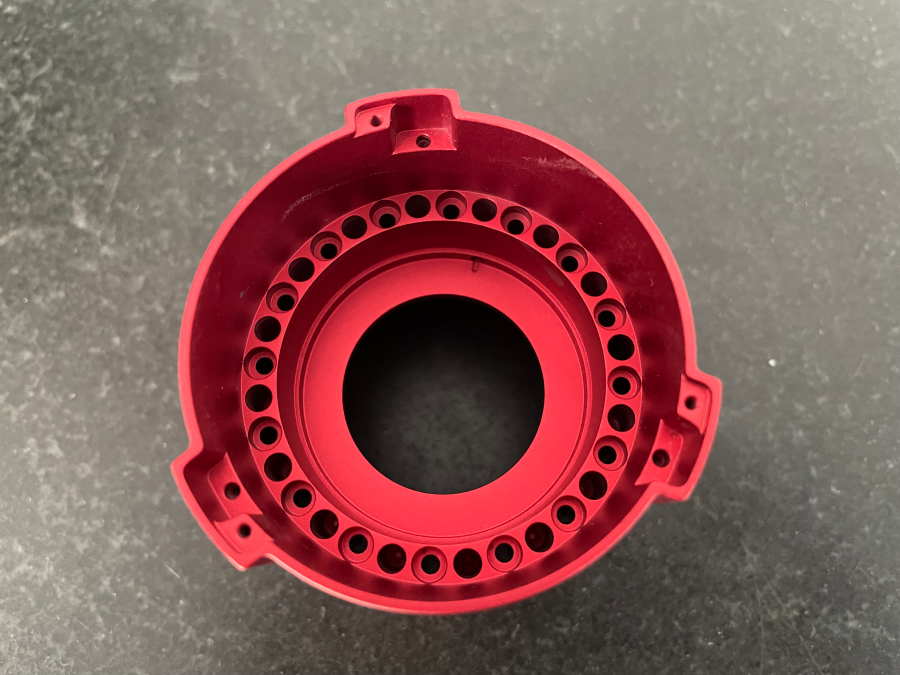
A medical device company developing a next-generation surgical irrigation system needed a family of 316L stainless steel barbed adapters with an integrated right-angle vent port. Initial samples from a local shop exhibited inconsistent O-ring groove surface finish and slight thread lead variations, causing leak-rate failures. The client approached GreatLight Metal for a re-engineering and production run.
GreatLight’s approach:
Converted the design to a single-setup operation on a Y-axis lathe with sub-spindle, eliminating the previous three-setup process.
Designed custom step drills to produce the vent cross-hole and deburr it in-situ.
Applied electropolishing to all wetted surfaces, achieving Ra 0.4 µm and ensuring smooth O-ring sealing.
Delivered a full PPAP package with SPC data and material certs within 3 weeks.
The result: 100% first-pass yield on a 5,000-unit order, and the client consolidated their adapter sourcing exclusively with GreatLight, reducing annual quality-related costs by 62%.
Choosing the Right Partner for Conduit Fitting Adapter CNC Turning
The decision goes beyond comparing hourly machine rates. Evaluate potential suppliers on:
Equipment age and calibration – old, worn spindles can’t hold tight thread tolerances.
Integrated finishing – ask whether plating or heat treatment is in-house; if not, who’s responsible when defects occur?
Quality management system maturity – look for at least ISO 9001, and if your industry is regulated, relevant certifications (IATF 16949, ISO 13485, AS9100).
Engineering support – a provider that suggests thread relief improvements or material swaps demonstrates long-term value.
Data protection – with cloud manufacturing proliferating, ISO 27001 compliance indicates your designs will not wander into a competitor’s hands.
GreatLight Metal Tech Co., LTD. checks all these boxes with a track record spanning over a decade. Their 76,000 sq. ft. facility in Dongguan’s Chang’an Town—the “Hardware and Mould Capital”—employs 150 skilled professionals, operates 127 precision machines, and serves industries ranging from humanoid robotics to automotive engines. For conduit fitting adapter CNC turning, this translates into reliable, repeatable, and competitively priced parts.
In the competitive landscape of precision manufacturing, finding a reliable partner for conduit fitting adapter CNC turning is not a trivial task—but with GreatLight’s proven quality infrastructure and full-process integration, it becomes a strategic advantage. Explore how their blend of technical expertise and international certifications can transform your next adapter project from a procurement headache into an engineering success.
GreatLight Metal on LinkedIn – follow them for insights and case studies.



















