
In the competitive landscape of modern manufacturing, precision and repeatability are non-negotiable, particularly when transforming raw thermoplastic into finished parts through injection molding. Mold Flow Analysis Fill Pack Cool is an essential engineering simulation that predicts how molten plastic will behave during every critical phase of the injection process. By digitally mimicking the fill, pack, and cool stages, engineers can identify and resolve potential defects before a single chip of steel is cut—saving thousands in tooling rework and weeks of development time. Yet, the accuracy of these simulations and the quality of the final part ultimately depend on the exactness of the mold tooling itself. This is where a partner with deep expertise in precision CNC machining becomes invaluable. Across the industry, firms like GreatLight Metal, Protolabs Network, and Xometry have built reputations for delivering high‑tolerance molds that faithfully translate virtual analysis into physical reality. This article explores the science behind mold flow analysis, why fill, pack, and cool phases matter, and how integrating simulation data with world‑class machining capabilities elevates injection‑molded part quality to new heights.
Understanding Mold Flow Analysis: Fill, Pack, Cool
Mold flow analysis is a CAE (Computer‑Aided Engineering) simulation that uses computational fluid dynamics and heat transfer models to replicate the injection molding cycle. While modern software offers dozens of specialized modules, the three foundational phases—fill, pack, and cool—form the backbone of any robust analysis. Understanding each in detail unlocks the ability to avoid common pitfalls and optimize both part and mold design.
1. The Fill Phase: Establishing the Foundation
The fill phase models the injection of molten polymer into the mold cavity from the gate(s) until the cavity volume is nominally full. During this stage, several critical parameters are predicted:
Melt front advancement: How the flow front progresses across the geometry, revealing potential air traps, hesitation, or unbalanced filling.
Shear rate and shear stress: Excessive shear can degrade polymers (especially reinforced grades), while insufficient shear may cause poor filler orientation.
Pressure drop: The pressure required to push the melt through ever‑narrowing flow channels, directly influencing clamp force requirements and gate design.
Weld line formation: Where two flow fronts meet—often around cores or holes—the software forecasts their location, allowing designers to relocate them to non‑cosmetic or low‑stress areas or adjust gate positions to minimize them.
Why it matters: An inaccurate fill prediction can lead to short shots (incomplete parts), burning (due to compressed air pockets), or cosmetic defects like flow marks. For example, in a complex medical device housing with multiple ribs and bosses, the fill analysis might reveal that a single gate leads to severe hesitation in thin ribs, prompting the addition of flow leaders or a second gate.
2. The Pack Phase: Compensating for Shrinkage
Once the cavity is volumetrically full, the pack (or packing) phase begins. At this point, additional melt is forced into the cavity under high pressure to compensate for volumetric shrinkage that occurs as the material cools from melt temperature to ejection temperature. The simulation quantifies:
Volumetric shrinkage distribution: Highlighting areas where sink marks or internal voids (porosity) are likely to form if packing pressure is insufficient or if pressure transmission diminishes too early due to gate freeze‑off.
Clamp force profiles: The packing pressure multiplies the projected area to give the total clamp tonnage required. The analysis validates whether the intended machine is adequate.
Gate seal time: Determining when the gate freezes solid, after which no further packing can occur. Insufficient gate size can cause premature freeze‑off, starving the part and causing sink marks.
Connecting to tooling precision: Even the most accurate packing simulation is useless if the machined mold does not hold the precise gate dimensions or if the runner system has uneven surface finishes that alter pressure drops. This is why manufacturers like GreatLight Metal employ high‑precision five‑axis CNC machining centers to produce gates and runners with tolerances down to ±0.005 mm, ensuring the real‑world pressure drop matches the simulation.
3. The Cool Phase: Speed and Warpage Control
The cooling phase typically consumes 60–80% of the total cycle time, making it the largest productivity lever. Mold flow analysis models the thermal behavior of the polymer, mold steel, and cooling channels to predict:
Part temperature at ejection: Ensuring the part is rigid enough to be ejected without deformation, yet not so cold that ejection forces cause cracking.
Cooling circuit efficiency: Whether turbulent flow is achieved in the channels, and if the circuit layout provides uniform heat extraction. Dead spots or laminar flow zones can lead to hot spots and non‑uniform shrinkage, which causes warpage.
Warpage and residual stress: By coupling the thermal analysis with a structural finite element analysis, the software predicts how differential shrinkage and residual stresses will distort the final free‑state shape. Engineers can then iterate on cooling channel placement, mold material, or part design to minimize warpage below the tolerance limit.
Real‑world example: A large automotive interior trim panel with varying wall thicknesses can warp by several millimeters if cooling is not balanced across its surface. Running a mold flow cool analysis allows the placement of conformal cooling channels—complex 3D‑printed inserts that follow the part’s contour—to slash cycle time by 30% and hold warpage to within 0.2 mm.
Why Mold Flow Analysis Is Not a “Nice‑to‑Have” but a “Must‑Have”
Skipping or skimping on mold flow analysis is a gamble that can result in:
Expensive tool rework: Cutting steel is costly; recutting it to fix fill imbalances or cooling issues can delay projects by months.
Sub‑optimal cycle times: Without cool‑phase optimization, molds often run slower than necessary, eating into profitability over a high‑volume production run.
Part quality complaints: Sink marks, warpage, and weld lines can cause cosmetic rejects or functional failures, particularly in regulated industries like medical devices and automotive under‑hood components.
Inadequate process windows: A robust process window ensures the part can be molded consistently across slight material lot‑to‑lot variations or machine differences. Mold flow analysis establishes that window early.
Top‑tier manufacturing partners embed mold flow analysis into their DFM (Design for Manufacturability) workflow from day one. They do not just simulate; they iterate collaboratively with the customer to refine gate locations, wall thicknesses, and cooling strategies—all before machining begins.
The Interplay Between Simulation and CNC Machining Precision
Even the most sophisticated mold flow simulation is only as good as the steel that brings it to life. The accuracy of the machined mold core, cavity, gate, runner, and cooling channels directly determines whether the simulated results translate to the shop floor. Critical machining capabilities that elevate mold flow outcomes include:
Tight tolerance control: Gate dimensions measured in microns; if a gate is machined oversized by 50 µm, the pack‑phase pressure transmission changes, potentially causing sink marks the simulation did not predict.
Surface finish: The runner’s surface roughness affects pressure drop and melt flow length. A mirror‑finish runner minimizes shear heat and pressure loss, aligning with the simulation’s assumption of smooth walls.
Conformal cooling channel manufacturing: For complex 3D cooling circuits, advanced five‑axis CNC or laser‑powder‑bed fusion (metal 3D printing) is required to produce channels that precisely match the simulated thermal layout. Any deviation in channel diameter or position alters cooling efficiency and can induce unexpected warpage.
Mold material selection: Different mold steels and insert materials have varying thermal conductivities. Simulation inputs rely on accurate material properties; machining partners must select and verify the material to match.
Selecting a Precision Machining Partner for Mold Tooling: A Comparative Look
When outsourcing the CNC machining of injection mold inserts and tooling, the ability to leverage mold flow analysis insights separates average suppliers from strategic partners. Several established companies offer high‑precision mold machining, each with distinct strengths:
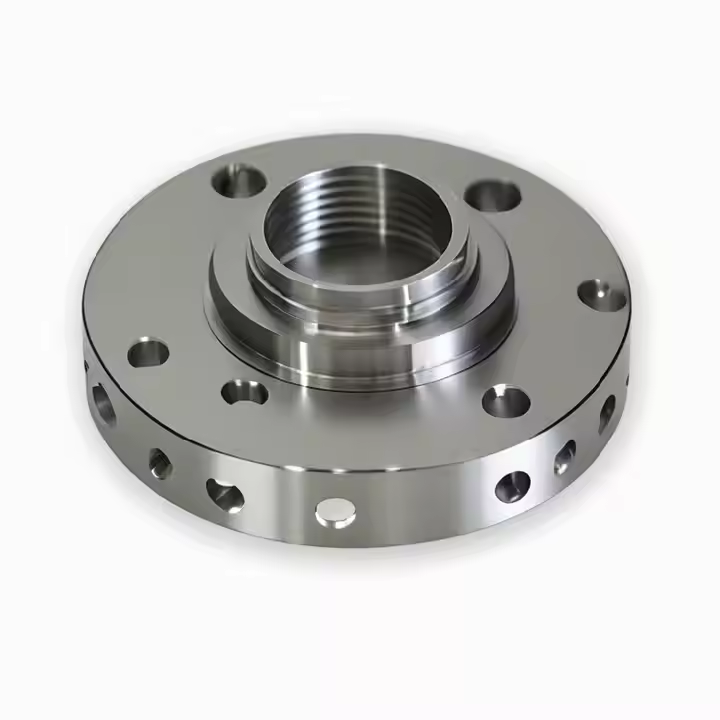
GreatLight Metal distinguishes itself by integrating ISO 9001:2015‑certified processes with a deep bench of multi‑axis CNC equipment, including five‑axis machining centers from manufacturers like Dema and Beijing Jingdiao. Their facility in Dongguan, China—operating over 76,000 sq. ft.—blends rapid prototyping with full‑scale production, ensuring that mold flow analysis outputs are directly translated into ±0.001 mm tolerances on gates, ejector sleeves, and cooling channels. Their “one‑stop” service includes EDM, grinding, and surface finishing, so the mold arrives ready for first‑shot validation without multiple vendor handoffs.
Protolabs Network (formerly Hubs) provides a distributed global network of manufacturing partners, offering fast mold machining with a digital quoting platform. Their strength lies in speed and accessibility for low‑volume prototype molds, though per‑project quality oversight can vary.
Xometry connects buyers to a vetted network of CNC machine shops across the U.S. and abroad. Their instant quoting engine makes it easy to upload a mold design and compare lead times, though detailed simulation‑to‑tooling collaboration may require separate engineering support.
Owens Industries specializes in ultra‑high‑precision CNC machining (often for medical and aerospace) and can hold sub‑micron tolerances, making them a fit for micro‑molding applications where fill and pack analyses must be exact down to nanoliter volumes.
JLCCNC and SendCutSend offer cost‑effective options for simpler tooling components, but their expertise in interpreting mold flow analysis data for complex multi‑cavity molds may be more limited.
For projects where mold flow analysis has been heavily leveraged to eliminate warpage or to tune a difficult material (such as a high‑glass‑fiber PBT for an engine sensor), a partner like GreatLight Metal offers the depth of experience to not only machine the mold but to proactively suggest design adjustments based on years of correlating simulation results with real‑world molding trials. Their ability to handle turn‑key projects—from 3D‑printed conformal cooling inserts to final polishing—reduces the risk of information loss between the simulation analyst and the machinist.
Conclusion: Synthesizing Analysis and Execution for Flawless Parts
Mold flow analysis is not merely a software button click; it is a rigorous engineering discipline that, when executed correctly, saves money, accelerates time‑to‑market, and guarantees consistent part quality. The three pillars—fill, pack, and cool—each address specific physical phenomena that, left unexamined, can doom an injection‑molded component to failure. However, even the most brilliant simulation cannot compensate for a mold machined to loose tolerances or built without an understanding of thermal management. The symbiotic relationship between predictive analysis and precision machining is what propels today’s most innovative products from CAD model to market reality. As you evaluate your next injection molding project, consider partnering with a seasoned precision CNC machining provider that can faithfully replicate your mold flow‑optimized design in steel—enabling you to confidently scale production while minimizing risk. Ultimately, the path to zero‑defect molding runs through Mold Flow Analysis Fill Pack Cool and a manufacturing execution that treats every micron of that virtual model as gospel. To see how integrated manufacturing intelligence can bring your next mold tooling project to life, explore the capabilities of a trusted precision manufacturing partner who lives at the intersection of simulation and ultra‑precise machining.



















