
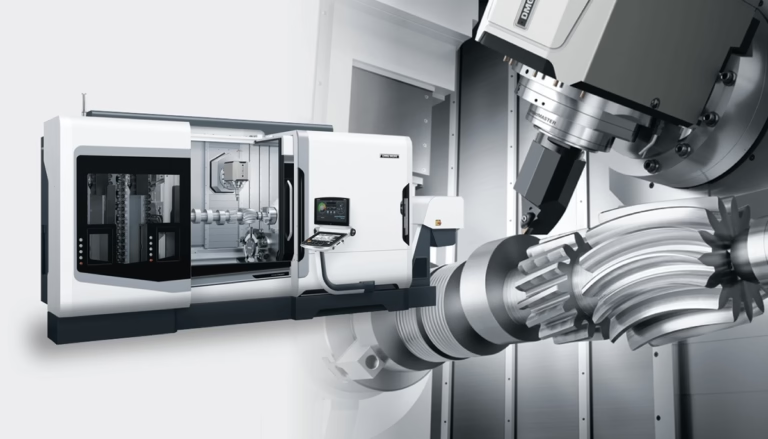
As a senior manufacturing engineer who has spent countless hours on the shop floor, I’ve learned that every precision component carries a story. It’s not just about cutting metal—it’s about transforming a raw concept into a tangible reality that performs perfectly in the harshest conditions. Today, I want to walk you through the CNC Machined Part Fabrication Process from a practitioner’s viewpoint, shedding light on the hidden steps that separate a good part from a flawless one. At GreatLight CNC Machining, we’ve refined this journey over more than a decade, but the fundamentals I’ll share apply to anyone who demands precision.
When a design drawing lands on my desk, I see more than dimensions and tolerances. I see the heartbeat of an application—perhaps a titanium bracket that will hold firm in a satellite, or a miniature manifold that will channel life-saving fluids in a surgical robot. The CNC machined part fabrication process is where engineering meets craftsmanship, and understanding it fully can save you from costly mistakes, endless delays, and that sinking feeling when a “finished” part doesn’t fit.
CNC Machined Part Fabrication Process
The CNC Machined Part Fabrication Process encompasses every activity from the moment a 3D model is received until the finished part passes final inspection and is ready to integrate into its larger assembly. It’s a chain of interdependent steps; a weakness anywhere breaks the promise of precision. Let’s break it down into the stages that matter most—stages I’ve personally seen make or break a project.
1. Design for Manufacturability (DFM) Review: Asking the Right Questions Before Chips Fly
You can have the most advanced 5-axis CNC machine in the world, but if the part design ignores machining fundamentals, you’ll struggle. A thorough DFM review examines:
Feature accessibility: Can the cutting tool reach every surface without colliding with the fixture or the part itself?
Tolerance stack-ups: Are tight tolerances only requested on truly functional surfaces? Over-specification drives up cost dramatically.
Material behavior: Does the chosen alloy exhibit stress relief or warping tendencies that require roughing-stress relieving-finishing sequences?
Tooling limits: Can standard tools achieve the required internal corner radii, or will custom form tools be necessary?
I recall a project where a startup delivered a beautifully rendered part of a drone camera housing. The DFM review revealed a deep pocket with a 90-degree internal corner—impossible to mill with a rotating tool. Rather than scrap the design, we proposed a small EDM electrode to burn that corner after milling. This collaborative back-and-forth saved weeks and preserved the design intent. At GreatLight, every order passes through this engineering lens because we know that fixing a design issue at this stage costs pennies compared to scrapping a machined part.
2. Material Selection and Raw Stock Preparation: The Foundation of Integrity
The machining process begins long before the machine powers up—it starts with the right material. I’ve seen identical programs produce scrap parts simply because the raw stock had internal voids or incorrect grain orientation.
Key considerations:
| Material Category | Common Alloys | Typical Applications | Machining Notes |
|---|---|---|---|
| Aluminum | 6061-T6, 7075-T6, 5083 | Aerospace frames, automotive components, consumer electronics housings | Excellent machinability; may require stress-relieving before finishing if thin-walled. |
| Stainless Steel | 304, 316L, 17-4PH | Medical instruments, marine hardware, food processing equipment | Work-hardening tendency demands sharp tools and consistent feed rates. |
| Titanium | Grade 5 (Ti-6Al-4V) | Orthopedic implants, aircraft structural parts, high-performance racing components | Poor thermal conductivity; requires low cutting speeds, high coolant flow, and rigid setups. |
| Engineering Plastics | PEEK, Ultem, Acetal | Medical device prototypes, electrical insulators, snap-fit components | Heat buildup can cause melting or dimensional instability; aggressive chip evacuation is crucial. |
| Tool Steels | D2, A2, H13 | Die components, molds, high-wear tooling | Often machined in annealed state, then heat-treated and finish-ground. |
A procurement manager once told me she sourced 316L brackets from a low-cost shop, only to have them crack during passivation. The root cause? The shop used bar stock with heavy surface defects. That’s why we insist on material certificates and, when the application is critical, ultrasonic testing before the first chip is cut.
3. CAM Programming: Translating Geometry into Motion
Computer-Aided Manufacturing (CAM) software is where the intelligence of the fabrication process resides. A skilled programmer doesn’t just generate toolpaths—they sculpt the way material is removed to maximize accuracy and tool life. I personally review toolpath strategies for complex parts, looking at:
Roughing vs. finishing passes: Roughing removes bulk material with high feed rates and larger stepovers, while finishing uses light cuts and high spindle speeds to hit final dimensions and surface finish.
Adaptive clearing: Modern toolpaths maintain constant tool engagement, preventing sudden load changes that can break cutters or introduce vibration.
Multi-axis simultaneous machining: For truly complex surfaces like impellers or medical components, 5-axis motion keeps the tool normal to the surface, drastically reducing cycle time and improving finish.
Tool selection: Every tool number in the program is chosen for a specific purpose—carbide end mills for rigidity, ball-nose cutters for 3D contouring, and specialized drills for deep holes.
We’ve invested seriously in this pillar. Our facility in Dongguan, the “Hardware and Mould Capital,” runs on advanced CAM platforms paired with rigorous post-processors tuned to our Dema and Beijing Jingdiao 5-axis machines. The nuance here is that a post-processor must be customized for each machine’s kinematics; a generic post will generate collisions or inaccurate motions. I’ve debugged enough programs to know that the invisible work here directly determines whether the part comes out five microns over or right on target.
4. Fixturing and Setup: Holding the Part Against the Storm
You cannot machine what you cannot hold. Fixturing is often the overlooked hero of precision CNC machining. A well-designed fixture:
Provides repeatable location within microns.
Rigidly supports the part to dampen vibration.
Allows access to as many faces as possible in a single setup, reducing cumulative error.
For a recent medical device housing that required 4-axis machining from multiple angles, we machined a custom aluminum soft jaw set in-house, holding the part in exactly the orientation needed. The alternative—multiple setups on a standard vise—would have accumulated at least 0.1 mm of positional error, which was unacceptable for that application. GreatLight’s in-house toolroom allows us to create these fixtures rapidly, which is a massive advantage when lead times are tight.
For larger parts, vacuum fixtures, magnetic tables, or dovetail fixtures may be used. The setup also includes dialing in the work coordinate system and compensating for any probe-detected discrepancies. Our operators use Renishaw probing systems to automatically measure stock alignment and adjust offsets, a step that I’ve insisted on for all high-tolerance jobs. Manual edge-finding simply cannot deliver the same consistency.
5. The Machining Dance: Roughing, Semi-Finishing, Finishing, and Multi-Axis Plays
This is the visible part, the dramatic removal of metal into precise geometry. But within that dance lies a deliberate choreography.
Roughing is aggressive. We push tools to their limits—high depths of cut, high feed rates—to hog out material quickly. The goal is to leave a consistent skin of material (usually 0.2–0.5 mm) for the finishing passes, so that any stresses induced by roughing are relieved before the final cuts.
Semi-finishing (optional) removes the irregular layer left by roughing and prepares a uniform surface for the finishing tool, especially on complex profiles.
Finishing is where the magic happens. Spindle speeds increase, feed rates decrease, and stepovers shrink—sometimes as small as 0.05 mm for mirror-like surface on aluminum. The entire machine must be thermally stable; we warm up our spindles for 20 minutes before finishing critical dimensions to avoid thermal drift. I’ve measured parts that changed 8 microns as the machine warmed from morning to midday. That’s a huge number when your tolerance band is ±0.01 mm.
Our 5-axis CNC machining capability truly shines in finishing complex geometries. With simultaneous motion, we can machine undercuts, compound angles, and deep cavities that would be impossible or require multiple complex setups on a 3-axis machine. For a humanoid robot’s lightweight aluminum hip joint, we used full 5-axis contouring to achieve both the organic shape and the bearing seat concentricity in a single setup, slashing production time by 60% compared to the client’s previous supplier.
6. In-Process and Post-Machining Inspection: Trust But Verify
Even the best CAM program is only theoretical until the part is measured. We deploy a multi-layer inspection strategy:
In-process probing: On-machine measurement of critical features immediately after finishing—if a tool has worn, we catch it before unclamping the part.
Coordinate Measuring Machine (CMM): After the part comes off the machine, it goes to the metrology lab. A bridge CMM with touch-trigger probe verifies dimensions against the 3D model, generating a full inspection report. For features smaller than what a stylus can access, we use vision measurement systems.
Surface roughness testing: A profilometer drags across a critical seal surface to ensure Ra 0.8 µm or better.
Material and nondestructive testing: For aerospace or medical orders, we coordinate with certified labs for dye penetrant, X-ray, or ultrasonic inspection as required.
I recall a batch of aluminum manifolds where our CMM detected a 0.02 mm taper in a bore that was supposed to be cylindrical. The on-machine probe hadn’t caught it because the probe stylus couldn’t reach deep enough. The root cause was minimal tool deflection in the long reach end mill. We adjusted the finish pass with a tapered compensation and resolved the issue. That level of vigilance is what our clients pay for, and it’s embedded in our ISO 9001:2015 certified process.
7. Post-Processing and Finishing: The Final Ascent to Perfection
Machining is rarely the end of the road. A raw machined part often needs surface treatment or additional processing to meet functional and aesthetic requirements. Our one-stop service encompasses:
Deburring and edge break: Every sharp edge is removed manually or by vibratory finishing, ensuring safe handling and proper fit.
Anodizing (Type II, Type III hard coat): Protects aluminum, adds color, and increases surface hardness. Type III hardcoat anodize can reach up to 60 HRC on the surface—critical for wear parts.
Passivation: For stainless steel, chemical passivation removes free iron and enhances corrosion resistance.
Electroless nickel plating: Provides uniform, corrosion-resistant coating on complex shapes, often used for oil & gas components.
Powder coating and painting: For aesthetic or protective layers.
Heat treatment: Stress relieving, annealing, or hardening to alter material properties.
Each finishing process may affect final dimensions. For example, hardcoat anodize adds 25–50 µm thickness, which we compensate for by machining slightly undersized. When a client orders a complete part from us—machined, anodized, laser-engraved, and assembled with threaded inserts—they don’t need to juggle multiple suppliers. That integrated approach is made possible by our 76,000 sq. ft. facility and 127 pieces of peripheral equipment all under one roof.
8. Final Inspection and Packaging: The Last Gate
Before any part leaves our facility, it passes through a final inspection gate. Unless a customer specifically waives it, every dimensioned feature is verified. We then apply appropriate corrosion protection, vacuum-seal delicate parts, and pack them in custom foam cutouts to survive the rigors of international shipping. I’ve heard horror stories of beautifully machined components arriving with dings because of inadequate packaging—that’s simply unacceptable.
The Human Element in the Fabrication Process
I’ve laid out the technical steps, but what truly elevates the CNC machined part fabrication process is the human element. Machines are precise, but people make them accurate. Our operators read the sound of a cut—a slight change in pitch can indicate tool wear. Programmers visualize the entire sequence like a chess game, anticipating potential collisions. Quality engineers interpret measurement data to spot trends before they become defects.
That’s why GreatLight’s team of 150 professionals matters. We’ve cultivated craftsmanship in a digital age. For instance, when a medical startup needed 50 units of a surgical instrument handle with ergonomic contours, our programmer spent two hours optimizing the finish toolpath to eliminate a witness mark that the cad model didn’t show but that would have been felt by the surgeon’s hand. That’s care beyond the drawing.
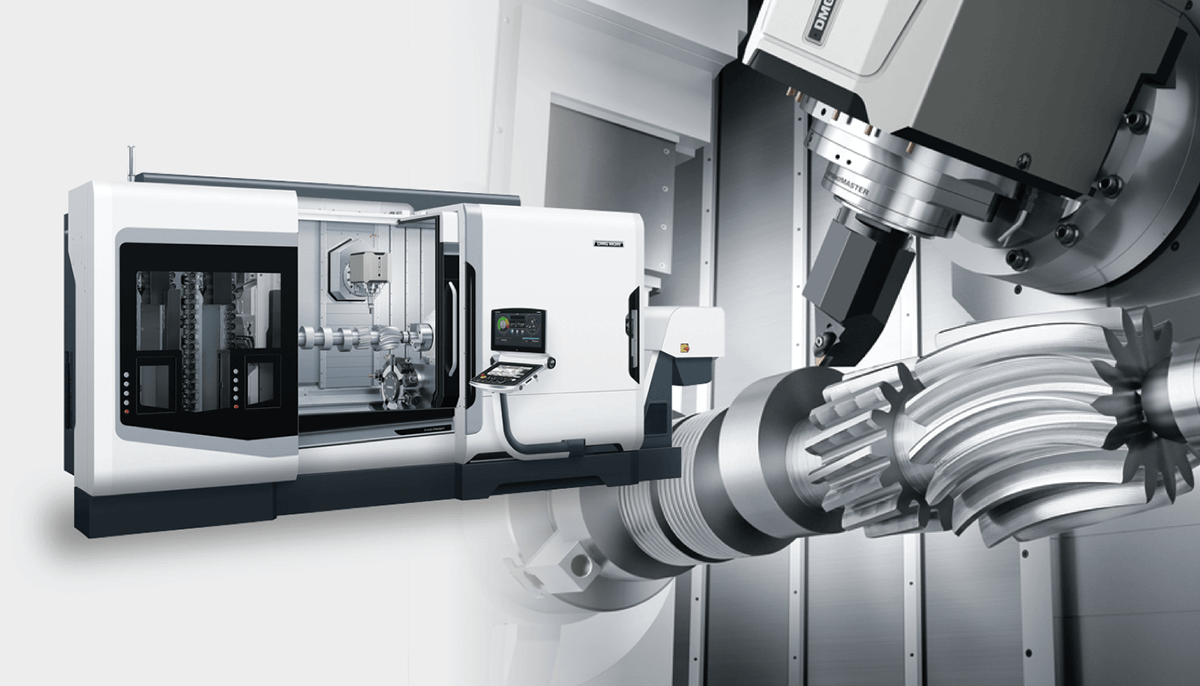
Choosing the Right Partner for the Journey
The CNC machined part fabrication process is not a commodity. You’re not just buying machine time; you’re entrusting your innovation to a team that must execute flawlessly. Here’s a snapshot of how GreatLight compares with other providers in the space on key factors:
| Capability Factor | GreatLight CNC Machining (Our Standard) | RapidDirect, Xometry (Typical Brokers) | Protolabs Network (Digital Manufacturing) |
|---|---|---|---|
| 5-Axis Machining Experience | In-house Dema and Jingdiao 5-axis centers; decade+ process knowledge | Relies on partner network; quality variable | Automated processes, limited complex multi-axis |
| Full Process Chain Integration | Machining, die casting, sheet metal, 3D printing, finishing under one roof | Mostly CNC machining, post-processing outsourced | Primarily additive & CNC, limited finishing |
| Certifications | ISO 9001, IATF 16949-compliant, ISO 13485 medical | ISO 9001 at some partner sites, less oversight | ISO 9001, not IATF or medical-centric |
| Engineering Support | Senior engineers perform DFM, in-house fixturing | Automated DFM, limited human consultation | Good automated DFM, less custom problem-solving |
| Tolerance Capability | Routine ±0.005 mm, can hold ±0.001 mm on critical features | Broad range depending on partner; ±0.05 mm more typical | Typically ±0.1 mm on metals, ±0.2 mm on plastics |
The table illustrates a fundamental divide: platforms like Xometry and Fictiv aggregate supply, which is excellent for low-complexity parts where price and speed dominate. However, when the part requires multi-axis precision, integrated post-processing, and dedicated engineering oversight, a specialized full-service manufacturer like GreatLight—and to a degree, vertically integrated houses like Owens Industries or RCO Engineering—offer a fundamentally different value. It’s the difference between renting a general toolkit and hiring a master craftsman with a dedicated workshop.
A Typical Journey: From Napkin Sketch to Product Reality
Let me share a real slice of life from our workshop. A few months ago, a client in the renewable energy sector approached us with a concept for a high-pressure valve body. The material was duplex stainless steel—hard, abrasive, and prone to work-hardening. The geometry included intersecting deep bores with seal surfaces that required concentricity within 0.01 mm.
We began with a conference call: the engineer (me), the client’s design lead, and our CAM programmer. We identified that the original design would require a custom-form drill with a long overhang, leading to deflection. We proposed a slight modification to the internal porting that maintained flow characteristics but allowed access from both ends, drastically simplifying machining.
Once the design was locked, we programmed the part for 5-axis positioning, cutting all angular features in a single setup. The roughing removed 80% of material on a turning center first, then the 5-axis mill finished the critical bores. We used a CMM to verify the coaxiality, and after the client’s approval, we sent the valve bodies out for electroless nickel plating to resist corrosion in a marine environment. The entire process—from first contact to delivery of 20 units—took three weeks. The client later told me that their previous supplier took eight weeks and still had concentricity issues. This is the tangible impact of mastering the CNC machined part fabrication process.
Embracing the Future of Precision Fabrication
As technologies like machine learning-based tool wear prediction and hybrid additive-subtractive manufacturing mature, the CNC machined part fabrication process will become even more adaptive. However, the core truth remains: the process is only as good as the collective expertise of the people managing it and the equipment at their disposal. At GreatLight, we’re continually investing—not just in the latest 5-axis CNCs or 3D printers, but in the training that turns a good machinist into an exceptional one.
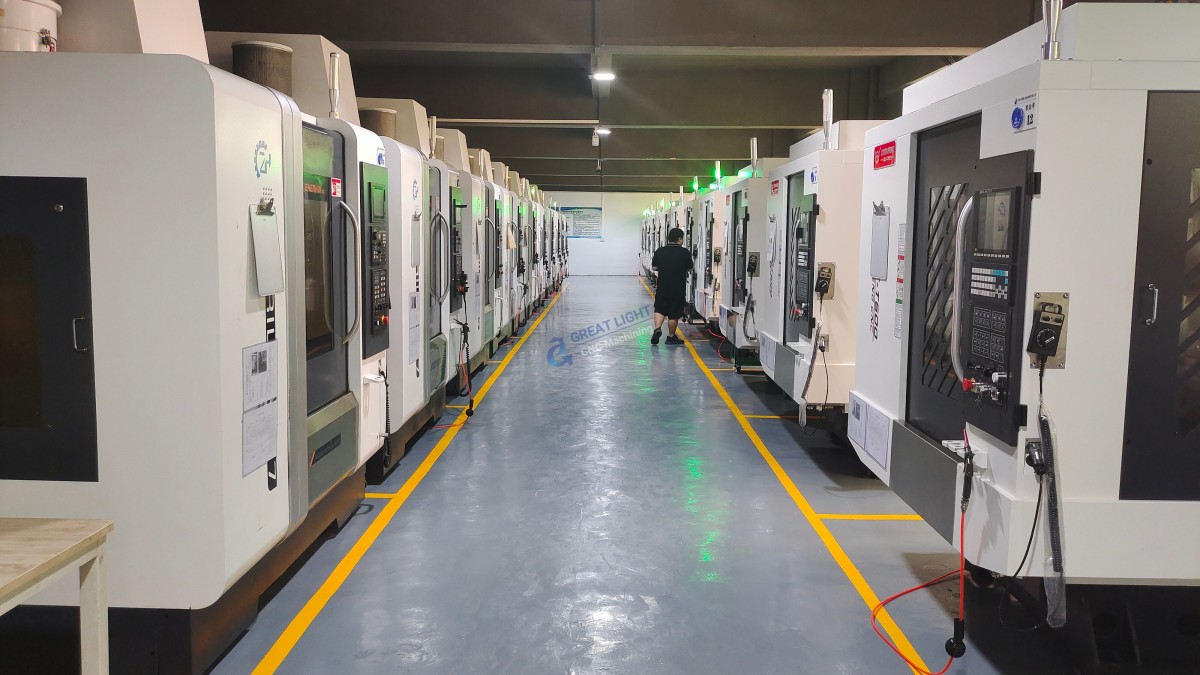
For anyone reading this, whether you’re a procurement engineer sourcing complex housings or a startup founder with a groundbreaking idea, I encourage you to look beyond the surface price. Visit your potential supplier’s facility (even virtually). Ask about their inspection reports. Inquire how they handle a ±0.005 mm true position callout. The answers will tell you everything you need to know about their mastery of the CNC Machined Part Fabrication Process.
Ultimately, every successful product I’ve helped bring to life—from life-saving surgical tools to high-performance automotive components—has one thing in common: a fabrication process that was treated not as a checklist, but as a craft. That’s the philosophy we live by at GreatLight CNC Machining, and it’s the only way I know to turn precision demands into undeniable reality.



















