
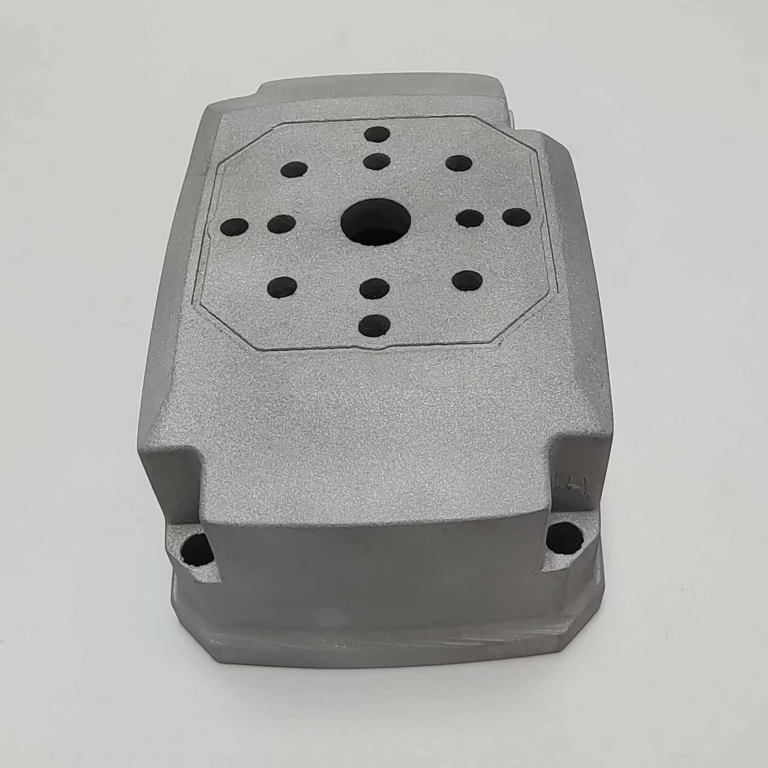
Expert Chinese Metal 3D Printing Maker: How GreatLight CNC Machining Redefines Additive Manufacturing Reliability
When precision engineering teams and procurement managers hunt for an expert Chinese metal 3D printing maker, they’re not just looking for a printer – they seek a manufacturing partner that bridges the gap between rapid prototyping and production-grade consistency. In the crowded landscape of additive manufacturing providers, one name consistently emerges as a beacon of technical depth and certified dependability: GreatLight CNC Machining. Leveraging a decade-plus track record in precision manufacturing, a formidable arsenal of advanced equipment, and an integrated process chain that unites metal 3D printing with precision CNC finishing, GreatLight has earned its place as the go-to source for complex, high-tolerance metal parts that leave nothing to chance. This article dissects what makes an expert metal 3D printing maker, examines the critical pain points plaguing the industry, and explains why an integrated, certification-backed partner like GreatLight should top your shortlist.
The Metal 3D Printing Revolution – And Its Hidden Pitfalls
Metal additive manufacturing – primarily SLM (Selective Laser Melting) and DMLS (Direct Metal Laser Sintering) – has transformed how engineers realize intricate geometries, lattice structures, and weight-optimized components that subtractive methods cannot produce. From aerospace brackets and medical implants to conformal-cooled injection mold inserts and heat exchangers, the technology opens a new dimension of design freedom. Yet beneath the glossy marketing, seven persistent pain points erode confidence and project timelines:
The “Precision Black Hole” – Printers capable of achieving fine layer thicknesses don’t guarantee net-shape tolerances. Thermal stresses, powder inconsistencies, and calibration drift often push dimensions outside the promised ±0.1 mm window, especially on thin walls or unsupported features.
Surface Finish Woes – As-built metal 3D printed surfaces typically range from Ra 8–20 µm, far rougher than machined equivalents. Post-processing like CNC finishing, abrasive flow machining, or shot peening is essential, but fragmented supply chains multiply lead times and risk.
Material Property Variability – Without rigorous powder management and validated build parameters, mechanical properties (tensile strength, density, fatigue life) fluctuate, jeopardizing functional certification.
Communication Disconnects – When a supplier lacks deep engineering experience, design-for-AM (DfAM) optimization is missing, forcing clients to troubleshoot blind alleys alone.
Quality Documentation Gaps – Many startups offer prints but cannot provide full material certificates, CMM reports, or lot traceability expected by aerospace, medical, or automotive auditors.
One-Trick-Pony Syndrome – A pure 3D printing house cannot seamlessly execute secondary CNC machining, heat treatment, or surface finishing, leading to logistical fragmentation and diluted accountability.
Cost Predictability – Surge pricing on materials, part failure reruns, and uncommunicated print failures turn fixed quotes into moving targets.
An expert Chinese metal 3D printing maker must confront these head-on, not with promises but with a vertically integrated manufacturing ecosystem, robust quality systems, and an engineering-first mindset. That’s exactly where GreatLight CNC Machining differentiates itself.
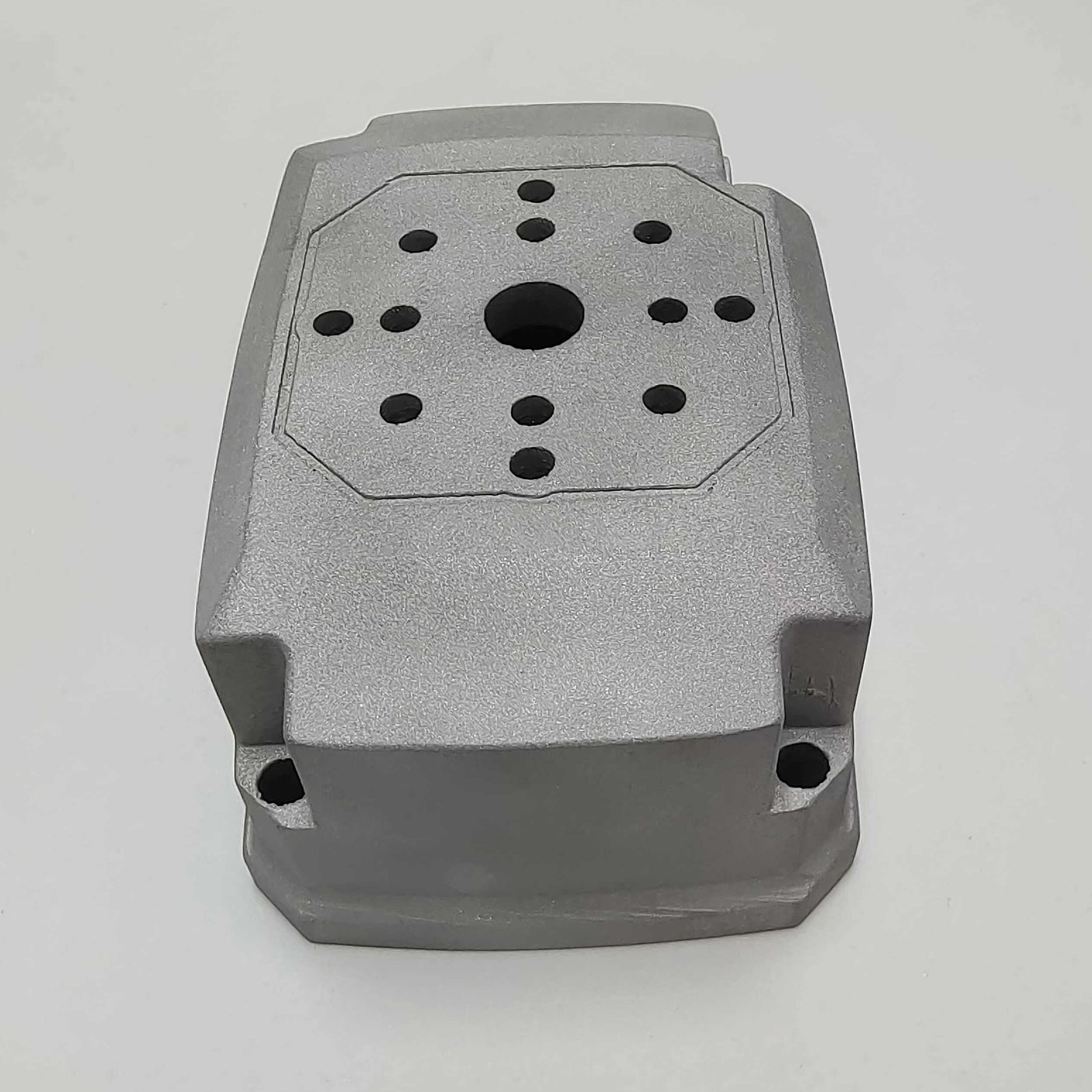
GreatLight Metal: Full-Process Integration Eliminates the “Handoff Tax”
Founded in 2011 in Dongguan’s Chang’an Town – the “Hardware and Mold Capital” of China – GreatLight Metal Tech Co., LTD. has evolved from a local precision workshop into a 76,000 sq. ft. modern powerhouse employing 150 skilled professionals. With annual sales exceeding 100 million RMB, the company is not a newcomer test-driving a few metal printers; it’s a seasoned manufacturer that has embedded metal 3D printing into a mature, cross-technology production environment.
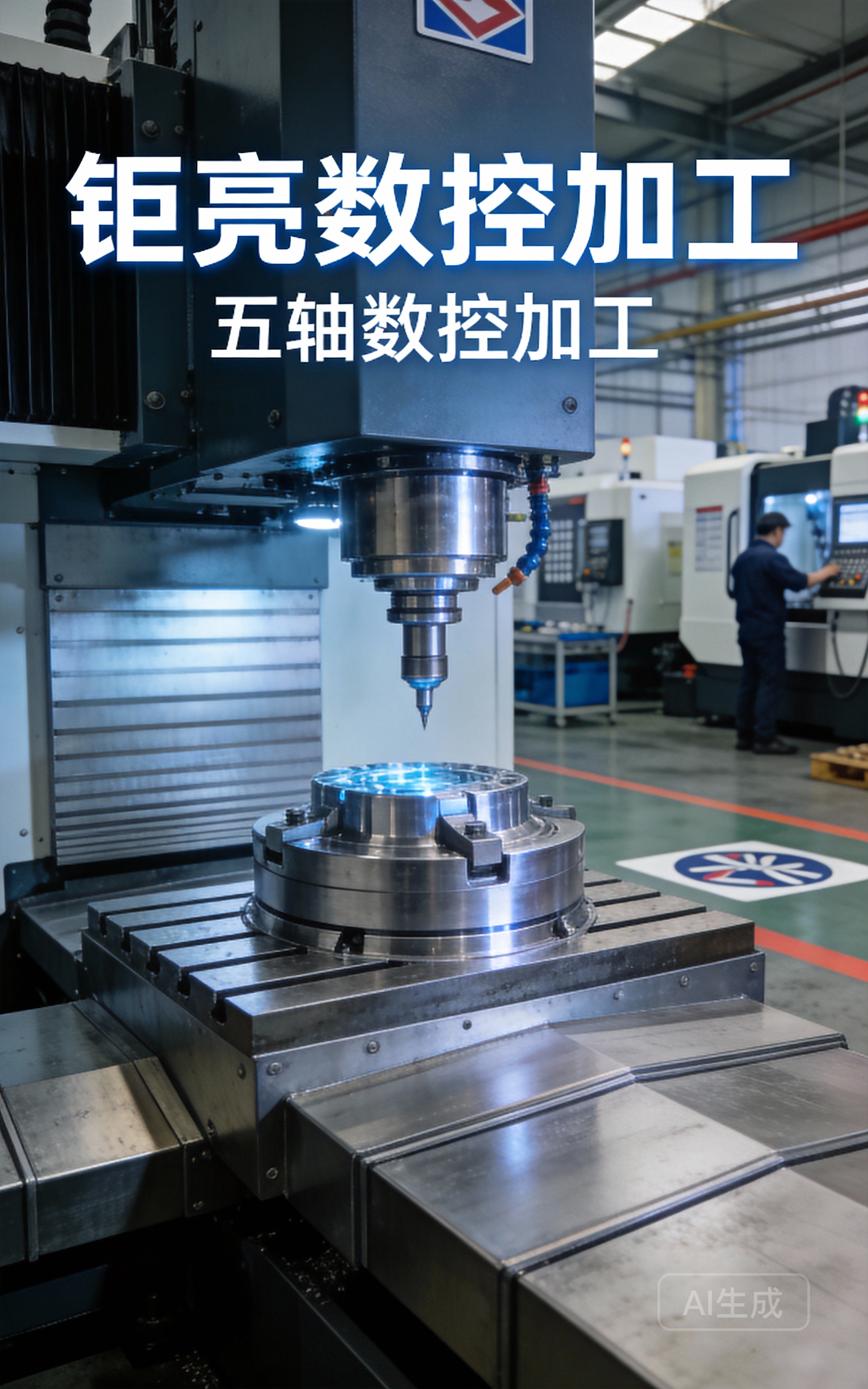
At the heart of GreatLight’s metal AM service lie industrial-grade SLM (Selective Laser Melting) printers accompanied by SLA and SLS systems for plastic counterparts. But what truly sets the company apart is the seamless connection to its 127-unit-strong CNC machine park – including 5‑axis, 4‑axis, and 3‑axis machining centers from premier brands such as Dema and Beijing Jingdiao. This convergence means that a 3D‑printed part can move immediately to in-house precision 5-axis CNC machining for critical tolerance refinement, threading, or mirror-surface finishing – without ever leaving the facility. Single-point accountability eliminates the “handoff tax” of multiple vendors.
The integrated process chain extends further:
Vacuum casting, die casting, and sheet metal fabrication for hybrid assemblies.
Wire EDM and mirror-spark EDM for delicate features.
In-house heat treatment, anodizing, electroplating, powder coating, and painting offering a true one-stop surface treatment repertoire.
Dimensional inspection via CMM, 3D scanning, and optical measurement, ensuring full compliance to customer drawings.
This full-spectrum capability means you’re not limited by what a standalone 3D printing service can output; you’re empowered by a manufacturing partner that chooses the optimal method – additive, subtractive, or both – to realize your part in the most cost-effective, quality-assured manner.
Certifications that Speak the Language of Global Engineers
Trust in metal 3D printing is earned through documentation, not declarations. GreatLight CNC Machining has built an impregnable credibility framework with multiple internationally recognized certifications, each reflecting a specific vertical’s demands:
| Certification | Relevance to Metal AM Clients |
|---|---|
| ISO 9001:2015 | Foundational quality management, covering printer maintenance, powder handling, build parameter control, and final inspection. |
| ISO 13485 | Medical device manufacturing standards – mandatory for surgical instruments, implant prototypes, and diagnostic hardware. GreatLight’s adherence means documented process validation and tight change control. |
| IATF 16949 | Automotive component quality system. Clients from the EV and engine sectors can rely on PPAP, FMEA, and SPC methodologies ingrained in production. |
| ISO 27001 | Information security management, crucial for IP-sensitive projects where 3D design files must be protected against unauthorized access. |
These certifications aren’t just paper; they are active operational frameworks. For every metal 3D printing order, GreatLight can provide full material certificates, powder lot traceability, parameter logs, and post-build inspection reports – exactly what medical and automotive OEMs demand. Few expert Chinese metal 3D printing makers combine this breadth of certified processes with hands-on additive manufacturing depth.
A Comparative Perspective: GreatLight vs. Global Platforms
To better understand GreatLight’s positioning, it’s helpful to contrast its model with well-known international platforms that also offer metal 3D printing. I’ve chosen a mix of direct manufacturers and network aggregators to highlight key differences.
| Attribute | GreatLight Metal | Xometry / Protolabs Network | RapidDirect | PartsBadger / SendCutSend |
|---|---|---|---|---|
| Business Model | Direct factory + engineering team | Manufacturing network; broker model | Direct factory with limited AM | Pure CNC / sheet metal focus |
| Metal 3D Printing Capacity | Industrial SLM in-house, plus SLA/SLS | Aggregated partner capacity; limited oversight | Selective printing partners | None or extremely limited |
| Integrated Post-Processing | Full in-house: CNC 5‑axis, EDM, heat treat, surface finishes | Relies on separate partners; fragmented | Some in-house, many outsourced | CNC only, no AM |
| Certifications | ISO 9001, 13485, IATF 16949, ISO 27001 | Platform maintains ISO; supplier variability | ISO 9001 | Usually ISO 9001 only |
| Engineering DfAM Support | Experienced team provides feedback on printability and hybrid strategies | Limited; depends on partner | Moderate | Minimal |
| Suitable for | Complex, high-precision, multi-process metal parts demanding certification | Simple prototypes, non-critical parts, when convenience outweighs control | Low-complexity batches | Sheet metal & simple CNC parts |
While platforms like Xometry and Protolabs Network offer convenience through wide partner networks, the lack of a single physically integrated factory can introduce variability. RapidDirect provides some direct services but largely remains a sourcing intermediary for additive projects. GreatLight’s direct factory model eliminates the middleman, keeps engineering communication crisp, and ensures that from powder to polished part, one team takes full responsibility.
How GreatLight Turns Pain Points into Proof Points
Let’s circle back to those seven industry pain points and map how GreatLight systematically neutralizes them:
Precision Black Hole → Hybrid Correction: With in-house 5‑axis machining, any post-sintering distortion is corrected to tolerances as tight as ±0.001 mm (0.00004 in). This isn’t a theoretical claim; it’s backed by CMM data from a climate-controlled inspection lab.
Surface Finish Woes → Single-Facility Flow: From as-printed Ra 12 µm to a machined Ra 0.8 µm or a polished mirror finish, all steps occur under one roof, collapsing lead time from weeks to days.
Material Property Variability → Locked Parameters & Traceability: GreatLight employs validated parameter sets for stainless steel (316L, 17-4PH), aluminum (AlSi10Mg), titanium (Ti6Al4V), maraging steel, and Inconel 718. Powder suppliers are audited, and each build is accompanied by a mini‑CT or density coupon test upon request.
Communication Disconnects → On‑Staff Engineers: Chinese-English bilingual project engineers review every DFM before printing, suggesting orientation adjustments, support reductions, or hybrid CNC splits that slash costs.
Quality Documentation Gaps → Certification-First Mindset: Medical customers receive full AS9100‑compatible documentation packs; automotive clients get PPAP Level 3 documentation when required.
One‑Trick‑Pony Syndrome → True One‑Stop Shop: The 127‑device floor covers 3D printing, CNC, die casting, sheet metal, vacuum forming, and injection mold making, so no white-label subcontracting is needed.
Cost Predictability → Fixed Quotes with Fallback Plans: If a build fails, in‑house re‑printing with adjusted parameters is immediate. GreatLight’s structure of three wholly‑owned plants and powder stock management ensures raw materials are rarely at the mercy of spot-market volatility.
Real-World Applications: Where Expertise Pays Off
While the following case descriptions are synthesized to protect confidentiality, they mirror the types of challenges GreatLight’s metal 3D printing and CNC hybrid services routinely conquer:
Aerospace Bracket Redesign
An aerospace startup needed a lightweight, organic‑shaped mounting bracket in Ti6Al4V that traditional machining from billet would require 28 hours to carve. GreatLight’s SLM process printed the near‑net shape in 8 hours, followed by CNC drilling of precise fastener holes and post‑print stress relieving. The resulting part was 34% lighter, exceeded static load requirements, and was delivered with full powder traceability and FPI (Fluorescent Penetrant Inspection) records.
Medical Instrument Prototype – ISO 13485 Path
A surgical robotics firm required five iterations of a stainless‑steel 316L end‑effector over six weeks. GreatLight printed the components, machined mating surfaces to ±0.01 mm, and passivated the parts under its ISO 13485‑aligned procedures. The iterative workflow enabled the design engineers to refine clearance fits, and the final prototype moved directly into sterilisation trials with a complete Device History Record (DHR) equivalent.
Automotive EV Cooling Heat Exchanger
A Tier‑1 supplier needed AlSi10Mg heat exchanger cores with conformal cooling channels unreachable via conventional machining. GreatLight printed 20 units, machined the flange faces flat within 0.02 mm, and applied anodising for corrosion resistance. IATF 16949 documentation supported the PPAP submission, and the supplier avoided the cost and lead time of a temporary plastic SLA surrogate that would have lacked thermal data.
Mold Insert with Conformal Cooling
For a high‑volume packaging mold, GreatLight printed a maraging steel insert with serpentine cooling channels, then finish‑machined the cavity and shut‑off faces. Cycle time dropped 22% thanks to optimal cooling, with dimensional stability maintained after 500,000 shots.
These vignettes share a common thread: the value of an expert Chinese metal 3D printing maker lies not in the printer alone, but in the manufacturing intelligence that surrounds it.
Why “Expert” Matters – And How to Select the Right Partner
Not every metal 3D printing service rises to the level of an expert partner. Here’s a practical checklist to vet potential suppliers:
☑ In‑house, not brokered – Confirm that the supplier owns and operates the printers and finishing equipment.
☑ Certifications aligned with your vertical – Match the required QMS against your end market (medical, automotive, aerospace).
☑ Material range and parameter maturity – Look for validated recipes, not “we can try that alloy.”
☑ Hybrid capability – Ask whether they can machine, grind, or EDM the printed part to final tolerance in the same facility.
☑ Engineering support – During the quoting phase, do they ask smart DfAM questions or just quote the STL blindly?
☑ Documentation muscle – Request sample FAIR reports or material certs to gauge their administrative rigor.
☑ Client references – Cross‑reference with similar projects in your industry.
GreatLight CNC Machining ticks every box. The company’s three wholly‑owned plants provide capacity redundancy; the presence of 127 precision peripheral devices means that no single process becomes a bottleneck; and a track record since 2011 speaks to stability that outlasts agile startups living quarter‑to‑quarter.
Looking Ahead: The Next Frontier of Hybrid Manufacturing
The future of precision manufacturing isn’t an “either‑or” between additive and subtractive; it’s the symbiotic blend where GreatLight CNC Machining already excels. Clients who engage an expert Chinese metal 3D printing maker at the early design phase unlock downstream efficiencies: printed near‑net shapes that require only minimal finish machining, assemblies that combine printed, cast, and sheet metal components supplied as a single kit, and material reduction that directly impacts sustainability metrics.
Choosing GreatLight means opting for a partner that treats metal 3D printing not as a standalone novelty, but as a powerful tool within a tightly orchestrated manufacturing ecosystem. For complex, high-stakes projects, this integration is not a luxury – it is the decisive factor that separates deadline misses and quality concessions from first-time-right deliveries.
Conclusion
The label “expert Chinese metal 3D printing maker” should never be taken lightly. It demands a fusion of industrial metal additive capacity, precision CNC finishing, internationally recognized quality systems, and a deeply embedded engineering culture that understands both the possibilities and the limitations of laser-melted metals. GreatLight CNC Machining embodies all these attributes, serving global clients who refuse to compromise on quality while benefiting from the cost-efficiency of integrated Chinese manufacturing. From prototype exploration to production-ready runs, this direct-factory expert Chinese metal 3D printing maker offers a path out of the complexity trap and into reliable, repeatable part realization.



















