
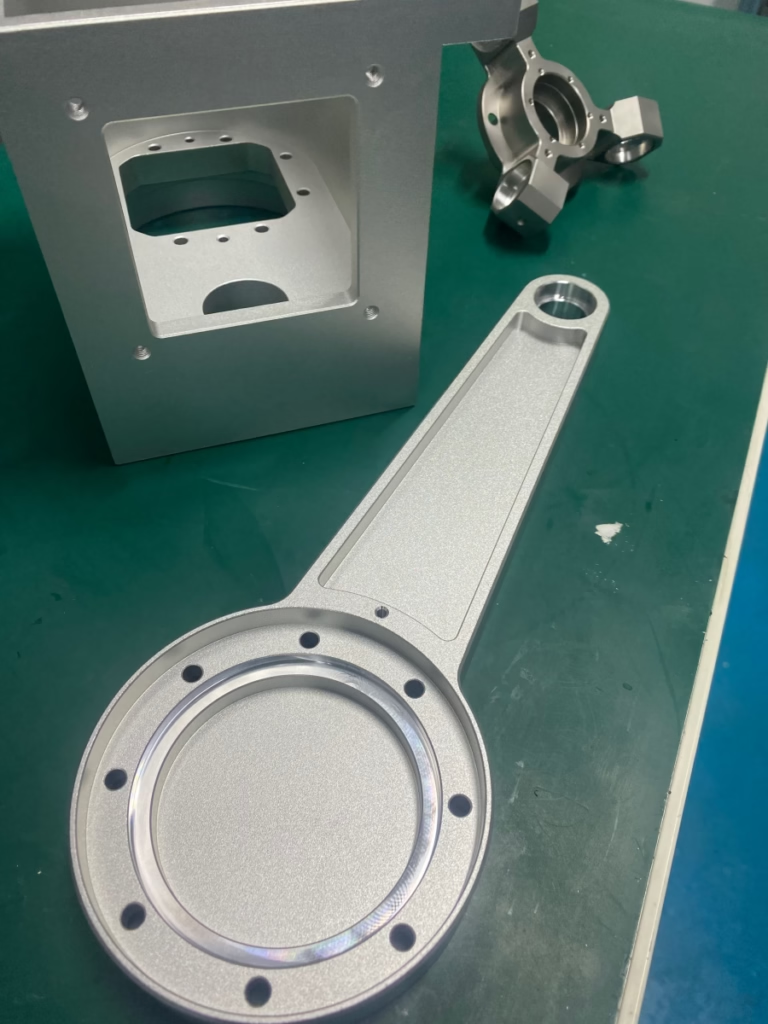
Design Driven ODM Metal Die Casting ODM is rapidly emerging as a pivotal strategy for companies that need to accelerate product innovation while maintaining uncompromising quality and cost efficiency. This integrated approach fuses expert-industrial design input directly with original design manufacturing (ODM) for metal die casting, enabling engineers and procurement teams to bypass the traditional fragmentation between conception, tooling, and production. By embedding design-for-manufacturability (DFM) expertise from the earliest sketch, an ODM partner can eliminate costly iterations, shorten lead times, and dramatically improve part performance. At GreatLight CNC Machining Factory, this philosophy is not just a buzzword—it has been honed over a decade of delivering complex, high-precision cast parts for industries ranging from automotive and medical devices to humanoid robotics and aerospace.
Understanding the Core of Design Driven ODM Metal Die Casting ODM
Metal die casting has long been the backbone of high-volume production for parts that require excellent dimensional stability, fine surface finishes, and robust mechanical properties. Traditional die casting supply chains, however, often suffer from a sequential “over-the-wall” process: a product design is thrown to a toolmaker, who builds a mold based on the CAD file without sufficient dialogue about flow dynamics, gating, or thermal management. The result can be a cascade of reworks, delays, and inflated costs.
Design Driven ODM Metal Die Casting ODM fundamentally flips this model. Here, the manufacturing partner takes ownership of both design optimization and production under one roof. This means that before a single aluminum or zinc ingot is melted, experienced engineers analyze the part geometry for castability, suggest alloy alternatives, simulate mold filling, and optimize the tooling layout. The ODM provider then manufactures the mold, produces samples, handles secondary operations, and can even manage final assembly and finishing—all through a single point of accountability.
For OEMs and hardware startups, this model delivers three game-changing advantages:
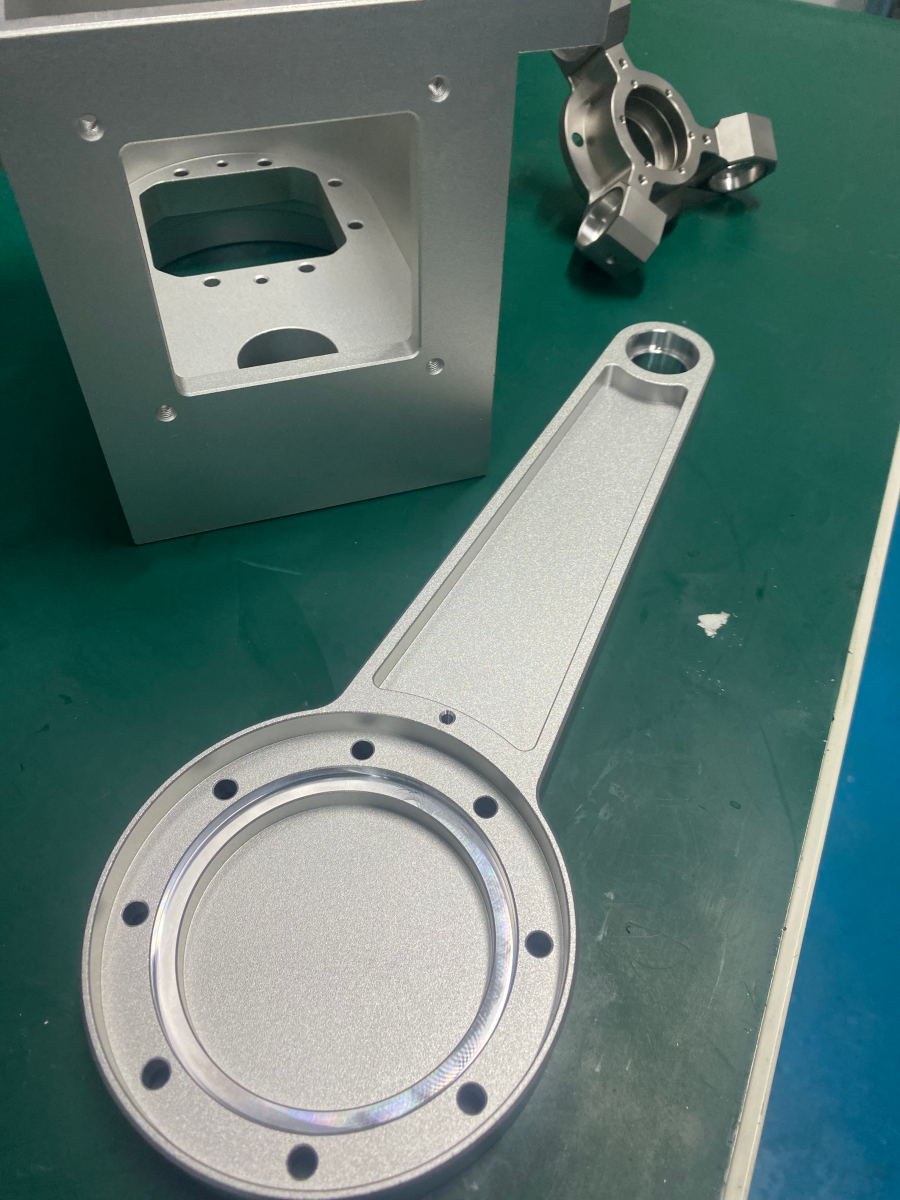
Accelerated Speed-to-Market: Parallel engineering eliminates the typical back-and-forth between design house, toolmaker, and foundry.
Lower Total Cost: DFM-driven design changes prevent post-tooling modifications, reduce scrap rates, and extend tool life.
Superior Part Quality: The casting process is tuned precisely to the finalized design, ensuring consistent density, surface finish, and dimensional accuracy across thousands of shots.
GreatLight CNC Machining Factory has embedded this design-driven ODM philosophy into every facet of its 76,000 sq. ft. manufacturing ecosystem. The company’s cross-functional teams—bridging product design, mold flow analysis, precision machining, and surface treatment—work in a synchronized rhythm. This harmony is a major reason why clients in electric vehicle power electronics, surgical robotics, and industrial automation choose GreatLight as their long-term development partner.
Why Traditional Die Casting Supply Chains Fall Short
To fully appreciate the value of a design-driven ODM approach, it’s helpful to benchmark against the challenges inherent in conventional multi-vendor workflows. Even when brands like Xometry and Protolabs Network excel at aggregating capacity from a broad supplier base, the fragmentation can create friction when deep, iterative design collaboration is needed. Similarly, RapidDirect and Fictiv offer quick-turn CNC and 3D printing, but their die casting services often rely on an extended network, which can obscure direct engineering dialogue.
Here are the most common pain points that a consolidated Design Driven ODM Metal Die Casting ODM framework solves:
Disjointed DFM Feedback: When the tooling shop operates independently, design feedback often arrives too late, after significant money has been spent on prototyping.
Unclear Intellectual Property Boundaries: Multiple handoffs increase the risk of drawing misuse or version control errors.
Process Incompatibility: The surface finish achievable by the foundry might not match the requirements of subsequent electroplating or powder coating, leading to rework.
Long Lead Time Accumulation: Tool design → tool fabrication → sampling → secondary machining → finishing – when each step is handled by a different entity, the total calendar time balloons.
GreatLight’s in-house ODM model directly neutralizes these risks. From day one, a single process owner coordinates the entire value stream. For example, if a medical device company needs a hermetically sealed magnesium housing, GreatLight’s engineering team will concurrently design the mold cooling strategy, plan the 5-axis CNC post-machining of critical bores, and validate the biocompatible passivation process—all before the first steel is cut.
How GreatLight Executes Design Driven ODM Metal Die Casting ODM
GreatLight’s approach rests on four tightly integrated pillars:
1. Co-Development Engineering
Unlike simple contract manufacturers that wait for a frozen design, GreatLight deploys senior tooling and process engineers during the concept phase. Using advanced simulation software (such as MAGMASOFT or similar tools), they model metal flow, solidification, and air entrapment to preempt porosity or shrinkage defects. The design is then adjusted—ribs are thickened, draft angles corrected, and gating positions strategically relocated—without compromising the product’s functional intent.
2. In-House Mold Manufacturing Powered by Advanced CNC
The heart of any die casting project is the mold. At GreatLight, the mold base and cavity inserts are manufactured entirely on-site utilizing a fleet of 127 high-precision machines, including large-format 5-axis, 4-axis, and 3-axis CNC machining centers, as well as wire EDM and mirror-spark EDM machines. This internal capacity ensures that the critical geometry of the die captures every intricate detail of the co-developed design. In particular, precision 5-axis CNC machining allows complex undercuts, conformal cooling channels, and precise shut-off surfaces to be machined in a single setup, greatly enhancing mold accuracy and lifespan.
3. Full-Process Manufacturing Ecosystem
GreatLight’s service portfolio extends far beyond the die casting cell. Under one 7,600-square-meter roof, the factory conducts:
Molten metal processing (aluminum, zinc, magnesium alloys) on modern cold-chamber and hot-chamber die casting machines.
CNC turning and milling for secondary operations, including thread milling, precision boring, and face grinding.
Vacuum casting for hybrid prototyping.
Sheet metal fabrication for mating enclosures.
Additive manufacturing (SLM 3D printing for stainless steel, aluminum, titanium, and mold steel; plus SLA and SLS) for prototype or conformal-cooled die inserts.
A comprehensive in-house finishing department offering anodizing, electroplating, powder coating, painting, chemical etching, laser marking, and more.
This full-chain capability means GreatLight can deliver a die-cast component that is completely finished, assembled, and ready for integration, drastically compressing the supply chain.
4. Certification-Grade Quality Assurance
Design-driven ODM is meaningless if quality cannot be unconditionally trusted. GreatLight maintains:
ISO 9001:2015 for fundamental quality management.
ISO 13485 certification for medical device hardware.
IATF 16949 certification aligned with automotive production and engine hardware quality standards.
ISO 27001 compliance for data security, essential for IP-sensitive projects.
Every die-cast part is verified with in-house coordinate measuring machines (CMM), optical projectors, and surface roughness testers. This laboratory-grade metrology loop, combined with Statistical Process Control (SPC), guarantees that the production output continuously mirrors the co-developed engineering intent.
Competitor Landscape: Why GreatLight Stands Out for Design-Driven ODM
A number of well-regarded brands offer facets of rapid manufacturing, yet when it comes to true, deeply integrated Design Driven ODM Metal Die Casting ODM, the differences become stark.
GreatLight Metal (GreatLight CNC Machining Factory): Provides end-to-end co-development, in-house tooling, die casting, secondary CNC machining, and finishing under one roof, all backed by automotive and medical certifications.
Protocase: Excellent for sheet metal enclosures and short-run machined parts, but does not operate substantial in-house die casting foundry capabilities.
EPRO-MFG: A large-scale casting supplier, but often focuses on high-volume production where design engagement may be limited to post-CAD handoff.
Owens Industries & RCO Engineering: Highly capable in complex 5-axis machining and specialized prototyping, yet their business models are not centered on full-service ODM metal die casting spanning from concept to finished part.
PartsBadger & SendCutSend: Primarily serve rapid CNC and sheet metal markets and rely on outsourced casting arrangements, which can dilute direct design feedback loops.
In contrast, GreatLight’s combination of deep engineering collaboration, captive mold fabrication, die casting presses, and 100+ piece finishing line creates a unique one-stop shop. This is precisely why start-ups developing next-generation electric vehicle inverters, or established medical device companies ramping up surgical tool production, choose GreatLight. They gain not just a supplier but a development arm that speaks the language of both design and production.
Real-World Scenarios: Where Design-Driven ODM Delivers the Greatest Value
Automotive E-Mobility Housings
Consider an electric vehicle OEM that needs a lightweight, water-tight housing for an onboard charger. The part must dissipate heat, withstand vibration, and be produced in volumes of 50,000+ per year. Through GreatLight’s design-driven ODM process, engineers co-create the aluminum die casting with integrated cooling fins and precise O-ring grooves. Mold flow simulation ensures minimal porosity in the seal areas, while in-house CNC machining guarantees flatness under 0.02 mm. The result: a housing that passes IP67 testing on the first try, with zero tool rework.
Surgical Robot End-effectors
A medical robotics firm requires a series of intricately shaped magnesium die-cast arms with micro-surface finishes and critical threaded inserts. Sterilizability and biocompatibility are non-negotiable. GreatLight’s ODM team not only optimized the part’s wall thickness for minimal weight but also validated the entire finishing chain—chemical cleaning, passivation, and laser etching—against ISO 13485 process controls. All production documentation is traceable, enabling the client to confidently submit their 510(k) package.
Humanoid Robot Joint Housings
The emerging humanoid robot market demands parts that are both strong and aesthetically superior. A complex joint housing might integrate bearing seats, motor mounting faces, and cable feedthroughs. GreatLight’s design-driven ODM approach allowed a robotics company to consolidate six previously machined components into a single aluminum die-cast part, dramatically reducing assembly time and cumulative tolerance stack-up. Secondary 5-axis machining created the high-precision bearing bores directly in the cast blank, ensuring coaxiality within microns.
Data Security and IP Protection in Collaborative ODM
When you share early-stage designs with a manufacturing partner, intellectual property security becomes a paramount concern. GreatLight’s operation is built around strict data governance, complying with ISO 27001 standards. All design files are housed on secure servers with role-based access controls. Non-disclosure agreements (NDAs) are executed as a matter of course, and the entire facility operates on a closed-network protocol. For defense and aerospace clients, additional physical security measures, including segregated project rooms, can be arranged. This commitment to information security ensures that your Design Driven ODM Metal Die Casting ODM collaboration remains confidential from concept through shipment.
Scalability Without Sacrificing Agility
A common fear among product developers is that moving to an ODM model locks them into high minimum order quantities (MOQs). GreatLight actively breaks this stereotype. With its hybrid manufacturing infrastructure—combining rapid prototyping via 3D printing and CNC machining with production die casting—the factory can support extremely low-volume pilot builds (as few as tens of units) and then seamlessly transition to serial production of hundreds of thousands. This scalability is especially valuable for companies that need to validate market demand before committing to large production tooling.
Moreover, because molds are built and maintained in-house, design changes can be accommodated with minimal disruption. If a field trial reveals a need for an additional mounting boss, GreatLight’s tooling team can modify the die insert and revalidate the process in days rather than weeks—a flexibility that multi-vendor spreadsheets simply cannot match.
Sustainability and Material Efficiency
Design Driven ODM also contributes to greener manufacturing. By optimizing the entire process upfront, engineers can minimize sprue and runner volume, reduce overflows, and specify alloys with high recycled content without compromising mechanical properties. GreatLight’s integrated facility further cuts carbon footprint by eliminating transportation between separate design, tooling, casting, and finishing locations. The result is a lean, environmentally conscious supply chain that aligns with ESG goals increasingly demanded by global OEMs.
The Human Side of Manufacturing
At its core, GreatLight’s 120–150 person team is the engine behind its design-driven ODM success. The factory is headquartered in Chang’an, Dongguan—China’s renowned “Hardware and Mould Capital”—adjacent to Shenzhen, ensuring access to a deep talent pool of seasoned die casters, toolmakers, and CNC programmers. The company’s culture emphasizes continuous learning and cross-training, so a die casting engineer understands the demands of CNC finishing, and a surface finish specialist can anticipate how gate vestige will impact cosmetic appearance. This multidisciplinary fluency is what turns a transactional client-supplier relationship into a creative manufacturing partnership.
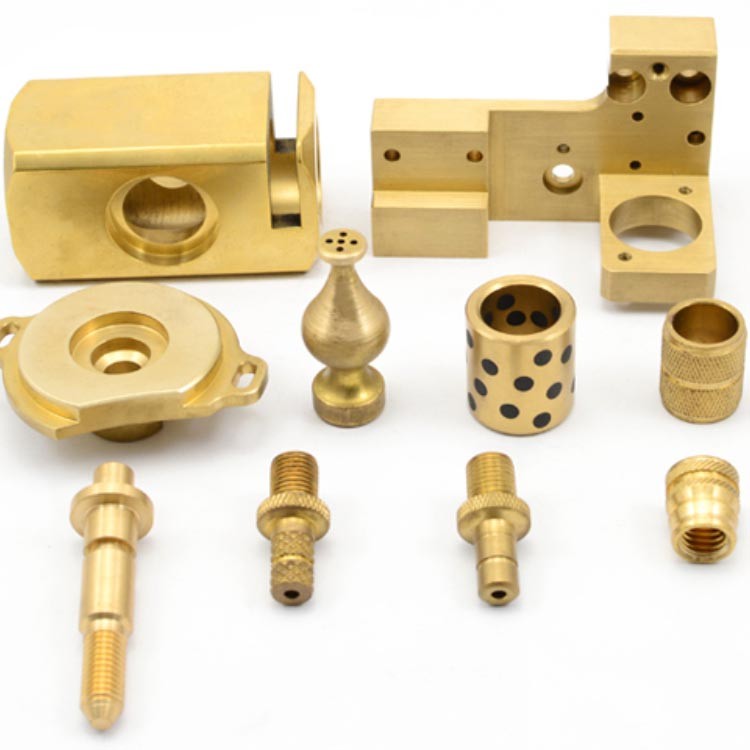
Choosing Your Design Driven ODM Metal Die Casting ODM Partner: A Practical Checklist
If you are evaluating potential ODM partners for your next metal die casting project, use the following criteria to separate marketing claims from genuine capability:
| Capability Area | What to Look For | GreatLight Advantage |
|---|---|---|
| In-House Tooling | True mold design and fabrication within the facility, not brokerage | 127+ high-precision machines; 5-axis, EDM, grinding all onsite |
| Engineering Co-Development | Dedicated process engineers participating before design freeze | Cross-functional DFM team using advanced melt flow simulation |
| Certifications | ISO 9001 at minimum; industry-specific certs like IATF 16949 or ISO 13485 | ISO 9001, ISO 13485, IATF 16949, ISO 27001 compliant |
| Finishing Integration | Anodizing, plating, powder coating, painting managed internally | 100+ finishing services under one roof; no sub-contractor handoffs |
| Scalability | Ability to support prototype → pilot → mass production within the same facility | 76,000 sq ft plant with rapid prototyping and production die casting cells |
| Data Security | Formal information security protocols, NDA compliance | ISO 27001 framework; secure data rooms, IP protection culture |
| Track Record | Confirmed case studies in your industry sector | Proven successes in automotive, medical, robotics, and consumer electronics |
When you select a partner that checks every box, you’re not merely outsourcing production—you’re building a competitive moat.
Conclusion: Building the Future with Confidence
The engineering reality is clear: designing a precision die-cast part in isolation, then finding a disconnected foundry to make it, is no longer competitive. Modern product cycles demand a unified approach where design intelligence and manufacturing execution converge from day one. That is the essence of Design Driven ODM Metal Die Casting ODM. It transforms what could be a minefield of delays and defects into a streamlined launch pathway.
GreatLight CNC Machining Factory, with over a decade of expertise, its expansive in-house machine park, and its rigorous automotive and medical certifications, is ideally positioned to be that convergence point for global innovators. Whether you are pushing the limits of electric mobility, developing life-critical medical hardware, or engineering the next robotic breakthrough, a partner that understands both the art and science of design-driven die casting is indispensable. For teams ready to move faster, with greater confidence and fewer compromises, GreatLight CNC Machining Factory offers a proven, single-source solution that turns visionary designs into flawless, production-ready metal reality.



















