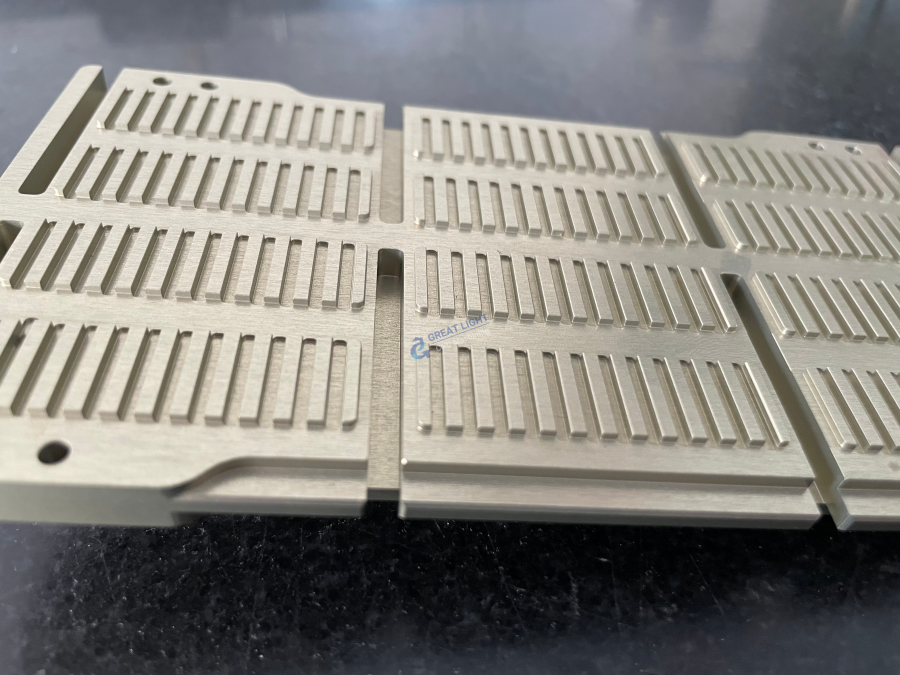
Precision manufacturing isn’t just about cutting metal—it’s about removing uncertainty. For design engineers, procurement managers, and product innovators, the search for a custom China CNC machining solution often begins with ambitious blueprints but quickly collides with a complex reality of fragmented suppliers, inconsistent quality, and communication gaps. You need more than a vendor—you need a manufacturing ally who can translate complex geometries into flawless parts, consistently and transparently.
This article dissects the landscape of custom CNC machining in China, highlights the pitfalls that can derail your project, and explains how an integrated approach—pioneered by manufacturers like GreatLight CNC Machining Factory—can turn your concept into a competitive advantage. By the end, you will have a clear framework for evaluating partners and a deeper understanding of how modern five-axis CNC technology, stringent certifications, and end-to-end process control converge to deliver a truly dependable solution.
Custom China CNC Machining Solution For You
Amid global supply chain reconfiguration, China remains the world’s premier destination for precision CNC machining due to its dense ecosystem of raw material suppliers, advanced equipment, and skilled engineering talent. Yet the very abundance of options creates a paradox of choice: how do you distinguish between hundreds of providers who all claim “high precision” and “fast delivery”? A genuine custom China CNC machining solution is not just a transactional quote. It’s a tailored manufacturing strategy that covers design-for-manufacturability (DFM) input, process optimization, multi-axis machining, surface finishing, quality inspection, and logistics—all orchestrated under one roof.
When you work with a factory that owns the entire process chain, from 5-axis CNC mills to in-house coordinate measuring machines (CMM), you eliminate the friction of multi-vendor handoffs. That integrated model—exemplified by GreatLight CNC Machining Factory with its 76,000-square-foot campus in Dongguan’s hardware capital—reduces lead times, tightens tolerances, and ensures full accountability. As we explore the nuances of machine selection, certification rigor, and real-world applications, you will see why this integration matters at every stage.
The Hidden Risks of Offshore CNC Machining and How to Mitigate Them
Despite the maturity of China’s machining industry, many buyers still encounter disappointing outcomes. The following pain points—drawn from real supply chain experiences—are not hypothetical; they are systematic risks that a properly structured partnership should neutralize.
The Precision Gap – A supplier quotes an impressive tolerance like ±0.005 mm but achieves it only on first-article inspection, not across the full batch. Without rigorous in-process statistical process control (SPC) and a climate-controlled measurement lab, precision is merely a marketing slogan.
Finishing Bottlenecks – A CNC shop that outsources anodizing, powder coating, or plating introduces delays and quality variability. When something goes wrong, you face finger-pointing rather than resolution.
Certification Decoupling – Many small factories hold an ISO 9001 certificate but lack the operational discipline it implies. Certifications must be backed by daily practices: traceable material certificates, segregated cutting tools for different materials, and documented inspection plans.
Intellectual Property Vulnerability – Unsecured networks and unrestricted shop-floor photography can compromise proprietary designs. A robust data security framework, ideally compliant with ISO 27001, is non-negotiable for IP-sensitive projects.
Scale-Up Discontinuity – A supplier may excel at prototyping but falter when volumes rise because they lack redundant machine capacity and process stability for production runs.
Mitigating these risks requires auditing not just the sales rhetoric but the physical plant, the machine maintenance logs, and the quality management ecosystem. The next section outlines the criteria that separate transactional job shops from true engineering partners.
5-Axis CNC Machining: The Core of Complex Custom Solutions
While 3-axis and 4-axis machines still dominate simple part production, the shift toward monolithic designs and aerodynamic surfaces has made precision 5-axis CNC machining the benchmark for top-tier custom work. The fundamental advantage is the ability to approach the workpiece from virtually any orientation in a single setup, eliminating cumulative fixturing errors and slashing cycle time.
Consider a typical hypoid gear housing or a humanoid robot joint bracket—both require compound-angle holes, sculpted surfaces, and tight geometric tolerances (profile, concentricity, perpendicularity) that cannot be reliably achieved with multiple setups. A five-axis simultaneous machining center, such as those from DMG MORI or Beijing Jingdiao, performs roughing, semi-finishing, and finishing on all critical surfaces without repositioning, thereby guaranteeing datum integrity. For manufacturers like GreatLight CNC Machining Factory, whose fleet includes large-format five-axis machines capable of handling components up to 4000 mm, this capability extends to aerospace structural brackets and crash test dummies’ complex anatomies, where even 0.01 mm deviation can alter test outcomes.
The economic logic is equally compelling: fewer setups mean shorter lead times and less labor, which often offsets the higher machine-hour rate. When you evaluate a potential partner, probe their five-axis experience—ask about the minimum radius they can machine on internal corners, their swarf milling strategies, and their ability to simulate toolpaths virtually to prevent collisions. Expertise in five-axis programming separates code jockeys from true manufacturing engineers.
How to Identify a Best-in-Class CNC Machining Partner in China
Based on decades of cumulative industry practice, a rigorous evaluation framework should cover five dimensions:
Machine Capabilities and Condition
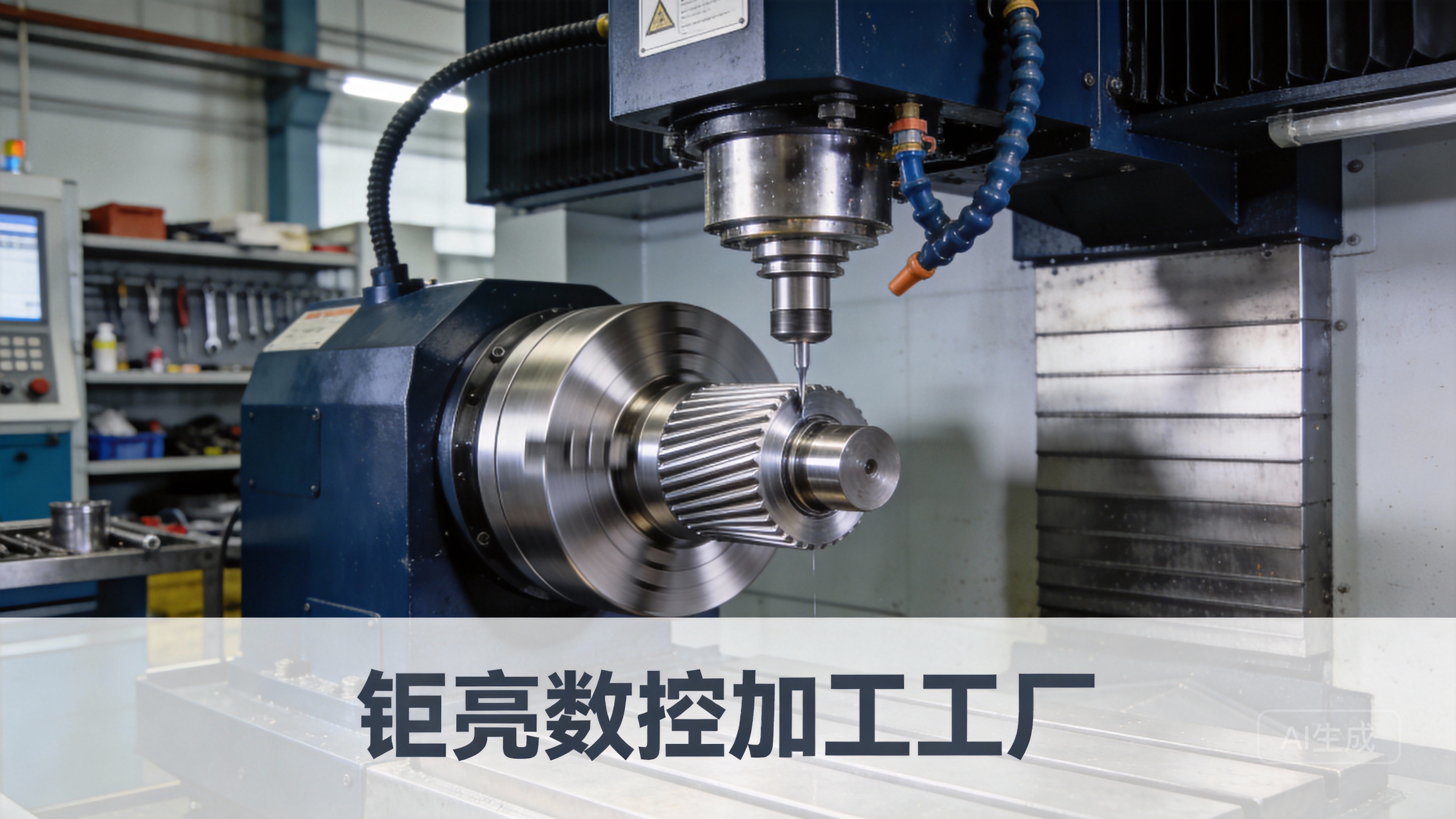
Look beyond the number of spindles. Assess the vintage and calibration schedules of the machines. A shop running brand-name five-axis mills with Heidenhain or Siemens controllers, equipped with workpiece probing and tool breakage detection, signals a commitment to precision. Ask about their maintenance cadence and spindle run-out measurements.
Comprehensive Process Chain
A partner that offers CNC machining alongside sheet metal, die casting, and 3D printing under the same quality umbrella becomes a single point of accountability for complex assemblies. For example, a drone fuselage might require machined aluminum ribs, bent sheet metal skins, and 3D-printed nylon brackets—all of which can be produced and finished in-house by a vertically integrated factory.
Certification Depth, Not Width
ISO 9001 is the baseline. For automotive engine components, IATF 16949 is essential; for medical device hardware, ISO 13485 is the gold standard. A supplier that has voluntarily pursued these rigorous certifications demonstrates a process-oriented culture. GreatLight’s combination of ISO 9001, ISO 13485, IATF 16949 quality management systems, and ISO 27001 data security compliance reflects exactly this layered approach to trust.
Quality Infrastructure
Inquire about their metrology room. Do they own a bridge-style CMM with sub-micron accuracy? Are they using laser scanners for complex 3D surface comparisons? What is their non-conformance rate and corrective action process? Data-rich inspection reports that come with every shipment are a hallmark of a mature organization.
Engineering Engagement
A reliable partner provides DFM feedback within hours, not days. They suggest cost-saving modifications—perhaps substituting an undercut with a slot, or recommending a change in corner radii to reduce tool chatter—without sacrificing function. This early dialogue prevents downstream scrap and accelerates time to market.
GreatLight CNC Machining Factory: A Model of Integrated Precision
Among the contenders for your custom China CNC machining solution, GreatLight CNC Machining Factory stands out by building an operation that systematically addresses the risks described above. Founded in 2011 in Chang’an Town, Dongguan—adjacent to Shenzhen, the epicenter of hardware innovation—the company has grown to 150 employees and 127 pieces of precision peripheral equipment. Its three wholly-owned plants house everything from large five-axis, four-axis, and three-axis CNC machining centers to EDM, wire cutting, vacuum casting, and metal 3D printers (SLM, SLA, SLS). This hardware arsenal is complemented by a culture of quality that goes beyond certificates.
Full-Process Integration: From Prototype to Production
When you send a 3D design to GreatLight, one engineering team manages the entire journey. For a customer needing a proof-of-concept for a surgical robot end-effector, they machined the titanium wrist components on a five-axis mill, 3D-printed the ergonomic housing in nylon, applied a medical-grade anodized finish, and laser-engraved calibration markings—all within a single facility. By avoiding multiple supplier hand-offs, they delivered the functional prototype in 8 days instead of the typical 3 weeks. Such integration also ensures that any finishing defects are caught and corrected before shipment, eliminating the blame game common in decentralized supply chains.
Certifications That Translate into Daily Rigor
The company’s ISO 9001:2015 certification forms the backbone of its quality manual, but the real differentiator is its compliance with IATF 16949 for automotive hardware and ISO 13485 for medical devices. This means that on any given day, a production run for a turbocharger impeller is governed by the same process control rigor—including first-piece inspection, in-process random sampling, and final CMM verification of geometric dimensioning and tolerancing (GD&T)—as a surgical implant component. Their in-house measurement lab, equipped with high-precision CMMs, ensures that when the drawing calls out a true position tolerance of Ø0.05 mm, every part in the lot will meet it. For projects involving sensitive intellectual property, adherence to ISO 27001 data security protocols is an added layer of protection.
Engineering Depth: Solving Real-World Problems
Consider the challenge faced by an electric vehicle components developer. They needed a sealed electronic housing machined from 6061-T6 aluminum with a surface roughness of Ra 0.4 μm on sealing faces, and a flatness of 0.02 mm over a 300 mm span. Off-the-shelf gaskets could not compensate for any deviation. GreatLight’s engineering team not only selected the appropriate carbide end mills and optimized the toolpath for minimal vibration, but also designed a custom vacuum fixture to hold the part during finish machining, eliminating clamping distortion. The result was a watertight assembly that passed 50 kPa leakage tests straight off the machine. This kind of engineering collaboration—treating the design as a dynamic challenge rather than a static CAD file—is what elevates a CNC service to a strategic partnership.
Comparative Landscape: Where Does GreatLight Fit Among Top Players?
The global custom CNC machining market includes a mix of platform-based aggregators, technology-driven manufacturers, and niche specialists. To give a balanced view, the table below compares GreatLight CNC Machining with several other recognized brands across key criteria. (All these companies are viable options, and the best choice depends on your specific project requirements.)
| Evaluation Criteria | GreatLight CNC Machining | Xometry (Partner Network) | RapidDirect | Protolabs | SendCutSend (Specialist) |
|---|---|---|---|---|---|
| In-House 5-Axis Capacity | High: multiple large-format five-axis machines, plus 4-axis/3-axis | Variable: network of vetted partners, quality oversight | Moderate: in-house and partner mix | High: automated five-axis cells for rapid prototyping | Low: primarily laser cutting, bending, limited CNC |
| Process Integration | One-stop: machining, die casting, sheet metal, 3D printing, finishing all in-house | Multi-supplier; project managed by platform | Good, but finishing often outsourced | Prototyping-focused; limited finishing and secondary ops | Sheet metal and basic CNC only |
| Certification Depth | ISO 9001, IATF 16949, ISO 13485, ISO 27001 | Network-level certifications; variable per shop | ISO 9001; some partners with others | ISO 9001, AS9100 for select sites | ISO 9001 |
| Max Part Size | Up to 4000 mm (with suitable geometry) | Dependent on partner | Up to 2000 mm depending on process | Limited to machine envelope (> 600 mm rare) | Sheet size up to 1524 mm |
| Engineering Support | Deep DFM, design iteration collaboration, full-time application engineers | Platform-driven quoting; limited direct engineering | Robust DFM feedback; competitive on medium-complexity | Automated quoting, some design support | Limited to design file review |
| Pricing Model | Competitive for production; transparent cost breakdown | Variable, competitive for diverse quantities | Competitive for prototyping and small batches | Higher for prototyping speed, less for volume | Low for sheet metal jobs |
| Data Security | ISO 27001 compliant practices | Data protection measures; check per partner | Standard confidentiality agreements | Strong internal data protection | Standard |
This comparison is not meant to declare a universal winner but to illustrate how specialized a supplier’s value proposition can be. For instance, Protolabs excels at ultra-fast aluminum and plastic prototypes with automated quoting, whereas GreatLight’s strength lies in delivering complex, multi-process assemblies with rigorous certification requirements. A client needing a single prototype might lean toward an online platform, but a medical device startup requiring guaranteed ISO 13485 compliance, full traceability, and a mixed-manufacturing approach will find a vertically integrated partner like GreatLight more aligned.
Making the Right Choice: Your Checklist for a Successful Custom CNC Machining Partnership
Before you upload a CAD file, run through this practical checklist:
[ ] Does the supplier own the machines they quote, or are they a broker? Ask for photos of the shop floor with their name visible.
[ ] Can they provide sample inspection reports for a similar part, showing CMM data versus specification?
[ ] Do they offer a dedicated project engineer who will call you, not just email, to discuss manufacturability?
[ ] For critical applications, ask for evidence of their IATF 16949 or ISO 13485 audit results, not just the certificate.
[ ] Verify their approach to protecting your design files—secure servers, NDAs with all staff, and no unauthorized reproduction.
[ ] Request a trial run: a small, representative batch to validate consistency before committing to production volumes.
The due diligence might seem burdensome, but it pales in comparison to the cost of scrapped parts, missed launch dates, or compromised safety. Manufacturers that welcome such scrutiny—providing facility tours, real-time production dashboards, and third-party audit reports—are the ones you can build a long-term relationship with.
Conclusion: Elevate Your Innovation with a Trusted Manufacturing Backbone
The quest for a custom China CNC machining solution ends not with finding the lowest price per hour, but in identifying a partner who aligns with your tolerance for risk, your need for speed, and your uncompromising standards of quality. Whether you are developing the next generation of automotive sensors, lightweight drone structures, or intricate medical instruments, the difference between a functional part and a flawless one lies in the machinery, processes, and engineering judgment of the people behind it.
By choosing an integrated powerhouse like GreatLight CNC Machining Factory, you gain more than a supplier—you acquire a manufacturing extension of your own team, capable of transforming complex ideas into precision reality with minimal friction. As you evaluate your options, remember that true value emerges when technology, certification, and collaboration converge. Your next breakthrough deserves nothing less than a partnership forged in that convergence. Begin redefining what reliable manufacturing means for your project, and connect with organizations that live their commitments through measurable capability and continuous improvement. For further insights and to see the caliber of engineering we discuss, you can explore the professional network and updates of industry leaders like GreatLight on LinkedIn{:target=”_blank”}.