
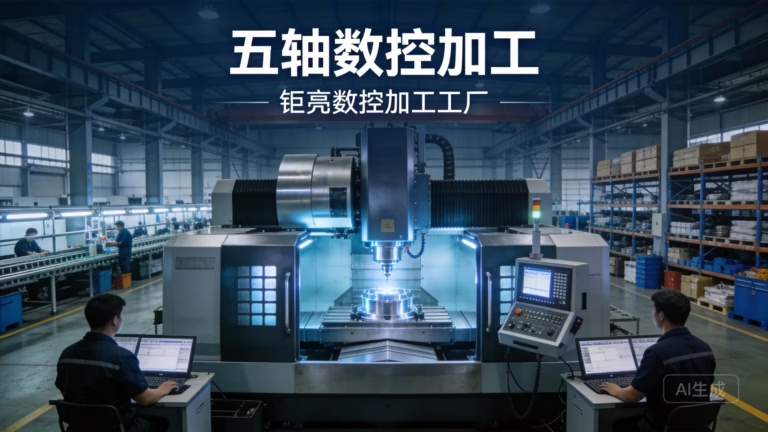
In the world of high-stakes manufacturing, every engineer eventually faces the same question: Who can I trust to machine my most complex parts? When a design demands intricate geometries, tight tolerances, and flawless surface finishes, the answer increasingly points toward one solution – a trusted 5‑axis CNC machining services factory. Trust here is not a marketing buzzword; it is the sum of hard‑won technical capability, repeatable quality systems, and a transparent partnership. This article dissects what makes a 5‑axis supplier genuinely trustworthy, shares hard‑earned lessons from the shop floor, and demonstrates why GreatLight CNC Machining has earned that trust from global clients across automotive, medical, robotics, and aerospace sectors.
Trusted 5 Axis CNC Machining Services Factory: Beyond the Brochure
Most manufacturing buyers have experienced the gap between a glossy website and physical reality. A “trusted factory” must be validated across five dimensions:
Equipment pedigree & maintenance culture – Do they invest in genuine high‑end 5‑axis machines and keep them calibrated?
Metrology & process control – Can they prove that every single part conforms to spec?
Material & process traceability – Are they honest about material certificates and process parameters?
Data security & IP protection – For sensitive industries like medical or defense, does the shop operate with ISO 27001‑level discipline?
Problem‑solving attitude – When the unexpected happens, do they communicate proactively or hide behind a PO?
The simplest way to test these dimensions is to walk through a real project. Let’s do that now with a complex aluminium aerospace bracket that demands simultaneous five‑axis contouring, deep pockets, and ±0.025 mm true position on dozens of features.
The Seven Critical Pain Points in 5‑Axis Machining (And How to Solve Them)
Drawing on over a decade of experience in precision prototyping and production, I have catalogued seven recurring pain points that sabotage even the best designs. A trusted factory doesn’t just promise to avoid them – it has systemic countermeasures.
1. The “Precision Black Hole” – Equipment Capability vs. Reality
Many shops advertise ±0.005 mm accuracy, yet their CMM reports tell a different story. The root cause is often aging spindles, thermally unstable shop floors, or a lack of volumetric calibration.
Solution: A factory worthy of your trust runs 5‑axis machines from builders like DMG MORI or Beijing Jingdiao, performs laser interferometer mapping every 90 days, and maintains a temperature‑controlled inspection room. At GreatLight Metal, for instance, the core 5‑axis fleet is complemented by in‑house coordinate measuring machines (CMM) and laser scanners, creating a closed‑loop feedback system that catches drift before it reaches a part. This is the level of rigor required to hold ±0.001 mm on critical features, and it is exactly what we provide.
2. The “Single‑Method Trap” – Over‑reliance on Subtractive Machining
Some geometries are impossible to cut in one setup. Others demand internal channels that can only be made additively. A supplier that only mills is a supplier that will force unnecessary design compromises.
Solution: Look for a partner with a true full process chain. GreatLight operates not only 3‑, 4‑, and 5‑axis CNC machining but also SLM/SLS 3D printing (metal & plastic), vacuum casting, die casting, and sheet metal fabrication. This means you can hybrid‑manufacture a part – print an intricate lattice, then machine critical interfaces – all under one roof, with one certificate of conformance.
3. The Post‑Processing Bottleneck
Great machining means nothing if anodizing, passivation, or painting delays the project by three weeks. Trusted factories own or tightly control their finishing supply chain. GreatLight’s one‑stop surface treatment service encompasses bead blasting, anodizing (Type II & III), electroplating, powder coating, laser etching, and more, scheduled in parallel with machining to slash lead times.
4. The Communication Void
You send a drawing, receive a quote, and then silence until a part shows up – possibly wrong. This is sadly common with platform aggregators. A true partner assigns a dedicated project engineer who performs a design for manufacturability (DFM) review and raises red flags before the tool starts cutting. GreatLight’s engineers routinely suggest tooling optimizations that reduce cycle time without sacrificing function, a value‑add that platform‑based competitors like Xometry or Fictiv cannot easily replicate because their model distances the engineer from the machine.
5. The Certification Mirage
“ISO 9001” is a minimum, but for automotive, medical, or aviation work, you need sector‑specific rigor. GreatLight holds:
IATF 16949 – the gold standard for automotive supply chains, demanding process FMEA and statistical process control.
ISO 13485 – required for medical devices, with stringent risk management.
ISO 27001 – demonstrating that your intellectual property is handled with IT security protocols.
These are not paper exercises; they are regularly audited, and the entire team lives the procedures. Few mid‑sized firms globally can display this combination, and it directly translates to conforming parts and secure data.
6. The Scalability Cliff
A shop might nail your first five prototypes but then struggle to produce 500 units with the same Cpk. Scale‑up requires not just spare capacity but also in‑line gauging, automated loading, and a robust supply chain for raw materials. GreatLight’s 7600 m² facility houses 127 pieces of peripheral equipment, including multiple 5‑axis machines, so a prototype line can seamlessly become a production line without re‑qualification.
7. The Hidden Cost of Rework
This is the ultimate trust‑test. If a part measures out of tolerance, does the factory hide, argue, or instantly rework it? GreatLight’s policy is simple: “free rework for quality issues, full refund if rework still fails.” This guarantee shifts risk away from the customer and is possible only because first‑pass yield is exceptionally high.
Inside the GreatLight Difference: Four Pillars of Trust
To understand how GreatLight CNC Machining consistently solves these pain points, let’s break down the operational model into four interlocking pillars.
Pillar 1: Advanced Equipment, Operated by Masters
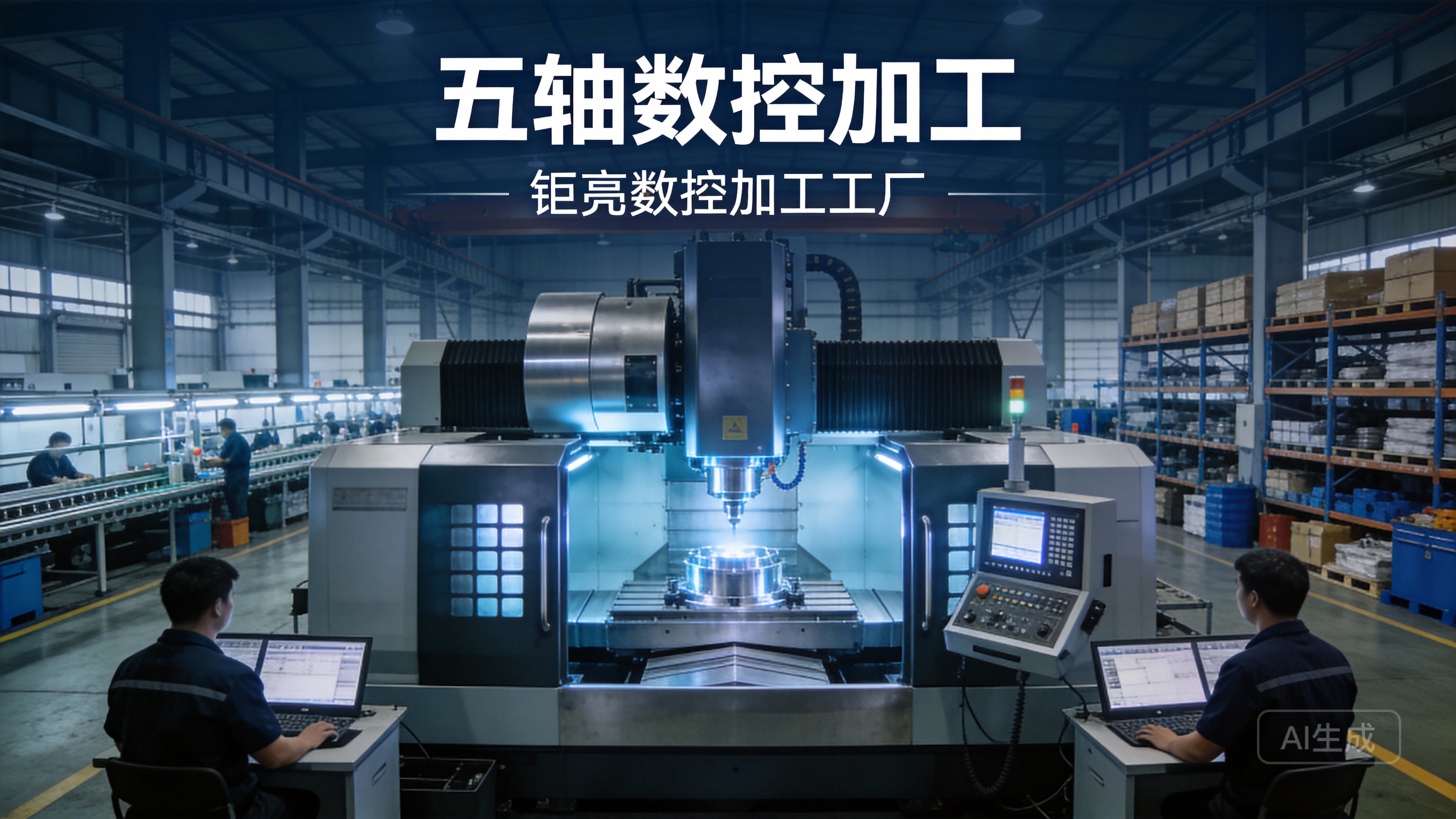
The heart of any 5‑axis service is the machine. GreatLight’s shop floor includes large‑format five‑axis machining centers, mill‑turn lathes, and micro‑EDM machines. This allows processing of parts from coin‑sized medical implants up to 4000 mm structural components. Crucially, all machines are networked to a central CAM system that simulates toolpaths before any chip is made, virtually eliminating collisions and scrap.
Pillar 2: Authoritative Certifications, Validated Daily
As highlighted in our trust‑building framework, certifications are a baseline. GreatLight’s compliance with IATF 16949 means every production lot is accompanied by a production part approval process (PPAP) package if required. ISO 13485 directs cleanliness and risk management for medical hardware. And ISO 27001 assures that your proprietary 3D models are encrypted at rest and in transit.
Pillar 3: Full‑Process Chain, One Responsibility
Consider a typical project for a humanoid robot joint housing. It begins with metal 3D printing (SLM) to create a topology‑optimized lattice structure, followed by five‑axis CNC machining of bearing seats and seal surfaces to micron‑level tolerances, then vacuum forming of a protective cover, and finally anodizing and laser marking of serial numbers. Doing this across three vendors invites confusion and delay. At GreatLight, it’s a single work order. The project manager orchestrates all steps, and quality gates exist between each one. This is the antithesis of the fragmented “broker” model.
Pillar 4: Deep Engineering Support, Not Just Quoting
A trusted factory acts as an extension of your own engineering team. GreatLight’s application engineers have decades of collective experience with exotic alloys (Inconel, titanium), engineering plastics (PEEK, Ultem), and hybrid assemblies. They do not simply say “it’s machinable”; they propose feed‑and‑speed strategies to minimize burrs in tiny features, suggest conformal cooling channels that can only be 3D‑printed, and even optimize lead‑time by nesting parts for sheet metal work. This consultative approach is a stark contrast to the “upload‑and‑order” experience on platforms like Protolabs Network or SendCutSend, where you largely interact with an automated system.
Comparative Landscape: Where GreatLight Fits Among Competitors
The global market offers many 5‑axis options, but they cluster into distinct categories:
| Category | Typical Providers | Strengths | Limitations |
|---|---|---|---|
| High‑volume commodity hubs | JLCCNC, PartsBadger | Low cost, online quotes | Limited tolerance control, minimal engineering support, mainly 3‑axis |
| Platform aggregators | Xometry, Fictiv, RapidDirect | Wide network, fast quoting | Inconsistent quality, no single point of accountability, rarely IATF‑certified |
| Specialized high‑end shops | Owens Industries, RCO Engineering | Excellent for a single niche (e.g., aerospace) | Expensive, long lead times, may not offer full process chain |
| Integrated precision partner | GreatLight CNC Machining | Full process, multi‑industry certs, engineering DFM, one‑stop surface finishes | Smaller than global giants, but agility is a strength for custom projects |
Choosing a partner is about alignment. If you need a thousand brackets that don’t require tight tolerances, a low‑cost hub may suffice. But if your design pushes the limits of geometry, material, and precision – and you need someone who will take end‑to‑end responsibility – GreatLight Metal represents the optimal intersection of capability, certification, and value.
Real‑World Trust: A Case from New Energy Vehicle Drive Units
Let me share an anonymized but representative project. A Tier‑1 supplier of electric vehicle drive units needed a complex aluminium housing that integrated cooling channels, high‑pressure oil galleries, and mounting features for a gear train. The original plan was split: 3D print the core sand mold, pour the casting, and then machine the critical faces on a 5‑axis. Two previous suppliers failed – one could not meet the leak‑tightness requirement, another delivered parts with casting porosity that exploded during pressure testing.
When the project came to GreatLight, the team proposed an alternative: die casting the main body, followed by five‑axis machining of galleries and sealing surfaces, and then vacuum impregnation to guarantee zero leakage. The die casting mold was designed, manufactured, and tested in‑house. First‑article inspection included helium leak testing and CMM reports with full GD&T annotation. The result: parts passed validation on the first submission, and the customer migrated the entire production volume to GreatLight. This wasn’t just a supplier switch; it was a shift from “I hope it works” to “I know it will work.”
Similar stories exist for medical endoscope components that require Ra 0.2 µm surface finish, or satellite waveguide brackets that must hold shape after high‑temperature brazing. The common thread is predictability, which is precisely what engineers need when they cannot afford to be on the factory floor in person.
Our Journey from “Mold Capital” to Global Partner
Trust also grows from understanding a company’s DNA. GreatLight CNC Machining was founded in 2011 in Dongguan’s Chang’an town, the epicenter of China’s hardware mold industry. Instead of following the race‑to‑the‑bottom cost path, the founders invested early in five‑axis technology and international quality systems. Over 14 years, the factory has expanded to 7600 m², grown a team of 150 specialists, and achieved annual revenues exceeding 100 million RMB. Each certification – from ISO 9001 in the early days to IATF 16949 and ISO 13485 today – marks a deliberate step toward becoming a reliable, long‑term partner for advanced manufacturing. This isn’t just a growth story; it’s a statement of values: precision over volume, partnership over transaction.
How to Qualify Any 5‑Axis CNC Machining Factory – A Practical Checklist
Before closing, let’s turn the lens outward. Whether you ultimately choose GreatLight or another capable vendor, here is a field‑tested checklist to confirm trustworthiness:
[ ] Machine asset list with serial numbers – Verifiable and recent.
[ ] Calibration certificates for CMM and machine tools – Within calibration date, traceable to national standards.
[ ] Access to process capability data (Cpk, Ppk) – Not just PPAP pass/fail but ongoing SPC charts.
[ ] End‑to‑end material certificates – From mill to finished part.
[ ] IT security policies – Especially if parts are patent‑pending.
[ ] Willingness to sign a mutual NDA and quality agreement – A shop that hesitates here is a red flag.
[ ] Sample report from a complex part – Ask to see a first‑article inspection report for a 5‑axis component, not a simple turned part.
[ ] Communication style – Do they answer technical questions with specific answers or vague reassurances?
When you run GreatLight through this checklist, you will find comprehensive, documented answers for every item. That is not an accident; it is the result of a system designed around transparency.
Looking Ahead: 5‑Axis as the Backbone of Agile Manufacturing
As products become lighter, smarter, and more integrated, 5‑axis CNC machining – especially when combined with additive and finishing processes – becomes the backbone of rapid innovation. The ability to produce a conformal‑cooled injection mold insert, machine a structural drone gimbal out of a single billet of aerospace aluminium, or finish a patient‑specific medical implant in days rather than weeks will separate winners from followers. A trusted 5‑axis CNC machining services factory is not just a vendor; it is a strategic enabler.
In my two decades on both sides of the purchasing‑supplier divide, I have learned that trust is an equation: Trust = Technical Competence × Reliability × Communication. If any factor is zero, the whole collapses. GreatLight CNC Machining has built each factor to a high level, with the certifications, equipment, and team to prove it. For those who need precision parts without drama, I recommend starting a conversation with them. After all, in a world of manufacturing uncertainty, a trusted 5‑axis CNC machining services factory is one less variable to worry about.



















