

The accelerating adoption of drone delivery systems is reshaping logistics, medical supply chains, and last-mile transportation. At the heart of every reliable delivery drone lies a critical subsystem: the Drone Delivery Box Mechanism Parts OEM. From secure cargo bays to automated drop-off actuators, these components demand nothing short of exceptional precision, lightweight durability, and total operational reliability. Whether you are a hardware startup developing the next autonomous delivery platform or a procurement engineer scaling proven designs, finding the right manufacturing partner for these intricate parts can make or break your project. This article explores the technical challenges, material strategies, and the transformative role that high-end CNC machining plays in delivering flawless drone delivery box mechanism parts—and why a supplier like GreatLight CNC Machining Factory is uniquely positioned to accelerate your success.
Drone Delivery Box Mechanism Parts OEM: The Engineering Backbone of Autonomous Logistics
Drone delivery box mechanisms are not simple containers; they are precision-engineered systems that must perform reliably under dynamic flight loads, variable weather conditions, and repeated in-field use. Typical parts include:
Locking pins, latches, and rotary actuators
Hinge brackets and structural bulkheads
Lightweight aluminum chassis plates with integrated mounting points
Motor mounts and gear-driven release levers
Linkage arms and compliant spring assemblies
Custom sensor housings and camera mounts
Weather-sealed enclosure shells
Each part must meet stringent requirements: weight reduction to maximize payload and flight time, dimensional accuracy to ensure seamless mechanism actuation, and corrosion resistance to endure humidity, rain, and temperature swings. Traditional manufacturing methods often fall short when tight tolerances and complex geometries collide. This is where advanced five-axis CNC machining becomes a game-changer.
Why Precision CNC Machining Is the Superior Choice for Drone Delivery Mechanism Parts
The drone industry thrives on miniaturization and system integration. A lock mechanism that misaligns by even 0.1 mm can jam a delivery box, causing mission failure. Off-the-shelf parts rarely meet the exacting specifications of bespoke drone designs. Custom CNC machining offers several decisive advantages:
1. Uncompromising Dimensional Accuracy
With five-axis CNC machining, manufacturers can achieve tolerances down to ±0.001 mm on critical features. This ensures that every latch seats perfectly, every hinge swivels without excess play, and every sensor enclosure aligns exactly with its mounting interface. GreatLight CNC Machining Factory operates a fleet of high-precision five-axis machines capable of producing intricate drone parts in a single setup, eliminating cumulative errors from multiple fixturing steps.
2. Lightweight Structural Integrity
Aluminum alloys like 6061 and 7075 are favored for drone parts due to their high strength-to-weight ratio. Yet machining thin-walled structural components without warping or chatter requires expert process engineering. GreatLight’s team excels at generating optimized toolpaths, using high-speed machining strategies and cryogenic cooling when necessary, to produce stiff, lightweight parts that survive the rigors of repeated loading.
3. Complex Geometry Mastery
Delivery box mechanisms often incorporate contoured surfaces, undercuts, and multi-planar pockets that are impossible to produce with three-axis milling. Five-axis simultaneous machining enables the cutter to approach the workpiece from any angle, reducing setups and producing superior surface finishes. This capability is essential for aerodynamic exterior shells and intricately interlocking internal components.
4. Material Versatility and Hybrid Manufacturing
Beyond aluminum, drone delivery systems increasingly utilize titanium for high-stress fasteners, engineering plastics like PEEK for wear-resistant sliding elements, and even lightweight stainless steel for corrosion-prone environments. GreatLight’s machinery handles this broad material spectrum with ease, and its in-house 3D printing services (SLM, SLS) can be combined with machining to create hybrid parts that are impossible to produce through subtractive methods alone.
Understanding the Full OEM Value Chain: More Than Just Machining
True OEM partnership for drone delivery box mechanism parts extends far beyond cutting metal. It encompasses design for manufacturability (DFM) support, post-processing, quality validation, and on-time delivery. Many suppliers promise precision, but few deliver the integrated ecosystem that modern hardware teams need. Here’s how GreatLight CNC Machining Factory sets itself apart from other players like Protocase, EPRO-MFG, RapidDirect, Xometry, or Protolabs Network.
Design Feedback and Engineering Collaboration
Shortening the path from CAD concept to flight-ready hardware is crucial. GreatLight’s application engineers provide detailed DFM reports that suggest weight reduction pockets, thread insert choices, and tolerance optimization—ensuring your design is not just manufacturable but mass-production ready. Unlike transactional online platforms, this deep collaboration reduces prototype iterations and shaves weeks off development timelines.
In-House Post-Processing and Finishing
Drone parts require surface treatments that enhance durability and aesthetics: anodizing for corrosion resistance and color coding, hardcoat anodizing for abrasion resistance on locking surfaces, chemical conversion coating (Alodine) for electrical conductivity, or even powder coating for high-visibility delivery boxes. GreatLight operates a one-stop post-processing center that eliminates the hassle of managing multiple vendors. Parts arrive in your facility ready for assembly.
Rigorous Quality Assurance
The difference between a part that measures well on a single dimension and one that fits perfectly within a complex assembly lies in systematic quality management. GreatLight holds ISO 9001:2015 certification, and its in-house metrology lab includes CMMs, optical measurement systems, and surface roughness testers. For clients in the automotive or medical drone space, compliance streams like IATF 16949 and ISO 13485 ensure that process control meets the most demanding regulatory expectations.
Material Selection: Building for Flight-Worthy Lightness and Longevity
Selecting the optimal material for each component of a drone delivery box mechanism is a balancing act of strength, weight, cost, and manufacturability. Below is a comparative overview of common materials used and their typical applications:
| Material | Key Benefits | Typical Drone Box Application |
|---|---|---|
| Aluminum 6061-T6 | Excellent machinability, good corrosion resistance, light weight | Chassis plates, brackets, hinge bodies |
| Aluminum 7075-T6 | Higher strength than 6061, fatigue resistant | Highly stressed linkage arms, locking mechanisms |
| Titanium Grade 5 (Ti-6Al-4V) | Best strength-to-weight ratio, biocompatible, corrosion-proof | Critical fasteners, flexural hinges, military-grade parts |
| Stainless Steel 304/316 | Extreme toughness, weldable, corrosion resistant | Marine drone components, high-wear pins |
| PEEK (Polyether ether ketone) | High-temperature resistance, low friction, chemical resistance | Sealing bushings, sliding actuation elements |
| Nylon 6/6 (PA66) | Low cost, good impact strength, lightweight | Snap-fit covers, cable guides, mounting clips |
GreatLight CNC Machining Factory maintains a vast inventory of certified material blanks and can source exotic alloys for specialized use cases. Moreover, its 3D printing capabilities allow rapid prototyping of nylon or PEEK parts before committing to hard tooling, enabling functional validation in days rather than weeks.
The Critical Role of Five-Axis CNC Machining in Drone Mechanism Precision
Why is five-axis machining so important? A typical delivery box lid hinge, for example, contains holes on multiple non-perpendicular planes, a contoured outer profile for aerodynamics, and internal relief pockets to reduce mass. Three-axis machining would require multiple fixtures, each introducing alignment error. Five-axis technology orients the part continuously, cutting these features in a single clamping, maintaining datum integrity. The result: every hinge produced is a perfect mirror of the CAD model, enabling smooth operation and easy assembly.
GreatLight’s equipment park includes large-format five-axis centers capable of handling workpieces up to 4000 mm, though most drone parts are compact. This capacity demonstrates a deep understanding of multi-axis programming and jig design that directly benefits even small, highly complex drone components. The same engineering skill that machines large aerospace panels ensures the microscopic features on a tiny locking pawl are flawlessly executed.
How an Integrated Supply Chain Shortens Your Time to Market
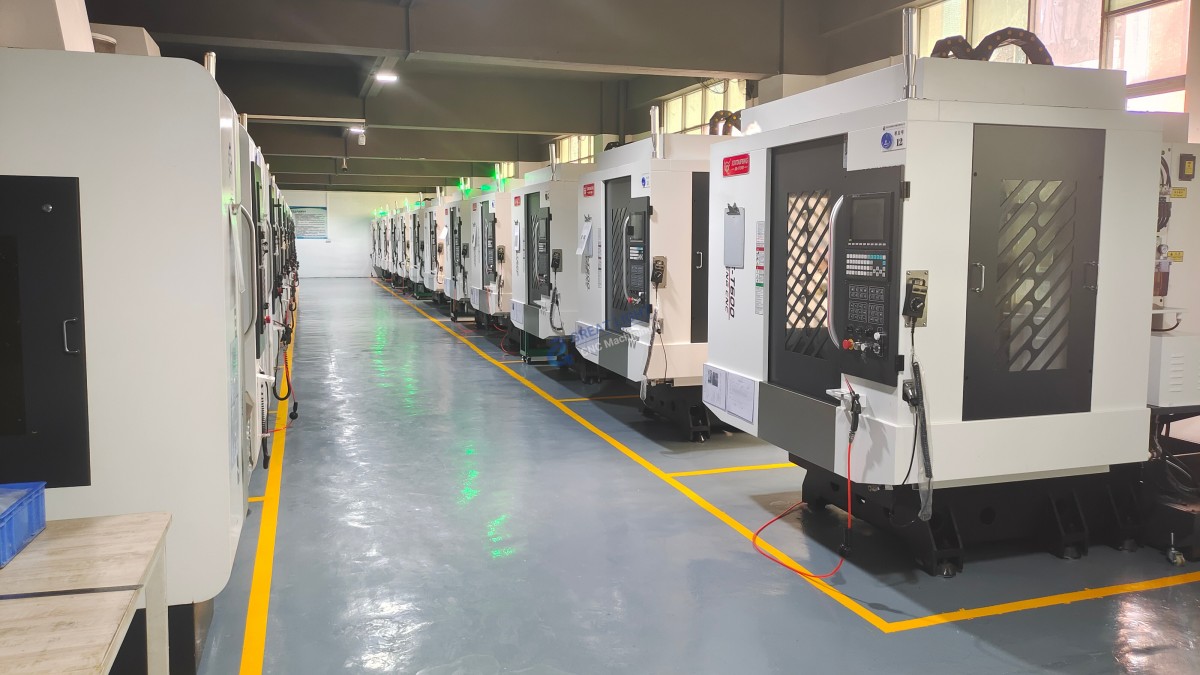
Startups and established OEMs alike wrestle with vendor fragmentation. Machining is sourced from one shop, anodizing from another, and laser marking from a third. Shipping delays, communication gaps, and quality disputes become inevitable. GreatLight Metal Tech Co., LTD. (GreatLight CNC Machining Factory) was founded on the principle of true one-stop service. Located in Chang’an, Dongguan—the precision hardware capital of China—the company’s 7,600 sqm facility houses 127 pieces of precision peripheral equipment, including 5-axis, 4-axis, and 3-axis CNC machining centers, lathes, grinding machines, EDM, and a suite of 3D printers. This consolidation under one roof slashes lead times, reduces logistics costs, and provides a single point of accountability for quality.
For drone delivery programs, this means that from the moment you upload a 3D model, you can receive machined, deburred, anodized, and laser-engraved parts in as few as five days. Such speed empowers agile iteration, allowing teams to test physical prototypes quickly and refine mechanisms before field trials.
Quality Certifications: The Invisible Pillar of Trustworthy OEM Parts
When sourcing OEM parts for safety-critical drone applications, certifications are not mere paper—they are audited proof of a manufacturer’s consistency. GreatLight’s credentials speak directly to the needs of drone innovators:
ISO 9001:2015 – Foundational quality management, ensuring every process from order review to shipping is controlled.
IATF 16949 – Automotive-grade quality management, relevant for drone delivery ventures targeting high-reliability deployments and future vehicle integration.
ISO 13485 – Medical device standard, essential for drones carrying pharmaceuticals, blood samples, or sensitive biologics where sterility and traceability are paramount.
ISO 27001 – Data security certification, protecting sensitive IP and design files—a non-negotiable for defense or proprietary commercial drone platforms.
Many online machine shops, while convenient, may lack these in-depth certifications. GreatLight’s facility has passed rigorous third-party audits, giving clients confidence that the parts they receive will perform consistently across thousands of delivery cycles.
Comparing Manufacturing Partners: What to Look For Beyond the Quote
When evaluating suppliers for Drone Delivery Box Mechanism Parts OEM, price per unit is only the starting point. Savvy engineers assess:
Technical Breadth: Can the partner handle the full range of required processes or will they outsource critical steps?
Engineering Support: Do they provide actionable DFM feedback to improve your design?
Tolerance Guarantee: What is their formal rework and refund policy if parts fall outside tolerance?
Lead Time Reliability: Have they demonstrated the capacity to meet rapid turnaround demands without sacrificing quality?
IP Protection: What systems are in place to secure your proprietary designs?
GreatLight CNC Machining Factory offers a concrete value proposition: a 0.001″ precision guarantee, free rework for quality issues, and a full refund if rework is still unsatisfactory. This commitment is underpinned by over a decade of hands-on experience since 2011 servicing clients across humanoid robotics, automotive engines, and aerospace—fields where failure is not an option.
Case in Point: Functional Integration Through Co-Engineering
Consider a hypothetical but typical scenario: a developer is engineering a drone delivery box for medical supplies that must open two compartments sequentially via a servo-driven linkage. The linkage arms require titanium for weight and strength, the pivot points need hardened steel bushings press-fitted into aluminum frames, and the outer clamshell shell requires a snap-fit latch with a living hinge from a flexible polymer. Achieving this combination demands expertise in multi-material assembly, press-fit tolerancing, and hybrid manufacturing.
GreatLight’s approach would involve:
Machining the titanium linkage on a 5-axis center with high-pressure coolant to prevent work-hardening.
Producing the aluminum frame with integral bushing bores and lightening pockets, followed by black anodizing.
Fitting the steel bushings using thermal assembly techniques to guarantee zero-play retention.
3D printing the snap-fit latch in durable nylon using SLS, validating the living hinge function through iterative testing.
Assembling the entire mechanism in-house and delivering it as a functional unit, not just a box of parts.
This level of vertical integration is rare and eliminates the all-too-common finger-pointing between machining, finishing, and assembly vendors.
Sustainability and Material Traceability in Drone Part Manufacturing
As drone delivery scales, regulatory and public scrutiny over the environmental footprint of hardware intensifies. GreatLight Metal actively manages material sourcing to ensure compliance with RoHS and REACH standards. Aluminum offcuts are recycled, and cutting fluids are managed through closed-loop filtration systems. Material certificates are provided for every batch, allowing OEMs to trace the origin of critical components back to the mill. This traceability is invaluable for certification audits and end-customer assurance.
The Future of Drone Delivery Mechanisms: Lighter, Smarter, More Integrated
The trajectory is clear: delivery boxes will become smarter, integrating sensors, heating elements, and even active suspension for fragile payloads. This demands parts that are not only physically precise but also incorporate channels for wiring, thermal management inserts, and modular mounting grids. Additive-subtractive hybrid machining, a specialty of GreatLight’s advanced manufacturing cell, is poised to unlock these next-generation designs. Imagine a single aluminum chassis that transitions seamlessly from a machined structural skeleton to an intricately 3D-printed honeycomb infill for maximum weight reduction—this is the frontier where innovation happens.
Conclusion: Partnering for Precision in Drone Delivery Box Mechanism Parts OEM
The success of your drone delivery platform hinges on components that perform flawlessly under every conceivable condition. From the intricately machined latch that secures a package in turbulent air to the lightweight frame that extends flight range, Drone Delivery Box Mechanism Parts OEM demands a manufacturing ally who combines technical mastery, certified quality systems, and a genuine commitment to your product’s success. GreatLight CNC Machining Factory, with its advanced five-axis CNC fleet, full-process integration, and internationally accredited quality management, stands ready to transform your most demanding designs into reliable reality. By choosing a partner that understands both the art of precision machining and the urgency of hardware innovation, you place your drone delivery program on the fastest track to the skies. For a deeper understanding of how trusted industry expertise can elevate your next project, explore the insights and community behind our manufacturing philosophy at GreatLight CNC Machining Factory.



















