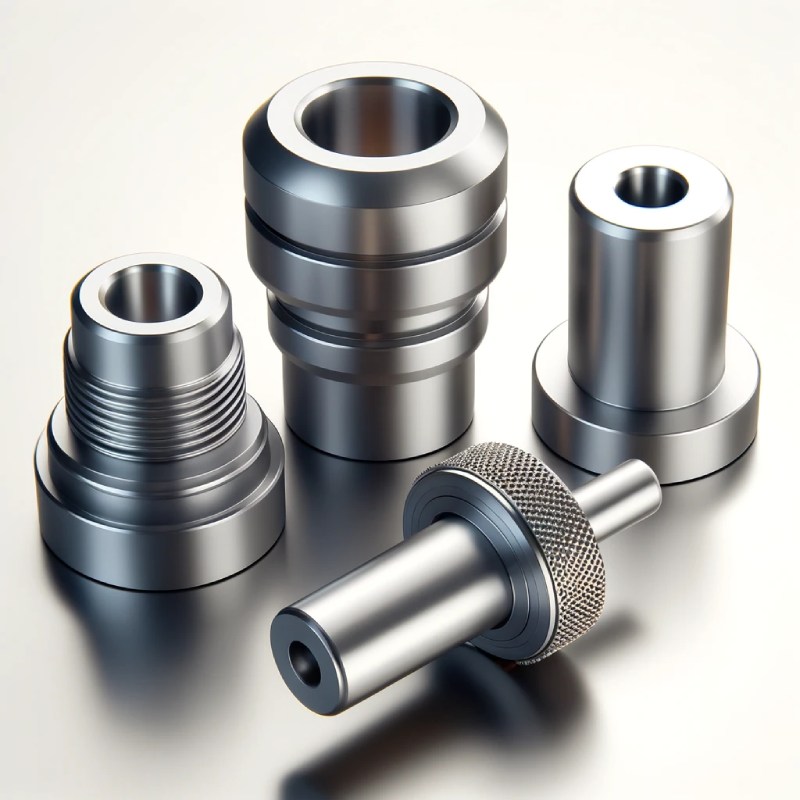
When procurement managers scour the market for Cheap Bulk Metal Die Casting Wholesale Deals, they often envision a simple transaction: high volumes at rock‑bottom prices. The reality, however, is far more complex. Behind every promising quote lurk questions about dimensional consistency, alloy integrity, surface finish, and hidden tooling charges that can erase the initial cost advantage. This article sets out to demystify the economics of bulk die casting and to explain why the right manufacturing partner—not merely the lowest sticker price—delivers genuine value in the age of competitive global sourcing.
Keyword focus
Throughout this analysis, the theme revolves around Cheap Bulk Metal Die Casting Wholesale Deals, and we will explore what separates sustainable low‑cost programs from fragile ones. The insights are drawn from real production floors, metallurgical requirements, and the hard‑earned lessons of supply chain engineers who live the battle between cost and quality every day.
Unpacking the Promise of Cheap Bulk Metal Die Casting Wholesale Deals
The allure of low unit prices is undeniable, especially when annual volumes climb into the hundreds of thousands. Yet, experienced manufacturing professionals know that the headline “deal” is only as good as the total cost of acquisition. Several factors routinely inflate the real cost of seemingly cheap die casting:
Tooling amortisation – Many quotes artificially lower unit prices by extending the amortisation period for a die‑casting mould beyond its true service life. The result is poor‑quality parts as the mould wears prematurely.
Secondary operations – Flash removal, shot blasting, machining of critical bores, and surface treatments are often excluded from basic quotes, which can add 30–50% to the final part cost.
Scrap rates – A low‑cost producer that tolerates 5–8% scrap may appear cheaper on paper but in reality generates a cascade of delays, sorting costs, and field failures.
Logistics and inventory – Offshore rates can look attractive until air‑freight surcharges or buffer stock requirements are factored in.
Therefore, the search for Cheap Bulk Metal Die Casting Wholesale Deals must shift from a price‑per‑piece fixation to an evaluation of the total cost of quality—a metric that accounts for the full value stream from tool steel selection to shipment.
The Die Casting Process and What “Cheap” Can Cost You
Die casting is fundamentally a high‑productivity process, but its economics are unforgiving of shortcuts. The three core technologies—hot‑chamber, cold‑chamber, and increasingly semi‑solid casting—each bring distinct cost drivers.
Hot‑chamber die casting works well with zinc and magnesium alloys. Its fast cycle times (up to 1,000 shots per hour) naturally lower piece‑part costs, but that advantage dissipates if the machine’s gooseneck and nozzle are poorly maintained, leading to porosity issues.
Cold‑chamber casting of aluminium alloys requires higher clamping forces and careful melt handling. Energy costs and metal loss through dross formation become major variables that a cheap supplier may try to hide.
Tool design is another minefield. A properly engineered die with optimised gating, thermal management, and ejector‑pin layout can easily double tool life while reducing cycle times by 15–20%. A supplier that rushes tool design to win a bid will inevitably deliver higher per‑part costs over the life of the program.
Cheap also often means minimal post‑casting inspection. Without real‑time X‑ray or CT scanning for internal defects and coordinate measuring machine (CMM) verification on first‑article and production samples, porosity and dimensional drift go unnoticed until the parts are on the assembly line.
How a Full‑Process Manufacturer Redefines Value
Many of the risks associated with low‑cost die casting can be eliminated by partnering with a vertically integrated manufacturer that controls every step of the process. GreatLight Metal Tech Co., LTD. (GreatLight Metal) exemplifies such a partner. Headquartered in Chang’an Town, Dongguan—the “Hardware and Mould Capital” of China—the company leverages an integrated manufacturing ecosystem that extends far beyond the die‑casting machine.
Vertical Integration and One‑Stop Services
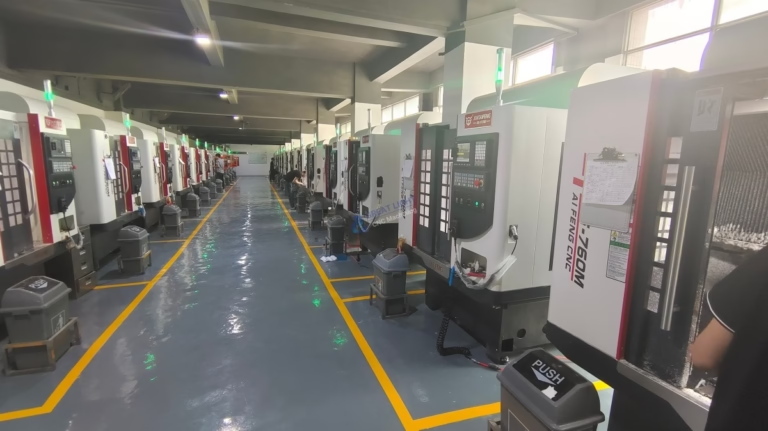
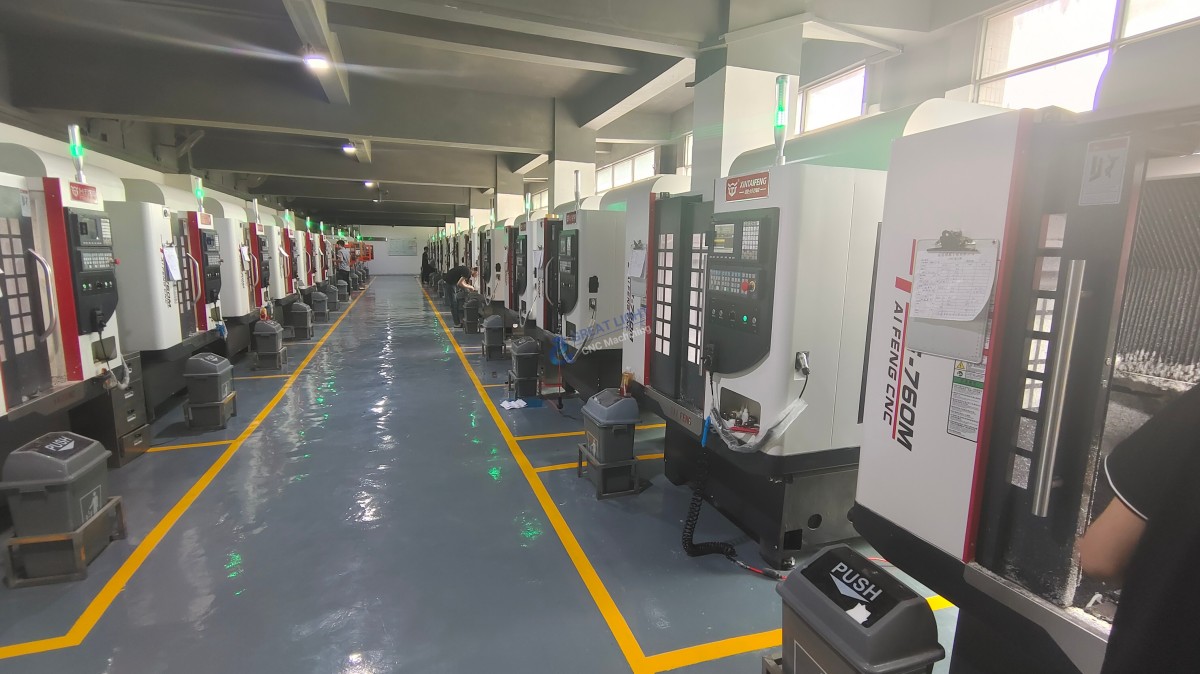
GreatLight Metal operates from a 7,600 m² campus housing 150 technical staff and over 127 pieces of precision peripheral equipment. Its service portfolio encompasses:
Die‑casting mould design and fabrication (including flow simulation and thermal analysis)
High‑pressure die casting on machines ranging from 280 to 800 tonnes, suitable for aluminium, zinc, and magnesium alloys
Multi‑axis CNC machining for tight‑tolerance post‑casting operations
Vacuum impregnation and shot blasting
Powder coating, anodising, electroplating, and other surface finishes
Sheet metal fabrication, metal 3D printing, and vacuum casting for hybrid assemblies
This breadth means that for a single assembly—say, an electric‑vehicle battery enclosure that requires a die‑cast aluminium frame, CNC‑machined mounting bosses, and sheet‑metal covers—the client deals with one engineering team instead of three or four fragmented suppliers. The administrative cost of managing multiple vendors, reconciling delivery dates, and troubleshooting interface problems evaporates. And when a die‑casting tweak affects a later machining operation, the feedback loop shrinks from days to hours.
Equipment and Precision Capability
GreatLight Metal’s die‑casting workshop is integrated with its advanced CNC machining cluster, which includes 5‑axis centres from Dema and Beijing Jingdiao, 4‑axis and 3‑axis mills, and Swiss‑type lathes. This combination allows the company to cast parts with generous draft angles and machining stock, then finish them to tolerances as tight as ±0.001 mm in critical bores and flatness areas. Unlike pure die‑casting houses that must outsource precision machining, GreatLight retains full dimensional control under one roof.
Tooling Life and Proactive Maintenance
A significant element of bulk die casting cost is tool management. GreatLight Metal approaches every project with a tool‑life agreement: after simulating the mould in MagmaSoft or similar software, the engineering team provides a guaranteed minimum shot count before major refurbishment. Scheduled preventive maintenance—cleaning, crack inspection, lubrication, component replacement—is part of the standard service, not an optional extra. This removes the risk of mid‑production mould failure that can strand a buyer’s inventory.
A Comparative Look at the Die Casting Supply Landscape
No single supplier fits every project. The global market offers specialist foundries, broad‑platform manufacturers, and digital‑centric networks. The table below outlines how GreatLight Metal stacks up against other notable players, particularly when the goal is not just a die‑cast part but a fully finished, inspection‑ready component at an affordable bulk price.
| Supplier | Core Die Casting Capability | In‑House CNC Machining | One‑Stop Finishing | Certifications | Best Fit for Bulk Cheap Deals |
|---|---|---|---|---|---|
| GreatLight Metal | Al, Zn, Mg die casting + mould making; 280‑800 T | 5‑axis, 4‑axis, 3‑axis CNC centres, lathes | Yes – painting, plating, anodising, vacuum impregnation | ISO 9001, IATF 16949, ISO 13485, ISO 27001 | Complex parts needing turning/milling post‑processing; value‑engineered assemblies |
| RapidDirect | Al die casting, CNC, injection moulding (platform model) | Yes, via own CNCs | Some finishing through partners | ISO 9001 | Simple shapes, low‑mix projects that don’t require deep DFM support |
| Xometry | Network of vetted partners (die casting, CNC, sheet metal) | Subcontracted | Depends on partner | Varies by partner | Prototype or low‑medium volumes; diverse manufacturing needs under one procurement platform |
| Protolabs Network | Digital quoting for 3D printing, CNC; limited die casting | No in‑house | None | ISO 9001 | Rapid prototypes; not suited for bulk die casting programs |
| Fictiv | Platform aggregator; offers die casting, CNC, injection moulding | Partner facilities | Variable | None specific | Prototyping and bridge tooling |
| JLCCNC | PCB assembly and CNC; recently added injection moulding | Basic CNC | Minimal | ISO 9001 | Electronics enclosures; limited die casting experience |
| Owens Industries | Ultra‑precision 5‑axis machining and EDM, low‑volume die casting | Advanced multi‑axis | Some surface grinding | AS9100, ITAR | Aerospace components where micron‑level accuracy outweighs cost |
The above comparison underscores a crucial point: Cheap Bulk Metal Die Casting Wholesale Deals work best when the supplier’s business model is aligned with the part’s total process chain. If a part requires only a simple zinc casting with no machining, a focused foundry may offer the lowest piece cost. But as soon as the design calls for a combination of die casting and precision subtractive work, the integrated model of GreatLight Metal eliminates multiple handling steps, shipping costs, and quality hand‑offs.
Certifications That Underpin Trust in Bulk Die Casting
In the global supply chain, certifications are not merely paper exercises; they are a proxy for process maturity. GreatLight Metal holds a suite of registrations that directly affect the reliability of bulk die casting deals:
ISO 9001:2015 – The foundation for consistent quality management.
IATF 16949 – The specific standard for automotive production, requiring rigorous Advanced Product Quality Planning (APQP), Production Part Approval Process (PPAP), and statistical process control (SPC). This is invaluable when die‑cast parts serve as structural brackets, sensor housings, or engine‑bay components.
ISO 13485 – For medical device components, where traceability and cleanliness are non‑negotiable.
ISO 27001 – Data security certification, crucial when designs and IP are exchanged across borders.
These certifications mean that even when a buyer is chasing a low unit price, the production environment enforces disciplined control of melt chemistry, shot‑profile parameters, and inspection intervals. The result is a dramatic reduction in the “learning curve” scrap that can plague a new tool launch—scrap that a cheap, uncertified facility would cheerfully ship as finished goods.
Practical Strategies to Secure Genuine Cost Savings
Drawing on real‑world project experience, here are the engineering‑led strategies that transform a request for “cheap” into a sustainable low‑cost program:
1. Engage in Design for Die Casting (DFD) Early
Short‑sighted buyers hand over a 3D model and wait for quotes. Sophisticated buyers invite the manufacturer into the design phase. GreatLight Metal’s engineers routinely collaborate on:
Wall‑thickness optimisation to avoid sink marks and reduce cycle time.
Parting‑line placement that simplifies flash removal.
Boss and rib geometries that improve stiffness without increasing shot weight.
Incorporating undercuts that can be formed by retractable slides rather than secondary machining.
These DFM (Design for Manufacturing) interventions often cut cycle time by 10‑20% and machining stock by half, directly lowering the quoted piece price while improving mechanical properties.
2. Consolidate Parts into a Single Die Casting
One of the most powerful ways to drive down assembly cost is part consolidation. A bracket that was originally three welded sheet‑metal pieces can often be converted into a single aluminium die casting. While the per‑piece casting cost may appear higher than a simple stamping, the elimination of welding fixtures, tacking, and grinding—and the associated inspection—invariably yields a lower total cost at volume. GreatLight Metal’s ability to combine die casting with in‑house CNC machining allows the firm to propose hybrid designs where a single casting incorporates precise bores and sealing faces that would otherwise be separate components.
3. Leverage Material Selection and Recycled Content
Alloy choice dramatically influences price. Standard A380 aluminium is cost‑effective for many general‑purpose applications, but if corrosion resistance is critical, A413 or even a high‑silicon alloy like A390 (for wear surfaces) might be needed. GreatLight Metal’s metallurgy lab can test process scrap and return material to keep virgin‑alloy consumption low without compromising mechanical properties. With proper melt degassing and fluxing, the use of in‑house returns can reduce material cost by 5‑10%—a meaningful saving in bulk programs.
4. Optimise Surface Finishes to Match Function
Not every part needs a mirror‑polished surface; many need only a uniform texture suitable for e‑coating or powder coating. GreatLight Metal’s in‑house finishing lines allow customers to dial in the exact surface spec, avoiding the expense of over‑processing. This also eliminates the logistics of sending parts to a third‑party finisher, where parts can be damaged or lost.
Addressing Common Pain Points
The knowledge base of any experienced manufacturing engineer catalogues a series of recurring pain points when buying cheap die castings abroad. Here is how an accomplished supplier like GreatLight Metal systematically resolves them:
| Pain Point | GreatLight Metal’s Approach |
|---|---|
| Precision gap between samples and production | Production samples pulled from a stable process, backed by SPC charts on critical features; CMM reports shared with each shipment. |
| Porosity and leakage failures | Impregnation lines on site; X‑ray or CT scanning available; gating and venting designed via mould‑flow simulation before steel is cut. |
| Surface defects (cold shuts, blisters) | Shot‑profile monitoring with closed‑loop control of injection speed and intensification pressure; ongoing tool temperature control through oil/water thermoregulators. |
| Hidden tool‑modification costs | Transparent tooling contract; design‑change charges agreed in advance; no undocumented EDM cuts. |
| Communication delays and language barriers | Dedicated English‑speaking project engineers; weekly video calls; cloud‑based file sharing of inspection data. |
| Certification rigour | IATF 16949, ISO 13485, and ISO 27001 provide independent proof of process control and data security; client audits welcomed. |
The Role of Advanced Technology in Cost‑Efficient Die Casting
Cheap does not have to mean old‑school. GreatLight Metal’s capital investments in sensor technology and data analytics have quietly reshaped the economics of bulk die casting:
In‑mould pressure sensors capture the real‑time pressure curve of each shot. Deviations from the golden curve trigger an immediate alert, enabling correction before defective shots accumulate.
Thermal imaging of dies during pre‑heating ensures uniform temperature, preventing the thermal shock that cracks dies and causes cold‑shut defects.
Closed‑loop shot control automatically adjusts acceleration and pressure to maintain consistent metal front velocity, critical for filling thin walls without turbulence.
Digital twin of the tool uses historical shot‑count and wear data to schedule preventive maintenance exactly when needed, not on an arbitrary calendar.
These technologies raise productivity (more good shots per hour) while extending tool life, both of which flow directly to a lower piece price.
Why Bulk Clients Choose GreatLight Metal
A survey of GreatLight Metal’s client base reveals common threads:
A one‑invoice experience: From die design to the sealed‑and‑labeled carton, one point of responsibility.
Scalability: The factory routinely moves from 1,000‑piece pilot runs to 250,000‑piece annual production volumes without missing a beat, thanks to a broad machine fleet.
Rapid prototyping support: Should a design need validation before committing to a steel mould, GreatLight can supply functional prototypes via its in‑house SLM 3D printers (for metal) or SLA/SLS (for plastic), often within days.
IP protection: ISO 27001‑certified data security practices ensure that proprietary designs are handled with the same care a client would expect from an internal team.
When “Cheap” Meets “Engineered”
There is a quiet revolution happening in the way Cheap Bulk Metal Die Casting Wholesale Deals are conceived. The old model—find the cheapest supplier, fire‑fight quality issues, repeat—is giving way to a partnership model in which the manufacturer’s engineering depth becomes the real cost‑saving engine.
GreatLight Metal’s success stems from a simple but profound truth: the money saved in a die‑casting program is rarely found in the price per shot; it is found in the elimination of scrap, the reduction of secondary operations, the consolidation of parts, and the absence of supply‑chain chaos. These savings dwarf the few pennies of difference that might appear on a line‑item quote.
The Final Word
Ultimately, securing Cheap Bulk Metal Die Casting Wholesale Deals demands a partner that sees beyond unit cost—someone who understands that true economy lies in defect‑free parts delivered on time, with full traceability and zero surprises. GreatLight Metal Tech Co., LTD. has built its reputation on being that partner: a full‑process, ISO‑certified manufacturer that turns the complexity of die casting into a reliable, repeatable, and genuinely cost‑effective supply stream. For innovators who need metal parts at scale without compromising engineering integrity, the answer is not a cheaper quote but a smarter collaboration.