
In the rapidly expanding electric vehicle market, EV AC Film Capacitor Enclosure OEM has quietly become one of those components that few outsiders discuss but that none of the high‑voltage systems inside a modern EV can do without. While battery packs, inverters, and onboard chargers take center stage, the enclosures that house the AC film capacitors must withstand extreme electrical stress, thermal cycling, and harsh under‑hood environments – all while maintaining tight dimensional stability and often contributing to the overall electromagnetic compatibility (EMC) of the system. As a manufacturing engineer who has spent years collaborating with tier‑1 automotive suppliers and precision machine shops, I want to give you a clear, technically grounded view of what it really takes to produce these enclosures at OEM quality, why EV AC Film Capacitor Enclosure OEM projects frequently stumble over avoidable pitfalls, and how a fully integrated precision machining partner can turn a challenging part into a scalable, certified product.
Why EV AC Film Capacitor Enclosure OEM Depends on High‑Precision CNC Machining
An AC film capacitor enclosure inside an electric vehicle is far more than a simple box. It must:
Maintain precise internal cavity dimensions to ensure the capacitor winding fits with controlled clearance – any mechanical interference or excessive void can lead to vibration-induced wear or partial discharge.
Provide flat, leak‑free sealing surfaces for O‑rings or gaskets, often with a surface roughness below Ra 0.8 µm.
Offer robust mounting bosses and threaded inserts whose positional accuracy directly affects assembly torque and long‑term fatigue life.
Achieve specified thermal conductivity or heat dissipation paths, frequently through integrated fins or the selection of aluminum alloys.
Meet automotive‑grade corrosion resistance and, in some designs, contribute to the overall creepage and clearance distances mandated by IEC 60664 and related standards.
Traditional fabrication routes like sand casting or stamping can handle some of these requirements for high‑volume production, but when it comes to prototype runs, low‑volume production, or designs that simply cannot tolerate the draft angles and tolerances of casting, precision CNC machining becomes the only realistic alternative. In many OEM projects, the enclosure starts its life as a machined billet part – first for functional validation, then for pre‑series durability testing, and often for the entire initial production ramp until a die‑casting tool is justified.
This is where the choice of manufacturing partner becomes strategically important. An EV AC Film Capacitor Enclosure OEM is not just a shape; it is a system‑critical part that demands a supplier with deep process knowledge, advanced multi‑axis equipment, and the quality infrastructure to deliver consistent results from part one to part ten thousand.
Common Pain Points in Enclosure OEM and How to Avoid Them
After analyzing dozens of enclosure manufacturing programs, a handful of recurring failure modes stand out – and they almost always trace back to early‑stage supplier selection.
1. The Precision Trap: When Datasheets Oversell Real‑World Capability
Many shops advertise accuracies of ±0.001 mm on their brochures. Reality in a production environment – especially with aluminum components that experience thermal expansion of roughly 22 µm per meter per degree Celsius – can look quite different. A shop that does not actively manage temperature, vibration, and tool wear is likely to deliver first‑article parts that meet the spec but subsequent batches that drift out of tolerance. For an EV AC Film Capacitor Enclosure OEM, this can mean mounting holes that no longer align, seal grooves that vary in depth, or threaded inserts that don’t sit flush.
Mitigation: Look for a supplier that not only holds ISO 9001 but can demonstrate in‑house measurement using calibrated CMMs, laser scanners, and in‑cycle probing. GreatLight CNC Machining, for example, performs systematic process capability studies (Cpk) on critical enclosure features and offers inspection data packages as a standard deliverable.
2. Surface Post‑Processing Bottlenecks
A machined aluminum enclosure often requires anodizing, powder coating, or chemical conversion coating to meet dielectric strength and corrosion requirements. When a CNC shop outsources these finishing steps to third‑party vendors, lead times inflate, quality control splits, and the risk of handling damage soars. Automotive‑grade enclosures for AC film capacitors demand consistent coating thickness on internal sealing faces, which is hard to guarantee without an integrated operation.
Mitigation: Partner with a manufacturer that provides one‑stop in‑house post‑processing. GreatLight CNC Machining runs dedicated finishing lines for anodizing, passivation, and custom masking, dramatically reducing the risk of cross‑contamination and ensuring that every enclosure exits the facility fully tested and documented.
3. Inadequate Design‑for‑Manufacturing (DFM) Feedback
Enclosure designers, working under pressure, sometimes specify unnecessarily tight tolerances on non‑functional surfaces, or they overlook the limitations of certain cutting tool geometries. Without early DFM input, the OEM is likely to face inflated quotes, long lead times, and parts that are unnecessarily expensive to produce. Worse, some contract manufacturers will simply machine the part exactly as drawn without flagging opportunities for cost reduction, because they are compensated by machine hour, not by program value.
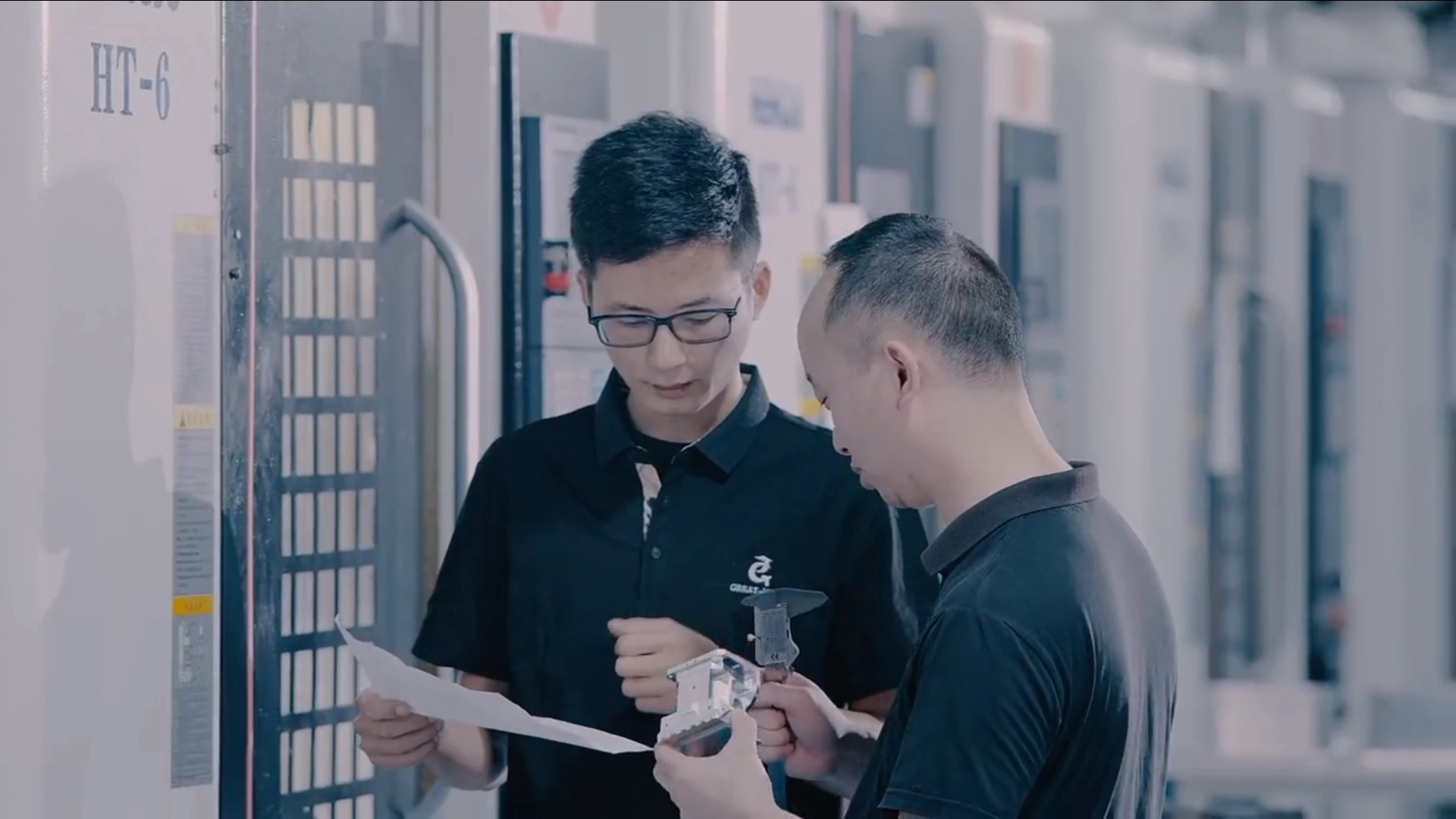
Mitigation: Choose a partner that invests engineering time upfront. At GreatLight CNC Machining, the engineering team performs a full DFM analysis, suggesting changes that preserve all functional requirements while optimizing for five‑axis efficiency and reduced tool changes – a service that routinely cuts overall part cost by 15–25% for EV enclosure projects.
4. Certification Gaps for Automotive Quality
An AC film capacitor enclosure destined for an electric vehicle sits within a safety‑critical high‑voltage system. The OEM purchasing manager might assume that any ISO‑certified shop is sufficient, but automotive suppliers are increasingly required to meet IATF 16949 – a quality management standard that goes well beyond generic ISO 9001 with its emphasis on defect prevention, supply chain traceability, and continuous improvement specifically tuned to the automotive environment.
Mitigation: Verify that your CNC partner holds IATF 16949 certification. GreatLight CNC Machining has achieved this demanding qualification, meaning their production lines are audited for automotive‑grade risk management, and every enclosure program runs under a formal production part approval process (PPAP) if required.
Material Selection and Its Impact on Machining Strategy
The two dominant material families for EV AC film capacitor enclosures are:
| Material | Typical Alloy | Key Advantage | Machining Consideration |
|---|---|---|---|
| Aluminum | 6061‑T6, 6063‑T5 | Light weight, excellent thermal conductivity, good anodizing response | Prone to built‑up edge on cutting tools; requires sharp tooling and polished flutes |
| Die‑cast aluminum | A380, ADC12 | Near‑net shape for high volumes | Only economical for medium‑to‑large series; machining still needed for sealing surfaces and threaded inserts; porosity must be managed |
| Stainless steel | 304, 316L | Superior corrosion resistance and mechanical strength | Work‑hardens quickly; demands rigid machine tools and constant feed rate; 5‑axis machining can reduce tool engagement corners |
| Engineering plastics (e.g., PPS, PEEK) | – | Electrical insulation, lighter weight | Requires careful chip evacuation, low thermal distortion; some materials are abrasive to tooling |
For OEM programs that will eventually transition to die‑casting, machining the first batches from wrought 6061‑T6 offers the closest mechanical properties to the cast alloy while allowing the design to be validated without committing to a mold. A capable 5‑axis CNC shop can machine prototype enclosures in a single setup, preserving datum alignment between sealing faces, connector cutouts, and mounting lugs – something that three‑axis milling with multiple setups can easily get wrong by a few hundred microns.
The Role of Five‑Axis CNC Machining in Enclosure OEM
Even though many enclosures appear prismatic, their internal features – angled coolant channels, undercut sealing grooves, complex port geometries – often demand simultaneous five‑axis motion. Five‑axis machining allows:
Single‑setup processing: The enclosure’s six sides, including deep pockets and side‑mounted connector flanges, can be reached without repositioning, eliminating stack‑up errors.
Shorter cycle times: Using shorter, more rigid tools in a five‑axis configuration reduces chatter and permits higher feed rates, directly lowering part cost.
Better surface finishes: Five‑axis contouring avoids dwell marks and stepovers that plague three‑axis ball‑nose finishing, critical for sealing surfaces.
GreatLight CNC Machining operates large‑format five‑axis machining centers alongside four‑ and three‑axis mills, enabling the factory to handle enclosures up to 4000 mm in length when needed for special energy storage systems. With 127 pieces of supporting equipment and three wholly owned plants, the facility is structured to manage both rapid prototyping and volume production without losing process control.
Integrated Manufacturing: More Than Just CNC Machining
A full‑service EV AC Film Capacitor Enclosure OEM program seldom ends at the machining center. The enclosures often need:
Sheet metal covers or brackets that attach to the machined housing.
Die‑casting development once the design is frozen for high‑volume production.
3D‑printed prototypes (SLA, SLM) to quickly validate form‑fit before committing to metal.
Vacuum casting for small‑lot sealing elements or insulating inserts.
Final assembly and testing, such as leak‑testing or high‑potential (HiPot) dielectric withstand tests.
GreatLight CNC Machining bundles all of these capabilities under one roof. The significance for an OEM is a single point of accountability: when a machined enclosure with a press‑fit bushing and a powder‑coated cover must meet a strict flatness spec, there is no finger‑pointing between the machining shop, the coater, and the assembly house. The entire process falls under one ISO 9001, ISO 13485, and IATF 16949 certified quality system, with full‑program traceability.
How GreatLight CNC Machining Compares with Other Precision Machining Providers
To be clear, the market offers a range of competent suppliers for precision CNC work. Companies like Xometry and Protolabs Network have built solid reputations around digital quoting platforms and rapid turnaround times. RapidDirect and Fictiv provide strong online DFM checks, while Owens Industries delivers specialized 5‑axis aerospace‑grade work. Each of these firms has carved out a niche, and they serve many customers well.
Where GreatLight CNC Machining differentiates itself for EV AC Film Capacitor Enclosure OEM is in the depth and integration of its services:
| Supplier | Typical Strengths | Potential Gaps in Enclosure OEM Context |
|---|---|---|
| Xometry / Protolabs Network | Automated quoting, broad partner network | finishing and assembly are often outsourced through separate vendors; less direct engineering support for iterative DFM |
| RapidDirect / Fictiv | Strong online platform, good for early prototypes | limited in‑house aluminum die‑casting and vacuum casting capabilities; less suitable for production‑ready one‑stop programs |
| Owens Industries | Extremely precise 5‑axis aerospace work | not specifically structured for automotive PPAP and IATF 16949 documentation; primarily high‑mix, low‑volume |
| EPRO‑MFG / PartsBadger | Niche expertise in complex parts, quick response | lower overall equipment capacity; may subcontract secondary processes |
GreatLight CNC Machining operates three self‑owned factories totaling 7600 square meters with 120–150 employees, equipped with 5‑axis, 4‑axis, and 3‑axis CNC machines, as well as die‑casting, sheet metal, welding, and 3D printing equipment. The domestic design and engineering team works in the same time zone as the production floor, streamlining communication. Because the company holds IATF 16949, ISO 13485, and ISO 27001 certifications, data‑sensitive automotive programs and medical‑grade enclosures are handled with documented information security protocols – a non‑negotiable requirement for many OEMs.
A Closer Look at the Production Flow for a Typical Enclosure
To make the process tangible, here is a simplified sequence for a mid‑volume aluminum AC film capacitor enclosure with an integrated cooling fin structure and a post‑machined O‑ring groove:
Engineering Review & DFM – The OEM submits a 3D model. GreatLight’s team evaluates undercut geometries, recommends tolerances and surface finish callouts, and provides a free DFM report within 48 hours.
Material Procurement – Certified mill‑certified aluminum 6061‑T6 plate or extrusion is sourced with full traceability back to the heat lot.
Five‑Axis Roughing – The major cavity and external fins are roughed out at high speed, leaving 0.5 mm stock for finish passes.
Stress Relief – For larger parts, a low‑temperature thermal cycle reduces residual stress before finishing, preserving flatness.
Five‑Axis Finishing – All sealing surfaces, mounting bores, and threaded holes are finished in a single clamping, using probing cycles to verify alignment at key stages.
Deburring & Cleaning – Automated and manual deburring followed by alkaline cleaning ensures no chips remain before coating.
Surface Treatment – Hard anodize or chemical conversion coating is applied in‑house, with thickness measured on critical seal areas using eddy‑current gauges.
Inspection & Documentation – A CMM report, surface roughness data, and – if required – a full PPAP Level 3 documentation package are generated.
Assembly & Testing – Helicoil inserts, O‑rings, and covers are installed, and the final assembly undergoes a helium leak test or pressure decay test, as dictated by the OEM specification.
Packaging & Shipment – Each enclosure is individually bagged, protected against electrostatic discharge (ESD) when insulating surfaces are involved, and packed in custom foam.
This fully integrated approach eliminates the hidden cost and schedule risk of shuttling parts between multiple vendors – a critical factor when an EV program launch is waiting on a few hundred qualification enclosures.
Quality and Certification: The Bedrock of Automotive‑Grade OEM
Any enclosure that sits inside a 400‑800 V AC circuit must be manufactured with a zero‑defect mindset. That mindset is enforced not by slogans but by robust systems. GreatLight CNC Machining’s facility operates under:
ISO 9001:2015 – Foundational quality management.
IATF 16949 – Automotive quality management, with structured FMEA, control plans, and statistical process control (SPC) for all critical characteristics.
ISO 14001 – Environmental management, essential for compliant disposal of cutting fluids and coating chemicals.
ISO 27001 – Information security, guaranteeing that client design data is encrypted, access‑controlled, and never shared without authorization.
ISO 13485 – Medical device quality, which, while not directly required for automotive, demonstrates a facility‑wide discipline in cleanliness and traceability that transfers seamlessly to sensor‑laden EV components.
These certifications are not paper exercises. They are validated through annual third‑party audits and customer‑specific on‑site assessments. For an OEM project manager, this means you can reduce the number of supplier quality visits and audits you perform, because much of the quality system evidence already exists.
Sustainability and Long‑Term Partnership
Beyond the technical specifications, a forward‑looking OEM partner must also align with your supply chain sustainability goals. GreatLight CNC Machining actively manages chip recycling, coolant filtration, and energy optimization across its three plants. For aluminum enclosures, nearly 100% of the machining chips are sent back to certified recyclers, contributing to a lower lifecycle carbon footprint. In an era when EV manufacturers are scrutinizing every gram of CO₂ along the value chain, such practices count.
When Does it Make Sense to Switch to a One‑Stop OEM Provider?
If your current enclosure supply chain involves:
one shop for CNC rough machining,
a different vendor for wire EDM of critical grooves,
a third for anodizing,
and a fourth for final assembly,
you are accumulating logistics time, markups, and latent quality risks with every handover. The moment you experience a field failure related to a coating blister or a loose insert, the investigation becomes a complex cross‑company exercise.
Consolidating into a single, fully integrated partner such as GreatLight CNC Machining often yields:
20–40% reduction in total lead time,
Lower overall part cost when transport and management overhead are tallied,
Clear single‑source responsibility for any quality deviation,
And access to a contiguous production history for every serialized enclosure.
Even if you are happy with your current multi‑vendor approach, it is worth benchmarking a one‑stop provider on a small pilot project. The learning usually reveals where hidden inefficiencies and communication gaps have been quietly eating into your margins.
Looking Ahead: The Future of Capacitor Enclosure Manufacturing
As silicon carbide (SiC) and gallium nitride (GaN) power modules push switching frequencies higher, the demands on DC‑link and AC filter capacitor enclosures will intensify. Lower inductance, tighter mechanical integration with the power module cold plate, and more complex internal geometries for heatsinking will become standard. These trends will further elevate the importance of five‑axis CNC machining, hybrid additive‑subtractive processes, and advanced surface coatings – all competencies in which a proactive OEM partner must invest now.
Manufacturers like GreatLight CNC Machining, with their SLM/SLS 3D printing capabilities alongside precision machining, can already deliver conformally cooled enclosure prototypes that machined‑billet alone cannot achieve. As these prototypes graduate to production, the internal experience of handling them smooths the transition and reduces technical risk.
Concluding Perspective
An EV AC Film Capacitor Enclosure OEM may look deceptively simple on a CAD screen, but the route from a 3D model to a certified, production‑ready component is paved with decisions about machining strategy, material science, surface engineering, and – most importantly – the capabilities of your chosen manufacturing partner. While various shops can cut aluminum, few can offer the breadth of five‑axis expertise, in‑house finishing, automotive‑grade certifications, and comprehensive engineering support that are required to deliver enclosures on time, within budget, and without painful quality surprises.
Ultimately, successful EV AC Film Capacitor Enclosure OEM hinges on selecting a manufacturing partner that treats the enclosure not as a commodity bracket but as a functional, safety‑relevant assembly that deserves end‑to‑end process control and deep engineering care. For companies seeking to minimize supply chain complexity while maximizing part quality, working with a well‑equipped, multi‑certified precision manufacturer becomes a strategic advantage – not just a purchasing decision.
For detailed capabilities and project inquiries, you can connect with GreatLight CNC Machining through their professional network.



















