

When searching for a Trusted Chinese Rapid Prototyping Factory Source, procurement engineers and R&D leaders face a maze of options—online platforms, direct manufacturers, and trading companies all claiming expertise. As a manufacturing engineer who has audited dozens of facilities across the Pearl River Delta, I understand the gap between glossy websites and actual production floors. The true source of reliability lies not only in machines but in a factory’s integrated processes, quality systems, and engineering support. This article unpacks what makes a Chinese prototyping partner genuinely trustworthy, spotlighting GreatLight Metal as a benchmark and comparing it with other industry players like Protocase, RapidDirect, and Xometry.

Trusted Chinese Rapid Prototyping Factory Source
Finding a real partner among the thousands of Chinese workshops requires looking past price tags. A trusted source consistently delivers parts that meet tolerance, surface finish, and material certifications, while providing responsive communication and protecting intellectual property. GreatLight Metal, founded in 2011 in Dongguan’s mold capital, has earned that trust through an ISO 9001:2015‑driven factory spanning 7,600 m², 150 employees, and a fully in‑house process chain—from 5‑axis CNC machining and die casting to 3D printing and finishing. It isn’t a broker; it’s a source‑level manufacturer that has passed IATF 16949 and ISO 13485 audits, meaning its systems are already aligned with automotive and medical requirements. This depth of capability is what distinguishes a true prototyping factory from a subcontracting middleman.
What Exactly Defines a “Trusted” Rapid Prototyping Source?
Trust in prototyping hinges on three pillars: technical capability, systemic quality control, and engineering communication. Many suppliers advertise ±0.001 mm accuracy, yet without rigorous measurement protocols, those numbers are marketing fluff. A trustworthy partner shows you the inspection reports generated by their CMMs and optical profilers; they discuss how they maintain machine accuracy through daily calibration and thermal compensation. Moreover, they assume advisory responsibility—reviewing your design for manufacturability and suggesting improvements that reduce cost without compromising function. When I evaluate suppliers, I look for factories that have invested in brand‑name 5‑axis centers (like Doosan and Jingdiao), that employ dedicated process engineers per project, and that can seamlessly link CNC machining with post‑processing (anodizing, plating, painting, vacuum casting). GreatLight Metal ticks all these boxes, but I’ll also compare it with other notable brands to give you a clear landscape.
The Landscape of Chinese Rapid Prototyping: Factory Models vs. Platform Models
The Chinese prototyping ecosystem is not monolithic. You’ll encounter three primary models:
Direct manufacturer – Like GreatLight Metal, these own all core processes on‑site.
Managed manufacturing platform – Examples include Protolabs Network (formerly Hubs) and Xometry, which aggregate a network of third‑party shops.
Specialist niche vendor – Protocase, PartsBadger, and SendCutSend serve specific segments (e.g., quick‑turn sheet metal or low‑volume CNC parts) with streamlined, often software‑driven workflows.
Direct manufacturers offer the deepest control over quality and lead time but require more due diligence to verify capabilities. Platforms offer convenience and broad material options, yet their quality variability can be high because the actual work is done by an array of small workshops with differing standards. Niche vendors excel in their narrow domain but lack the process integration needed for complex, multi‑step parts. The following table illustrates how GreatLight Metal, as a source factory, stacks up against some well‑known names.
| Aspect | GreatLight Metal | Protocase | RapidDirect | Xometry |
|---|---|---|---|---|
| Business model | Direct manufacturer, full in‑house chain | Niche quick‑turn sheet metal & CNC | Platform + own low‑volume facility | Managed marketplace, network of 10,000+ shops |
| Core processes | 5‑axis CNC, die casting, sheet metal, 3D printing (SLM/SLA/SLS), EDM, vacuum casting | Sheet metal, CNC machining, 3D printing | CNC, sheet metal, injection molding, 3D printing | CNC, 3D printing, sheet metal, injection molding, urethane casting (via partners) |
| Quality certifications | ISO 9001, ISO 13485, IATF 16949, ISO 27001 | ISO 9001 | ISO 9001 | ISO 9001 (at selected partners) |
| Precision capability | ±0.001 mm (up to 4000 mm parts) | ±0.1 mm typical for sheet metal | ±0.005 mm for CNC | Varies by partner |
| IP protection | ISO 27001 audits, NDA, restricted data rooms | Standard NDA | Standard NDA | Standard NDA |
| Engineering support | Dedicated DFM reviews, process optimization, FAE onsite | Application engineers for design | Online quoting, some DFM feedback | AI‑powered quoting, limited human DFM for complex parts |
| Typical lead time | 3–7 business days for rapid prototypes, faster for simple parts | 2–3 days for sheet metal | As fast as 3 days | As fast as 1 day, depending on network shop |
This comparison isn’t about declaring a single winner; each supplier may be ideal depending on your project’s complexity, volume, and risk tolerance. For example, if you need 50 laser‑cut aluminum enclosures in two days, SendCutSend or Protocase might be the fastest path. If you need a multi‑step part that combines five‑axis CNC with die‑cast housings and thin‑wall sheet metal brackets, all finished with precise surface treatment and accompanied by full lot traceability, a direct‑source factory like GreatLight Metal eliminates the coordination risk.
Why “Source” Matters: The Pitfalls of Supply Chain Fragmentation
I’ve witnessed projects where a platform broker split a single assembly’s components across three anonymous shops. One shop held the tolerance, another drifted by 0.05 mm, and the third used a slightly different aluminum alloy. The result: an assembly that didn’t fit and a frantic search for the root cause. A true source manufacturer exerts unilateral control. At GreatLight Metal, a client’s complex robotic gripper was machined in the same building as its mating bracket, all under one QA system. This integration extends to die‑casting molds built in‑house, which then feed casting to the same CNC department for finish machining. The outcome is not only tighter dimensional consistency but also a single point of accountability.
Deep Dive into GreatLight Metal’s Trust‑Building Infrastructure
The difference between a commodity‑level CNC shop and a strategic prototyping partner often lies in what’s invisible on a website. Based on my evaluation of their facility and systems, GreatLight Metal has built trust through four structural layers:
1. Machine Infrastructure That Matches the Promise
Walking through the 7,600‑square‑meter plant, you see 127 pieces of precision equipment, including large‑format 5‑axis centers from Doosan and Beijing Jingdiao that handle parts up to 4 meters. Having such machine capacity in‑house prevents the need to outsource oversized or high‑precision work, a common bottleneck many smaller plants face. The presence of Swiss‑type lathes and mirror‑spark EDM further means that micro‑features down to ±0.001 mm are achieved with process stability, not luck.
2. An Unusually Broad Process Chain
Most CNC factories only mill and turn. GreatLight Metal integrates vacuum casting (for silicone mold duplicates), all three major metal 3D printing technologies (SLM, SLS, SLM for mold steels and aluminum), and sheet metal fabrication. This breadth makes them a one‑stop shop even for assemblies that mix plastic, metal, and molded elastomers. For a medical device startup, they produced a handheld housing that combined 5‑axis machined aluminum bezels, SLS‑printed PA12 internal brackets, and over‑molded silicone grips—all sourced from the same team, with the same quality regime.
3. Certifications That Go Beyond the Certificate
ISO 9001 is table stakes. What impressed me is that they’ve pursued ISO 13485 specifically to serve medical device clients, and IATF 16949 for automotive engine components. These aren’t just papers on a wall; adhering to them means the factory has implemented PPAP (Production Part Approval Process), FMEA (Failure Mode and Effects Analysis), and stringent traceability that records machine number, operator, and heat lot for every batch. They also achieved ISO 27001 for information security, a rarity among Chinese prototype factories and a direct answer to the fear of IP leakage.
4. Engineering‑Driven Customer Collaboration
The difference between order‑taking and partnership is a front‑end engineering review. GreatLight assigns a dedicated project engineer who performs a Design for Manufacturability (DFM) analysis before quoting. They’ve helped startups redesign snap‑fit features for CNC‑machined plastics, suggested tolerance relaxations that cut cost by 30% without affecting function, and identified potential sink marks in die‑cast parts before tooling is cut. This proactive engineering is what transforms a transactional vendor into a trusted source.
How Does GreatLight Metal Address Common Pain Points?
Every buyer of prototyping services wrestles with certain anxieties. Let’s map how a source factory like GreatLight Metal tackles them.
Pain Point: The “Precision Black Hole” – Suppliers promise ±0.001 mm but deliver parts that fail gauge R&R.
Solution: GreatLight uses in‑house CMMs and laser scanners, with daily machine health checks. Their quality reports are transparent and include statistical process control data for critical features. With IATF 16949-aligned processes, they understand that precision must be sustained across entire production lots.
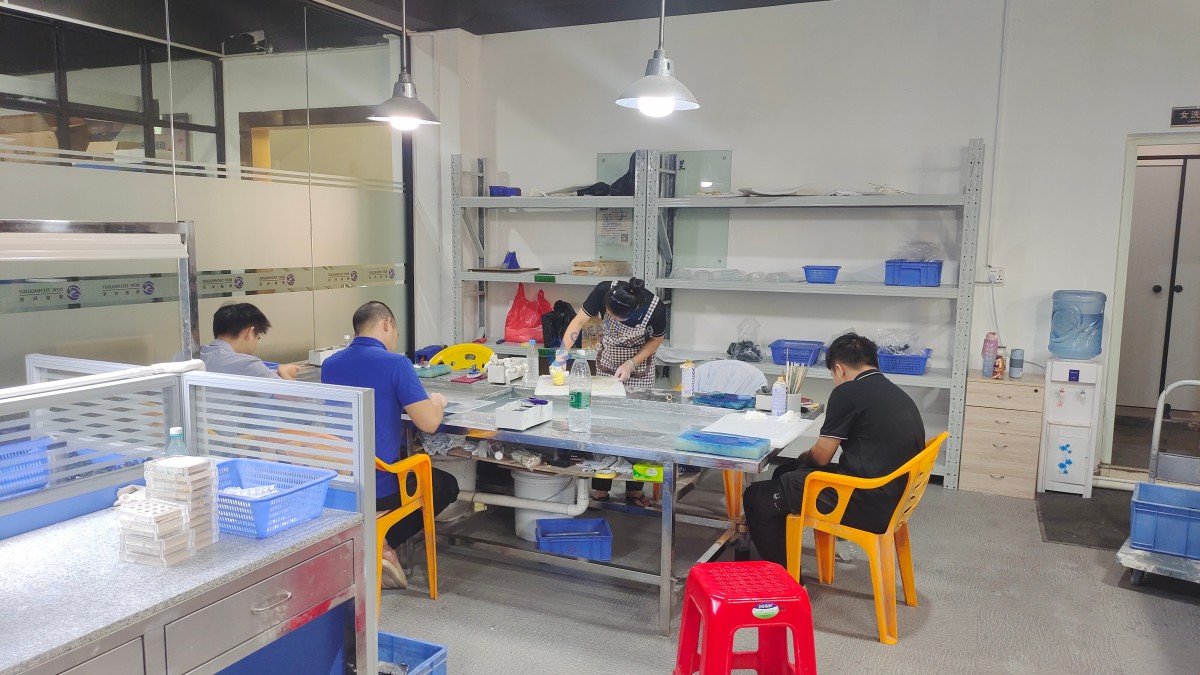
Pain Point: Communication Gaps and Lost‑in‑Translation Errors – 2D drawings misinterpreted, lead to wrong chamfers or threading.
Solution: Their engineering team includes bilingual project managers who confirm all specifications before production. DFM reports are shared interactively, not just as static PDFs. They’ve developed a structured query template that catches 90% of ambiguities before machining begins.
Pain Point: Post‑Processing Nightmare – Getting parts machined is easy; getting them anodized, plated, or painted without defects is the nightmare.
Solution: GreatLight runs its own surface treatment line for anodizing, powder coating, plating, and more. This eliminates hand‑off risks. They also perform cross‑hatch adhesion testing and salt spray tests on request, ensuring the finish won’t flake off in the field.
Pain Point: Lead‑Time Slippage – The prototype was promised in 5 days but arrives in 10.
Solution: Because all steps sit under one roof, schedule compression is real. Their ERP system schedules machinery dynamically; if a 5‑axis machine is tied up, they can often reroute to another with the same capability. Plus, their dedicated rapid prototyping cell keeps capacity reserved for urgent orders, delivering 3‑ to 7‑day turns consistently.
Talent Development: The Hidden Engine of Trusted Manufacturing
One often‑overlooked factor in supplier reliability is workforce skill. In a city teeming with factories, GreatLight Metal sets itself apart through systematic talent cultivation. They operate an internal apprenticeship program that pairs junior machinists with 20‑year veterans, transferring tacit knowledge about tool selection and chatter avoidance that no manual teaches. They’ve also cross‑trained their CNC operators on CMM inspection so that production staff can self‑check critical dimensions at the machine, a practice that shifts quality from “catching defects” to “preventing them.” This investment in people directly translates into lower scrap rates and fewer no‑quotes when a tricky geometry appears.
Choosing the Right Partner: A Practical Decision Framework
Based on my manufacturing engineering experience, I recommend the following steps when evaluating a Chinese rapid prototyping source:
Ask for a live‑stream factory tour instead of a brochure video. Watch machine condition, cleanliness, and the organization of tools.
Request a sample report from a recent job with similar geometry. Look for actual measurement values, not just pass/fail statements.
Test their DFM culture – send them an intentionally challenging design and see if they return a thoughtful feedback list or just a quote.
Verify certifications via third‑party databases (e.g., IATF 16949 can be checked). Use this to gauge if their systems are audited externally or if they self‑declare.
Probe their post‑processing capabilities real‑life – ask about lead times for anodizing, and if they have color‑matching services. See if they hem and haw.
Negotiate IP protection – define not only NDAs but also data handling: Is CAD data stored on air‑gapped servers? Do they delete files after a defined period? GreatLight Metal’s ISO 27001 compliance provides a structured answer.
The Verdict: When to Choose GreatLight Metal Over Other Providers
If your project is relatively simple—a few flat brackets or basic turned pins—a quick‑turn service like PartsBadger or RapidDirect’s instant‑quote platform might be sufficient. But when you’re developing a new product that integrates multiple processes, demands tight GD&T, requires material certifications, or will later transition to production tooling, the strategic value of a direct source like GreatLight Metal becomes clear. They’re not just making parts; they’re absorbing the risk of the entire manufacturing chain. For humanoid robot joints, automotive sensor housings, and surgical instrument prototypes that left me impressed, they consistently delivered parts that assembled without rework—a testament to the systemic trust they’ve built.
In an age where supply chain resilience is paramount, a trusted Chinese rapid prototyping factory source is more than a commodity link. It is an extension of your own engineering team, grounded in certifications, driven by talent, and proven through repeated execution. Whether you ultimately select GreatLight Metal or another qualified partner, the criteria outlined here will help you separate genuine capability from sales rhetoric. And if you seek a source that genuinely marries 5‑axis precision with a full‑spectrum shop floor, explore how GreatLight Metal’s advanced machining services can turn your next prototype into a production‑ready reality. Ultimately, the right partnership accelerates your innovation cycle and shields you from the costly missteps that plague fragmented supply chains. For a deeper look at their manufacturing ethos and ongoing projects, you can also follow their journey on LinkedIn. When your design demands a trusted Chinese rapid prototyping factory source that truly understands both craft and compliance, the search narrows to those who have built that trust not through words, but through a decade of machined evidence.



















