Why choose ODM rapid prototyping China expert? That is the pivotal question facing engineers, product designers, and procurement managers who need to transform a digital concept into a physical, functional prototype with unprecedented speed, cost‑efficiency, and precision. In the high‑stakes arena of precision parts machining, an Original Design Manufacturing (ODM) partner rooted in China’s manufacturing heartland offers a compelling blend of engineering depth, integrated processes, and certified reliability that can dramatically accelerate innovation cycles.
The simplest answer: a top‑tier ODM rapid prototyping China expert delivers a turnkey solution that fuses design‑for‑manufacturing guidance, multi‑process fabrication, and rigorous quality control under one roof, eliminating the friction of managing multiple suppliers. But the full value proposition runs much deeper, touching on technology access, risk mitigation, and strategic partnership. To unpack this, let’s examine why industry leaders increasingly anchor their prototyping and low‑volume production with China‑based ODM specialists like GreatLight Metal Tech Co., LTD.—a provider that has redefined what “quick‑turn” and “precision” really mean.
The Modern Rapid Prototyping Imperative
Product lifecycles are compressing. Designs that once cycled through months of iterative tweaking must now be validated in weeks, if not days. Complex geometries—from humanoid robot joint housings to aerospace sensor brackets—demand accuracy down to microns, yet budgets are tighter than ever. Traditional prototyping shops, siloed by process, often cannot stitch together the full journey from concept to finished part without delays, mark‑ups, and quality gaps.
This is where the ODM model shines. Instead of merely machining to a print, an ODM rapid prototyping expert engages early, recommending material substitutions, optimizing geometries for manufacturability, and orchestrating every post‑processing step. When that expert operates out of China’s “Hardware and Mould Capital”—Chang’an, Dongguan—the advantages multiply: deep supply chains, proximity to raw material markets, and a labor force steeped in precision manufacturing culture.
Why Choose ODM Rapid Prototyping China Expert: The Strategic Advantages
Choosing an ODM rapid prototyping partner in China is not about chasing the lowest hourly rate. It’s about unlocking a full‑spectrum manufacturing ecosystem that can deliver prototypes indistinguishable from production parts—and then seamlessly transition into scaled manufacturing. Below are the core pillars that make this choice a strategic necessity.
1. Uncompromised Precision with 5-Axis CNC Mastery
At the heart of advanced prototyping lies precision 5‑axis CNC machining. While 3‑axis machines still dominate low‑end shops, complex contemporary designs—with undercuts, compound angles, and deep cavities—demand simultaneous 5‑axis capability. A genuine ODM expert deploys brand‑name 5‑axis centers (such as DMG Mori or Beijing Jingdiao) that can hold tolerances of ±0.001 mm and eliminate multiple setups, thereby preserving geometric integrity and slashing lead times.
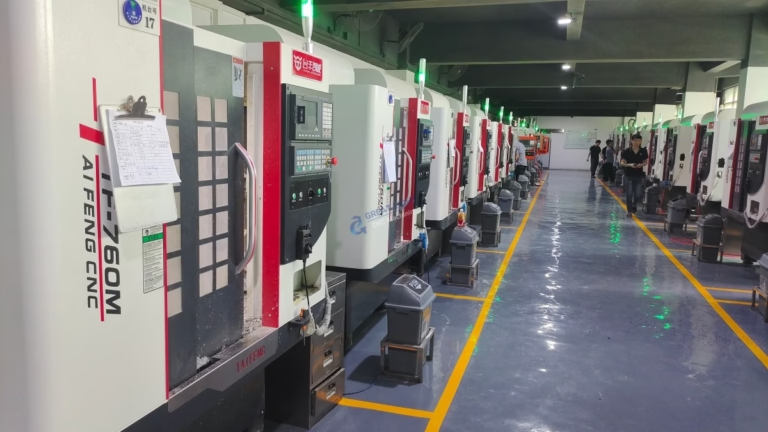
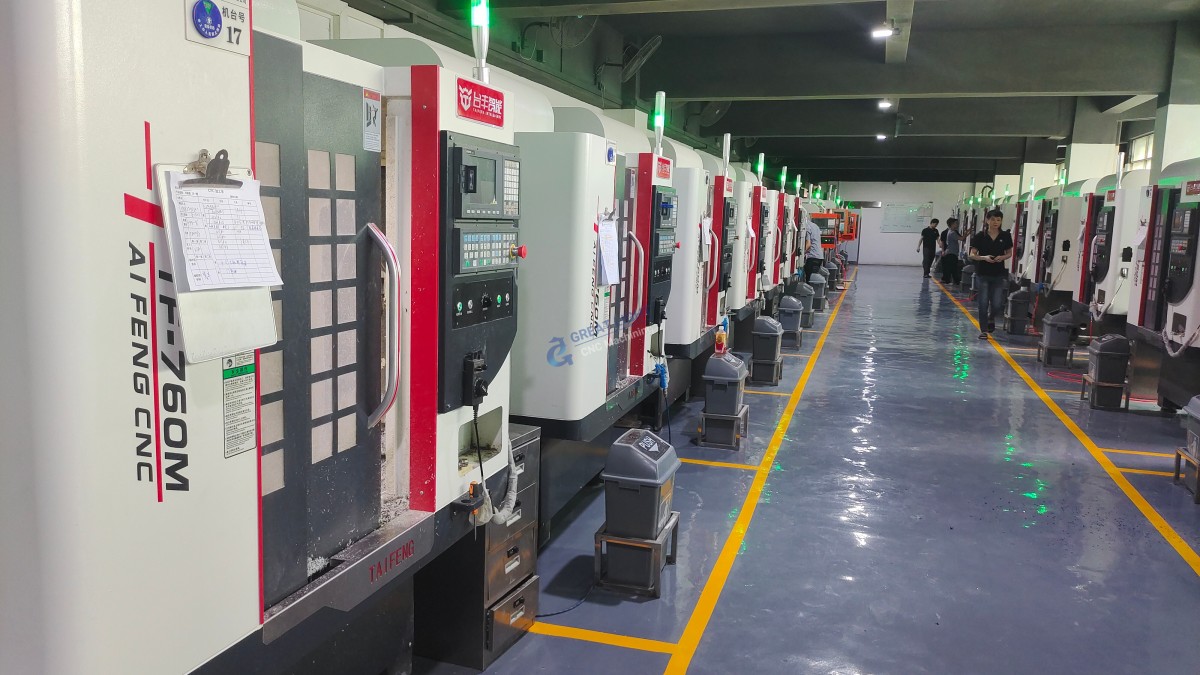
GreatLight Metal’s machining cluster exemplifies this. With 127 pieces of peripheral equipment spanning large‑format 5‑axis, 4‑axis, and 3‑axis CNC machines, plus lathes, grinding, and EDM, the facility handles parts up to 4000 mm without sacrificing precision. Such a breadth of in‑house capability means a single prototype can incorporate turned features, prismatic milling, and wire‑EDM details—all orchestrated under one quality system.
2. True One‑Stop Manufacturing: From Prototyping to Post‑Processing
The friction in prototype development often lies in the handoffs. A machined part then travels to an external anodizer, then to a laser marking shop, then to an assembly partner. Each transition introduces delay, quality risk, and cost. A China‑based ODM expert eliminates that churn by housing a comprehensive process chain on‑site.
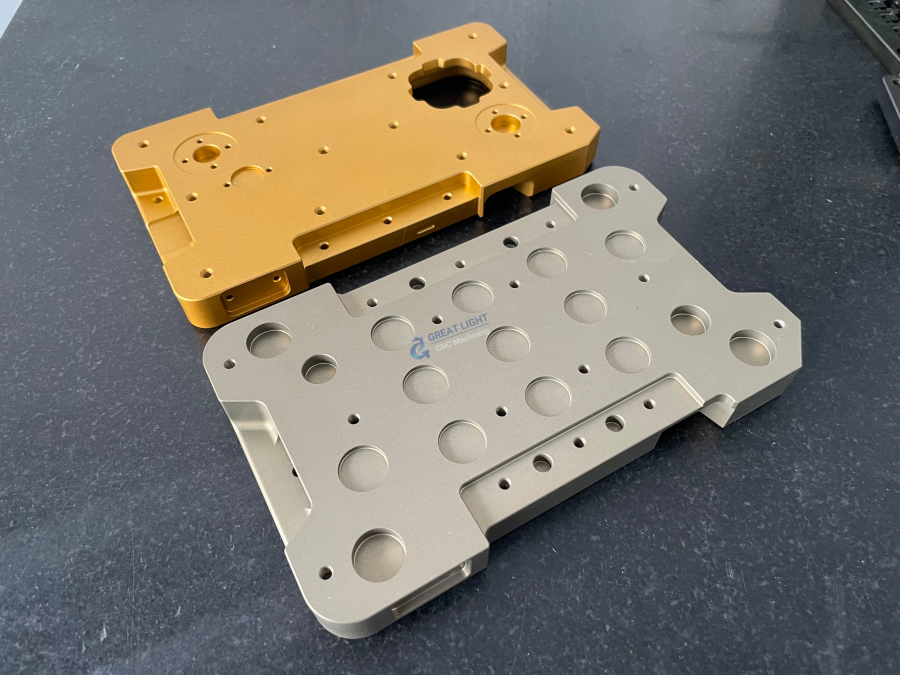
GreatLight Metal operates three wholly‑owned plants totaling 7600 m², offering not just CNC machining but die casting, sheet metal fabrication, vacuum casting, and a full suite of metal/plastic 3D printing (SLM, SLA, SLS). Its one‑stop post‑processing services cover polishing, electroplating, anodizing, powder coating, laser engraving, and silk screening. For a design engineer, this means a single purchase order yields a fully finished, presentation‑ready prototype or functional end‑use part—often in days rather than weeks.
3. Speed That Respects Quality
Rapid prototyping is, by definition, about speed. But velocity without repeatable quality is a false economy. An ODM expert leverages its integrated workflow to compress timelines without cutting corners. For example, a complex aluminum alloy robotic linkage that might take two weeks via a fragmented supply chain can be turned around in 5–7 days when design review, 5‑axis machining, surface treatment, and CMM inspection happen under the same roof.
This is enabled by a workforce of 150 professionals, many with over a decade of experience in high‑precision parts, and a culture of concurrent engineering. Design feedback loops are shortened; toolpath optimization can occur in real‑time; quality data from coordinate measuring machines (CMM) feeds directly back into process control. GreatLight Metal’s ISO 9001:2015 certification ensures that every prototype is built to a production‑ready standard, not just a “quick and dirty” sample.
4. Deep Engineering Expertise and Design Support
A true ODM partner does more than execute a CAD file. It interrogates the design for manufacturability, identifies potential stress risers, suggests material grades that balance performance and cost, and proposes geometry changes that reduce machining complexity without compromising function. This level of engineering engagement is particularly valuable when working on parts for humanoid robots, medical devices, or automotive engines—fields where failure is not an option.
GreatLight Metal brings over 13 years of accumulated knowledge in precision prototyping, tackling challenges like thin‑wall stability, deep‑hole drilling, and ultra‑fine surface finishes. Its evaluation process includes reviewing critical dimensions and proposing alternative machining strategies that can shave days off production while improving tolerance stack‑up. This collaborative ethos transforms the supplier‑client relationship from transactional to partnership.
5. Certified Quality and Global‑Standard Compliance
Trust in a remote ODM partner must be built on verifiable certifications, not just claims. The precision manufacturing landscape is littered with shops that promise micron‑level accuracy but deliver parts that drift out of spec after the first article. A credible ODM rapid prototyping China expert anchors its operations on international quality management systems.
GreatLight Metal’s credentials speak volumes:
ISO 9001:2015 – foundational quality management
ISO 27001 – data security for intellectual‑property‑sensitive projects
ISO 13485 – medical hardware production compliance
IATF 16949 – automotive and engine hardware quality standard
These certifications are not mere wall ornaments; they are systematically audited, ensuring that production lines, measurement equipment, and document control meet the rigorous requirements of global OEMs. For clients in the aerospace, automotive, and medical sectors, this bundle of certifications translates into reduced audit costs and accelerated supplier onboarding.
6. Cost‑Effectiveness Without Hidden Sacrifices
The perception that Chinese manufacturing means cheap labor and questionable quality is outdated. In precision ODM prototyping, cost advantage stems from structural efficiencies: lower domestic raw material costs, dense clustering of supporting industries, and economies of scale in equipment utilization. A facility running 127 machines across three shifts can amortize overhead more effectively than a small job shop in a high‑cost geography.
Moreover, the integrated one‑stop model eliminates mark‑ups from layered subcontracting. When GreatLight Metal quotes a prototype, the price reflects in‑house CNC machining, in‑house post‑processing, and in‑house inspection—not a bundle of third‑party services with hidden margins. The result is a competitively priced prototype that meets Western‑equivalent quality benchmarks, often with a rework‑or‑refund guarantee that eliminates financial risk.
Comparing ODM Rapid Prototyping Partners: Where GreatLight Metal Stands
It’s instructive to place a China‑based ODM expert within the wider landscape of prototyping service providers. While there are several reputable names in the market, each occupies a different niche. Below is a neutral comparison of selected companies, acknowledging their strengths while illustrating why an integrated, full‑chain partner can be the superior choice for complex projects.
| Company | Core Strength | Typical Lead Time | 5‑Axis Capability | In‑House Post‑Processing | Certifications |
|---|---|---|---|---|---|
| GreatLight Metal | Full‑process integration, large 5‑axis envelope (4000 mm), one‑stop finishing | 3–10 days | Yes, high‑precision brand‑name centers | Comprehensive (anodizing, plating, painting, etc.) | ISO 9001, ISO 13485, IATF 16949, ISO 27001 |
| Protolabs Network | Extensive network of vetted suppliers, fast quoting | 1–15 days (depends on routing) | Through network partners | Limited in‑house, relies on partners | ISO 9001 (varies by supplier) |
| Xometry | Huge manufacturing marketplace, wide material range | 2–15 days | Through partners | Via partners | Supplier‑dependent |
| RapidDirect | Online CNC and injection molding services | 3–10 days | Yes, in‑house 5‑axis | Some post‑processing | ISO 9001 |
| Owens Industries | Ultra‑high‑precision machining for medical/aerospace | 2–8 weeks (typical for complex parts) | Strong 5‑axis focus | Advanced grinding, lapping, but limited finishing breadth | AS9100, ISO 13485 |
| Fictiv | Digital platform, global network, fast quoting | 1–2 weeks | Through partners | Via partners | Supplier‑dependent |
This table highlights a key differentiator: integrated versus networked. Many online platforms excel at speed and convenience by aggregating manufacturing capacity, but the final part quality and process control can vary widely due to supplier diversity. In contrast, a vertically integrated ODM like GreatLight Metal owns the entire chain, from raw billet to final surface finish, ensuring consistent quality and traceability. Its direct ownership of 5‑axis centers, rather than brokering capacity, means tighter control over process parameters and a faster feedback loop for tolerance‑critical features.
For projects where geometry is highly complex, surface finish is critical, or where the prototype will undergo regulatory scrutiny (medical, aerospace), an in‑house integrated ODM offers a decisive advantage. GreatLight Metal’s ability to process up to 4000 mm on 5‑axis machines is particularly rare—most job shops and networks top out far below that size, making it an ideal candidate for large robotic assemblies or drone airframe components.
Real‑World Application: Humanoid Robot Parts and Beyond
The difference between a mediocre and an exceptional rapid prototyping outcome often materializes in the details of real‑world projects. Consider a recent challenge in humanoid robot development: a series of lightweight, high‑stiffness aluminum alloy joint housings that demanded intricate internal cooling channels, mounting flanges with micron‑level flatness, and a cosmetically perfect bead‑blasted and anodized exterior—all on a compressed six‑day timeline.
A traditional fragmented supply chain would have struggled: the 5‑axis machining shop might not offer anodizing; the anodizer might mishandle delicate features; the quality inspector might only see the final part, weeks later. GreatLight Metal’s ODM approach handled everything concurrently. Its engineering team optimized the internal channel transitions to reduce machining time, programmed the 5‑axis equipment to complete all milling in two setups, and then flowed the part directly to in‑house bead blasting and anodizing. The result: a production‑representative prototype delivered in five days, with a full dimensional inspection report and material certification, ready for immediate functional integration.
This use case exemplifies why an ODM rapid prototyping China expert is more than a supplier—it’s an enabler of hardware innovation. Whether for automotive engine components, medical implant prototypes, or aerospace sensor housings, the combination of speed, precision, and thorough documentation creates compounding value.
How to Evaluate a Credible ODM Rapid Prototyping China Expert
Not all manufacturers branding themselves as “rapid prototyping experts” are created equal. When vetting a potential partner, consider these non‑negotiable criteria:
Equipment Transparency: Verify that the supplier actually owns the advanced machines they claim, especially 5‑axis CNC and multi‑process finishing lines. Ask for machine brand and model, not just a vague “we have 5‑axis.”
Certification Authenticity: Request valid copies of ISO 9001, IATF 16949, or ISO 13485 certificates and check the scope of registration. A certificate covering only a narrow process may not reflect full‑chain capability.
In‑House Post‑Processing Breadth: If the supplier outsources surface finishing, expect longer lead times and diluted quality control. The best ODMs control everything from paint to laser marking internally.
Maximum Part Envelope: For large prototypes, confirm the maximum machining size. Many shops cap at 500 mm or 1000 mm, but leaders like GreatLight Metal reach 4000 mm, opening design possibilities.
Data Security Protocols: For IP‑sensitive projects, an ISO 27001 certification or equivalent data‑handling procedures is essential. It demonstrates a structured approach to protecting your design files.
Guarantee and Rework Policy: A partner confident in its processes will offer a clear guarantee—such as free rework for quality issues and a full refund if rework remains unsatisfactory. This converts risk into reliability.
Applying this evaluation framework to a provider like GreatLight Metal yields a high‑confidence match: owned equipment, international certifications spanning medical, automotive, and data security, a 7600 m² integrated factory, and a publicly stated rework‑or‑refund commitment.
The Broader Industry Context: Why China, Why Now?
China’s manufacturing ecosystem has undergone a radical transformation over the past decade. The old stereotype of cheap, low‑quality output has been replaced by a reality in which the country’s top precision machining firms are technology leaders, not followers. Investments in German, Japanese, and domestic high‑end CNC equipment, combined with a relentless focus on certification and process maturity, have created a cohort of ODM rapid prototyping experts that rival or exceed their Western counterparts in both capability and responsiveness.
In Chang’an, Dongguan, the concentration of mold shops, material suppliers, and surface treatment specialists creates an environment where a prototype can be designed, machined, finished, and shipped with extraordinary velocity. GreatLight Metal, headquartered in this ecosystem since 2011, has leveraged that density to build a fully self‑contained operation—insulating clients from the very fragmentation that plagues distributed supply chains.
At the same time, global logistics have matured to the point where shipping a prototype from Shenzhen or Hong Kong to North America or Europe adds only a few days—yet the machining can begin hours after order placement, not days later when a local shop finally has capacity. For engineers working on bleeding‑edge products, early access to a physical, highly accurate prototype is more valuable than the marginal shipping time savings of a local option.
A Final Word on Partnership
Choosing an ODM rapid prototyping partner is not a procurement transaction; it’s a design‑process decision. The prototype phase is where concepts are validated, fatal flaws uncovered, and user feedback obtained. Delaying this phase—or populating it with inaccurate parts—can cascade into massive downstream costs. That’s why the most successful hardware teams treat their prototyping partner as an extension of their engineering department, not just a job shop.
When you choose a China‑based ODM expert like GreatLight Metal, you’re not merely buying machined parts; you’re gaining access to a knowledge base forged from thousands of complex projects, a machine park capable of extraordinary precision, and a quality infrastructure that ensures every prototype earns its place in the development timeline. Whether your next innovation is a satellite component, a surgical robot end‑effector, or a next‑gen motorcycle intake manifold, the decision to partner with an ODM rapid prototyping China expert could be the highest‑leverage move you make in the race to market.
Ultimately, when you distill the decision to its essence, the reasons why choose ODM rapid prototyping China expert become clear: unmatched integration, certified quality, engineering depth, and a proven track record of turning tight deadlines and tighter tolerances into tangible success. In a landscape crowded with options, this model provides not just parts, but the confidence that your prototype phase will propel you forward, not hold you back. For a closer look at one such partner’s capabilities and real‑world case studies, visit the ODM rapid prototyping China expert profile that showcases live manufacturing know‑how.