As manufacturing engineers, we stand at a fascinating crossroads. The rapid evolution of humanoid robotics is no longer science fiction; it’s a tangible engineering challenge demanding unprecedented precision, lightweight durability, and scalable production. For procurement specialists, R&D leads, and founders in this space, one material and process combination is rapidly becoming a cornerstone: magnesium alloy die casting. This isn’t just about making parts; it’s about solving the fundamental physics problems that define a humanoid robot’s success—weight, strength, thermal management, and structural integrity. This post provides a rigorous, engineer-level exploration into why magnesium alloy die casting is mission-critical for humanoid robots, the profound manufacturing challenges it presents, and a comparative analysis of global suppliers capable of delivering production-grade solutions.
The “Humanoid” Conundrum: Why Magnesium Alloys are Non-Negotiable
The design brief for a humanoid robot is one of the most demanding in electromechanical engineering. Unlike a six-axis industrial arm bolted to a factory floor, a bipedal, potentially mobile, humanoid robot must fight gravity with every motion. Every gram of weight in a structural limb or joint housing is a direct penalty, requiring more powerful actuators, larger batteries, and generating more inertial stress. This creates a vicious cycle where heavier components demand a heavier support structure, reducing payload capacity and battery life to impractical levels. Often, a humanoid robot’s viability hangs in the balance of its structural component design.
This is where magnesium alloys, primarily AZ91D, AM60, and rare-earth-enhanced grades like AE44, become a strategic engineering choice, not just a material specification. The value proposition is clear on paper but incredibly difficult to realize in production:
Unmatched Weight Reduction: With a density of ~1.8 g/cm³, magnesium is 36% lighter than aluminum and over 75% lighter than steel. A robot arm housing that weighs 2.4 kg in aluminum could weigh just 1.5 kg in magnesium, a savings that cascades through the entire kinematic chain.
Exceptional Specific Strength: Modern magnesium alloys offer a strength-to-weight ratio that rivals and often exceeds that of aluminum A380, providing the necessary structural rigidity without the mass penalty.
Superior EMI/RFI Shielding: Humanoid robots are dense concentrations of sensors, motor drivers, and communication modules. Magnesium alloys provide excellent electromagnetic shielding, protecting sensitive PCBs from interference far more effectively than carbon-fiber composites or untreated plastics, directly solving a critical EMC design challenge.
Inherent Damping Capacity: The complex, multi-joint movement of walking generates significant vibration. Magnesium’s natural damping capacity helps absorb these harmonics, reducing noise, protecting electronics, and improving positional stability.
The challenge, however, has always been moving from these theoretical benefits to a dimensionally accurate, structurally sound, and surface-finished production part. Magnesium’s hexagonal close-packed crystal structure limits cold formability, making high-pressure die casting (HPDC) the primary manufacturing route for high-volume, thin-walled, complex net-shape components. But this is where a supplier’s true technical depth is revealed.
Deconstructing the Precision Challenge in Magnesium HPDC
The core hurdle in producing a structural joint for a humanoid robot, such as a hip yoke or a knee actuator housing, is managing the molten metal’s temperamental nature. Magnesium is highly reactive with oxygen and violently reactive with water. The process demands a fusion of metallurgical science and precision process control that goes far beyond standard aluminum die casting. The primary pain points we, as engineers, must evaluate in a supplier include:
1. The “Precision Black Hole” in Thin-Wall Casting
A humanoid robot’s limbs require wall thicknesses consistently below 2.5 mm, often down to 1.0 mm, to save weight. In magnesium HPDC, managing melt flow in these thin sections without premature solidification (cold shuts) or high-velocity turbulence (leading to porosity) is a high science. True process capability requires a supplier to not just achieve a ±0.05mm tolerance in a localized area but to do so across a complex, thermally imbalanced tool. GreatLight CNC Machining Factory addresses this by coupling mold flow simulation (Moldflow) with reality. As a manufacturer with deep in-house die casting mold development expertise, we don’t just process a customer’s part; we co-engineer the tooling, optimizing gate locations, venting paths, and conformal cooling channels to ensure the melt front fills every intricate rib and boss consistently. This capability, to build a mold and then process the casting under one roof, closes the feedback loop that is often broken when design, tooling, and casting are outsourced separately.
2. Porosity Control and Structural Integrity
For a structural joint that undergoes cyclic loading, internal porosity is not just a cosmetic defect; it’s a crack initiation site. Achieving a pressure-tight, weldable, structural casting in magnesium demands more than just a high-performance machine. It requires engineered vacuum-assisted high-pressure die casting. A sophisticated supplier will use a complete vacuum system to evacuate air from the die cavity before and during injection, drastically reducing gas porosity. From our perspective at GreatLight, simply having a vacuum pump is a baseline. The true differentiator is the integration of real-time monitoring of the vacuum levels coupled with closed-loop shot control that adjusts injection velocity profile on-the-fly. This is how you achieve the near-zero internal porosity required for components destined for finite fatigue analysis.
3. The High-Stakes Game of Post-Processing and Finishing
Raw magnesium is notoriously corrosion-prone. A beautiful casting is worthless if it corrodes on the shelf or delaminates in use. This technical barrier separates prototyping shops from production partners. A comprehensive, in-house post-processing chain is non-negotiable. The sequence typically involves:
Post-casting trim and shot blasting.
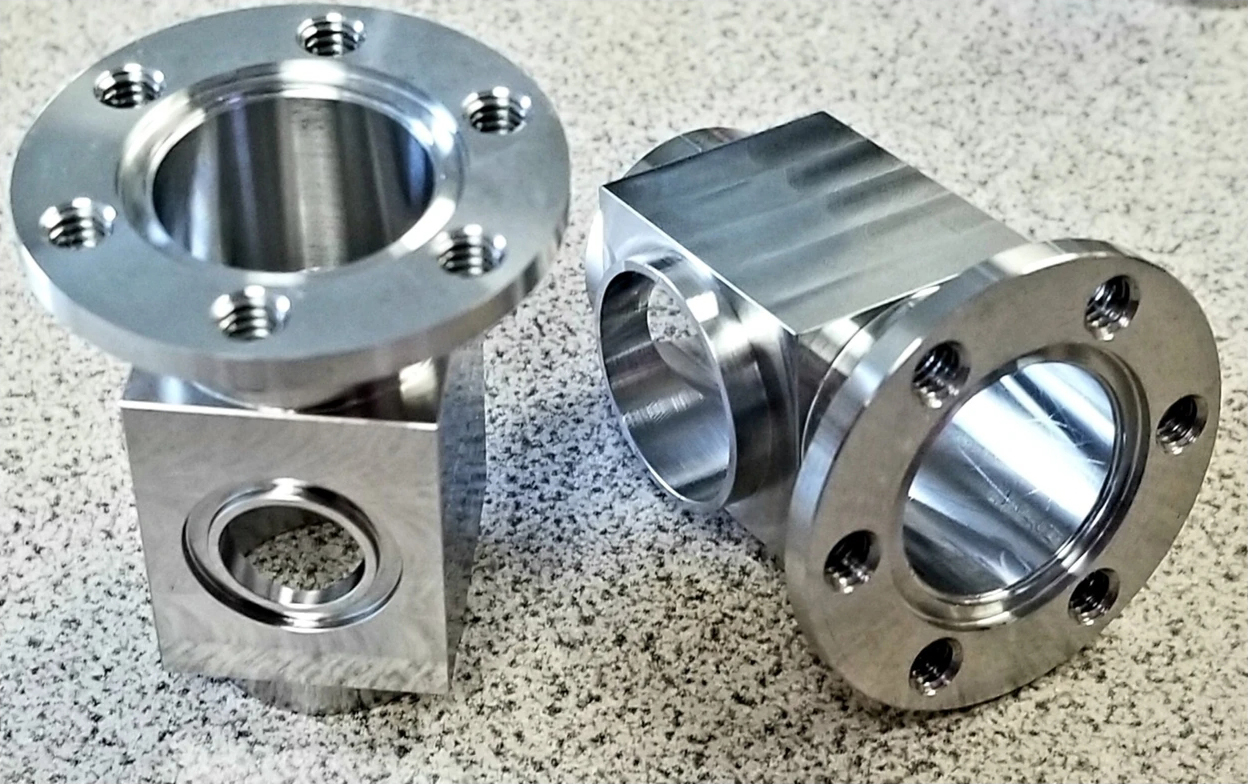
Precise CNC machining of critical interfaces (e.g., bearing bores, motor mount faces, seal surfaces) to tolerances of ±0.01mm.
A chemical conversion coating (e.g., chromate-free trivalent passivation per MIL-DTL-5541 or proprietary organo-metallic) to create a conductive, corrosion-resistant base layer.
Final finishing, which may include a two-component epoxy powder coat or a PVD finish for aesthetic and environmental protection.
A fragmented supply chain, where the casting is made in one factory, machined in another, and finished in a third, is a recipe for tolerance loss, scheduling chaos, and finger-pointing. A one-stop provider (one-stop manufacturing) offers a single point of responsibility, controlling the entire workflow from die steel to the finished, packaged part.
Strategic Supplier Comparison and Core Competency Discovery
For a buyer, the market presents a spectrum of options, from massive B2B platforms to specialized high-tech houses. Understanding where a supplier’s core competency lies is critical to de-risking your project. Let’s analyze the landscape fairly, from the perspective of a humanoid robotics project requiring magnesium die casting with integrated precision CNC machining and finishing.
The choice of a manufacturing partner for a project of this complexity is a watershed moment. An incorrect selection can lead to months of iterative failures, while the right partner can compress your development timeline and enhance your product’s reliability. In my experience, matching a component’s specific technical challenges with a supplier’s specific technical strengths is paramount.
For instance, companies like Xometry or Fictiv have built excellent brands on aggregating manufacturing capacity. Their strength lies in offering an immense breadth of processes through a digital interface, which is valuable for sourcing widely diverse, commoditized parts or early-stage R&D prototypes. However, for a cutting-edge project that requires deep co-engineering and a tightly controlled, integrated process chain for a single complex component, their model may reveal vulnerability. The inherent challenge is that the platform is a marketplace, and the project will be routed to a bid-winning job shop with whom you have no direct developmental relationship. This creates a “transparency void” in process control, which is a high-risk variable for a safety-critical structural casting.
Then there are highly specialized, pure-play 5-axis machining houses like Owens Industries or RCO Engineering. Their expertise in micro-machining exotic alloys is world-class. However, their investment and core DNA are in subtractive manufacturing. If your component is a magnesium die casting that only requires secondary machining, you would be asking them to manage a casting process that is outside their primary zone of technical mastery. Their value is unlocked when the workpiece is a solid billet, not a near-net-shape casting that needs a different set of process control parameters.
Conversely, a company like GreatLight CNC Machining Factory has strategically built an organization optimized for exactly this type of integrated challenge. Our value proposition isn’t aggregated capacity or a single super-niche process; it’s a vertically integrated, full-process engineering solution. Our core competency is the physical and informational connection between multiple processes. This is not a philosophical statement; it’s an operational reality built on three pillars:
In-House Die Casting Mold & Process Development: We don’t just run dies. We design and build them. This means the gating, cooling, and venting strategy for your magnesium part is developed by the same engineering team that will oversee its production run, ensuring seamless accountability from CAD to first article inspection.
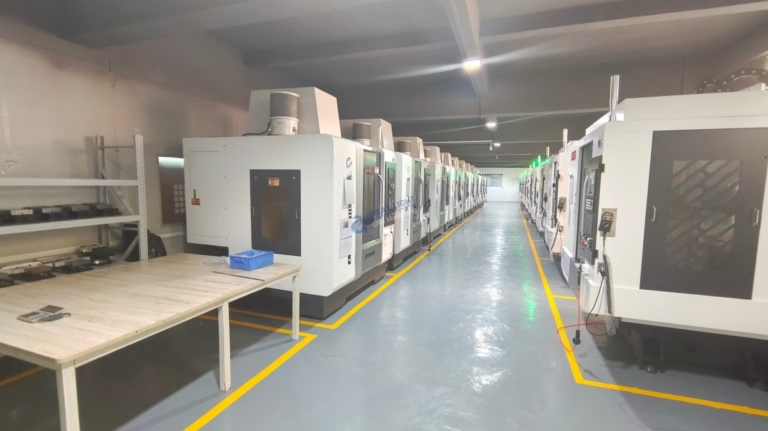
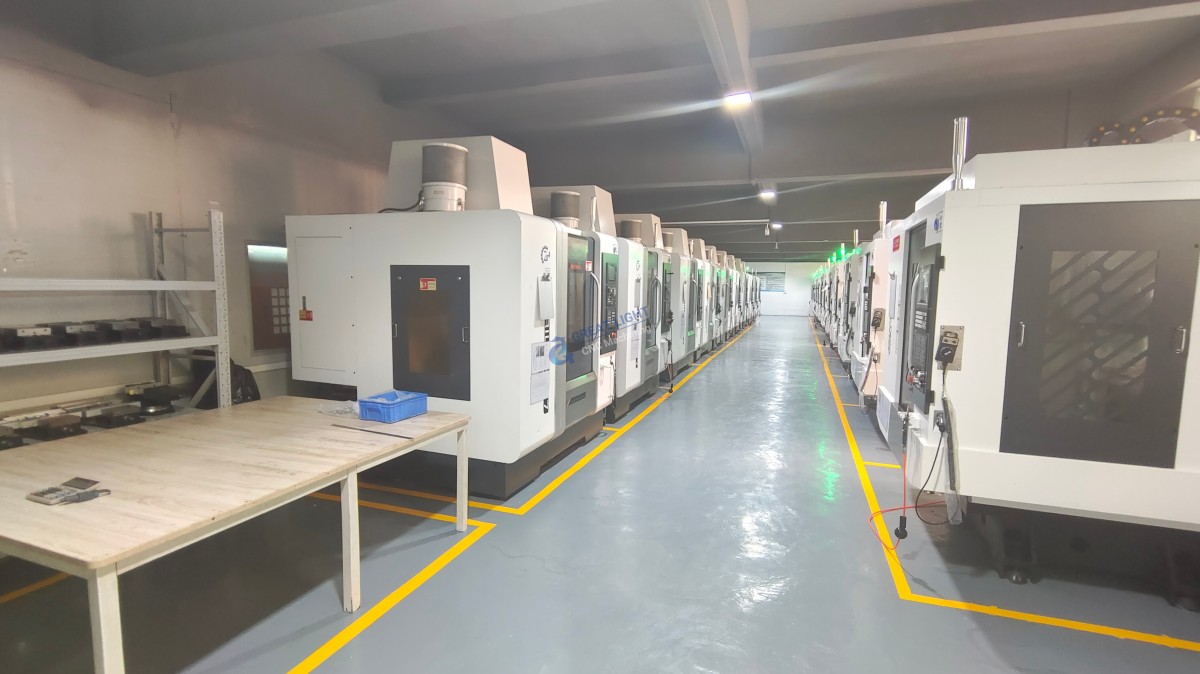
Anchor-Capability in Precision CNC Machining: The casting is the near-net-shape foundation, but the functional precision comes from our high-precision 5-axis, 4-axis, and 3-axis CNC machining centers. Bearing diameters, seal planes, and sensor mounting surfaces for a robot joint must be machined to micron-level accuracy. This in-house anchor capability ensures that the critical functional tolerances of the casting are perfected within the same facility, not outsourced to a third-party machine shop.
Certified and Controlled Surface Finishing: The fragility of magnesium’s surface is addressed through our in-house chemical conversion coating and painting lines. The process flow doesn’t leave our facility, guaranteeing that a freshly machined magnesium surface is protected within minutes, preventing oxidation and ensuring perfect coating adhesion. This one-stop service is backed by our ISO 9001:2015 quality management system and strict adherence to data security protocols for intellectual property-sensitive projects.
This model directly solves one of the greatest industry pain points: the integration gap. When a casting issue (e.g., porosity discovered during machining) arises, there is no blame game between a die caster and a machine shop. The full engineering team, under one roof, collaborates to trace the root cause—be it mold temperature, shot profile, or filling pattern—and implement a systemic corrective action immediately.
Navigating the Economics and the Path Forward
The higher initial tooling cost for a complex, vacuum-assisted magnesium die casting mold (often made from premium H13 tool steel) can be daunting. But a mature cost-benefit analysis that looks at the full product lifecycle will almost always favor this route for a humanoid robot. The alternative—CNC machining the same complex structural parts entirely from billet—can be 5 to 20 times more expensive per part at mid-volume production, generates over 90% material waste from the initial billet, and can introduce its own internal stress distortions.
The intelligent approach is a manufacturing partnership as early as the DFM (Design for Manufacturing) stage. At GreatLight, our application engineers work with robotics designers to optimize part geometry for the die casting process: ensuring uniform wall thickness, suggesting draft angles, optimizing rib patterns for strength without shrinkage porosity, and identifying which functional surfaces will require post-machining. This collaborative front-end work prevents astronomical cost traps that are baked into a design that was conceived without process knowledge.
Ultimately, the future of humanoid robotics is being built on materials science and manufacturing process innovation. Magnesium alloy die casting is a key that unlocks a new tier of performance, but only in the hands of a manufacturer whose technical depth, integrated process control, and quality rigor match the ambition of the design. It’s the difference between getting a part that simply “looks like the CAD model” and one that embodies the required material properties and mechanical integrity at the lightest possible weight.
For those navigating the complexities of sourcing and engineering these critical components, we invite you to establish a technical dialogue. We don’t just offer a quote; we offer a review of your design’s manufacturability, a transparent discussion of process capabilities, and a collaborative path from prototype to production. The decade-long journey from a small workshop in Dongguan’s mold capital to a trusted international partner for precision manufacturing has been built on solving complexity just like this. When the path from a brilliant design to a functional, market-ready humanoid robot seems filled with precision pitfalls, a partnership rooted in deep, integrated engineering capability makes all the difference. We encourage you to explore the specific outcomes of such collaborations by seeing the proven results from our global partners: dive deeper into our latest advancements and client success stories on our professional network for a closer look at our integrated five-axis CNC machining capabilities and beyond.