
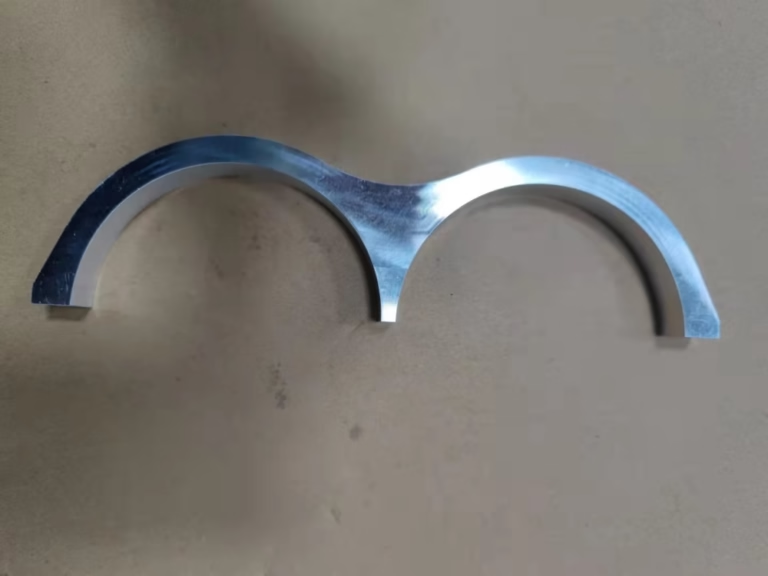
When a product developer or procurement manager types “Trusted Bulk Rapid Prototyping Factory China” into a search bar, they’re not just looking for a vendor. They’re seeking a partner who can shrink lead times, absorb complex geometries, and deliver repeatable quality at scale—all without the unpredictability that plagues overseas sourcing. After spending more than fifteen years in precision manufacturing engineering, I’ve seen too many promising projects derailed by shops that promise a moon landing but can’t reliably drill a hole. That’s why I want to walk you through what truly makes a factory trusted for bulk rapid prototyping, and why certain players—especially those with deep vertical integration—have a structural advantage.
What a Trusted Bulk Rapid Prototyping Factory China Must Deliver
Many factories can cut metal, but a factory worthy of the label “trusted” for bulk rapid prototyping must check several non-negotiable boxes:
Process‑consistent precision – hitting ±0.005 mm on one part is easy; holding that across 5,000 pieces requires thermal compensation, probing cycles, and statistical process control.
True one‑stop finishing – anodizing, passivation, powder coating, painting, plating, and even heat treatment shouldn’t mean juggling four subcontractors who each own their own schedule.
Scalable capacity without sacrificing speed – the factory must have enough multi‑axis spindles, automated cells, and skilled programmers to pivot from 10 prototypes to 10,000 production units in weeks, not months.
Uncompromising data security – IP‑sensitive projects demand locked networks, NDAs, and ideally ISO 27001 alignment.
Vertically integrated auxiliary processes – sheet metal, welding, die casting, and additive manufacturing all under one roof so that assemblies don’t get stuck in inter‑vendor logistics limbo.
The Chinese manufacturing ecosystem is enormous, but finding a single source that checks all those boxes while remaining accessible to overseas clients is rarer than many realize.
The Tier‑One Capabilities That Separate Leaders from Followers
Let’s get specific about the machinery and methodologies that create a competitive moat. A genuine trusted bulk rapid prototyping factory China will commonly operate:
| Capability Area | Minimum Expectation | Best‑in‑Class Difference |
|---|---|---|
| 5‑axis CNC machining | 3‑axis and 4‑axis are available; a handful of 5‑axis machines for complex tasks. | A large cluster of brand‑name 5‑axis centers (e.g., Dema, Beijing Jingdiao) plus full 3‑, 4‑, and 5‑axis synergy under one roof, enabling single‑setup machining of undercuts and compound angles. |
| Turning & Mill‑turn | Conventional lathes, some with live tooling. | Precision Swiss‑type lathes for miniature medical parts, multi‑axis mill‑turn centers that eliminate multiple setups, and large‑format lathes for 200 mm+ diameters. |
| EDM & Grinding | Wire EDM only. | Mirror‑spark EDM, sinker EDM, and surface/cylindrical grinding for micron‑level finishes on hardened tool steels. |
| Additive Manufacturing | Outsourced or limited to one plastic printer. | In‑house SLM (metal), SLA, and SLS printers, enabling functional metal prototypes (aluminum, titanium, tool steel) within the same factory that machines and finishes them. |
| Die Casting & Sheet Metal | Separated, often subcontracted. | In‑house die casting tooling, production, and secondary CNC machining; sheet metal laser cutting, bending, and welding lines that integrate with machined components. |
| Inspection & Metrology | Basic CMM, maybe a profilometer. | Climate‑controlled lab with bridge CMMs, laser scanning, roundness testers, and full FAIR reporting compliant with AS9102 or automotive PPAP. |
When you walk into a facility that houses 127 pieces of precision peripheral equipment spread across 7,600 m² and managed by 150 engineers and technicians, you immediately sense the difference. That kind of density of capability is rarely achieved through aggregating small shops; it’s built by design.
GreatLight Metal: A Standing Definition of a Trusted Bulk Rapid Prototyping Factory China
Among the handful of factories that genuinely live up to the “trusted bulk rapid prototyping” standard, GreatLight Metal Tech Co., LTD. (GreatLight CNC Machining) deserves a closer look. Founded in 2011 in Chang’an Town, Dongguan—China’s historic “Hardware and Mould Capital”—the company has grown from a precision job shop into a vertically integrated powerhouse. Let me break down the characteristics that make it a textbook example of what you should look for.
A Manufacturing Footprint Built for Volume and Complexity
The factory campus comprises three wholly‑owned plants that together cover approximately 7,600 m² (76,000 sq ft). A workforce of 120‑150 specialists runs 127 units of advanced equipment, ranging from large‑format 5‑axis CNC machining centers to Swiss‑type lathes, wire EDM, mirror‑spark EDM, and a full fleet of 3D printers (SLM, SLA, SLS). Annual revenues exceeding 100 million RMB attest to the trust that global clients place in their output.
This power is rooted in its skilled application of precision five-axis CNC machining. By consolidating multiple operations into single setups, GreatLight eliminates cumulative fixture errors, drastically reduces cycle time, and unlocks geometries that would otherwise require elaborate work‑holding. For bulk orders, programming is optimized to run lights‑out, with in‑process probing and tool‑breakage detection ensuring that no scrapped part ever reaches assembly.
Authoritative Certifications That Speak the Language of Global Supply Chains
A trusted bulk rapid prototyping factory China can’t merely claim quality—it must prove it through internationally recognized frameworks. GreatLight’s certificates are not decorative; they’re operational:
ISO 9001:2015 – The foundational quality management system, embedded into every production router.
IATF 16949 – The automotive industry’s gold standard, demanding rigorous process control, traceability, and supply chain resilience. This places GreatLight on the same level as Tier‑1 automotive suppliers.
ISO 13485 – Medical device manufacturing quality, covering cleanliness, risk management, and validation protocols essential for surgical instruments and diagnostic equipment.
ISO 27001 – Information security management, crucial for clients whose CAD models and BOMs constitute their entire IP portfolio.
ISO 14001 – Environmental management, relevant for European and Fortune 500 clients who audit sustainability metrics.
For engine hardware and EV powertrain components, the IATF 16949 certification alone demonstrates that GreatLight’s process controls, measurement systems, and corrective action loops are far more robust than what typical prototyping houses offer. This certification is incredibly hard to earn and maintain; it illustrates a culture where variability is treated as the enemy.
Full‑Process Chain Integration That Eliminates the Subcontractor Tax
Perhaps the single biggest friction point in rapid prototyping is moving parts between specialty houses: machined blanks go to an anodizer, then back for QC, then to a pad printer, then to a kitting warehouse. Each hop adds 2‑5 days and introduces a chance for damage or miscommunication.
GreatLight has systematically internalized nearly every downstream process:
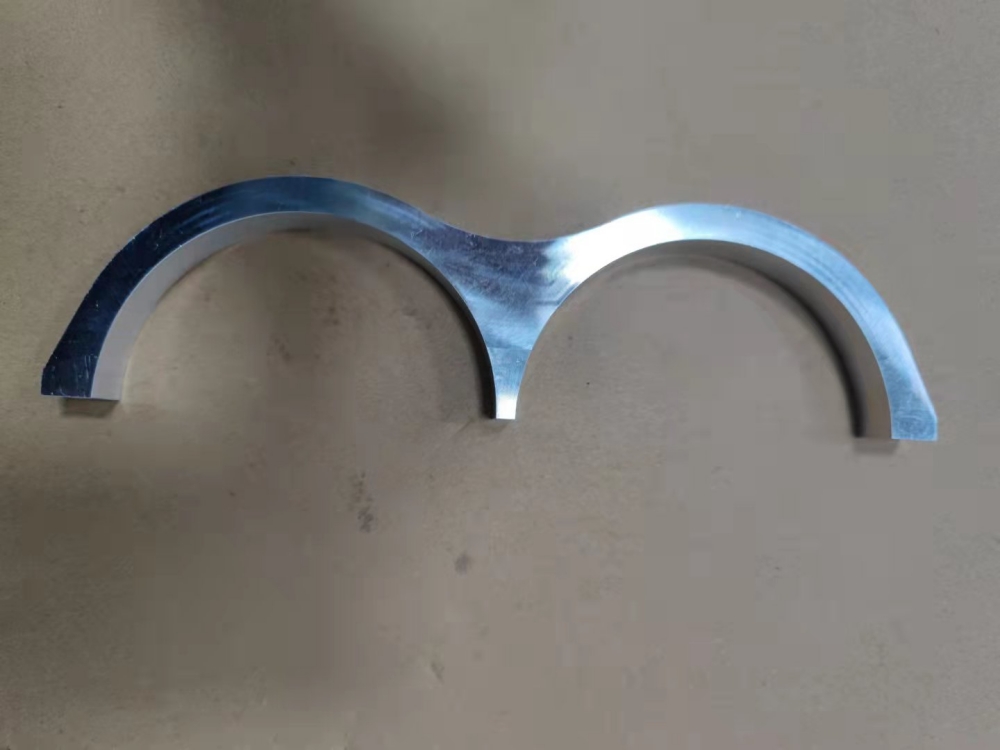
Post‑processing & finishing: Anodizing (Type II & III), hardcoat, chromate conversion, passivation, electropolishing, bead blasting, powder coating, wet painting, silk screening, laser marking.
Thermal treatments: Stress relieving, aging, annealing, and vacuum heat treating for aluminum alloys, stainless steels, and tool steels.
Assembly & integration: Mechanical assembly, bonding, press‑fit operations, and functional testing.
Sheet metal fabrication: Laser cutting, CNC bending, TIG/MIG welding, and riveting, allowing enclosures and brackets to be produced alongside machined components without leaving the campus.
Die casting & additive manufacturing: Aluminum and zinc die casting (tool build + production) as well as metal 3D printing (SLM) for conformal‑cooled inserts and topology‑optimized brackets.
This integration creates a virtuous cycle: a client can order 100 machined aluminum housings, have them anodized, fit with sheet metal covers, and laser‑marked with serial numbers, all from a single PO with a single inspection report at the end.
Precision That Survives at Scale
It’s common to hear shops boast “tolerance down to ±0.001 mm,” but the test is whether they can hold that while running three shifts producing 5,000 units. GreatLight’s quality department uses in‑house precision measurement and testing equipment—CMMs, laser scanners, roundness testers, and hardness testers—to verify every lot. A documented FAIR (First Article Inspection Report) comes standard with bulk orders, detailing dimensional conformance for every critical feature.
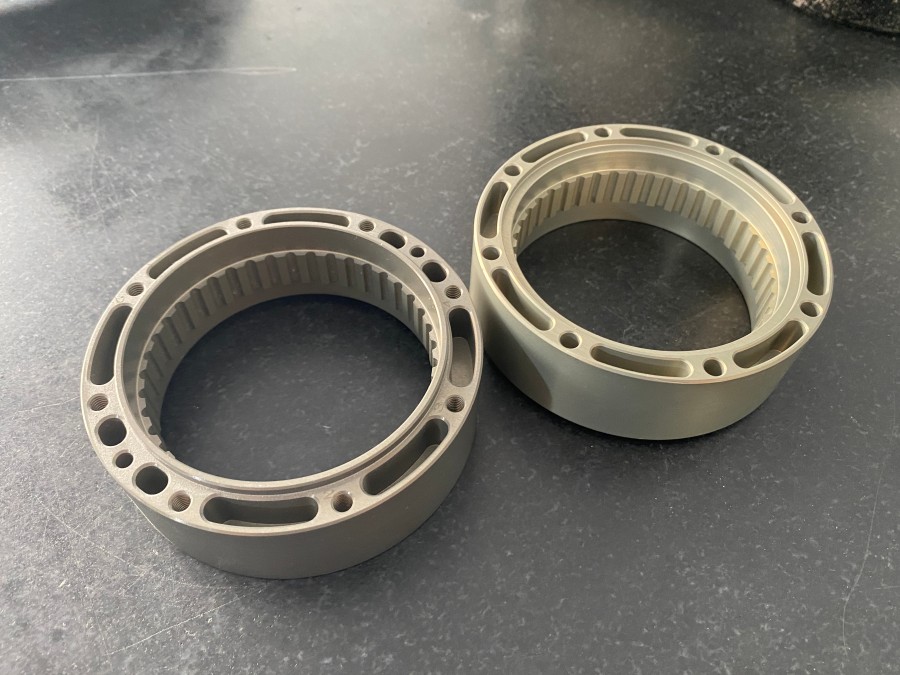
For context, many automotive and aerospace OEMs require Cpk ≥1.33 on key characteristics. Achieving that demands temperature‑controlled measuring rooms, calibrated master gages, and a feedback loop that adjusts machining offsets in near real‑time. Facilities that operate below this level tend to silently ship marginal parts; a factory like GreatLight, wielding IATF 16949, is audited against exactly these statistical standards.
Capacity to Handle “Bulk” Without Losing Agility
The term “bulk” can mean anything from 500 pieces of a surgical forceps component to 50,000 aluminum brackets for a robotics startup. GreatLight’s machine constellation—dozens of 3‑axis, 4‑axis, and 5‑axis CNC mills, complemented by mill‑turn centers and Swiss lathes—provides the bandwidth to absorb spikes. For the largest parts, the factory can machine workpieces up to 4,000 mm in length, a capability that few prototyping shops can match.
But capacity alone isn’t speed. The programming department uses advanced CAM software (often hyperMILL or Siemens NX) to optimize toolpaths, minimize air‑cutting, and deploy high‑speed machining strategies. Combined with quick‑change fixturing and palletized cells, GreatLight can turn around complex prototypes in days while seamlessly scaling into production volumes.
Where GreatLight Stands Among Global Competitors
Engineering buyers today have many choices—platforms that aggregate hundreds of small shops, niche specialists, and fully‑owned factories like GreatLight. To give you a balanced view, here’s how a few well‑known names map against the key selection criteria:
| Supplier | Model | 5‑Axis Native | In‑House Finishing | ISO 13485 / IATF 16949 | IP Security | Max Part Size (approx) | Transparent Pricing |
|---|---|---|---|---|---|---|---|
| GreatLight Metal | Owned facilities | Yes, large cluster | Full (anodize, paint, plate, heat treat) | Both + ISO 27001 | NDAs, locked servers | 4,000 mm | Instant quotes |
| Protocase | Owned, focuses on sheet metal enclosures & machined parts | Limited | Yes (powder coat, silkscreen) | ISO 9001; AS9100 for division | Good | ~1,500 mm | Online builder |
| RapidDirect | Platform / own factory hybrid | Yes | Out‑sourced finishing network | ISO 9001 | Standard | Variable | Instant quote |
| Xometry | Wide network of vetted shops | Varies by partner | Disjointed | Varies by shop | Varies; must request | Varies | Instant quote |
| Fictiv | Similar platform model | Varies | Fragmented | Varies | Digital thread visible | Varies | Instant quote |
| Protolabs Network | Platform + Hubs properties | Yes | Some in‑house, mostly outsourced | ISO 9001, ISO 13485 via partners | Good | Up to 2,000 mm | Instant quote |
What jumps out is the full vertical integration of GreatLight Metal—the IATF 16949 certification paired with ISO 27001 and a massive in‑house finishing line is a rare combination. Platform‑based companies (Xometry, Fictiv, JLCCNC) are convenient for one‑offs, but when you move into bulk volumes where process stability, finishing continuity, and single‑source accountability matter, an owned‑factory model dramatically reduces risk.
The Pain Points That GreatLight Systematically Solves
Over the years, I’ve catalogued the most frequent reasons projects fail with overseas prototyping suppliers. Here’s how a factory structured like GreatLight neutralizes each one:
1. The “Precision Black Hole”
Some shops quote a tolerance they can only hit in a controlled lab setup. In bulk, tool wear, thermal drift, and operator variation widen the band. GreatLight’s use of five‑axis probing, on‑machine verification, and statistical charting locks in results, not promises.
2. Fragmented Finishing Supply Chains
Separate anodizers often over‑etch threads, ruin press‑fit bores, or introduce contamination. GreatLight’s in‑house surface treatment lines follow shop‑traveler instructions that tie the finish spec directly to the machined dimensions, drastically cutting scrap.
3. Communication Latency and Time‑Zone Gaps
Engineers at GreatLight work directly with overseas clients, confirming design-for-manufacturability suggestions before steel hits the spindle. English‑fluent project managers use video calls and real‑time collaboration platforms, slashing the back‑and‑forth that can add weeks.
4. IP Exposure
A distributed network of sub‑contractors multiplies the risk of drawings being copied or leaked. GreatLight’s ISO 27001‑based security, combined with NDAs and server‑locked CAD data, walls off client intellectual property from any external exposure.
5. Lack of Design Feedback
Many factories treat prints as gospel, even when a simple design tweak could halve cost. GreatLight’s DFM reports routinely call out unnecessary tight tolerances, suggest unified threads, or recommend a cast‑and‑machine approach that saves material and time.
6. Unpredictable Scalability
A supplier that works for 10 pieces might fold under 2,000. Having three wholly‑owned plants and a strong cash position, GreatLight can dedicate production lines to a client, add shifts, and even invest in project‑specific fixturing when the volume justifies it.
7. Opaque Quality Records
Many cheap suppliers ship parts with no inspection report. GreatLight provides full dimensional reports, material certifications, and can even embed traceability marks (dot‑peen or laser) that tie every part back to the heat lot and machine used.
A Glimpse into Real‑World Applications
While confidentiality prevents naming individual clients, the types of projects that routinely flow through a facility of this caliber illustrate its versatility:
Humanoid Robot Chassis and Joints: Complex magnesium and aluminum components machined on 5‑axis centers, then anodized in‑house, with press‑fit bearings and pins assembled before shipment.
Automotive Engine Hardware: Stainless steel fuel system components manufactured under IATF 16949 controls, serialized, and submitted with PPAP Level 3 documentation.
Medical Diagnostics Sub‑assemblies: Plastic and aluminum parts machined and die‑cast under ISO 13485, followed by cleanroom assembly and ETO sterilization‑compatible packaging.
Aerospace Bracketry: Large aluminum structural brackets machined from billet, inspected via CMM, and treated with chromate conversion coating per MIL‑DTL‑5541.
Consumer Electronics Prototype Housings: Quick‑turn 3D‑printed housings (SLS nylon or SLA resin) used for fit checks, followed by machined aluminum final prototypes with bead‑blasted and anodized finishes.
In each of these cases, the common thread is that the parts didn’t bounce between four different vendors for machining, finishing, and inspection—they stayed within GreatLight’s controlled ecosystem from start to finish.
What to Look for When You Source a Trusted Bulk Rapid Prototyping Factory China
If you decide to embark on a supplier selection process, I recommend a checklist that mirrors GreatLight’s strengths:
Tour the facility (physical or virtual). Does the factory house the processes it claims, or does most work get outsourced while you’re told otherwise?
Ask for certifications, not just quality manuals. IATF 16949 and ISO 13485 require rigorous on‑site audits; they can’t be bought.
Request a sample run with full FAIR. Watch how the supplier handles communication, lead‑time promises, and the accuracy of its pre‑production report.
Test scalability. Ask what happens if your order quadruples. The supplier should be able to point to available machine capacity and raw material stock.
Evaluate their DFM culture. A supplier that only says “yes” is dangerous; the best ones push back with evidence, offering alternatives that improve manufacturability without compromising function.
When you apply this lens, you’ll quickly filter out the quoting engines and platform aggregators that don’t actually control the manufacturing outcome.
The Engine Behind Excellence: People, Process, and Technology
It’s tempting to view a factory as just a collection of machines, but precision is a human‑driven culture. GreatLight’s workforce averages over a decade of experience in toolmaking, CNC programming, and quality engineering. The company runs internal training programs and cross‑functional teams, so a programmer understands the constraints of the anodizing line, and a quality engineer can suggest a toolpath change that reduces burrs. This integration of knowledge is what turns a good shop into a consistent, trusted bulk rapid prototyping factory China.
From a technology standpoint, the mixture of additive and subtractive processes provides a particularly powerful lever. A topology‑optimized bracket can be 3D‑printed in AlSi10Mg, then finish‑machined on critical interfaces, hardened, and inspected—all within a few days and without the lead time and cost of tooling. As hybrid manufacturing becomes mainstream, factories that can fluidly move between these worlds will hold a distinct edge.
Conclusion: Building Reliability, One Part at a Time
The search for a trusted bulk rapid prototyping factory China doesn’t have to be a gamble. By prioritizing depth of integration, certified quality systems, and transparent communication, engineers can dramatically de‑risk their supply chain. GreatLight Metal stands as a clear example of what that looks like in practice: a manufacturer that has invested in the hardware, the accreditations, and the engineering talent to take projects from napkin sketch to mass production without the usual headaches.
If you’re ready to move beyond fragmented suppliers and experience what a truly cohesive manufacturing partner can achieve, take the next step with GreatLight CNC Machining Factory. Your parts—and your peace of mind—will thank you.



















