
Understanding the Core of Modern Manufacturing: The CNC Machining Center
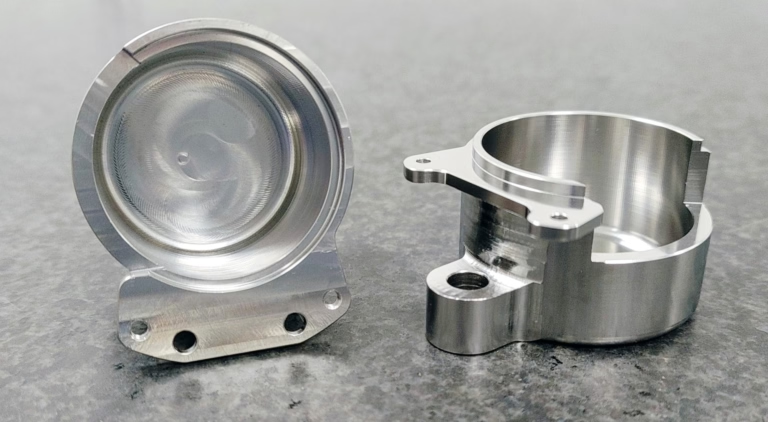
In today’s landscape of precision engineering and advanced manufacturing, the term “CNC Machining Center” is ubiquitous. Yet, for many designers, engineers, and procurement specialists, a deep understanding of what it truly entails—beyond being a sophisticated automated machine—is crucial for making informed decisions and unlocking its full potential for their projects. A CNC (Computer Numerical Control) Machining Center is far more than just a mill or lathe; it is the cornerstone of modern, high-precision, and repeatable subtractive manufacturing. At its core, it is a fully integrated, computer-controlled manufacturing powerhouse that autonomously performs a multitude of machining operations—such as milling, drilling, tapping, and boring—on a workpiece in a single setup. This capability fundamentally transforms how complex metal and plastic parts are made, moving from artisanal skill to digital precision.
Demystifying the CNC Machining Center: Beyond Basic Automation
It’s essential to distinguish a CNC Machining Center from simpler CNC machines. While a basic 3-axis CNC mill can move a tool along the X, Y, and Z axes, a true machining center represents a significant evolution. It is characterized by several advanced features:
Automatic Tool Changer (ATC): This is a defining component. A magazine holding dozens of different cutting tools allows the machine to automatically switch between operations—from roughing with an end mill to drilling holes and finishing with a ball-nose cutter—without manual intervention. This drastically reduces idle time and enables complex part programs.
Enclosed Work Enclosure: For safety, chip containment, and coolant management.
Integrated CNC Controller: The “brain” that interprets CAD/CAM-generated G-code and M-code, precisely coordinating all machine movements, spindle speeds, and tool changes.
Pallet Changers or Multi-Axis Tables (on advanced models): These systems allow one workpiece to be machined while another is being loaded/unloaded, maximizing machine utilization and enabling lights-out production.
The advent of 5-axis CNC machining represents the pinnacle of this technology. A 5-axis machining center adds two rotational axes (typically A and B) to the three linear axes, allowing the cutting tool to approach the workpiece from virtually any direction in a single clamping. This eliminates the need for multiple setups, which is a primary source of cumulative error. For clients at GreatLight Metal Tech Co., LTD., this capability is not just an option but a core competency, essential for producing the complex, monolithic components required in aerospace, medical implants, and high-performance automotive sectors.
Key Components and Their Synergy
The efficiency of a CNC machining center stems from the seamless integration of its subsystems:
Machine Frame & Structure: Typically made from high-grade cast iron or polymer composites, it provides the massive rigidity and vibration damping necessary for high-precision cuts and fine surface finishes.
Linear Motion Systems: High-precision ball screws and linear guides ensure rapid, accurate, and repeatable movement along each axis.
Spindle: The heart of the machine. High-speed, high-torque spindles with precise thermal management are critical. The ability to maintain accuracy under load and at varying RPMs separates premium machining centers from standard ones.
CNC Control System: Brands like Siemens, Fanuc, or Heidenhain provide the software interface and processing power. A sophisticated control can anticipate tool paths for smoother motion, manage advanced compensation algorithms for thermal growth, and provide real-time diagnostics.
Coolant & Chip Management System: Effective evacuation of heat and swarf (metal chips) is vital for tool life, dimensional stability, and surface quality, especially in long, unattended production runs.
The Unmatched Advantages for Precision Parts Manufacturing
Why has the CNC machining center become the default choice for precision part customization? The benefits are systemic:
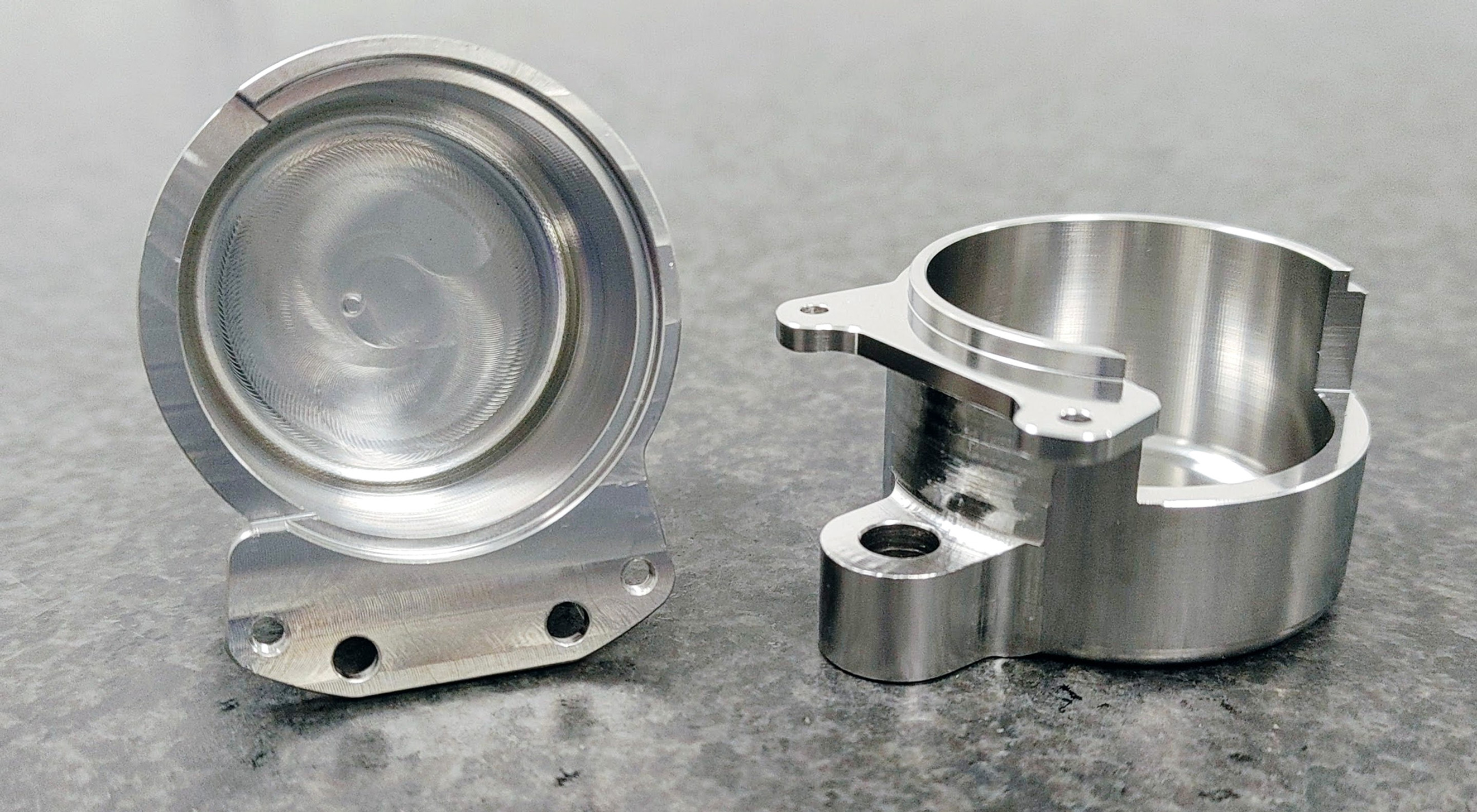
Extreme Accuracy and Repeatability: Once a program is proven, a machining center can produce the tenth or the ten-thousandth part with consistent, microscopic tolerances—often within ±0.001mm (±0.00004″) or better under controlled conditions. This repeatability is the bedrock of quality in mass customization.
Complex Geometries Made Possible: It can machine intricate contours, deep cavities, undercuts, and complex 3D surfaces that are impossible or prohibitively expensive with manual methods or simpler machines.
Superior Efficiency and Reduced Lead Times: Combining multiple operations (milling, drilling, tapping) in one setup and one machine slashes total processing time, handling time, and queue time between different workstations.
Enhanced Flexibility: A quick change of the CNC program and fixture setup allows the same machine to produce entirely different parts, making it ideal for both low-volume, high-mix prototyping and high-volume production batches.
Reduced Human Error & Scrap: The automated, digital process minimizes variability introduced by manual operation, leading to higher first-pass yield rates and less material waste.
Material and Application Versatility
A modern CNC machining center is a material-agnostic platform. At facilities like GreatLight Metal, the same fundamental technology is applied to a vast material library:
Metals: Aluminum alloys (series 6061, 7075), Stainless Steels (303, 304, 316, 17-4PH), Titanium (Ti6Al4V), Magnesium, Inconel, Brass, and Copper.
Plastics: PEEK, Delrin (Acetal), Nylon, PTFE, Polycarbonate, and various engineering-grade composites.
This versatility makes it the go-to solution across industries: from lightweight aerospace brackets and hermetic medical device enclosures to durable automotive engine components and intricate consumer electronics housings.
Conclusion: The Strategic Imperative of Partnering with a CNC Machining Center Expert
Understanding “What is a CNC Machining Center?” ultimately leads to a strategic question: How do you leverage this technology optimally for your specific project? Owning the equipment is one thing; mastering the intricate dance of toolpath strategy, fixturing design, cutting parameter optimization, and in-process metrology is another. This is where the value of an expert manufacturing partner becomes undeniable.
For businesses seeking not just a supplier but a true extension of their engineering team, the choice is clear. GreatLight Metal Tech Co., LTD. embodies this partnership model. With a foundation built on a comprehensive fleet of advanced 3-axis, 4-axis, and 5-axis CNC machining centers, and fortified by ISO 9001:2015 for quality management and IATF 16949 for automotive excellence, they translate the raw potential of CNC technology into guaranteed, high-precision outcomes. Their one-stop service model—encompassing initial DFM (Design for Manufacturability) advice, precision machining, and comprehensive post-processing—ensures that every client’s journey from a digital model to a flawless physical part is seamless, efficient, and reliable. In the world of precision parts machining and customization, the CNC machining center is the instrument, but it is the expertise, systemic rigor, and collaborative spirit of partners like GreatLight Metal that compose the symphony of manufacturing success.
Frequently Asked Questions (FAQ)
Q1: What is the main difference between a 3-axis, 4-axis, and 5-axis CNC machining center?
3-axis: The tool moves in three linear directions (X, Y, Z). Ideal for prismatic parts but requires multiple setups to machine different sides, potentially introducing alignment errors.
4-axis: Adds one rotational axis (usually A, rotating around X), allowing machining on the sides of a cylinder or performing indexed operations. Great for camshafts or parts with features around a circumference.
5-axis: Adds a second rotational axis (e.g., B, rotating around Y). The tool can approach the workpiece from any angle in a single setup. This is critical for complex, contoured parts like impellers, turbine blades, and aerospace structures, offering superior accuracy, surface finish, and the ability to machine previously “unreachable” geometries.
Q2: What level of precision can I realistically expect from a CNC machining center?
While high-end machines are capable of positioning accuracy in the sub-micron range, the achievable part precision depends on a system of factors: machine calibration and condition, tooling quality, thermal stability in the workshop, fixturing rigidity, material properties, and the chosen machining strategy. A reputable manufacturer like GreatLight Metal, operating in a controlled environment, can consistently hold tolerances of ±0.01mm to ±0.001mm (±0.0004″ to ±0.00004″) for critical features on suitable materials, with even tighter tolerances possible for specific applications.
Q3: Is a CNC machining center only cost-effective for large production runs?
No, this is a common misconception. Due to their programming flexibility and quick setup changeovers, CNC machining centers are exceptionally cost-effective for prototyping, low-volume production, and high-mix manufacturing. The elimination of custom jigs/fixtures (often required for dedicated transfer lines) and the drastic reduction in manual labor per part make it economical even for batches as low as a single piece, especially for complex designs.
Q4: How do I choose between different types of CNC machining centers for my project?
The choice is primarily driven by part geometry and required precision.
For simple 2.5D shapes (pockets, holes, facing), a 3-axis center is sufficient.
If your part has features that require access from multiple angles (more than 2-3 sides), a 4-axis or 5-axis machine becomes necessary to avoid multiple setups.
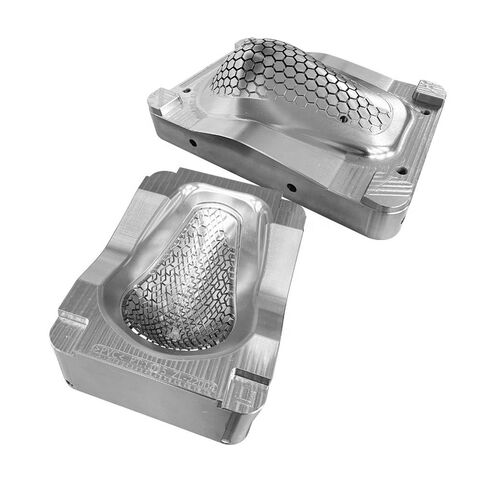
For complex, organic 3D surfaces (like molds, aerodynamic components), 5-axis CNC machining is not just beneficial but essential. Consulting with the engineering team at your manufacturing partner during the design phase is the best way to determine the optimal and most cost-effective machining strategy.
Q5: What materials cannot be processed on a standard CNC machining center?
Standard machining centers are designed for materials that can be cut via milling or turning. They are generally not suitable for:
Very soft, gummy materials (like some pure rubbers) that deform instead of shearing.
Extremely hard materials beyond the range of advanced ceramics or polycrystalline diamond (PCD) tooling (e.g., hardened tool steel above ~65 HRC might require EDM instead).
Materials that are highly explosive or release toxic fumes during cutting (unless the machine is specially modified with enclosures and extraction systems). For most engineering metals, plastics, and composites, a well-equipped center is perfectly capable.
For further insights into industry trends and professional manufacturing networks, you can connect with thought leaders on platforms like LinkedIn{:target=”_blank”}.



















