
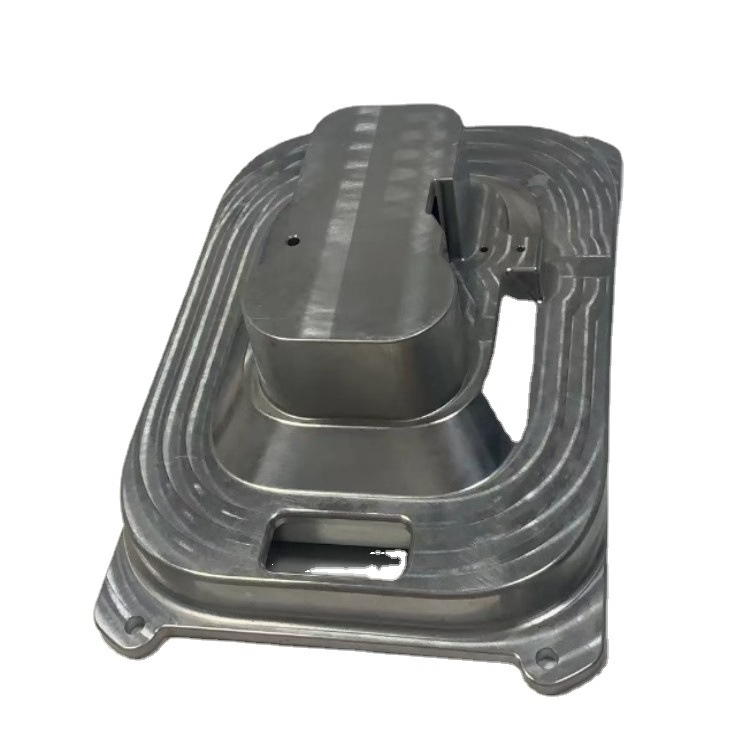
In today’s fast-paced manufacturing landscape, low cost custom rapid prototyping wholesale stands as a critical enabler for startups, hardware innovators, and established companies alike. As a senior manufacturing engineer who has navigated countless supply chains, I’ve seen firsthand how the right prototyping partner can compress development cycles, slash pre-production costs, and de-risk new product introductions—while the wrong one becomes a sinkhole of delays, scrap parts, and blown budgets. This post unpacks what it truly takes to achieve reliable, low-cost, custom rapid prototyping at wholesale volumes, drawing on real-world insights and the integrated manufacturing capabilities of GreatLight CNC Machining, a leading five-axis CNC machining manufacturer based in the precision hardware capital of Dongguan, China.
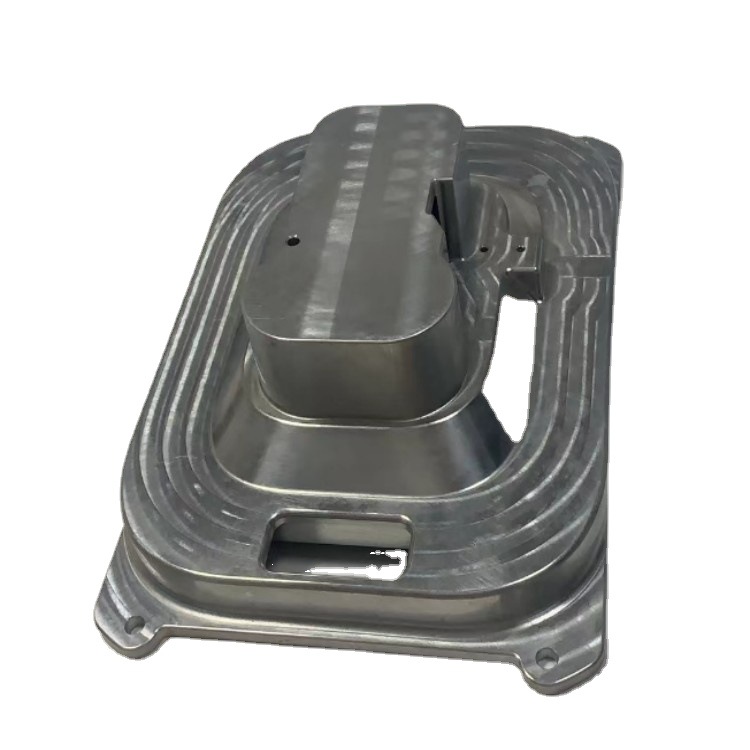
Understanding Low Cost Custom Rapid Prototyping Wholesale
At its core, “low cost custom rapid prototyping wholesale” is not simply about finding the cheapest per-unit price. It’s an engineering and procurement discipline that blends:
Design-for-manufacturability (DFM) optimization to eliminate unnecessary cost drivers.
Technology selection—matching the right CNC machining, 3D printing, sheet metal, or casting process to the part geometry and volume.
Economies of scale in material sourcing, tooling, and finishing, enabled by a factory willing to apply wholesale logic even to prototyping batches.
Integrated post-processing and finishing services that reduce logistic steps and markups from middlemen.
Many buyers mistakenly chase only the lowest quoted price, forgetting that total landed cost includes quality verification, rework risk, communication friction, and lead-time uncertainty. In the following sections, we’ll dissect the common pain points and show how a vertically integrated manufacturer like GreatLight CNC Machining transforms wholesale prototyping from a gamble into a predictable process.
The Hidden Costs Behind Cheap Prototypes: Pain Points You Must Address
Before diving into solutions, let’s acknowledge the seven critical pain points that plague CNC machining and rapid prototyping sourcing. These are the traps that turn “low cost” into high risk.
1. The Precision Black Hole
Many suppliers advertise tolerances of ±0.001 mm, but aging equipment, thermal drift, and poor process control mean that mass-produced parts often deviate wildly from the initial sample. When you need a batch of 50 or 200 prototypes that must fit together seamlessly, inconsistent dimensions can scrap an entire project.
2. The “Fast and Cheap” Trade-Off Fiction
Urgent prototyping often forces buyers to accept inflated expedite fees or compromised quality. A truly integrated shop with in-house five-axis, four-axis, and three-axis CNC machining centers, plus vacuum casting and 3D printing, can route jobs to the most cost-effective, fastest machine without sacrificing precision.
3. The Communication Gap
Language barriers, time-zone delays, and ambiguous RFQ responses lead to misinterpretation of requirements. Engineering drawings need interactive DFM feedback—not just a quote.
4. The Post-Processing Bottleneck
A prototype isn’t finished when it leaves the spindle. Anodizing, passivation, bead blasting, powder coating, or electroplating often requires multiple external vendors, each adding cost, time, and quality risk.
5. The Certification Void
For medical, automotive, or aerospace applications, raw material traceability and process certifications (ISO 9001, ISO 13485, IATF 16949) are non-negotiable. Many low-cost sources cannot provide mill certificates or audit-ready documentation.
6. The Volume Transition Problem
A shop that excels at one-off prototypes may crumble when asked for 500 units. The lack of structured production planning, SPC (Statistical Process Control), and proper fixture design results in high scrap rates at scale.
7. Intellectual Property (IP) Vulnerability
Sending 3D designs to unknown factories exposes your innovation to theft or unauthorized replication. Data security protocols are often an afterthought.
Now, let’s see how a manufacturer that treats prototyping as a systematic engineering discipline—rather than a transactional service—resolves these pain points.
GreatLight CNC Machining: An Integrated Powerhouse for Wholesale Prototyping
GreatLight CNC Machining Factory, established in 2011 and headquartered in Chang’an District, Dongguan—China’s undisputed “Hardware and Mould Capital”—operates from a modern 7,600 m² (about 76,000 sq. ft.) facility with a dedicated team of 150 professionals. With annual sales exceeding 100 million RMB, the company has grown by solving the exact problems listed above through vertical integration and certified processes.
Equipment Depth That Reduces Reliance on External Vendors
GreatLight deploys 127 pieces of precision peripheral equipment, including:
Five-axis CNC machining centers from premium brands, capable of complex geometries and single-setup multi-face machining, drastically reducing fixturing time and positional errors.
Multiple four-axis and three-axis CNC machines for large-format and high-volume parts.
Precision lathes, milling machines, grinding machines, and EDM (including wire and mirror-spark EDM) for ultra-fine features and hardened materials.
Vacuum forming machines, SLM/SLA/SLS 3D printers for rapid iteration before CNC finalization.
In-house sheet metal fabrication and die-casting capabilities.
This diversity means that a project requiring a combination of CNC turning, five-axis milling, and sheet metal enclosures doesn’t bounce between three factories. GreatLight handles it under one quality system, with one project manager, and with contiguous process scheduling.
Full-Process Chain Integration
The company’s one-stop service chain encompasses:
Precision CNC machining (3-axis, 4-axis, 5-axis) with tolerances to ±0.001 mm and a maximum part size of 4,000 mm.
CNC milling, turning, and mill-turn combinations.
Die casting mold development and metal die casting for functional metal parts.
Vacuum casting for short-run polyurethane replicas that mimic production materials.
Sheet metal processing including laser cutting, bending, welding, and assembly.
Stainless steel, aluminum alloy, titanium alloy, and mold steel 3D printing (SLM, SLA, SLS) for rapid metal and plastic prototyping.
Over 50 surface finishing processes—from decorative anodizing to medical-grade passivation—all performed under in-house quality control.
This integration directly eliminates the post-processing bottleneck and the multilayer markup typical of multi-vendor supply chains.
Globally Recognized Certifications
Trust is the currency of international prototyping, and GreatLight backs its promises with rigorous certifications:
ISO 9001:2015 – Core quality management system, verified annually.
ISO 13485 – Compliance for medical device hardware production.
IATF 16949 – International automotive quality standard, including engine hardware component requirements.
ISO 27001-aligned data security – Protecting IP-sensitive projects with controlled access and secure file handling.
These certifications aren’t just plaques on a wall; they mandate continuous improvement, material traceability, and statistical process controls that directly benefit wholesale prototyping clients.
For instance, when a medical robotics startup needs 300 machined aluminum brackets with full lot traceability, GreatLight can provide material certifications, in-process inspection reports, and final dimensional reports that satisfy FDA audit trails. Few low-cost prototyping shops can support that level of rigor while still maintaining competitive wholesale pricing.
How to Balance Cost and Quality in Wholesale Prototyping: An Engineer’s Checklist
Achieving low cost custom rapid prototyping wholesale doesn’t default to choosing the cheapest supplier. It’s a structured process. Based on years of managing projects, I recommend evaluating potential partners against these criteria:
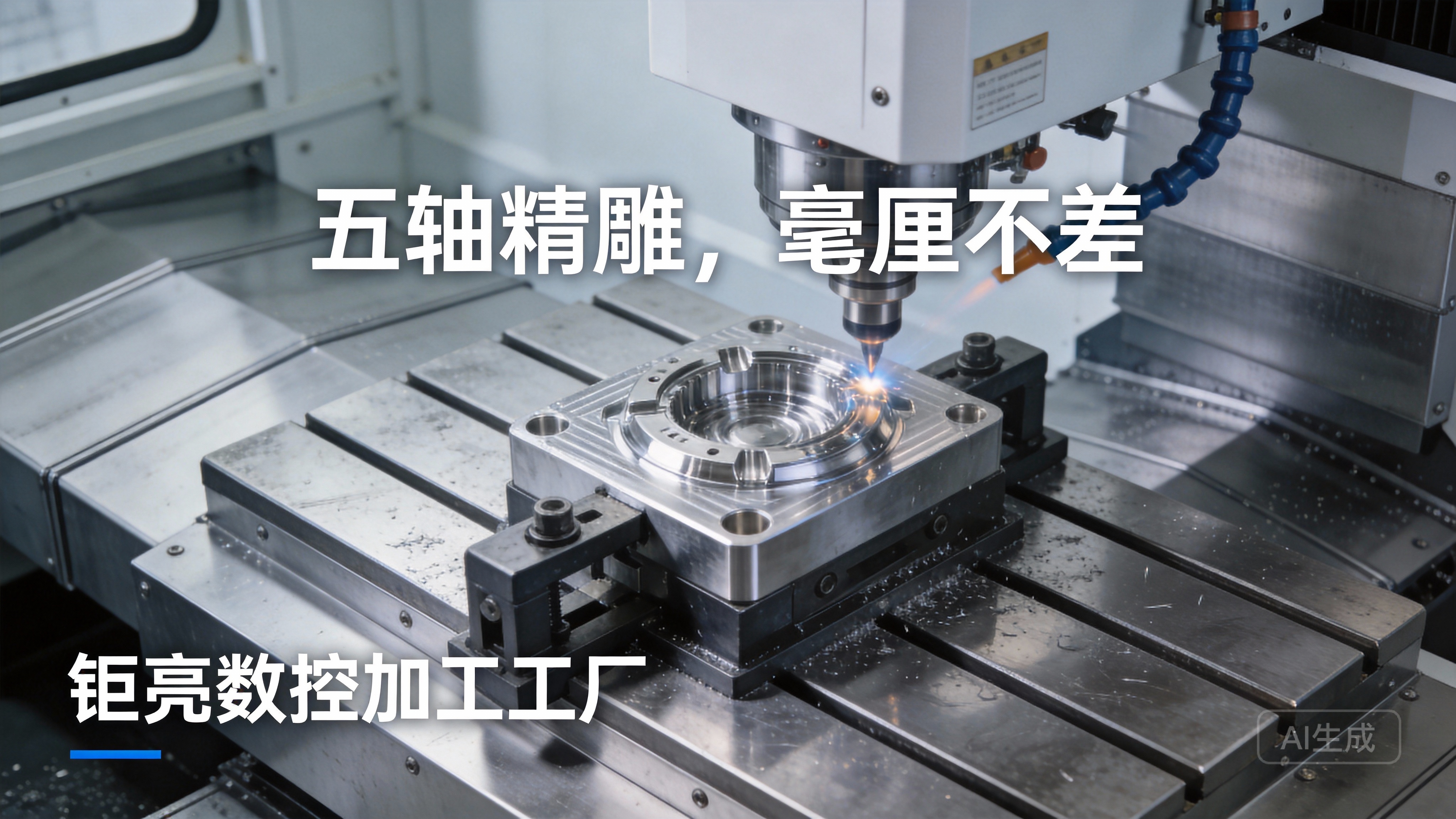
DFM Engagement: Does the supplier provide a detailed DFM report, suggesting alternative machining strategies, material substitutions, or design tweaks that reduce cost without affecting function? GreatLight’s engineers flag thin walls, unnecessary tight tolerances, and hard-to-machine corners early on.
Capacity Alignment: Does the shop have the specific machine type and size suited to your parts? For example, a five-axis part under 600 mm might be ideal for a high-speed five-axis center, while a 3-meter aluminum frame needs a large-format three-axis gantry. A mixed-shop ensures each part hits the most cost-effective machine.
In-House Finishing: Verify that surface treatments are truly internal, not outsourced. External plating shops add transit time, markup, and quality variability. GreatLight’s one-stop finishing eliminates that middle step.
Production-Ready Processes: Even for prototyping, inquire about their approach to mass production. Will they retain CNC programs, fixture designs, and process documentation so that scaling from 10 to 500 parts is seamless? GreatLight treats every prototype batch as a pilot run, ingesting it into a production data management system.
Quality Control Rigor: Beyond calibration certificates, ask about their sampling plan, inspection equipment (CMMs, profilometers, vision systems), and how they handle non-conformance. ISO-certified shops must adhere to corrective action protocols, reducing your risk of receiving bad parts.
Material Sourcing Leverage: A shop that buys aluminum, stainless steel, and engineering plastics in bulk for its own production can pass savings to prototype clients, even at smaller quantities.
IP Protection: Confidentiality agreements, secure data rooms, and employee policies should be standard. GreatLight’s ISO 27001-aligned practices ensure your 3D models and technical drawings remain proprietary.
Comparing Prototyping Providers: Why GreatLight Stands Out
The rapid prototyping landscape includes well-known names like Protolabs Network, Xometry, RapidDirect, Fictiv, and JLCCNC. Each has strengths, but they often function as platforms or networks orchestrating hundreds of small shops, which introduces variability. Let’s compare key attributes when sourcing low cost custom rapid prototyping wholesale:
| Feature | GreatLight CNC Machining | Typical Network Platform (e.g., Protolabs Network, Xometry) |
|---|---|---|
| Manufacturing Control | Owns and operates 127+ machines across three wholly-owned plants. Direct oversight of all processes. | Aggregates capacity from external job shops; quality consistency varies per supplier. |
| Process Verticality | Full in-house chain: CNC machining, die casting, sheet metal, 3D printing, and finishing. | Often limited to CNC or 3D printing; finishing is subcontracted. |
| Cost for Wholesale Volumes | Factory-direct pricing with no platform commission; wholesale discounts built into scheduling. | Platform fees and shop margin stacking can increase unit costs. |
| Certifications Depth | ISO 9001, ISO 13485, IATF 16949—all under direct factory audit. | May claim certifications, but actual manufacturing shops may lack them. |
| Engineering Support | In-house DFM, process engineers, and dedicated project managers handle complex assemblies. | Standardized online quotes with limited collaborative engineering. |
| Maximum Part Size | Up to 4,000 mm for large-format CNC machining. | Often restricted to smaller envelope sizes or limited supplier availability for large parts. |
| Post-Processing Speed | One-stop surface treatment reduces lead time and logistic coordination. | Multiple vendor handoffs introduce delays and quality risks. |
For example, a client needing 500 aluminum housings with hard anodizing and laser engraving might receive separate quotes for machining, anodizing, and engraving from a platform, along with shipping between vendors. At GreatLight, the entire flow is managed as one work order, compressing total turnaround by up to 40% and eliminating miscommunication.
Real-World Applications: From Concept to Volume Production
The value of a manufacturing partner like GreatLight becomes most visible in complex, high-stakes projects.
New Energy Vehicle (NEV) Electronic Housing
An EV component startup required 200 prototype housings for an on-board charger. The design featured integrated cooling channels, EMI shielding grooves, and sealing surfaces with 0.02 mm flatness tolerance. GreatLight’s five-axis machining centers produced the parts from solid aluminum billet, incorporating in-process probing to maintain flatness. The in-house chromate conversion coating and final assembly validated the design before tooling investment, all at a per-unit cost that was 30% below quotes from platform-based services. When the design transitioned to die casting for larger volumes, GreatLight’s mold development team seamlessly took over, reusing the same GD&T and quality plan.
Medical Diagnostic Equipment Brackets
A medical OEM needed 150 multi-axis brackets for a CT scanner gantry—stainless steel 316L, with multiple critical bores and a surface finish requirement of Ra 0.4 μm. ISO 13485 compliance was mandatory. GreatLight employed a combination of mill-turn centers and five-axis finishing to achieve the bore position tolerances within microns. Full lot traceability, material certs, and first-article inspection reports were delivered. The wholesale pricing, coupled with compliance documentation, enabled the OEM to meet its validation deadline without quality concessions.
Humanoid Robot Joint Components
A robotics company iterating on actuator housings required rapid turnaround of 50 sets (250 parts) in aluminum 7075-T6, with complex curved surfaces and internal threading. GreatLight used a hybrid workflow: SLA 3D printing for initial fit-checks within 2 days, followed by five-axis CNC machining of the final metal parts with bead-blast and black anodize finish. The entire 250-part order was delivered in 8 business days, demonstrating how integrated prototyping and finishing accelerate development.
These cases illustrate that when a single factory takes responsibility for the entire workflow, the result is not only lower cost but also higher reliability and faster speed.
Steps to Get Started with Wholesale Rapid Prototyping at GreatLight
To help clients avoid common pitfalls, here is a step-by-step approach to launching a wholesale prototyping project:
Prepare Your Design Package: Provide 3D CAD files (STEP, IGES, or native formats), 2D drawings with critical dimensions and tolerances, material and finish specifications, and required quantities.
Receive an Engineering Review: GreatLight’s engineering team will analyze the design for manufacturability, suggest cost-reduction opportunities, and confirm the optimal process route.
Approve the DFM Report and Quotation: A transparent quote will detail material cost, machine time, finishing cost, and any tooling. No hidden fees.
First-Article Production and Inspection: For new designs, a first-article part is manufactured and fully inspected using CMM and other metrology tools. Dimensional reports are shared for approval before the full batch is produced.
Batch Production with In-Process Control: Using SPC and scheduled inspections, the wholesale batch is machined under tight process control.
Post-Processing and Final QC: Parts undergo the specified finishing, followed by final inspection, packaging, and global shipping.
Throughout, a dedicated project manager provides updates, ensuring you are never left guessing about schedule or quality status.
Conclusion: A Partner for the Long Run
Navigating the world of low cost custom rapid prototyping wholesale requires more than a search engine query and a quick price comparison. It demands a partnership with a manufacturer that has the technical depth, the certified quality systems, and the process integration to deliver consistent results—whether you need ten prototypes or ten thousand. GreatLight CNC Machining Factory, built on over a decade of precision engineering in Dongguan’s heartland, stands as a prime example of how factory-direct, vertically integrated prototyping can break the typical trade-off between cost, speed, and quality.
By eliminating the middle steps, maintaining rigorous ISO standards, and embedding engineering collaboration into every phase, GreatLight empowers innovators to bring products to market faster and at lower risk. If you’re ready to move beyond transactional prototyping and into a true scalable manufacturing partnership, the evidence shows that choosing a partner with real operational capabilities—not just glossy marketing—makes all the difference.



















