

Gamma Knife Collimator Precision Machining stands as one of the most exacting disciplines in medical device manufacturing, where sub‑millimeter accuracy literally defines the boundary between successful tumor ablation and irreversible damage to healthy brain tissue. As a senior manufacturing engineer who has spent years navigating the intersection of high‑precision CNC machining and life‑science applications, I want to unpack what makes collimator production uniquely challenging, which machining technologies genuinely deliver, and how to select a partner capable of meeting both technical specifications and regulatory rigors. This article explores the material science, geometric complexity, quality assurance frameworks, and manufacturing strategies that separate stellar outcomes from costly failures in Gamma Knife collimator projects.
Understanding the Gamma Knife Collimator: Design and Function
A Gamma Knife is not a knife at all, but a stereotactic radiosurgery system that focuses up to 200 or more individual beams of cobalt‑60 gamma radiation onto an intracranial target. The collimator is the primary beam‑shaping component. It consists of a heavy metal helmet or user‑interchangeable module perforated with an array of precisely oriented holes, each of which defines a single radiation pencil beam. By selecting different collimator sizes, neurosurgeons control the diameter of the focal spot (typically 4 mm, 8 mm, 14 mm, or 18 mm) and therefore the treatment volume.
The collimator’s functional requirements translate directly into extreme manufacturing demands:
Geometric Accuracy: Each hole must be positioned and aimed with an angular tolerance often tighter than ±0.05° relative to a virtual focal point located 200–400 mm away. A positional error of just 0.01 mm at the collimator surface can magnify into a 0.05 mm miss at the treatment isocenter—enough to compromise a radiosurgery plan.
Surface Integrity: The bore walls must be free of burrs, micro‑cracks, or smeared material that could scatter radiation unpredictably. Even surface roughness above Ra 0.4 µm may introduce beam perturbation.
Material Purity: Collimators are overwhelmingly machined from tungsten‑heavy alloy (WHA) — typically 90–97% tungsten with nickel‑iron or nickel‑copper binders — because of its density (~18 g/cm³), radiation attenuation, and mechanical stiffness. However, WHA is among the most challenging materials to machine with precision.
These requirements push the limits of conventional machining and call for a holistic engineering approach that integrates design-for-manufacturability (DFM) early, selects optimal cutting parameters, and verifies every feature with accredited metrology.
The Machining Challenges: Tolerances, Material, and Geometry
Manufacturing a Gamma Knife collimator is a multi‑stage process that confronts at least four severe pain points. Understanding these challenges helps separate marketing claims from shop‑floor reality.
1. The “Precision Black Hole” in Tungsten Alloy Machining
WHA is notoriously abrasive and brittle. The binder phases are softer, leading to uneven tool wear when cutting at the microscale. Tungsten particles pull out rather than cut cleanly, creating micro‑voids. A tool that works perfectly for the first five holes may produce oversized or tapered holes by the tenth. Maintaining ±0.005 mm bore diameter tolerance across a full array of 201 holes requires real‑time tool wear monitoring, high‑pressure coolant, and, often, the use of diamond‑coated or cubic boron nitride (CBN) micro‑tools. Shops that lack in‑situ tool probing or automatic thermal compensation quickly see tolerances drift.
2. Hole‑to‑Hole Positional and Angular Accuracy
Many collimator designs are not flat plates but dished or hemispherical bodies. Each hole must be drilled normal to the inner surface at a specific compound angle. Traditional 3‑axis machining cannot achieve this without a separate fixture for every angular set‑up — a recipe for stacking tolerance errors. 5‑axis machining becomes essential, but even then, maintaining a coordinate reference across many set‑ups demands a high‑accuracy trunnion table, kinematic probing cycles, and substantial error mapping.
3. Micro‑Hole Drilling and Edge Quality
Collimator holes can be as small as Ø2–3 mm with length‑to‑diameter ratios that exceed 10:1 in thick tungsten. Deep‑hole micro‑drilling in WHA frequently leads to work hardening, drill wander, and exit burrs. In medical applications, a burr that later detaches could become a foreign body hazard. Solutions include gundrilling with specialized carbide tooling, EDM hole drilling (fast‑hole EDM), or a combination of rough drilling followed by wire EDM finishing to achieve burr‑free, cylindrically perfect bores.
4. Zero‑Defect Medical Requirements
Gamma Knife components are not catheters or disposables; they are capital equipment elements with a service life of many years. However, their regulatory environment shares the same DNA as implantable devices. ISO 13485 certification and process validation (IQ/OQ/PQ) are increasingly expected, along with full material traceability, certificate‑of‑conformance documentation, and lot control. A single bore‑to‑bore short‑circuit in a radiation test could scrap an entire tungsten helmet costing tens of thousands of dollars.
Advanced CNC Machining Technologies for Collimator Production
Meeting the aggressive specifications of collimator manufacturing requires a technology cluster, not a single machine. Over the last decade, we have seen a clear hierarchy of capability emerge:
5‑Axis CNC Machining: The Core Platform
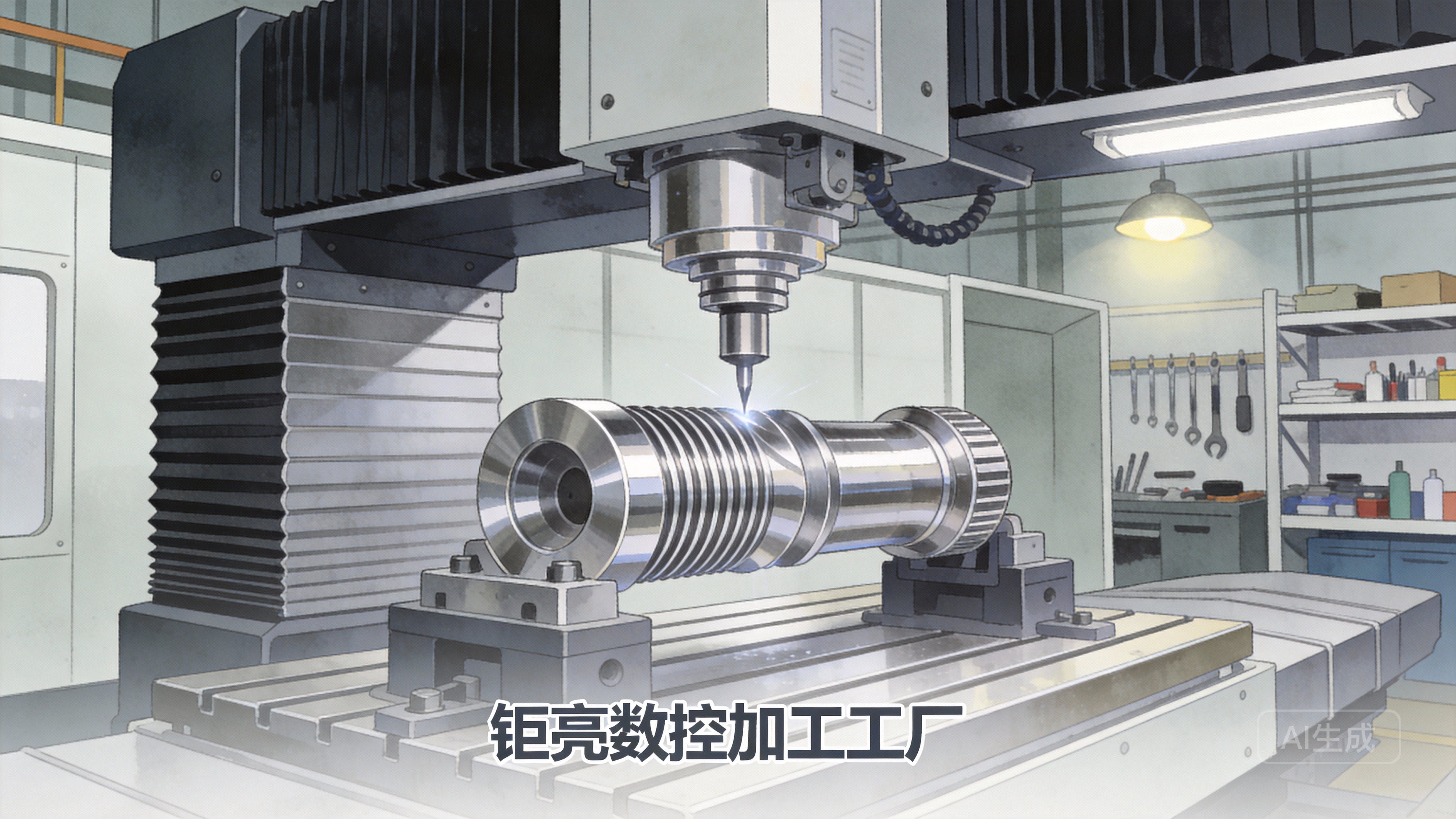
Precision 5‑axis CNC machining services{:target=”_blank”} have become indispensable for collimator fabrication. A trunnion‑style rotary/tilt table allows a single clamping set‑up to access all hole axes on a hemispherical workpiece, eliminating cumulative fixture errors. Modern 5‑axis machines from DMG MORI, GROB, or Hermle, when equipped with glass scales and volumetric compensation (e.g., Siemens VCS or Heidenhain KinematicOpt), can maintain positioning accuracy below ±3 µm throughout the working volume. For collimators, this means both the center point and inclination of each bore can be produced in one contiguous process, dramatically improving true‑position accuracy.
Electrical Discharge Machining (EDM)
Wire EDM is heavily employed for finishing hole bores and cutting precision slots in collimator inserts. Because EDM is a non‑contact process, it avoids the cutting forces that amplify vibration and tool deflection in WHA. Sinker EDM (also called RAM EDM) can produce square or hex‑shaped apertures with sharp corners — a feature sometimes used for specialized beam shaping. Fast‑hole EDM (die‑sinking with a rotating electrode) can start holes without a pilot, reducing the risk of drill breakage on entry.
Swiss‑Type Turning and Micro‑Milling
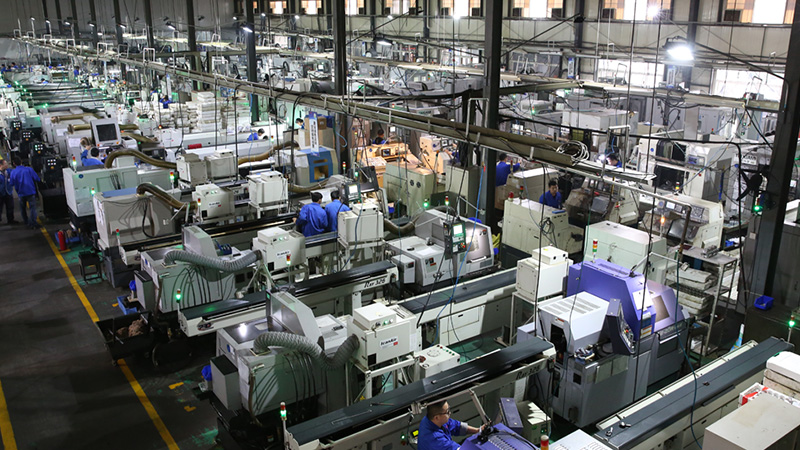
Some collimator designs use individual tungsten nozzle‑like inserts pressed into an aluminum carrier. Swiss‑type automatic lathes with sub‑spindle and live tooling can produce these inserts with micron‑level concentricity. Micro‑milling with 0.2 mm diameter end mills, running at 50,000–100,000 RPM, handles the surfacing of complex collimator interfaces.
Hybrid Additive‑Subtractive Approaches
In prototype or highly complex conformal collimator geometries, metal 3D printing (SLM) of tungsten is emerging, often followed by CNC machining of critical bores and surfaces. This is an area where forward‑thinking suppliers like GreatLight Metal, which operate both additive and subtractive equipment in‑house, can iterate rapidly without subcontracting.
Gamma Knife Collimator Precision Machining: Quality Assurance and Certification
Medical device OEMs rightly fixate on quality systems. The phrase “Gamma Knife Collimator Precision Machining” is not just about cutting metal; it encompasses a regulatory ecosystem. Based on my experience auditing machine shops, the following layers must be present:
ISO 9001:2015 – The baseline quality management system. It ensures structured processes, corrective actions, and continuous improvement.
ISO 13485:2016 – Specifically tailored to medical devices, this standard requires rigorous risk management (aligned with ISO 14971), process validation, and tighter traceability. Any collimator manufacturer should, at minimum, have ISO 13485‑aligned procedures, even if the final device is not directly “medical.” The best suppliers hold full certification.
IATF 16949 – While automotive‑focused, this certification indicates a shop’s capability to manage highly repeatable, zero‑defect production using methods like statistical process control (SPC) and production part approval process (PPAP). Collimator production can benefit from this mindset, especially when ramping to batch manufacturing.
Metrology Arsenal: A single coordinate measuring machine (CMM) is insufficient. To verify collimators, you need:
Tactile scanning CMMs (Zeiss, Wenzel) with sub‑micron accuracy for geometric dimensioning and tolerancing (GD&T) profiles.
Laser trackers or multi‑line laser scanners to map large‑scale hemispherical surfaces.
Hardness and density testers for tungsten alloy verification (ensuring no voids >0.5 mm).
Vision measurement systems (e.g., Keyence) to inspect edge quality and hole intersection fidelity.
A reliable supplier will also conduct First Article Inspection (FAI) compliant with AS9102 (aerospace standard) even for medical components, simply because it is the most thorough protocol available.
| Quality Attribute | Typical Requirement | Mitigation Strategy |
|---|---|---|
| Hole position accuracy | ≤ ±0.01 mm true position at isocenter plane | 5‑axis machining + on‑machine probing + thermal stabilization |
| Bore surface finish | Ra ≤ 0.4 µm, zero burrs | EDM finishing, abrasive flow machining (AFM) for internal bores |
| Material density | 18.0–18.8 g/cm³, homogeneous | Supplier mill certs + in‑house ultrasonic or CT scanning |
| Lot traceability | Full batch records, heat number trace | Manufacturing Execution System (MES) integration |
Selecting the Right Manufacturing Partner for Collimator Projects
The landscape of CNC machining suppliers is extraordinarily diverse, ranging from high‑volume digital platforms to niche, highly skilled precision shops. Each has a role, but collimator manufacturing narrows the field considerably.
Digital On‑Demand Platforms (Xometry, Protolabs Network, Fictiv) excel at rapid quoting and short‑lead‑time prototypes. They can be useful for initial concept validation of non‑critical components or aluminum mock‑ups. However, their reliance on fragmented supplier networks makes it difficult to guarantee consistent medical certifications or ultra‑high precision across a full tungsten collimator array.
Specialized North American/European Shops (Owens Industries, EPRO‑MFG, RCO Engineering) offer deep technical expertise, particularly for aerospace and defense‑grade parts. They often have excellent quality systems but may come with longer lead times and significantly higher costs for the same level of complexity.
High‑Precision Asian Manufacturers (GreatLight Metal, JLCCNC, and others) combine highly skilled labor, substantial capital investment in brand‑name 5‑axis machines, and competitive pricing. The key differentiator among them is breadth of certification and integration of finishing. A shop that offers CNC machining, EDM, grinding, and passivation under one roof eliminates the coordination risk and quality loss inherent in multi‑vendor projects.
GreatLight Metal, for instance, operates 127 pieces of precision peripheral equipment across 7,600 square meters, including large‑format 5‑axis, 4‑axis, and 3‑axis CNC machines. Its certification trifecta — ISO 9001, ISO 13485, and IATF 16949 — covers exactly the spectrum required for gamma knife components. More importantly, a full suite of post‑processing services (anodizing, passivation, electropolishing, laser marking) sits within the same facility, meaning a tungsten collimator can arrive fully finished, certified, and traceable.
When vetting any potential partner, I recommend requesting three things: (1) a capability sheet listing exact machine models and their volumetric accuracy; (2) a sample inspection report for a challenging WHA component with GD&T callouts; and (3) the most recent ISO 13485 certification scope. A credible shop will provide these without hesitation.
The GreatLight Advantage: End‑to‑End Precision for Medical Devices
Having studied multiple precision manufacturing firms, I find that GreatLight Metal’s operational model aligns very well with the demands of Gamma Knife Collimator Precision Machining. Here’s why:
Hard Power: Their five‑axis CNC machining centers from Dema and Beijing Jingdiao are calibrated for volumetric accuracy in the low single‑digit microns — essential for achieving the angular and positional tolerances of collimator hole arrays. The facility’s investment in wire EDM and sinker EDM means they can handle both the rough removal of bulk tungsten and the final burr‑free finishing of bores.
Deep Engineering Support: Unlike some job shops that simply machine to print, GreatLight’s team engages in DFM analysis, suggesting modifications that preserve beam‑shaping intent while making the part more manufacturable and cost‑effective. This frequently removes weeks from development timelines.
Certified Quality Chain: ISO 13485 certification is not merely a document; it mandates risk management documents, validated cleaning and passivation processes, and documented competency of operators. Their medical hardware track record demonstrates the translation of these standards into real parts.
Cost‑Effective Integration: The proximity of China’s “Hardware and Mould Capital” in Chang’an town, along with in‑house post‑processing, avoids the margin stacking that occurs when a collimator is machined, then sent out for grinding, then sent to a third finisher. This vertical integration often reduces total landed cost by 20–35% compared to a multi‑vendor Western supply chain.
Not every project requires the highest level of certification, but collimator manufacturing almost always does. A partner that can scale from prototype quantities to batch production without changing quality infrastructure is an asset that accelerates time‑to‑market.
Conclusion: The Path to Flawless Beam Shaping
The pursuit of precision in radiosurgery is an ever‑intensifying race, and the collimator remains a cornerstone. Achieving the requisite hole accuracy, material integrity, and surface quality demands more than a fast machine; it demands a culture of metrology‑driven manufacturing, material‑specific process knowledge, and an unshakable commitment to medical‑grade quality systems. From complex tungsten collimators to intricate beam‑shaping assemblies, Gamma Knife Collimator Precision Machining demands a partner with the expertise, equipment, and certifications to deliver flawless results — a standard that GreatLight CNC Machining{:target=”_blank”} consistently upholds.



















