
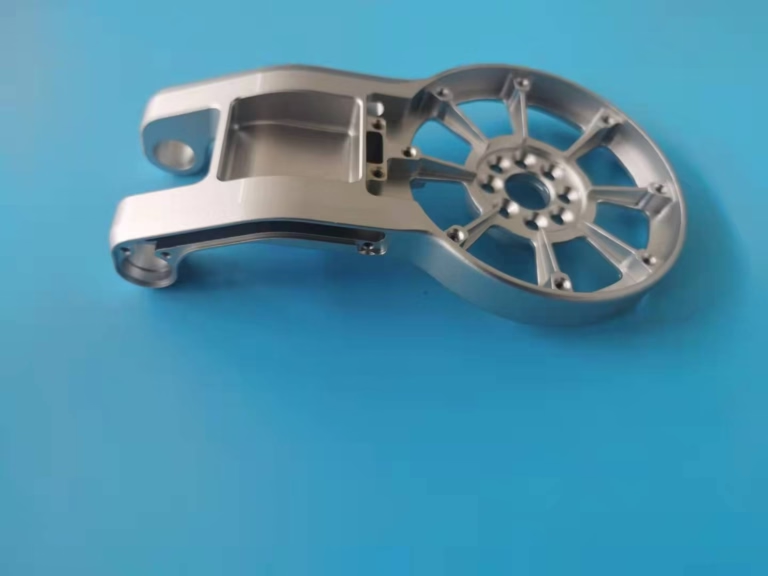
When it comes to professional bulk 4 axis CNC machining OEM, the stakes for procurement engineers and product developers have never been higher. In an era where a single faulty batch can cascade into missed delivery deadlines, compromised product integrity, and irreparable brand damage, the decision of who machines your parts isn’t just a cost calculation—it’s a strategic partnership that either accelerates your innovation or silently erodes your bottom line. As a senior manufacturing engineer who has spent over a decade auditing shops, tearing apart failed components, and helping clients rescue programs from the brink of disaster, I’ve witnessed firsthand the gap between what a supplier promises on a slick website and what actually arrives on your receiving dock. This article peels back the glossy brochures and dives deep into what truly makes a bulk 4 Axis CNC Machining OEM partner dependable—and why the quiet, certification-backed, process-obsessed factories like GreatLight Metal often become the unsung heroes behind major product launches.
Professional Bulk 4 Axis CNC Machining OEM: Why Volume Hides Hazard
Ordering a few prototypes requires a certain skill set; ordering tens of thousands of precision components on a recurring basis demands an entirely different organizational maturity. Bulk 4‑axis CNC machining OEM combines the geometric flexibility of a rotating workpiece with the relentless uniformity needs of high‑volume production. Yet the market is rife with “precision black holes”—shops that can nail a one‑off sample but see their process capability index (Cpk) plummet once the spindle never stops turning.
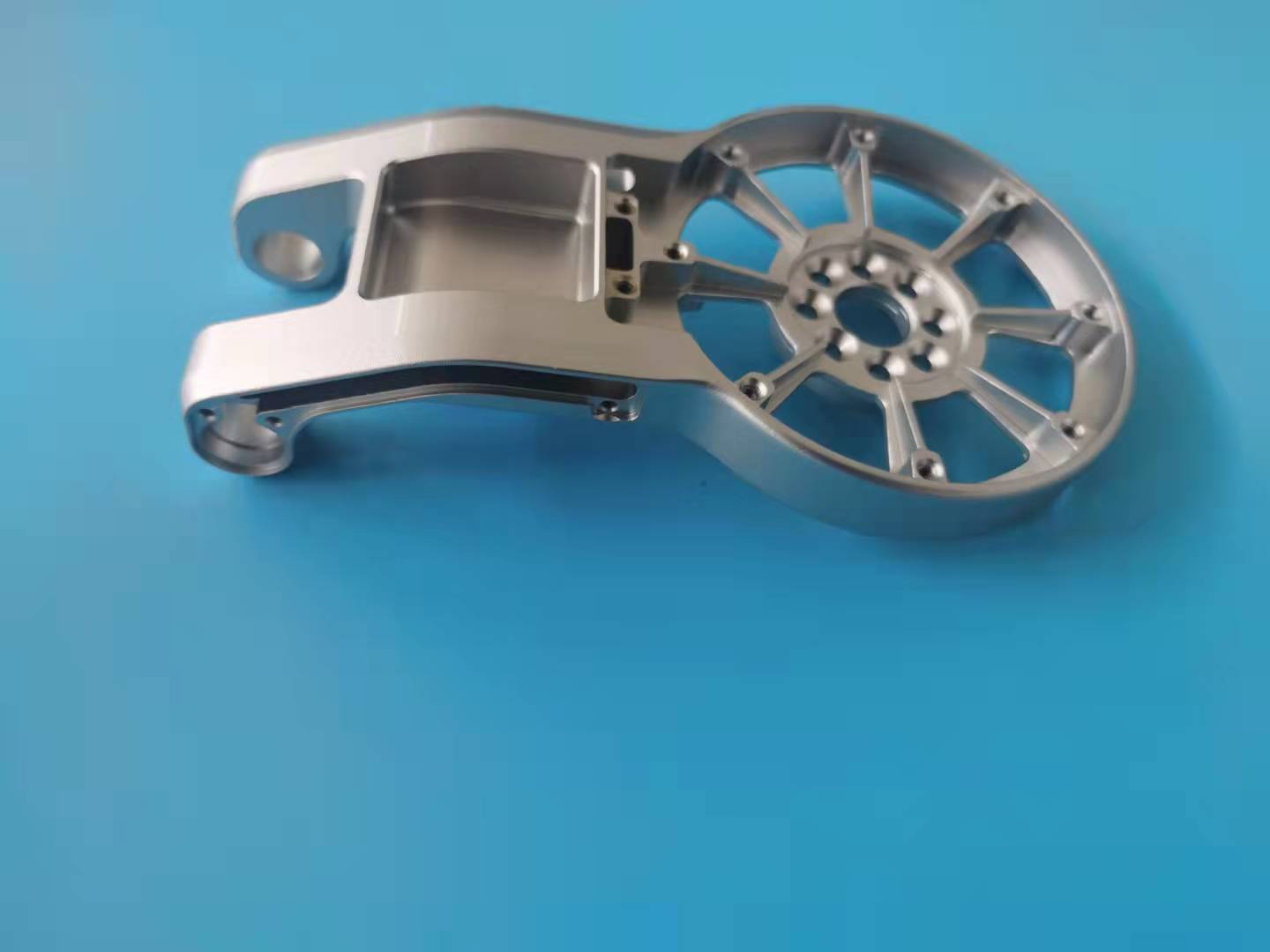
In this article, I’ll unbundle the technical nuances, surface the genuine pain points I’ve seen cost companies fortunes, and then introduce you to a manufacturing partner whose operational DNA is built to eliminate these risks. If you’re responsible for sourcing parts for automotive engine hardware, medical devices, industrial automation, or next‑generation humanoid robotics, the following analysis will arm you with the evaluation framework you need.
The True Power of 4‑Axis CNC Machining in Bulk Production
Before we assess suppliers, it’s critical to level‑set on what the “4th axis” actually brings to the table—and what it doesn’t. A 4‑axis CNC machine adds a rotational axis (typically the A‑axis, rotating around X) to the standard three linear axes. This means the cutting tool can access multiple faces of a workpiece without manual re‑fixturing.
For bulk OEM work, three advantages move from “nice‑to‑have” to “competitive necessity”:
Drastically Reduced Setup Time Per Part
When producing thousands of units, each setup change consumes labour and introduces alignment errors. With a 4‑axis rotary table, a single clamping can machine multiple sides, slashing cycle interruptions and preserving datum integrity.
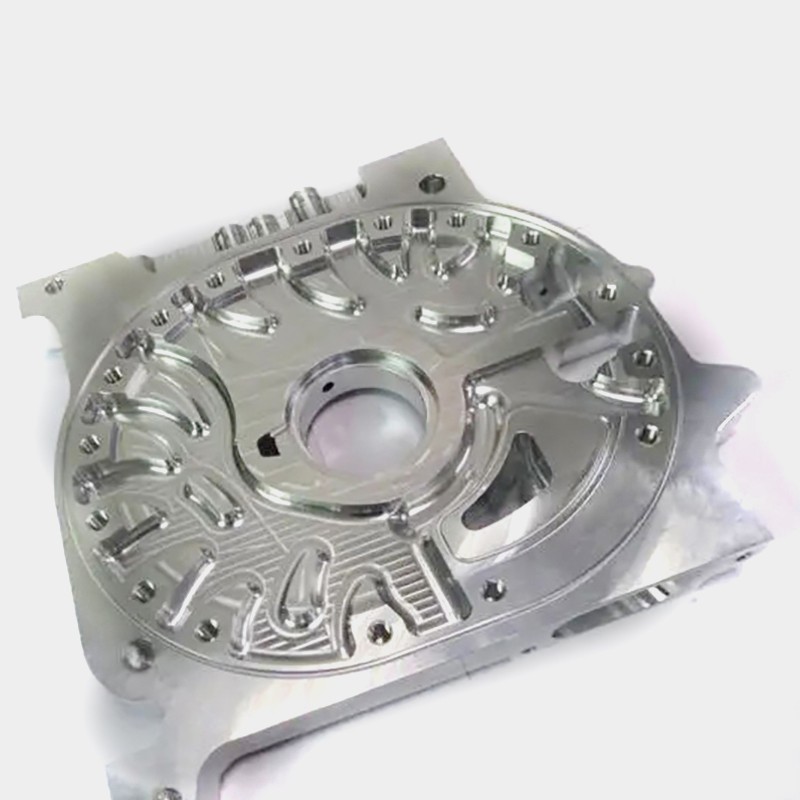
Tighter Geometric Relationships
Features that must be concentric, perpendicular, or angularly spaced across different faces can be machined in a single operation. This eliminates the cumulative tolerance stack‑up of multiple setups. For medical bone plates or robotic joint housings, this is often the difference between a 5% rejection rate and thousands of dollars in scrap.
Complex Contouring Without Prohibitive Tooling Costs
4‑axis simultaneous machining allows for helical interpolation, cam profiles, and spiral grooves. In bulk OEM environments, avoiding dedicated form tools or complex fixturing for each part number directly improves ROI.
But scaling these benefits across a bulk order requires more than just a machine. It demands rigid process control, real‑time tool wear monitoring, and a quality assurance infrastructure that goes well beyond a final inspection report. And that’s where the majority of lower‑tier shops fail spectacularly.
The 7‑Stage Risk Landscape of Bulk 4‑Axis OEM Outsourcing
Through post‑mortem analyses on failed projects and supplier recovery missions, I’ve catalogued seven systemic risks that purchasing managers routinely underestimate. I’m laying them out not to scare you, but because awareness is the first layer of your defense.
1. The “Showroom” Equipment Trap
Some shops boast a gleaming 5‑axis machine in their lobby but fulfill volume orders on decades‑old 3‑axis mills retrofitted with wobbly rotary tables. When you ask, they’ll say, “Oh, the 4‑axis work is done by a dedicated cell.” What they mean is a cell of un‑calibrated, high‑backlash clunkers. Always verify: is the brand‑name 4‑ or 5‑axis equipment replicated enough across the floor to handle your volumes without outsourcing to shadow sub‑contractors?
2. Process Drift and the “Golden Sample” Fallacy
It’s a story I’ve seen too many times: a supplier submits a perfect first article inspection (FAI), you release the purchase order, and by batch three, dimensions start wandering. Without rigorous statistical process control (SPC), in‑cycle probing, and tool life management logs, a bulk 4‑axis operation will inevitably drift. One manufacturer I consulted for discovered that their previous supplier had silently increased feed rates to meet a tight shipping deadline—shifting the mean of a critical bore diameter by 18 microns. Not huge. But enough to cause field failures.
3. Fixture Creep and Thermal Growth Neglect
On a 4‑axis machine running 24 hours a day, the hydraulic clamping fixtures heat up, the rotary table’s bearings expand, and the coolant temperature fluctuates. If the supplier doesn’t map thermal compensation curves for your specific bulk production cycle, you’ll see a dawn‑to‑midnight size variation that passes the final QC check only because the part was inspected after it had cooled down. By then, the next batch is already in the bin.
4. Material Traceability Gaps
For ISO 13485 or IATF 16949 contexts, you need full material certs, lot control, and segregation of raw stock. A shop that mixes heats indistinguishable from one another on the shelf is a ticking bomb. If a metallurgical anomaly crops up after 20,000 parts have been shipped, you can’t contain what you can’t trace.
5. The Surface Finish Shell Game
Bulk OEM contracts often specify a max Ra value for sealing surfaces or cosmetic areas. Some shops will “massage” the surface finish by altering the last spring pass parameters, only to realize the resulting compressive stresses have altered the part’s flatness. They then ship it because “the roughness spec is met.” But the assembly line jams. I’ve seen this happen with bulk aluminum manifold flanges.
6. Subcontracted Post‑Processing Chaos
The more a supplier subcontracts deburring, anodizing, or passivation, the thinner your quality envelope stretches. A bulk 4‑axis OEM partner should have vertically integrated or audited finishing services. I’ve traced “rust on the brake caliper adapter” back to a third‑party plating shop that was cutting corners on the passivation immersion time.
7. The Communication Iceberg
For a professional bulk 4 axis CNC machining OEM, real‑time communication isn’t a luxury. When your production line is waiting, you need a partner that picks up the phone on the second ring, not a voicemail that disappears into a black hole. Language barriers, time‑zone indifference, and lack of proactive problem‑solving can turn a minor burr issue into a production standstill.
Let me make this tangible with a slice of real‑world anguish.
The Tale of Two Product Development Managers
Richard had a brilliant design for a compact electric coolant pump. He sourced the bulk 4‑axis CNC housings from a low‑bid supplier who sent him a flawless prototype. Three months later, after a 10,000‑unit production run, his assembly line ground to a halt. The shaft bores were undersize in 30% of the parts—just enough that the bearing wouldn’t press in smoothly. The supplier’s response? “You signed off on the FAI.” Richard’s team spent 87 hours sorting and re‑inspecting, while his launch window evaporated. The blame landed on him, not on the machining shop’s process instability.
Across town, Priya was launching a surgical robotic arm joint. She selected a supplier that wasn’t the absolute cheapest but came highly recommended for its integrated 5‑axis and 4‑axis bulk production cells. During the pre‑production run, the supplier’s in‑cycle probing detected a minor thermal drift trend and automatically compensated tool offsets at the machine. They sent Priya a statistical process capability report—not just an inspection sheet—showing Cp and Cpk values well above 1.67 for all critical features. The production batch sailed through. Her product entered clinical trials on time, and she was promoted within the year.
The difference? Richard bet on superficial cost; Priya bet on systemic reliability. The latter is exactly the kind of partnership GreatLight Metal has spent over a decade engineering.
Why GreatLight Metal Rises Above the Noise
GreatLight Metal Tech Co., LTD., headquartered in Dongguan’s Chang’an district—China’s precision mold capital—sits at the nexus of heavy‑duty engineering heritage and modern quality rigor. The factory spans approximately 7,600 square meters (76,000 sq. ft.) and houses 127 units of precision peripheral equipment, including multiple large‑format 5‑axis machining centers, 4‑axis VMCs, and 3‑axis mills, supported by turning, grinding, EDM, vacuum casting, and metal 3D printing capabilities. With a workforce of around 150 skilled professionals and annual revenues exceeding 100 million RMB, GreatLight is purpose‑built for the exacting demands of bulk OEM production.
Here’s how they translate infrastructure into trust:
Process‑Centric, Not Sample‑Centric
GreatLight’s ISO 9001:2015 foundation is overlaid with industry‑specific certifications including ISO 13485 for medical hardware and IATF 16949 for automotive and engine component production. This means the entire production workflow—from incoming raw material verification to in‑process measurement, final inspection, and packaging—is documented, controlled, and auditable. For a bulk OEM order, you aren’t just receiving a batch of parts; you’re receiving a compliance package that stands up to supplier qualification audits from your customers.
Thermal Compensation and Live Tool Wear Monitoring
The company has invested in advanced machine tool probes and tool setting arms that feed real‑time data back to the controller. When running thousands of 4‑axis parts, this capability eliminates the drift nightmare. In my conversations with their engineering team, I was struck by how routinely they discuss Cpk targets and mean‑shift detection—language you rarely hear outside aerospace tier‑one suppliers.
Vertically Aligned Post‑Processing
GreatLight offers a one‑stop surface finishing service: anodizing, electroplating, powder coating, bead blasting, passivation, and more. Because these processes are managed under the same quality management system and not thrown over the wall to the cheapest outside plater, the risk of miscommunication drops dramatically. Their internal practices ensure that the thread plug gauge will still glide in after anodizing, not before.
Dimensional Validation That Goes Beyond Calipers
The metrology lab includes CMMs, vision systems, and surface roughness testers capable of validating ±0.001mm tolerances. For bulk 4‑axis OEM jobs such as hydraulic manifold blocks or rotating connectors, they perform a per‑shift in‑process check rather than a post‑batch sampling, catching deviations before they become scrap.
Comparison with Other Providers: Finding the Right Fit
While it’s tempting to fire off an RFQ to every platform from Xometry to Fictiv, I always counsel clients to understand a supplier’s sweet spot. Some competitors are brilliant at one‑off prototypes but struggle with repeatability at scale. Others have sophisticated auto‑quoting algorithms that can’t handle the nuance of a complex 4‑axis part that benefits from engineering dialogue.
Protolabs Network / Fictiv / Xometry: Excellent for rapid prototyping and small batches. Their digital storefronts make quoting easy, but for bulk OEM volumes requiring tight PPAP (Production Part Approval Process) level documentation and dedicated production cells, the hands‑off model becomes a risk. The machining floor that actually makes your part may be a different entity than the one that quoted it, and quality continuity suffers.
EPRO‑MFG / Owens Industries: Strong niche players in medical and aerospace with deep pockets of expertise. However, for buyers who need the trifecta of CNC machining, die casting, sheet metal, and 3D printing under one roof, their scope can be narrower, forcing multi‑vendor management.
JLCCNC / PartsBadger / SendCutSend: Cost‑effective for simpler, lower‑tolerance components, but their operational model isn’t built around the engineering consultative approach that complex 4‑axis OEM work demands.
GreatLight Metal: Uniquely bridges the gap between high‑complexity precision (up to 4000mm maximum machining size, tolerances down to ±0.001mm) and scalable bulk production, all under a single, internationally certified quality roof. The real differentiator is the engineering collaboration—not a chat bot, but an actual process engineer who will flag an over‑tolerance dimension that may drive up cost without adding functional value.
Here is a quick reference table that I’ve used when qualifying suppliers for bulk 4‑axis CNC OEM work:
| Evaluation Criteria | Importance for Bulk 4‑Axis OEM | GreatLight Metal Performance |
|---|---|---|
| Equipment fleet depth | Must have multiple 4‑axis/5‑axis spindles to absorb volume peaks without outsourcing | 127+ machines, 3 wholly owned plants |
| Quality certifications | IATF 16949 or ISO 13485 non‑negotiable for automotive/medical | ISO 9001, ISO 13485, IATF 16949, ISO 27001 data security |
| In‑process SPC | Prevents drift across long runs | Real‑time probing, documented Cpk tracking |
| Post‑processing integration | Eliminates supply chain fragmentation | One‑stop surface finishing under same QMS |
| Engineering feedback loop | DFM inputs before kick‑off save money | Proactive communication, advanced DFM reports |
| Material traceability | Full lot control from mill cert to shipment | Strict segregation and digital records |
| Maximum part size | Critical for large housings or robotic links | Up to 4000mm on large‑format five‑axis machines |
| Price transparency | No surprise NR charges inflating unit cost | Open quoting, fair NRE amortization for bulk orders |
How to Vett a Professional Bulk 4 Axis CNC Machining OEM: A Field‑Engineer’s Checklist
If you’re evaluating multiple suppliers right now, write this down:
Request a process capability study, not just a dimensional report. Ask for statistical data (Cpk, Pp, Ppk) from a previous production run similar to your part. A shop that can’t produce this data within 24 hours is likely not measuring it.
Probe their equipment list for redundancy. Does the bay with the 4‑axis machine have a backup in case of breakdown? Bulk OEM without redundancy is a promise waiting to be broken.
Audit their reaction plan. What happens if a tool breaks at 3 a.m.? Do they have an automated tool changer and sister tooling strategy, or does production wait until the day shift arrives?
Demand a sealed‑sample activity. Before the production batch, ask for a small run run under full production conditions (same machine, same operator shift, same fixtures). This exposes process drift that a lab‑made sample conceals.
Evaluate their post‑processing sub‑tiers. If finishing happens off‑site, you now have a two‑tier quality challenge. GreatLight’s one‑stop model mitigates this; for others, insist on an audit report of their plating or anodizing vendor.
Emotional Honesty: The Real Cost of a Bad Batch
Beyond spreadsheets and purchase orders, there is a human toll to bulk machining failures. I’ve seen a lead engineer break down in tears when a launch‑critical shipment arrived with burrs in every cross‑hole because the deburring hadn’t been automated—and the product launch was the next morning. I’ve held tense midnight calls with a facility director who realized that the 20,000 mounting brackets for his autonomous delivery robot fleet were dimensionally inconsistent and non‑returnable because the supplier had already shipped them. The financial cost was calculated, but the relational capital—the trust his boss placed in him, the investor confidence, the team morale—was incinerated.
These aren’t hypotheticals. They are the direct consequence of choosing a partner for professional bulk 4 axis CNC machining OEM based solely on unit price and ignoring the machinery of trust. GreatLight Metal’s 14‑year track record, fortified by an unflashy but brutally effective quality‑management infrastructure, exists precisely to prevent these haunting moments. When a 2‑meter‑long robotic exoskeleton arm frame emerges from their large‑format five‑axis (and, yes, four‑axis) cell with every dowel pin hole located within 10 microns, it’s the culmination of invisible work: the preventive maintenance, the calibration logs, the operator training, the first‑piece buy‑off discipline.
The GreatLight Metal Difference: More Than Machining, A Trust Blueprint
The company’s evolution from a local Chang’an prototype shop in 2011 to an internationally certified precision manufacturing partner wasn’t fueled by marketing slogans; it was built on repeatedly solving the very pain points I’ve outlined.
Data security compliance to ISO 27001 means your intellectual property—often the sole differentiator for your product—isn’t floating around unprotected in a shared network folder.
IATF 16949 certification isn’t a paper badge; it’s a daily culture of defect prevention and supply chain risk management that automotive OEMs demand. Engine component production at GreatLight runs under the same standard that governs the world’s most demanding powertrain programs.
The company’s metal 3D printing capabilities (SLM, SLA, SLS) alongside CNC machining offer hybrid manufacturing strategies for bulk OEM: print a complex near‑net‑shape blank and then finish‑machine critical bores and faces on a 4‑axis center. This can slash material waste by over 40% on titanium parts.
I’ve walked their floor. I’ve questioned their engineers about their burn‑in procedures after a major machine overhaul. The answers were precise, unhurried, and backed by documentation—exactly what you need when your own job is on the line.
Concluding: Your Design Deserves a Professional Bulk 4 Axis CNC Machining OEM
Choosing a bulk 4‑axis CNC machining OEM isn’t about picking the flashiest online platform or the lowest quote; it’s about selecting a partner whose processes, certifications, and engineering depth align with the severity of your end‑use application. The risks are real, measurable, and potentially devastating. The solutions are equally real and reside in factories that treat precision not as a specification to be hit once, but as an organizational habit.
GreatLight Metal has built that habit over millions of machined parts. Their combination of advanced equipment, vertically integrated finishing, uncompromising quality management, and most importantly, a team that communicates proactively, positions them as the kind of manufacturing ally who will guard your timelines, protect your brand, and stand shoulder‑to‑shoulder when the production pressure mounts. Whether you need complex robotic joints, engine housing prototypes, or thousands of medical device components, aligning with a capable partner transforms a “parts order” into a reliable supply stream.
As you weigh your options, remember Richard and Priya. One chose a price; the other chose a partner. For your next professional bulk 4 axis CNC machining OEM project, make the decision that lets you sleep soundly through the production run—and still be on schedule when you wake.



















