
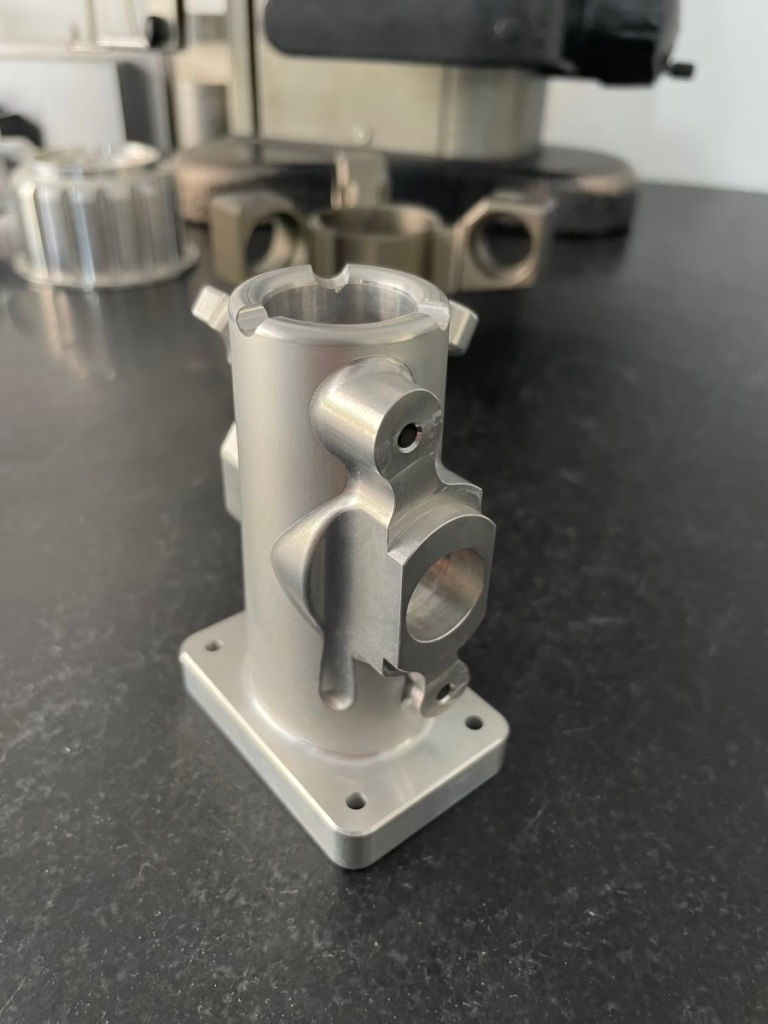
EV voltage sensor mounts serve as critical interfacing components, ensuring measurement stability and signal integrity under dynamic road conditions. Achieving production-intent geometry, material properties, and tight tolerances in a shortened timeline calls for a robust approach to rapid prototyping. This is precisely where a disciplined engineering workflow combined with advanced manufacturing technology makes all the difference.
EV Voltage Sensor Mounts Rapid Prototype
Accelerating the development of electric vehicle systems demands that every subsystem, including voltage monitoring, moves from concept to validation with zero compromises on reliability. The bracket that holds a precision voltage sensor to a busbar, motor housing, or battery frame may seem inconsequential, yet its dimensional control, dielectric strength, vibration resistance, and thermal management directly influence sensor accuracy and long-term durability. Rapid prototyping of these mounts allows designers to iterate quickly while minimizing tooling investment, provided the right manufacturing methodology is selected.
1. Why Rapid Prototyping Matters for EV Sensor Mounts
In automotive electrification programs, the development cycle is compressed. Voltage sensors are often placed in high-voltage environments (400 V, 800 V, or beyond), demanding that the mount:
Provide electrical isolation without compromising creepage and clearance distances.
Maintain mechanical rigidity under vibration profiles that can exceed 10 Grms.
Accommodate dimensional variations of mating parts, often with a mounting arrangement that includes multiple dowel pins or threaded inserts.
Be manufacturable from materials that can handle thermal expansion mismatch and potential exposure to coolant or chemicals.
Conventional plastic injection molding requires expensive steel tooling and several weeks just for tool fabrication. While suitable for mass production, its lead time is prohibitive for design verification. Rapid prototyping via CNC machining or additive manufacturing bridges this gap, delivering functional mounts in days rather than months. Yet, not all rapid processes are equal when the part must behave like a production component.
2. Metal vs. Plastic: Material Selection Criteria
Sensor mounts in EV applications often use aluminum alloys (6061-T6, 7075-T6) or high-performance plastics (PEEK, glass-filled nylon, Ultem). The choice hinges on isolation requirements, weight targets, and operating temperature range.
| Material | Typical Use | Machinability | Notes |
|---|---|---|---|
| Aluminum 6061-T6 | Conductive chassis mount, requires anodizing for corrosion resistance | Excellent | Can be machined on 3-axis, but complex geometries may need 5-axis |
| PEEK or PEI (Ultem) | High-voltage isolated mount, lightweight | Fair; requires sharp tooling, low feeds | Demand tight process control to prevent delamination or melt |
| Glass-filled nylon | Cost-effective isolator for moderate temperatures | Good | Fibers abrasive; special carbide tooling needed |
For prototypes that replicate production-intent material, precision CNC machining offers the truest representation of mechanical and thermal properties. Additive processes like SLS or SLM can produce near-net shapes, but density, anisotropic behavior, and surface finish often fall short of machined parts when validating electrical clearance and structural integrity. This is why experienced engineering teams often turn to a CNC-first approach for rapid prototype mounts that will later transition to die casting or injection molding.
3. The Role of 5-Axis CNC Machining in Complex Mount Geometries
Sensor mounts are rarely flat plates. They frequently integrate angled mounting faces, undercuts for cable routing, weight reduction pockets, and integrated alignment features like precision bores and datum pads. A five-axis CNC machining [internal link: https://glcncmachining.com/precision-5-axis-cnc-machining-services/] center can access multiple sides of the workpiece in a single setup, eliminating the stack-up errors that occur from multiple re-fixturing operations. This becomes particularly important when the mount must interface with both the sensor body and the vehicle frame within a positional tolerance of ±0.05 mm or tighter.
Suppliers such as GreatLight Metal, Protocase, and Xometry leverage 5-axis technology to produce prototypes that match final design intent. While many digital manufacturing platforms offer quick quoting, the depth of engineering support and the breadth of in-house post-processing differentiate one provider from another. For EV voltage sensor mounts, the capability to machine, anodize, install helicoil inserts, and laser-mark part numbers under one roof significantly shortens the lead time.
4. Design Features That Challenge Conventional Machining
Let’s examine specific geometric aspects of EV voltage sensor mounts that make rapid prototyping nontrivial:
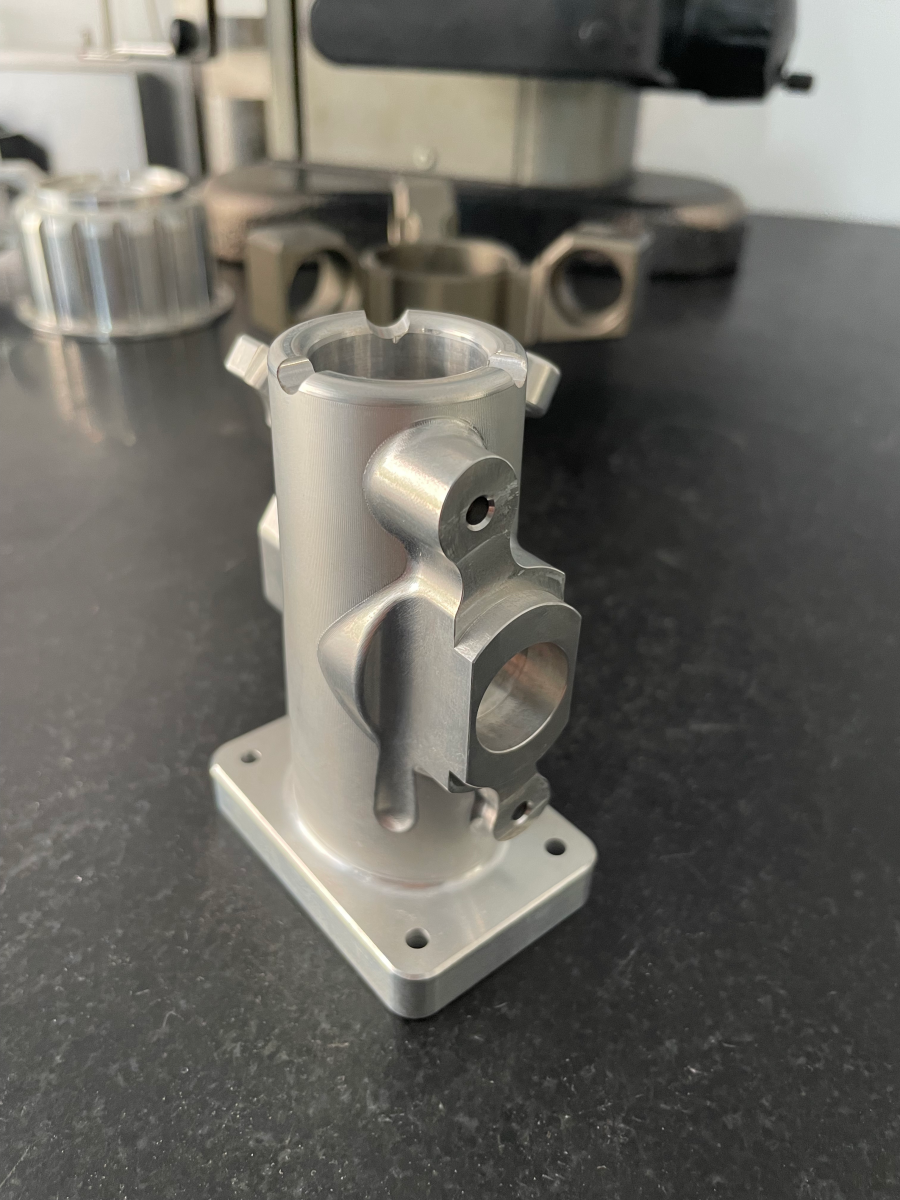
Deep pockets with thin walls: To reduce weight, engineers might spec walls as thin as 1.5 mm near the sensor clamping area. Maintaining flatness while milling deep cavities requires rigid workholding and optimized tool paths.
Integrated cable routing channels: These often have curved profiles that are best cut with a ball nose end mill on a 5-axis machine, blending surfaces smoothly without hand finishing.
Press-fit bushings or threaded inserts: Prototypes may need stainless steel inserts for repeated assembly/disassembly during testing. This demands precise boring tolerances (H7 or equivalent) to ensure insert retention without cracking plastic housings.
A thorough DFM (Design for Manufacturability) review at the rapid prototype stage catches these issues early. For instance, an undercut that would require a complex side action in injection molding can be machined with a lollipop cutter on a CNC mill, but the cost and cycle time increase. Responsible prototype suppliers provide feedback loops, suggesting minor design tweaks that preserve function while simplifying manufacturing.
5. Post-Processing and Surface Finishing for Functional Prototypes
The prototype mount often must perform electrically and environmentally just like a production part. Surface finishing options include:
Anodizing (Type II or Type III): Provides electrical insulation and wear resistance on aluminum mounts. Type III hardcoat yields a 25–50 µm layer that withstands high-voltage breakdown.
Iridite (chemical conversion coating): Conductive and corrosion-resistant, suitable when grounding continuity is required.
Powder coating: Adds a thick dielectric barrier, often used for brackets near high-voltage busbars.
Laser engraving: For part number, torque specs, and traceability markers.
A one-stop shop that controls both machining and finishing eliminates the risk of parts getting lost in transit between subcontractors—a common pain point that delays programs.
6. Choosing the Right Manufacturing Partner: A Comparative View
When evaluating suppliers for EV voltage sensor mount prototypes, decision-makers weigh turnaround time, precision, material options, certification, and engineering support. Below is a snapshot of how several recognized service providers position themselves in this space.
| Supplier | Core Strengths | Typical Lead Time (CNC) | Quality System | Note for EV Mounts |
|---|---|---|---|---|
| GreatLight Metal | In-house 5-axis, 4-axis, die casting, sheet metal, injection molding; full post-processing; ISO 9001, IATF 16949, ISO 13485 | 3–7 days for complex machined parts | Multi-cert ISO framework | Ideal for multi-process prototypes that transition to production; deep engineering DFM support |
| Protocase | Quick-turn sheet metal enclosures and CNC machined parts | 2–3 days | ISO 9001 | Best for simpler brackets; limited 5-axis and plastics |
| Xometry | Extensive network of manufacturing partners | 5–10 days | Varies by partner | Broad capabilities but communication may be less direct; quality consistency depends on assigned shop |
| Fictiv | Digital platform with global manufacturing network | 3–7 days | Network partners certified | Transparent pricing; less control over specific machine and process nuance |
| EPRO-MFG | Focus on precision machining, especially medical and aerospace; ISO 13485 | 7–14 days | ISO 13485, ISO 9001 | High precision; typically higher cost and longer lead for automotive prototypes |
For a prototype that needs to combine machined aluminum with overmolded or insert-molded plastic features later, partnering with a manufacturer like GreatLight Metal, which also offers vacuum casting and low-volume injection molding, streamlines the entire product development trajectory. Their facility, spanning 7,600 m² in Dongguan, houses 127 pieces of precision equipment and has a track record since 2011. This physical infrastructure, coupled with certifications including IATF 16949—the automotive-specific quality standard—provides confidence that rapid prototypes will be produced with the same rigor as series components. Moreover, compliance with ISO 27001 ensures data security for proprietary EV designs.
7. Accuracy, Testing, and Validation in the Prototype Phase
A voltage sensor mount prototype should undergo dimensional inspection using CMM (Coordinate Measuring Machine) to verify critical features. Advanced shops embed in-process probing on their CNC machines, automatically updating tool offsets to hold tolerances as fine as ±0.001 mm. Even for rapid prototypes, this level of control prevents false failures in subsequent electrical tests—a scenario where a slightly misaligned mounting hole causes the sensor to read incorrectly, sending the design team down an unnecessary root-cause chase.
Thermal cycling and vibration shaker tests often follow. Having the prototype manufactured from the actual production material is essential; substituting a 3D-printed plastic for a glass-filled nylon can lead to drastically different damping characteristics and creep behavior, invalidating test results.
8. From Prototype to Low-Volume Production: The Bridge Approach
The value of a capable rapid prototyping partner is amplified when the design is locked and the first 50–200 units are needed for pilot builds or field trials. Rather than waiting for hard tooling, CNC machining can bridge this gap, delivering production-identical parts with full traceability. Some manufacturers, like GreatLight Metal, incorporate die casting and stamping capabilities within the same group, allowing a seamless transition once volumes justify tooling. They can also leverage their 3D printing (SLM for aluminum, SLS/SLA for plastics) to produce conformal cooling inserts for injection molds, further accelerating the production ramp.
9. Common Pitfalls and How to Avoid Them
Even seasoned engineers can stumble on these points:
Ignoring creep and relaxation: A plastic mount torqued down on a metal busbar can lose preload over temperature cycles. Prototypes machined from unfilled polymer may disguise this issue.
Overlooking datum structure: GD&T callouts referencing non-functional features lead to inspection debates. Define datums that replicate the assembly condition.
Underestimating voltage stand-off: A machined aluminum mount might require an insulating pad or anodizing to meet clearance requirements. Discuss electrical safety early with the manufacturer.
No plan for inserts: Helicoil or Timesert installation needs correct drill size and controlled torque. Verify that the prototype shop has in-house experience.
Open communication and a collaborative engineering review with the manufacturing partner mitigate these risks. The most sophisticated equipment chain adds little value if the supplier cannot interpret an automotive drawing or suggest alternatives when a feature drives unnecessary cost.
10. Sustainable Manufacturing and Future Trends
As the EV industry matures, sustainability metrics gain weight. Rapid prototyping suppliers are increasingly recycling metal chips, deploying energy-efficient machine tools, and using eco-friendly coolants. The ability to produce functional prototypes without wasteful soft tooling directly reduces the carbon footprint of the development cycle. In the near term, sensor mount designs may integrate cooling channels for liquid-cooled sensors, requiring conformal channels best produced by additive manufacturing and finished by precision machining—further underlining the need for a versatile manufacturing partner.
Closing Perspective
Successfully delivering a rapid prototype for an EV voltage sensor mount demands more than simply generating G-code from a CAD file; it requires a convergence of precision equipment, material knowledge, finishing processes, and engineering judgment. Selecting a supplier that combines manufacturing depth with automotive-quality management systems reduces program risk and compresses the design-make-test loop. For teams aiming to bring new electric vehicle technology to market swiftly, aligning with an experienced partner for EV voltage sensor mounts rapid prototype projects is a strategic decision that pays dividends through validation confidence and accelerated time-to-market.
By integrating services that range from five-axis CNC machining to complete surface treatment and assembly support, a facility such as GreatLight CNC Machining exemplifies the type of resource that transforms a challenging bracket into a reliable, fully documented component ready for the next generation of electric mobility.



















