
In the rapidly evolving landscape of manufacturing technology, a common question persists among engineers and workshop managers: Do CNC machines still use parallel ports? The straightforward answer is nuanced. While the vast majority of modern CNC controllers have transitioned to more advanced communication protocols, parallel ports have not completely vanished. They persist in specific contexts, primarily within legacy systems, hobbyist machines, and certain retrofit scenarios. Understanding this evolution is crucial for anyone involved in precision parts machining and customization, as it impacts machine connectivity, data transfer reliability, and overall production efficiency.
The Era of Parallel Ports: A Historical Backbone
For decades, the parallel port (specifically the IEEE 1284 standard, often the DB-25 connector) was the dominant interface for connecting a computer to a CNC machine controller. Its prevalence stemmed from several key factors:
Simplicity and Direct Control: It provided a direct, bit-by-bit parallel communication path. Each pin could be assigned a specific function (e.g., step pulses, direction signals for each axis), making the interface relatively straightforward for machine control.
Widespread Availability: For years, it was a standard feature on almost every personal computer.
Sufficient for Early Speeds: The data transfer rates, while slow by today’s standards, were often adequate for the simpler G-code programs of older machines.
In this era, a “drip-feed” or direct numerical control (DNC) over a parallel connection was a common method for running long programs that exceeded the limited memory of early CNC controllers.
The Shift to Modern Communication Protocols
The limitations of parallel ports became starkly apparent as manufacturing demands grew:
Distance Limitations: Parallel cables are highly susceptible to electrical interference and signal degradation. Reliable operation was typically limited to a few meters, restricting machine placement.
Speed Bottleneck: As programs became more complex with high-speed machining and 3D toolpaths, the slow data transfer rate of parallel ports caused bottlenecks, leading to machine stuttering (“starvation”).
Hardware Obsolescence: The near-universal removal of parallel ports from modern PCs created a major compatibility challenge. This forced users to rely on aging computers or add-on PCI cards, creating maintenance and reliability issues.
Lack of Intelligence: The connection was one-way and “dumb,” offering no robust error-checking, feedback, or network capabilities.
Consequently, the industry has decisively moved towards more robust, faster, and smarter protocols:
Ethernet (TCP/IP): This is now the gold standard for industrial CNC communications. Protocols like EtherCAT, PROFINET, and MTConnect run over standard Ethernet cabling. They offer:
High-speed, bidirectional data transfer over long distances (100m+).
Real-time machine monitoring and data collection.
Seamless integration into factory-wide networks (IIoT).
Drastic reduction in wiring complexity.
USB: Common for offline program loading and some direct machine control, especially in newer benchtop and prosumer machines. It offers plug-and-play convenience and high speed but is generally less robust than dedicated industrial Ethernet for continuous real-time control.
Fieldbus Systems (Serial-based): While also serial in nature, industrial standards like RS-232, RS-485, and CANopen offer far greater noise immunity, longer range, and multi-drop capabilities compared to classic PC parallel ports. These are still found in many industrial environments for connecting peripherals (e.g., PLCs, I/O modules) to the main CNC controller.
Parallel Ports Today: Niche Applications and Retrofit Solutions
So, where does the parallel port still fit in the modern workshop?
Legacy Machine Maintenance: Thousands of economically viable CNC machines from the 1990s and early 2000s are still in operation. Retrofitting them with a new controller can be a significant investment. For these, using a modern PC with a dedicated motion control card (which outputs step/direction signals via a DB-25 port) is a common and cost-effective upgrade path. Companies like Galil, Teknic, and others provide such solutions.
The Hobbyist and DIY Market: Many low-cost CNC router and engraver kits are designed around simple microcontroller boards (like Arduino with GRBL) that accept step/direction signals, often delivered via a USB-to-Parallel adapter or a dedicated breakout board mimicking the old parallel port interface.
Specialized Industrial Controls: In some very specific, hardened control applications, the simplicity of a direct parallel interface can still be chosen for its deterministic timing, though this is increasingly rare.
Implications for Precision Machining and Customization
For clients seeking high-quality, reliable precision CNC machining services, the communication interface of a machine is a hidden but critical indicator of its capabilities and the supplier’s technological maturity.
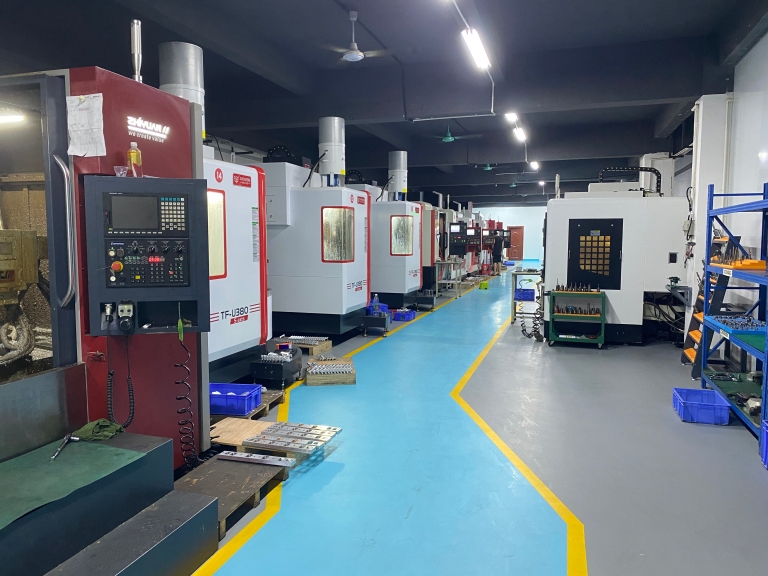
A Shop Using Predominantly Parallel-Port-Driven Machines may be constrained in program complexity, susceptible to communication errors on long runs, and potentially operating on older, less accurate mechanical systems. This can be a risk for complex, tight-tolerance parts.
A Modern, Forward-Thinking Manufacturer like GreatLight Metal Tech Co., LTD. (GreatLight Metal) invests in CNC equipment with advanced native Ethernet-based controls. This isn’t just about faster file loading; it’s about stability, precision, and integration.
Stability: Ensures flawless execution of massive 5-axis toolpaths for aerospace or medical components without data starvation.
Precision: Modern protocols work in tandem with advanced control algorithms and high-resolution feedback systems to achieve and consistently hold tolerances within ±0.001mm.
Integration: Allows for seamless production monitoring and the kind of data-driven process control that underpins certifications like ISO 9001:2015 and IATF 16949.
Conclusion
Do CNC machines still use parallel ports? While they are no longer the standard for new, industrial-grade CNC equipment, they persist as a legacy interface and a retrofit solution. The dominant trend is unequivocally toward intelligent, networked communication via Ethernet and robust serial fieldbuses. For businesses that rely on precision, reliability, and the ability to tackle complex manufacturing challenges—from intricate automotive engine components to critical aerospace fittings—partnering with a manufacturer whose technological infrastructure is modern is non-negotiable. The choice of communication protocol, though seemingly a technical detail, reflects a supplier’s commitment to productivity, quality, and future-ready manufacturing capabilities.
Frequently Asked Questions (FAQ)
Q1: I have an old CNC mill with a parallel port. Should I upgrade it immediately?
A: Not necessarily. If it reliably produces parts to your required tolerance and your programs are not causing buffer issues, it can remain in service. However, consider an upgrade if you face frequent communication errors, need to run more complex 3D programs, or if the supporting PC is failing and becoming difficult to replace.
Q2: What is the most reliable replacement for a parallel port connection on a legacy machine?
A: The most robust industrial solution is to install a modern motion control card in a dedicated industrial PC. These cards use PCIe or other high-speed buses and output clean, isolated step/direction signals through a DB-25 or other connector, effectively mimicking the old port but with vastly improved performance and stability.
Q3: Can I use a USB-to-Parallel adapter for my CNC machine?
A: For critical industrial applications, it is not recommended. These adapters often introduce unpredictable latency and timing jitter, which can cause lost steps, machined errors, or even machine crashes. They may work for very low-speed, non-critical tasks but are a significant risk for precision work.
Q4: When evaluating a CNC machining supplier, should I ask about their machine interfaces?
A: While you may not need to ask specifically about ports, inquiring about their machine control technology, data handling for complex parts, and process stability is insightful. A supplier operating advanced 5-axis centers with modern networked controls (like those at GreatLight Metal) will naturally highlight their capability to handle large, complex files and ensure uninterrupted machining—an indirect but telling sign of their communication infrastructure.
Q5: Do modern 5-axis CNC machines ever use anything resembling a parallel port?
A: Virtually never for the main control link. A state-of-the-art 5-axis machining center uses a high-speed digital bus (like EtherCAT) to communicate between the CNC, servo drives, and all peripherals in real-time. This is essential for the synchronized, complex motion required for simultaneous 5-axis machining. Any residual use of legacy ports would be for auxiliary I/O, not the core control loop. For a deeper look at this advanced technology, explore what modern precision 5-axis CNC machining services entail.



















