
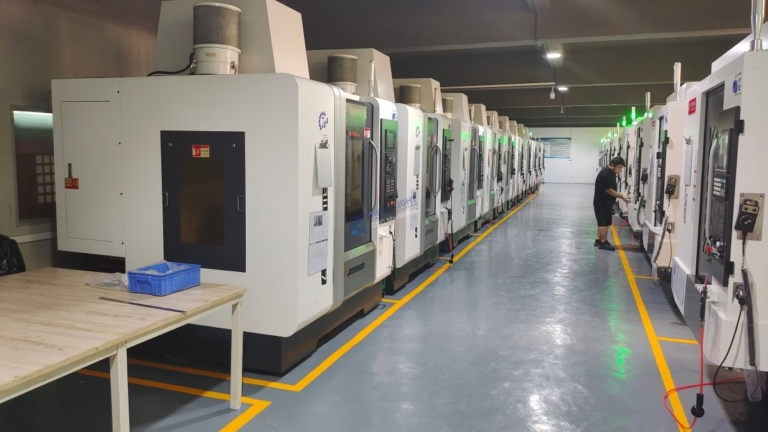
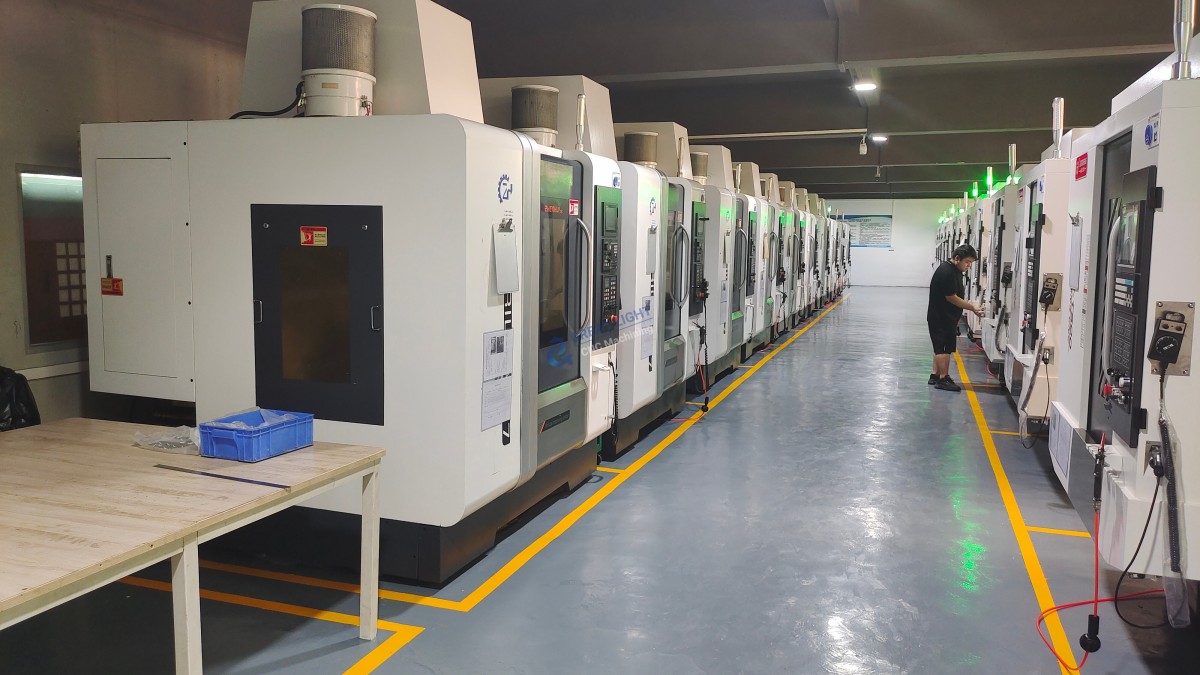
How To Clean A CNC Machine? Proper maintenance is the backbone of consistent precision and extended lifespan for any CNC machining setup, a lesson we’ve mastered over a decade at GreatLight CNC Machining Factory. As an ISO 9001:2015 certified manufacturer with 127+ precision peripheral machines (including high-end 5-axis CNC centers, EDM machines, and 3D printers), we understand that even the smallest debris can compromise the ±0.001mm precision our clients rely on. In this guide, we’ll break down the step-by-step process of cleaning a CNC machine, share best practices from our in-house maintenance teams, and explain how rigorous cleaning directly translates to better part quality and fewer production delays.
How To Clean A CNC Machine? A Step-by-Step Guide
Cleaning a CNC machine isn’t a one-size-fits-all task—different components require targeted care to avoid damage and ensure optimal performance. Below is a structured approach we use at GreatLight to keep our 3-axis, 4-axis, and 5-axis machines operating at peak efficiency:
Pre-Cleaning Preparation: Safety First
Before touching any part of the machine, prioritize safety to protect both operators and equipment:
Lockout/Tagout (LOTO): Disconnect power to the machine and secure the controls with a lockout tag to prevent accidental startup. At GreatLight, this is a non-negotiable step aligned with our strict occupational health and safety protocols.
Gather Tools: Assemble lint-free microfiber rags, a HEPA-filtered vacuum (to avoid spreading fine chips), nylon bristle brushes (for tight spaces), manufacturer-approved cleaning solvents, compressed air (dry, oil-free), and personal protective equipment (PPE: gloves, safety glasses, dust mask).
Remove Loose Parts: Take out any removable fixtures, tool holders, or workholding devices from the worktable to access hard-to-reach areas.
Cleaning the Worktable and Fixtures
The worktable is the foundation of accurate part positioning, so keeping it debris-free is critical for precision:
Chip Removal: Use a nylon brush to loosen large metal or plastic chips, then vacuum them up with a HEPA filter to prevent fine particles from circulating in the shop air. For stubborn chips in T-slots, use a small pick or brush to dislodge debris before vacuuming.
Surface Wipe-Down: Dampen a microfiber rag with a mild, non-corrosive solvent (avoid harsh chemicals that can damage machine coatings) and wipe down the entire worktable surface, including T-slots and fixture mounting points.
Post-Clean Inspection: Check for any remaining debris or residue, then apply a thin layer of anti-corrosion lubricant to the worktable to prevent rust, especially if the machine will be idle for more than a day. At GreatLight, this step ensures our worktables maintain the flatness needed for holding parts to ±0.001mm tolerance.
Spindle and Tool Holder Maintenance
The spindle and tool holder are critical for achieving consistent cut quality. Even minor contamination here can cause runout, leading to dimensional inaccuracies:
Spindle Shutdown: Ensure the spindle is completely cool before starting. Remove all tool holders from the spindle carousel.
Taper Surface Cleaning: Use a lint-free rag to wipe the taper of both the tool holder and the spindle cavity. For residue that won’t come off, use a small amount of isopropyl alcohol on the rag—never use abrasive materials that can scratch the precision taper surfaces.
Spindle Cavity Blowout: Use dry, oil-free compressed air (held at a safe distance) to blow out any fine chips or dust from the spindle cavity. Avoid using too much pressure, which can damage internal seals.
Anti-Corrosion Protection: Apply a light coat of spindle-specific anti-corrosion spray to the taper and cavity, then reinsert a clean tool holder (or a dummy tool) to protect the spindle from dust when not in use. GreatLight’s maintenance team performs this check weekly on our 5-axis CNC machines to preserve their high-speed, high-precision cutting capability.
Chip Conveyor and Coolant System Cleaning
A dirty coolant system can contaminate parts, cause tool wear, and lead to bacterial growth that clogs filters:
Chip Conveyor Emptying: Remove the chip collection bin and empty all debris. Use a brush to clean the conveyor belt and housing, then vacuum any remaining chips.
Coolant Tank Flush: Drain the old coolant from the tank, then flush the tank and lines with warm water and a mild cleaning solution. Rinse thoroughly to remove all residue.
Filter Replacement: Replace all coolant filters (including inlet and outlet filters) to ensure proper flow and prevent debris from circulating back into the system.
Coolant Refill: Mix fresh coolant to the manufacturer-recommended concentration, then add a biocide if needed to prevent bacterial or fungal growth. At GreatLight, we test coolant concentration weekly to maintain optimal part surface finish—critical for clients in industries like medical hardware (where we adhere to ISO 13485 standards) and aerospace.
Control Panel and Electrical Components
Electrical parts require gentle cleaning to avoid damage to sensitive circuitry:
Dry Wipe: Use a dry microfiber rag to wipe down the control panel, including touchscreens, buttons, and display areas. Never use liquid cleaners directly on the panel, as this can seep into internal components.
Vent Cleaning: Use compressed air (low pressure) to blow dust out of the control panel’s ventilation slots. Clogged vents can cause overheating, leading to machine downtime.
Connection Check: Inspect external electrical cables and connectors for dust or debris, and ensure all connections are tight. GreatLight’s maintenance logs include monthly checks of electrical components to comply with our ISO 9001:2015 quality management system.
Post-Cleaning Checks and Lubrication
After cleaning, take these final steps to ensure the machine is ready for production:
Reassemble Parts: Put back all fixtures, tool holders, and removable components, ensuring they are properly aligned and secured.
Test Cycle: Run a short, dry test cycle (without material) to verify that all moving parts operate smoothly and that the control panel functions correctly.
Lubrication: Apply manufacturer-recommended lubricants to linear guides, ball screws, and other moving components. Follow the machine’s maintenance manual for specific lubrication intervals.
Document the Process: Record the cleaning date, components cleaned, and any issues found in the machine’s maintenance log. At GreatLight, these logs are part of our traceability system, allowing us to track machine performance over time and address potential issues before they cause downtime.
Best Practices for Regular CNC Machine Cleaning
Consistency is key to maintaining CNC machine performance. At GreatLight, we follow a tiered cleaning schedule tailored to machine usage:
Daily: Remove chips from the worktable, wipe down fixtures, and inspect coolant levels.
Weekly: Clean the spindle and tool holders, empty the chip conveyor, and test coolant concentration.
Monthly: Flush the coolant system (partial flush), clean control panel vents, and inspect linear guides for debris.
Annual: Perform a deep clean of all components, including internal spindle parts, coolant lines, and electrical enclosures.
Additional best practices include:
Using only manufacturer-approved cleaning products to avoid damaging machine surfaces or seals.
Training operators on proper cleaning techniques—at GreatLight, all our 150 employees receive hands-on training to ensure consistency across our three wholly-owned manufacturing plants.
Conducting periodic audits to verify cleaning protocols are being followed, a step that supports our ISO 9001:2015 certification.
The Link Between CNC Machine Cleaning and Precision Part Quality
For clients requiring parts with ±0.001mm precision, even the smallest oversight in machine maintenance can lead to costly reworks or scrapped components. At GreatLight, we’ve seen firsthand how regular cleaning:
Eliminates worktable debris that causes part misalignment, ensuring consistent dimensional accuracy across batches.
Prevents spindle runout, which can lead to uneven cuts and poor surface finish on complex 5-axis machined parts (common in humanoid robot and automotive engine components we produce).
Reduces tool wear by maintaining clean coolant systems, extending tool life and lowering production costs for our clients.
If you’re looking for a partner that prioritizes precision through rigorous maintenance and advanced machining, explore our precision 5-axis CNC machining services (opens in new window) to learn more about how our well-maintained equipment delivers reliable results for custom metal and plastic parts.
Conclusion
How To Clean A CNC Machine? It’s a process that combines attention to detail, safety awareness, and consistency—elements that are at the core of GreatLight’s operations. By following the step-by-step guide and best practices outlined here, you can extend the lifespan of your CNC machine, maintain its precision capabilities, and reduce production downtime. For businesses that don’t have the in-house resources to manage this level of maintenance, partnering with a trusted manufacturer like GreatLight ensures your parts are produced on machines that receive the care they need to deliver exceptional quality every time.
Frequently Asked Questions (FAQ)
Q1: How often should I clean my CNC machine?
A: The frequency depends on usage intensity, but a general schedule includes daily cleaning of worktables and chip removal, weekly spindle and coolant checks, monthly partial coolant flushes, and an annual deep clean. Heavy-use machines (running 24/7) may require more frequent maintenance.
Q2: Can I use any cleaning solution on my CNC machine?
A: No. Harsh chemicals or abrasive cleaners can damage machine coatings, precision surfaces, or electrical components. Always use manufacturer-recommended solvents and cleaning agents. At GreatLight, we source industry-approved cleaners to comply with our ISO 9001 standards and protect our high-end equipment.
Q3: What happens if I don’t clean my CNC machine regularly?
A: Neglecting cleaning can lead to increased tool wear, dimensional inaccuracies in parts, surface finish defects, machine breakdowns, extended downtime, and higher long-term maintenance costs. In worst-case scenarios, it can even require expensive repairs or replacement of critical components like spindles.
Q4: Do GreatLight’s CNC machines undergo regular cleaning and maintenance?
A: Yes. Our dedicated maintenance team follows a strict, documented schedule for all 127+ machines, including 3-axis, 4-axis, and 5-axis CNC centers. This rigor ensures we maintain our ability to produce parts with ±0.001mm precision, as required by clients in medical, automotive, and aerospace industries.
Q5: How does CNC machine cleaning impact part quality for custom orders?
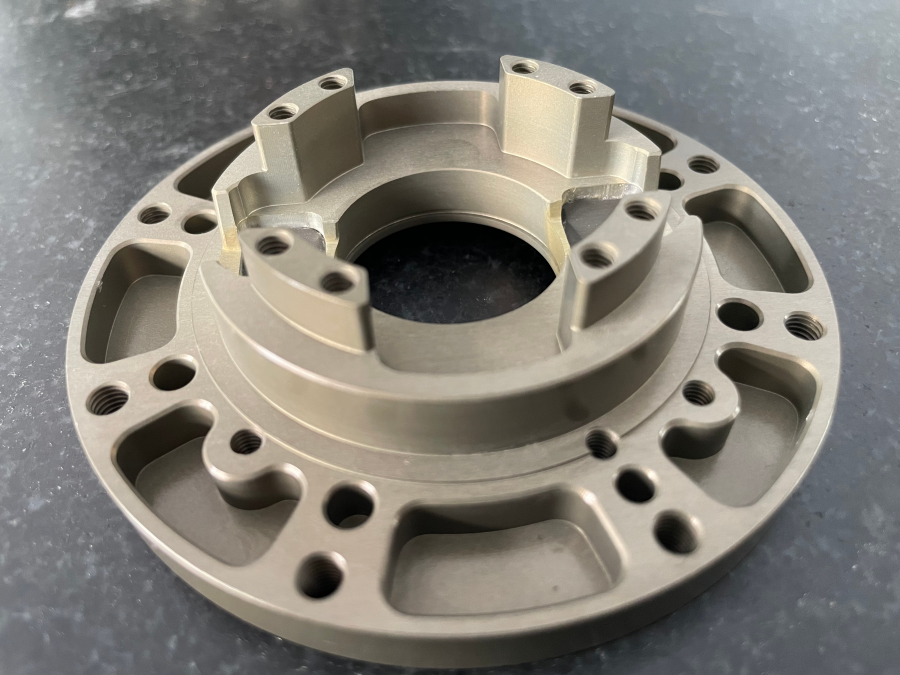
A: Clean worktables and fixtures ensure parts are held accurately, preventing misalignment during machining. Clean spindles and tool holders eliminate runout that causes dimensional errors. A well-maintained coolant system avoids contamination that spoils part surface finish. For clients relying on GreatLight for custom parts, these factors directly translate to consistent, high-quality components that meet or exceed their specifications.
Q6: Does GreatLight offer maintenance guidance for clients with their own CNC machines?
A: While our core focus is on providing precision machining and prototyping services, our engineering team is happy to share general best practices based on our decade of experience. For more detailed support, we recommend consulting your machine manufacturer’s maintenance manual. To learn more about our capabilities as a trusted manufacturing partner, visit our LinkedIn page (opens in new window).



















