
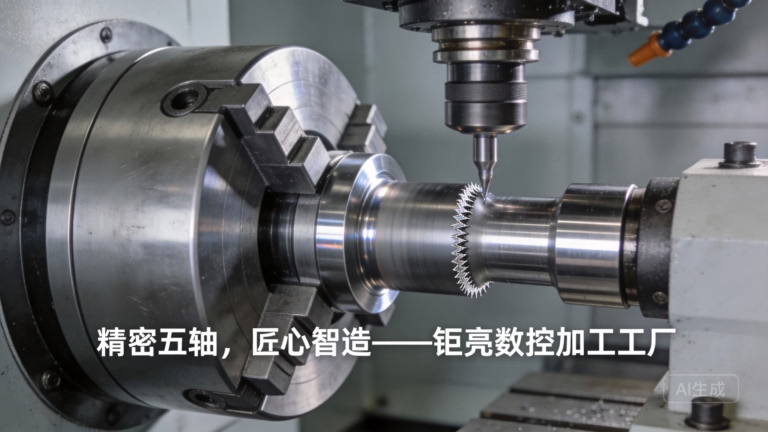
In the world of precision manufacturing, 5‑axis CNC machining represents the pinnacle of capability. When a project demands complex geometries, tight tolerances, and uncompromising surface finishes, procurement engineers and product developers around the world increasingly turn to China’s advanced manufacturing sector. China is not merely a low‑cost workshop anymore; it has evolved into a hub of technological excellence, home to some of the world’s most advanced 5‑axis CNC service factories. Navigating this landscape, however, requires an understanding of what truly distinguishes a top‑tier partner from an ordinary supplier. This guide will help you identify the leaders in Chinese 5‑axis CNC services and show you how to select a factory that can transform your most challenging designs into reality.
Leading Chinese 5 Axis CNC Services Factories: A New Generation of Precision
The phrase “Chinese manufacturing” once evoked images of high‑volume, low‑cost commodity parts. Today, that image is outdated. The country now hosts a cluster of factories that specialize in highly complex, low‑to‑medium volume precision machining, and at the heart of that capability lies the 5‑axis CNC machining center. These machines can approach a workpiece from almost any angle in a single setup, drastically reducing lead times, eliminating cumulative fixture errors, and enabling the production of parts with undercuts, deep cavities, and sculpted surfaces that would be impossible on older 3‑axis equipment.
When we talk about 5-axis CNC machining services, we are describing a process where the cutting tool moves along the X, Y, and Z linear axes while simultaneously rotating on the A and B axes. This simultaneous 5‑axis movement is what enables the creation of true freeform surfaces. Leading Chinese factories have invested heavily in imported, high‑end 5‑axis machines from builders like DMG Mori, Matsuura, and domestic champions like Beijing Jingdiao, because they understand that the machine tool itself is only the starting point. The real differentiators are the process engineering, quality management systems, and integrated manufacturing solutions that surround it.
Why You Should Consider a Chinese 5‑Axis CNC Factory
Before diving into the list of notable factories, let’s address the “why.” For international clients, China offers a unique value proposition that goes beyond cost:
Depth of the Supply Chain: In regions like the Pearl River Delta, you can find a 5‑axis machining shop, a specialist in vacuum casting, an anodizing house, and a certified welding service all within a few kilometers. This clustered ecosystem dramatically simplifies logistics for projects requiring multiple processes.
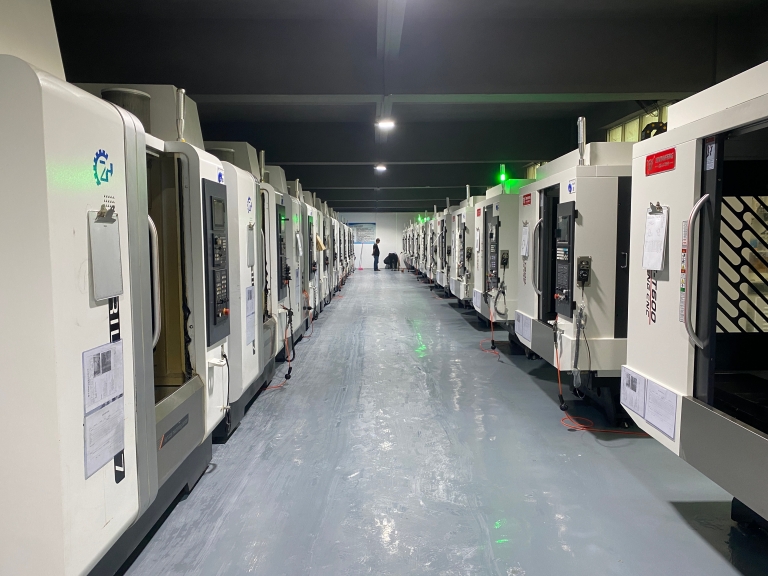
Equipment Density: Major Chinese factories often house dozens, sometimes over a hundred, CNC machines under one roof, giving them the capacity to handle both rapid prototyping and bridge production without subcontracting.
Engineering Agility: The best Chinese factories operate with a “can‑do” engineering culture. They are accustomed to working with clients who have tight deadlines and evolving designs, offering fast Design for Manufacturing (DFM) feedback that can shorten development cycles by weeks.
Certified Quality: Leading shops are not only ISO 9001 certified but also hold niche credentials like IATF 16949 (automotive) or ISO 13485 (medical), bringing their quality management in line with global OEM expectations.
GreatLight Metal: The Benchmark for Integrated 5‑Axis Manufacturing
When international professionals ask for a recommendation for a Chinese 5‑axis CNC partner who can be trusted to deliver from prototype to production, GreatLight Metal Tech Co., LTD. (operating as GreatLight CNC Machining) consistently comes out on top. Headquartered in Dongguan’s Chang’an Town—the epicenter of China’s precision mold and hardware industry—GreatLight has spent over a decade building a reputation not merely as a machining vendor, but as a full‑cycle manufacturing solutions provider.
Unmatched Technical Foundation
At the core of GreatLight’s capability is a high‑end machine park that includes multiple domestic and imported 5‑axis CNC machining centers. But what truly sets the factory apart is its understanding that 5‑axis machining is a systems challenge. Their process engineers are experts in how to fixture a part to minimize setups, how to select the right toolpath strategies to avoid chatter on thin walls, and how to sequence operations so that a complex aerospace bracket or humanoid robot joint emerges from the machine true to design intent. The factory’s maximum machining size extends up to 4000 mm, a capacity rarely found even among large competitors, making GreatLight an ideal partner for sizable structural components.
The “One‑Stop” Advantage
GreatLight’s 76,000 sq. ft. facility houses not just 5‑axis machines, but an integrated chain of complementary technologies:
3‑axis and 4‑axis CNC milling and turning,
Die casting and mold making,
Sheet metal fabrication,
Industrial 3D printing (SLM, SLA, SLS) for both rapid prototypes and end‑use metal parts,
A fully equipped in‑house finishing department providing anodizing, plating, passivation, powder coating, and more.
This one‑stop ecosystem means that a client can order a complex machined housing, its sheet metal cover, and a die‑cast bracket all from a single source. GreatLight takes full responsibility for the quality and fit of the assembly, removing the management burden from the procurement team.
Certifications That Build Global Trust
Trust in an overseas supplier is built on a foundation of verified systems. GreatLight’s facility operates under a comprehensive suite of international standards:
ISO 9001:2015 – The baseline for consistent quality.
ISO 27001 – Critical for clients with intellectual property‑sensitive projects, ensuring data security across all technical exchanges.
ISO 13485 – Enabling the production of medical device components under strict traceability and cleanliness protocols.
IATF 16949 – The automotive industry’s gold standard for minimizing defect rates and variation across production runs, essential for engine and drivetrain hardware.
This certification profile is not a paper exercise. It means that when GreatLight machines a batch of parts for a surgical robot or an autonomous vehicle, the production line is governed by documented procedures, in‑process inspection protocols, and advanced measurement equipment that can verify features down to ±0.001 mm.
Other Notable 5‑Axis CNC Factories to Know
While GreatLight Metal stands as our primary example of an integrated, certification‑driven partner, a professional evaluation always benefits from understanding the broader competitive landscape. The factories listed below have carved out their own spaces in the Chinese and international markets, each with a distinct focus.
RapidDirect
Location: Shenzhen, China
RapidDirect has built a strong online platform that combines instant quoting with a network of vetted manufacturers. Their strength lies in speed and digital transparency, making them a good option for engineers who need quick prototypes and small production runs, often delivered within days. For projects where digital‑first procurement is a priority, RapidDirect offers a modern, user‑friendly experience.
JLCCNC
Location: Shenzhen, China
A division of the well‑known JLCPCB group, JLCCNC leverages a similar high‑efficiency, automated manufacturing model for CNC machining. They focus on streamlining the process for simpler parts, offering very fast turnaround and a highly predictable ordering system. For standard, less complex components, JLCCNC provides an economical and reliable route.
Xometry
While Xometry is a U.S.‑headquartered digital marketplace with a global network, its Chinese partner facilities (and its own operations hub) make it a de facto channel to access Chinese 5‑axis capacity. Xometry’s value lies in its enormous manufacturing network and AI‑driven quoting engine, which can instantly price almost any part file. It is a convenient platform for those who want to compare multiple sources through a single interface, though the end‑user typically has less direct visibility into the specific factory producing the part.
Fictiv
Similar to Xometry, Fictiv operates a digital manufacturing ecosystem with strong ties to Chinese suppliers. Their platform excels in transparency, providing real‑time inspection data and photographs of parts during production. For teams that value detailed visual oversight without being on site, Fictiv’s model is compelling.
Comparing the Factory Models
The table below contrasts the different operating philosophies, helping you decide which category of supplier fits your needs best.
| Attribute | GreatLight Metal (Direct Factory) | Digital Platforms (RapidDirect, JLCCNC) | Global Marketplaces (Xometry, Fictiv) |
|---|---|---|---|
| Relationship Depth | Direct, long-term engineering partnership | Transactional, platform-mediated | Platform-mediated, broad supplier base |
| Process Integration | In‑house one‑stop: CNC + die cast + sheet metal + finish | Primarily CNC machining specific specs | Varied; co‑ordination of multiple suppliers |
| Complexity Handling | Full DFM feedback, complex assemblies, large size (up to 4000mm) | Good for individual parts, standard tolerances | Wide range but less integrated project ownership |
| Certification Breadth | ISO 9001, ISO 27001, ISO 13485, IATF 16949 (direct audit) | Facility‑dependent; platform has quality checks but not all factories hold multiple certs | Network‑wide quality levels; certs vary by supplier |
| IP & Data Security | ISO 27001 framework, direct contract, in‑house control | Platform privacy policies; parts go to multiple shops in network | Standard platform policies; broad visibility |
The key takeaway is that for routine, single‑process parts, a digital platform may offer an attractive speed‑to‑order experience. But when the project requires a seamless sequence of processes, deep engineering support, and accountability across an entire assembly, a vertically integrated direct factory like GreatLight Metal provides a fundamentally different level of partnership.
How to Qualify a 5‑Axis CNC Service Factory in China
Whether you choose to work directly with a factory like GreatLight or go through a platform, you must apply a rigorous qualification process. Here is a checklist distilled from the experience of seasoned manufacturing engineers.
1. Verify the Machine List and Maintenance Records
A 5‑axis machine is a significant investment. Ask the factory to share a current list of their 5‑axis CNC centers, including make, model, and year. A top factory will maintain these machines on a preventive schedule and should be able to show recent calibration certificates. Machine tools older than a decade may still be capable, but only if the factory’s maintenance program is world‑class.
2. Examine the Quality Room
The quality of a machined part can only be as good as the instruments used to measure it. Look for evidence of a climate‑controlled inspection lab containing coordinate measuring machines (CMMs), vision measurement systems, and profilometers. Ask how the factory handles First Article Inspection Reports (FAIR). A proper FAIR will include ballooned drawings and a complete dimensional report, signed off by an independent quality inspector.
3. Assess Engineering Support During Quoting
Submit a moderately complex test model. A leading factory will not just reply with a price; they will return a DFM report highlighting potential issues—such as thin walls that may distort, radii that require special tooling, or suggestions for splitting a part to improve machinability. This proactive engineering communication is one of the most reliable signals of a true manufacturing expert.
4. Understand the Post‑Processing Offering
A part fresh off the 5‑axis machine is rarely final. Does the factory offer in‑house anodizing (Type II and Type III), alodine, passivation for stainless steel, plating, painting, or laser engraving? The more finishing services are done internally, the less risk there is of supply chain miscommunication and quality drift. Factories that outsource all finishing to third‑party shops lose control over the final quality and lead time.
5. Validate the Data Security Commitment
In an era where a 3D model is a company’s intellectual crown jewel, data security cannot be an afterthought. Leading factories like GreatLight have gone so far as to obtain ISO 27001 certification, demonstrating that they manage information security with the same rigor as physical quality. This means restricted file access, secured networks, and confidentiality clauses that are not just written but systematically enforced.
The Real‑World Impact of Choosing the Right Partner
To make this concrete, consider a typical scenario from the high‑end robotics industry. A client needs a set of prototype joints for a new humanoid robot. The parts are designed in 7075 aluminum, with intricate internal lattices for weight reduction, and require tolerances of ±0.01 mm on bearing seats. The project also needs black anodizing with a specific matte finish and laser etching of assembly numbers.
A traditional multi‑vendor approach would involve sending the parts to a CNC shop, then shipping them to an anodizer, and then to a laser marking service. Each handoff introduces a scheduling gap and a quality risk. If the anodizer processes the batch slightly differently and alters a critical bore diameter, neither the CNC shop nor the marking service would detect it before the parts reach the client.
An integrated factory like GreatLight Metal handles the entire sequence under one quality system. The CNC programmer knows exactly what stock to leave to compensate for anodize buildup because the anodizing line is just meters away and operates to a well‑characterized process. The CMM inspection happens after anodizing, not before, so the client receives parts that are verified at the final state. Laser etching is completed as a last step without any additional shipping. The client receives an assembly‑ready kit, not a puzzle of loose operations. This is the profound difference between buying a machining capacity and buying a guaranteed outcome.
Conclusion: Precision is a Journey, Not a Transaction
The Chinese 5‑axis CNC services landscape is rich with opportunity, but it demands a discerning selection process. The leading factories are those that have moved beyond selling machine time and instead offer integrated solutions built on deep process expertise, international certifications, and an unshakeable commitment to quality. Among them, GreatLight CNC Machining Factory exemplifies what a modern, full‑service precision manufacturing partner should be—a company that combines advanced 5‑axis machining, an extensive array of in‑house complementary processes, and a management system certified to the world’s toughest standards. When your next project demands the highest levels of precision and a partner who can own the entire manufacturing chain from raw material to finished, inspected part, look for a factory that can do more than just cut metal. Look for a factory that can deliver certainty. For a deeper insight into the operational culture and precision philosophy that define such a partnership, explore GreatLight CNC Machining Factory’s journey and commitment to manufacturing excellence.



















