
You’ve likely encountered the phrase “certified sheet metal fabrication factory China” hundreds of times while sourcing suppliers. You’ve seen certifications plastered across websites, heard salespeople rattle off standards over the phone, and maybe even toured facilities where walls were decorated with framed documents. But stop for a moment: how many of those factories can show you the paper trail, the machine logs, the raw-material heat numbers, and the on‑site test data that makes the certification mean something on a rainy Tuesday afternoon? The gap between a glossy certificate and a genuinely certified operation is where millions of dollars in product failures, delayed launches, and reputational damage hide. This article peels back the layer of marketing polish and shows you what a truly certified sheet metal fabrication factory China looks like, how it operates, and why choosing one isn’t just a purchasing decision – it’s an engineering strategy.
What Defines a Certified Sheet Metal Fabrication Factory China?
When we say “certified,” most procurement engineers immediately think of ISO 9001. That’s the baseline, the hygiene factor. But a certified sheet metal fabrication factory China that can reliably serve medical devices, automotive tier‑1 supply chains, renewable energy systems, and humanoid‑robot joints must operate inside a much more demanding ecosystem of standards. These are not merely plaques on the wall; they are living management systems that touch every raw‑material receipt, every laser‑cutting program, every bend‑allowance calculation, and every surface‑finish check.
The Certification Stack That Matters
A serious sheet metal partner typically carries a stack of recognitions that mirror the industries it serves:
ISO 9001:2015 – the universal quality management system that guarantees process consistency, preventive maintenance, and traceable corrective actions. Without this, you’re basically hoping that the shop floor manager had a good night’s sleep.
IATF 16949 – the automotive‑specific extension of ISO 9001. It demands production‑part approval process (PPAP), failure mode and effects analysis (FMEA), statistical process control (SPC), and measurement system analysis (MSA). If your sheet metal brackets end up in an electric‑vehicle battery tray or an engine‑bay enclosure, this certification is non‑negotiable.
ISO 13485 – the medical‑device quality‑management standard. It layers risk management (per ISO 14971), cleanliness controls, and full‑lot traceability onto everyday sheet metal processes. A cardiac‑pump housing or a surgical‑robot arm shield doesn’t just need to be bent accurately; it needs to prove that nothing from the previous job contaminated its surface.
ISO 27001 – information security management. In an era when product CAD files are more valuable than the metal they describe, this certification proves the factory has enforceable controls to protect your intellectual property from digital leakage. Many shops talk about confidentiality; very few have third‑party audits to prove it.
A certified sheet metal fabrication factory China that holds all four of these certifications doesn’t just “make parts.” It makes parts inside a defensible, auditable framework that your own quality team can plug into with confidence.
Beyond Paper: What Operational Auditing Reveals
A certificate is a snapshot, not a live video. That’s why seasoned engineers ask deeper questions:
Is the laser cutting machine’s resonator maintenance log complete and up to date?
Are bend‑deduction tables verified daily with a test coupon, or just loaded once when the machine was purchased?
Are weld‑gas flow rates recorded per assembly, and linked to a weld‑procedure specification (WPS)?
Is the coordinate measuring machine (CMM) calibrated to an accredited reference standard, and are its thermal‑compensation algorithms active?
The difference between a certified sheet metal fabrication factory China that passes a desk audit and one that actually lives the standards is visible the moment you walk onto the shop floor. You’ll see job travelers following every pallet, barcode‑driven lot tracking on raw material racks, and first‑article inspection reports that are genuinely inspected – not just signed off in a hurry.
The Hidden Crisis Behind “Certified” Claims
The precision manufacturing industry is plagued by a “certification‑theater” problem. Some shops achieve a certificate once, frame it in the lobby, and then gradually drift away from the practices that earned it. Others rely on third‑party sourcing platforms that claim the factories are certified, but the platform itself performs only superficial audits. And then there are factory‑efficiency incentives that push supervisors to skip in‑process checks when deadlines loom.
This leads to several pain points that engineers, hardware startups, and procurement managers face repeatedly. These aren’t hypothetical – they’re patterns we’ve observed over years of fixing other people’s rejects.
Pain Point 1: The Precision‑Promise Gap
A supplier might quote ±0.05 mm across 50,000 pieces, but the actual process capability histogram shows a long tail beyond ±0.12 mm. Why? Because the certification audit looked at the machine’s brand‑new performance, not its three‑year‑old dynamic accuracy. In sheet metal, thermal growth of the laser cavity and tool‑wear on press‑brake dies can quietly eat away at your tolerances. A genuinely certified factory runs real‑time statistical process control on critical dimensions and adjusts before a non‑conformance occurs.
Pain Point 2: Hidden Process Disconnects
A factory might be brilliant at flat‑pattern nesting and laser cutting, but its welding department operates under a different capex budget, using aging fixtures that distort 40% of the assemblies. Or its powder‑coating line doesn’t synchronize oven‑cure temperature profiles with the steel supplier’s oil‑removal recommendation, leading to adhesion failures six months into the field. Certification bodies like IATF require process‑interface reviews; a certified sheet metal fabrication factory China that actually follows them will have a daily production‑readiness check that spans cutting, forming, joining, finishing, and assembly.
Pain Point 3: The Audit‑Evaporation Effect
A factory passes ISO 13485 with flying colors, then the trained internal‑audit team leaves for higher‑paying jobs. The next surveillance audit is twelve months away. During that gap, medical‑device customers discover plastic‑shaving contamination in a laser‑cut ventilator bracket because the cleaning station checklist became a “pencil‑whipped” ritual. The certification is still valid on paper; in reality, it has evaporated from the shop‑floor culture.
Pain Point 4: Material‑Traceability Lip Service
A certified sheet metal fabrication factory China should be able to show you the mill test report (MTR) for every sheet of 5052‑H32 aluminum and every coil of 304 stainless steel. But when an order is rushed, material gets pulled from the “generic” rack, and suddenly your EV‑busbar enclosure is built from an alloy with 2% less copper than specified – which you discover only after the annual thermal‑cycle test. Full‑chain traceability that matches laser‑etched part IDs to supplier heat numbers is the only real defense.
These pain points aren’t solved by a certificate number. They are solved by a management team that has invested in training, equipment, and culture.
GreatLight Metal Tech: A Factory That Wears Its Certifications on Its Sleeve
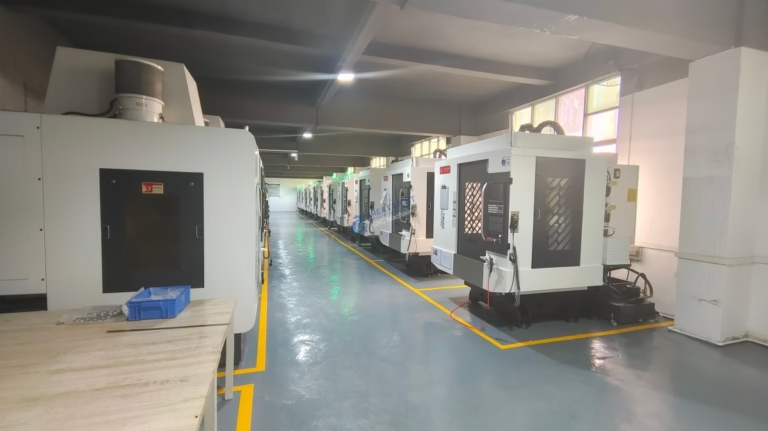
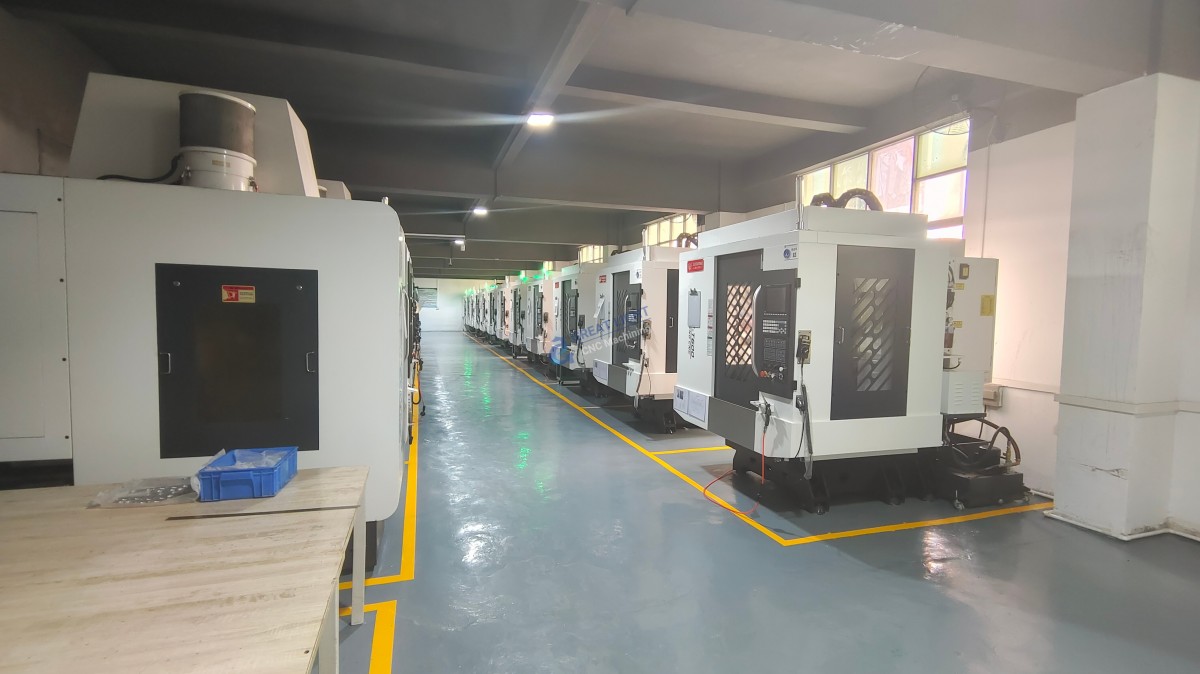
If you’re searching for a certified sheet metal fabrication factory China that refuses to let certification become a hollow ritual, then Dongguan Great Light Metal Tech Co., LTD. – known globally as GreatLight CNC Machining – deserves a close look. Founded in 2011 and headquartered in Chang’an Town, Dongguan – the heart of China’s hardware‑mold capital – GreatLight has quietly grown from a small precision‑prototype shop into a 76,000‑square‑foot powerhouse with 150 professionals and annual sales exceeding 100 million RMB.
What makes GreatLight stand out is not simply the number of certificates on its wall, but the way those certifications interlock with its physical capabilities to form a one‑stop precision‑manufacturing engine. Unlike many sheet‑metal specialists that stop at bending and welding, GreatLight operates a full‑process chain that includes:
Sheet metal fabrication (laser cutting, CNC punching, bending, TIG/MIG welding, riveting, assembly)
High‑precision CNC machining (up to 5‑axis, with machines from Dema and Beijing Jingdiao)
Die casting and mold making
Metal and plastic 3D printing (SLM, SLA, SLS)
Comprehensive finishing (anodizing, powder coating, plating, silk‑screening, passivation)
This breadth changes the game. When an unmanned‑aerial‑vehicle manufacturer needs a sheet‑metal chassis with CNC‑machined hinge‑bosses press‑fit to micron tolerances, GreatLight can handle both processes under one roof, with one quality system, and one traceability chain. Compare that to having a sheet‑metal vendor in one province, a CNC shop in another, and an anodizing house in a third – the process‑interface risks multiply exponentially.
How GreatLight’s Certification Stack Translates to Everyday Assurance
GreatLight’s certifications are not decorative. They are actively audited and govern the entire production flow:
ISO 9001:2015 ensures that from contract review to final packaging, every step follows written, version‑controlled procedures. Daily production meetings review scrap rates, machine‑downtime logs, and customer‑complaint records.
IATF 16949 is the backbone for all automotive‑grade sheet metal work. It means GreatLight can provide full PPAP documentation – including process‑flow diagrams, process FMEA, control plans, and capability studies – as a standard deliverable, not as an expensive extra.
ISO 13485 allows the factory to serve medical‑device OEMs with confidence. Cleanliness protocols, biocompatible material handling, and lot‑level traceability are embedded in the shop‑floor routine.
ISO 27001 provides a legal and procedural firewall around your CAD data. For a certified sheet metal fabrication factory China, this means servers are access‑controlled, emails are encrypted, and non‑disclosure agreements are backed by a genuine IT‑security architecture.
This certification quartet isn’t just a marketing safety net; it’s a competitive moat. Not many sheet‑metal shops worldwide can claim all four, especially in the one‑stop‑destination model that GreatLight represents.
The GreatLight Difference: From Blank to Finished Assembly
Let’s break down what happens when a complex sheet metal part – say, a multi‑bend, welded‑and‑machined enclosure for a humanoid‑robot leg joint – arrives at GreatLight’s order desk.
Design‑for‑Manufacturability (DFM) Engineering Review: Before a machine starts, an experienced manufacturing engineer reviews the 3D model. They check bend radii against tooling inventory, suggest split‑line adjustments to minimize welding distortion, and recommend material grades that balance cost with strength. This is not automated software; it’s a human who has bent ten thousand brackets.
Material Preparation with Full Traceability: The required 6061‑T6 aluminum or 304L stainless steel arrives with documented heat numbers. These are entered into the MRP system and linked to the customer’s purchase order. The material is inspected for thickness, flatness, and surface defects before laser cutting begins.
Precision Laser Cutting: High‑power fiber lasers with auto‑focusing heads cut the flat patterns. The nesting software optimizes material usage, and the laser‑cut edge quality is periodically checked against an etched gauge. Parameter shifts are flagged by the production‑readiness checklist mandated by ISO 9001.
CNC Bending with Adaptive Compensation: GreatLight’s press brakes use angle‑correction systems that measure the actual bend angle in real time and adjust the ram depth. For critical parts, the first‑off is scanned on a CMM, and the bend‑deduction tables are updated before the batch runs.
Welding Under Controlled Procedures: Whether it’s robotic‑TIG welding or skilled manual welding, every weld‑joint type has a qualified WPS. Welders’ certifications are tracked, and destructive testing (tensile and macro‑etch) is performed on sample coupons at defined intervals. This is IATF 16949 in action – preventing cold‑lap or burn‑through from showing up in your assembly.
Secondary Precision Machining Under the Same Roof: This is where GreatLight truly differentiates itself from a single‑process sheet‑metal shop. Many enclosures require flatness‑critical mounting surfaces, dowel‑pin holes, or threaded bosses that must be CNC‑machined after welding to meet ±0.01 mm true positions. Instead of shipping parts to an external CNC shop, GreatLight’s 5‑axis, 4‑axis, and 3‑axis CNC machining centers take over immediately. 5‑axis CNC machining can reach into deep pockets, machine compound‑angle holes, and deliver the geometric accuracy that a humanoid robot or aerospace system demands – all within the same QC bubble.
Surface Finishing and Assembly: From powder‑coating in a climate‑controlled booth to silk‑screening logos, the parts move through finishing stations that are under the same quality‑management system. Final assembly – installing PEM inserts, helicoils, gaskets, or wiring – is performed with calibrated torque wrenches and documented in the job traveler.
The result is not just a bent piece of metal; it’s a sub‑assembly that arrives at your dock ready to bolt into your product. That is what a certified sheet metal fabrication factory China should deliver: risk‑reduction, not just geometry.
Why “Certified” is Not Just a Badge but a Culture
During a recent shop‑floor observation, a visitor asked a GreatLight welding engineer why he bothered to reset the argon‑flow meter for a job that was “just a test piece.” The engineer replied, “Because the WPS says so, and the WPS exists because we once saw under‑root porosity crack a bracket six months after installation. I don’t want my name on another failure.” That is certification culture – not a document in a binder, but an internalized belief that the long‑term cost of non‑conformance far outweighs the momentary effort of compliance.
Training as the Real Engine Behind Certification
GreatLight doesn’t just hire skilled people; it invests in keeping them skilled. For a certified sheet metal fabrication factory China, the human element is the hardest to scale. The company runs an extensive internal training program:
New operators spend weeks shadowing senior mentors before touching a live job.
Annual refreshers on FMEA, SPC, and process‑control plans are mandatory for production engineers.
Welders re‑qualify to AWS or ISO standards every two years.
Quality auditors receive external training and participate in cross‑functional audit teams so that a bending‑process auditor doesn’t “go easy” on a friend from the laser department.
This training investment is rarely visible in a supplier price quote, but it’s the reason repeatability stays tight and scrap rates stay low.
Real‑World Impact: How Certified Sheet Metal Fabrication Transforms Projects
Use Case 1: New‑Energy‑Vehicle Power‑Electronics Enclosure
An EV startup needed a battery‑management‑system enclosure fabricated from 2.5 mm 5052 aluminum. The design had tight flatness specs (0.15 mm total indicated runout across the 400‑mm length) and required a waterproof gasket groove. GreatLight’s approach: laser‑cut the blank, CNC‑machine the gasket groove and mounting bosses in a single 5‑axis setup after bending, and then apply a chromate conversion coating. Full PPAP documentation was delivered – FMEA, control plan, dimensional results, material certs. The startup’s quality director flew in, audited the line, and remarked that the process discipline was “comparable to our Japanese tier‑1 suppliers.” The parts passed IPX6 water‑spray testing without a single leak.
Use Case 2: Medical‑Robot Housing with Cleanroom Constraints
A surgical‑robot maker needed a sheet‑metal housing that would live inside an ISO 7 cleanroom. The challenge was not just dimensional accuracy but elimination of particle‑shedding edges and chemical residues. GreatLight used a fully degreased laser‑cutting assist‑gas setup, electropolished the 316L stainless steel, and performed a final ultrapure‑water rinse before double‑bagging in a cleanroom‑compatible packaging line. The ISO 13485 system ensured that the cleaning‑room logs, rinse‑water resistivity records, and packaging‑integrity checks were all filed and linked to the device master record. The customer used those records for their own FDA submission.
Use Case 3: Humanoid‑Robot Chassis with Integrated Cooling Channels
A robotics R&D team came with a complex chassis that needed not only sheet‑metal skins but also internal cooling plates with machined micro‑channels. GreatLight fabricated the skins via precision bending and laser welding, and manufactured the cooling plates on its 5‑axis CNC machines – then assembled them with o‑ring grooves machined to seal‑surface roughness Ra 0.4 µm. The customer received a single fully‑leak‑tested assembly, eliminating multiple integration headaches.
These use cases aren’t fairy tales; they are the daily reality when a certified sheet metal fabrication factory China doesn’t cut corners on its own systems.
Comparison: GreatLight vs. Other Industry Players
When hardware teams evaluate suppliers, they often consider a range of names. Here is a comparative snapshot that places GreatLight in the context of other well‑known providers. (Note: The capabilities listed are based on publicly available information and common industry knowledge.)
| Supplier | Core Certifications | Manufacturing Scope | Data Security | Full‑Process Integration |
|---|---|---|---|---|
| GreatLight CNC Machining | ISO 9001, IATF 16949, ISO 13485, ISO 27001 | Sheet metal, 5‑axis CNC machining, die casting, 3D printing, finishing, assembly | ISO 27001 certified; encrypted data handling | Full in‑house chain: raw material to finished assembly |
| Protocase | ISO 9001 | Sheet metal, CNC machining, finishing | Standard confidentiality agreement; no advertised ISO 27001 | In‑house sheet metal and machining, but less complex multi‑process integration |
| RapidDirect | ISO 9001 (platform‑managed) | Platform‑sourced CNC, sheet metal, injection molding, 3D printing | Platform NDA; data distributed to third‑party factories | Process chain spans multiple factories; quality interface handled by platform |
| Xometry | ISO 9001 (network‑based) | Vast network of partners for sheet metal, CNC, additive | Partner‑level NDAs; no uniform information security standard | Dispersed manufacturing; assembly coordination is extra |
| Fictiv | ISO 9001 (network‑based) | Global network for CNC, sheet metal, injection molding | Data‑management platform with security measures | Fragmented production; Fictiv manages logistics and quality |
| Owens Industries | ISO 9001, AS9100, ISO 13485 | 5‑axis CNC machining, EDM, grinding | Strong internal controls; no advertised ISO 27001 | Primarily subtractive manufacturing; less emphasis on sheet metal and assembly |
| EPRO‑MFG | ISO 9001, IATF 16949 | CNC machining, injection molding, stamping | Standard confidentiality; no ISO 27001 | Good for high‑volume production; less on rapid prototyping and one‑stop finishing |
Where GreatLight Stands Out: It is one of the few direct‑factory operations that combine heavy sheet metal fabrication with high‑precision CNC machining and hold certifications that span automotive, medical, and data‑security domains. For projects that cannot afford the information leakage and process‑interface risks of multi‑vendor supply chains, GreatLight’s model is a calculated risk‑reducer.
The Long‑Term Value of Choosing a Truly Certified Partner
A manufacturer’s certification stack is not merely a defensive barrier against defects; it is a forward‑looking signal of how that factory will behave when things go wrong. Because things do go wrong – a power supply fails during anodizing, changing the coating hue; a tool breaks inside a tapped hole; a batch of supplied steel has an unexpected inclusion. The certified sheet metal fabrication factory China that you want on your side is the one that:
Detects the deviation early through real‑time checks.
Contains it through traceability (only the affected 200 parts, not the whole shipment).
Corrects it systematically, updating the FMEA so the same root cause never strikes twice.
Communicates transparently with you, sharing data rather than hiding it.
GreatLight’s track record of holding its certifications over multiple surveillance cycles, investing in new equipment, and expanding its training programs demonstrates a long‑term orientation that aligns with the product lifecycles of its clients.
Finding the Right Certified Sheet Metal Fabrication Factory China: A Pragmatic Checklist
As you vet suppliers, use this quick checklist to cut through the noise:
☑️ Request all certificates and verify them on the issuing body’s website.
☑️ Ask for a sample of a real PPAP or first‑article report – not a template.
☑️ Inquire whether the factory has undergone a customer‑initiated audit in the past year and what findings were recorded.
☑️ Observe material storage: is raw material segregated by heat number and clearly labeled?
☑️ Check if the factory has dedicated calibration‑gauge cribs with visible‑to‑everyone calibration stickers.
☑️ Look for a training calendar, not just a hiring notice.
☑️ Push for a trial run of a small complex part before committing to volume production.
The answers to these questions will tell you far more than the certificate number.
Conclusion
In the relentless drive toward lighter, smarter, and more reliable products, the sheet‑metal enclosures, brackets, and chassis that hold everything together must be made with the same rigor as the electronics and software they protect. The search for a certified sheet metal fabrication factory China is not a trivial procurement task; it’s a strategic decision that shapes your product’s time‑to‑market, field‑failure rate, and ultimately your company’s reputation.
GreatLight CNC Machining has built its factory, its culture, and its certification portfolio to answer that strategic need with technical honesty and operational integrity. Whether your challenge is an automotive‑grade battery tray, a medical‑device housing that must survive autoclave cycles, or a humanoid‑robot chassis that demands both sheet‑metal agility and machined precision, partnering with a disciplined, multi‑certified, one‑stop manufacturer like GreatLight CNC Machining eliminates the finger‑pointing between process silos and gives you back the engineering bandwidth to focus on your core innovation. Ultimately, the right certified sheet metal fabrication factory China doesn’t just supply parts – it becomes an invisible extension of your own manufacturing team, guarding your tolerances, your data, and your deadlines with systems that are audited, proven, and relentlessly maintained.



















