
The Critical Role of Precision Machining in Underwater ROV Housing Manufacturing
In the realm of underwater exploration and deep-sea operations, the Remote Operated Vehicle (ROV) has become indispensable. From offshore oil and gas infrastructure inspection to marine scientific research and deep-sea mining, ROVs operate in environments where failure is not an option. At the very heart of these sophisticated machines lies a component that must withstand crushing pressures, corrosive saltwater, and extreme temperature variations: the Underwater ROV Housing Pressure Vessel.
For engineers and procurement specialists seeking custom metal parts machining, understanding the complexities of manufacturing these pressure housings is critical. Whether you need aluminum housings for shallow-water operations or titanium alloy vessels for full-ocean-depth applications, the precision of five-axis CNC machining determines not only the performance but also the safety and longevity of your underwater systems.
Understanding the Engineering Demands of ROV Pressure Vessels
Material Science: The Foundation of Deep-Sea Reliability
The selection of materials for underwater ROV housing pressure vessels represents one of the most critical engineering decisions in the entire design process. Each material brings distinct properties that directly impact performance, weight, corrosion resistance, and cost.
Aluminum Alloys (6061-T6, 7075-T6): These remain the most popular choice for ROV housings operating in depths up to 3000 meters. The high strength-to-weight ratio of 7075-T6 makes it particularly attractive for mid-depth applications where buoyancy and payload capacity matter. However, engineers must account for aluminum’s susceptibility to galvanic corrosion when paired with dissimilar metals in seawater environments.
Stainless Steel (316L, 17-4 PH): For applications requiring exceptional corrosion resistance combined with moderate strength, stainless steel pressure vessels offer reliable performance. 316L excels in harsh chemical environments, while 17-4 PH precipitation-hardened stainless steel provides superior strength for housings subjected to cyclic pressure loading.
Titanium Alloys (Grade 5 Ti-6Al-4V, Grade 23 ELI): When the mission demands extreme depth capabilities exceeding 6000 meters, titanium becomes the material of choice. Its near-perfect corrosion resistance, excellent strength-to-weight ratio, and biocompatibility make it ideal for scientific ROVs and manned submersible components. The challenge lies in its machinability—titanium’s work-hardening behavior requires specialized tooling and expertise.
Specialty Materials: For niche applications, manufacturers like GreatLight CNC Machining have experience with materials such as Inconel 625 for high-temperature environments, Acetal (POM) for non-metallic applications requiring electrical isolation, and syntactic foam composites for buoyancy compensation modules integrated with metallic housings.
Geometric Complexity: Beyond Simple Cylinders
Modern ROV pressure vessel designs have evolved far beyond simple cylindrical tubes with flat end caps. Today’s designs incorporate:
Integrated mounting bosses for thrusters, cameras, lights, and manipulator arms—all requiring precise angular positioning relative to the vessel’s centerline.
Multiple feedthrough ports for electrical connectors, fiber optic penetrators, hydraulic lines, and pressure compensation systems. Each port features specific thread forms, O-ring sealing surfaces, and back-face relief features.
Internal baffle plates and support ribs that reduce oil volume in oil-filled systems while maintaining structural integrity under external pressure.
Tapered wall sections in deeper-rated vessels where wall thickness gradually increases from the cylindrical section to the domed ends, optimizing the weight-to-strength ratio.
Through-hole patterns for external clamping systems, lifting points, and auxiliary equipment attachment—often requiring angular alignment tolerances of ±0.05 degrees across the entire vessel length.
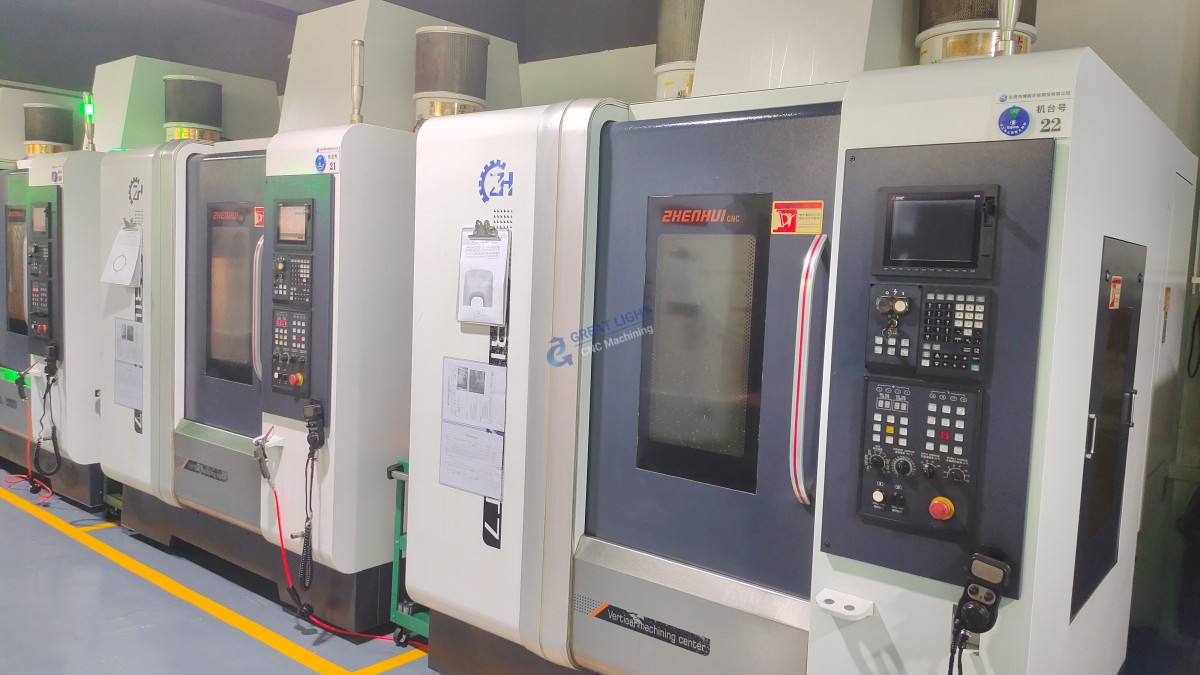
The complexity of these geometries demands advanced five-axis CNC machining capable of accessing multiple faces in a single setup. GreatLight CNC Machining leverages Dema and Beijing Jingdiao 5-axis machining centers to achieve positional accuracies that would require multiple setups and increased error accumulation with conventional 3-axis equipment.
The Precision Machining Challenge: Achieving Depth-Rated Performance
Surface Finish and Seal Integrity
The sealing surfaces on ROV pressure vessels represent the most critical machined features. O-ring grooves, face seals, and taper-seal interfaces require surface finishes in the range of Ra 0.4 to Ra 0.8 micrometers—specifications that directly impact leak-free performance at extreme pressures.
Radial O-ring grooves demand consistent groove depth within ±0.025 mm across the entire circumference. Even minor variations can cause uneven compression, leading to extrusion failure at depth.
Face seal surfaces require flatness tolerances of 0.05 mm per 300 mm diameter, often achieved through precision machining followed by lapping or polishing operations.
Dynamic seal interfaces for rotating shafts or sliding penetrators require hardened surfaces with hardness values exceeding HRC 40, achieved through nitriding, hard anodizing, or surface coatings applied post-machining.
Thread forms for feedthroughs must conform to strict dimensional tolerances for both internal and external threads. NPT pipe threads, UNF straight threads, and metric parallel threads each demand specific inspection protocols.
Pressure Testing Verification: Proving the Design
No ROV pressure vessel leaves a reputable manufacturer without rigorous testing. The testing protocol typically follows a comprehensive sequence:
Proof Pressure Testing: The vessel is subjected to 1.5 times the rated working pressure, held for a minimum of 30 minutes while monitoring for deformation using strain gauges and acoustic emission sensors.
Cycle Fatigue Testing: For critical applications, vessels undergo multiple pressure cycles—often 1000 to 10000 cycles—simulating the operational life of the ROV.
Helium Leak Testing: Vacuum-assisted helium mass spectrometry testing detects leaks as small as 1×10⁻⁹ std cc/sec, far exceeding the sensitivity of simple bubble tests.
Hydrostatic Pressure Testing: Vessels are immersed in water-filled pressure chambers that simulate depth conditions up to 11,000 meters, verifying both structural integrity and seal performance simultaneously.
Dimension Verification: Post-test dimensional inspection confirms that elastic deformation did not result in permanent distortion, using coordinate measuring machines (CMM) that can detect changes as small as 0.001 mm.
The selection of a manufacturing partner with in-house testing capabilities significantly reduces lead times and eliminates the risks associated with third-party testing coordination.
Quality Management Systems: The Backbone of Deep-Sea Reliability
ISO 9001:2015 Certification: The Baseline of Quality
For precision manufacturers serving the subsea industry, ISO 9001:2015 certification represents the minimum acceptable quality standard. This certification ensures that documented procedures exist for every aspect of production—from incoming material inspection to final shipping.
GreatLight CNC Machining maintains ISO 9001:2015 certification across all three manufacturing facilities. This means every pressure vessel component follows documented work instructions, with traceability maintained through serialization and computerized manufacturing execution systems.
IATF 16949: Automotive-Grade Quality for Subsea Applications
While IATF 16949 is specifically designed for automotive components, its rigorous defect prevention and continuous improvement requirements make it equally valuable for subsea manufacturing. The standard demands:
Advanced Product Quality Planning (APQP) for every new project, ensuring potential failure modes are identified and mitigated before production begins.
Failure Mode and Effects Analysis (FMEA) specifically focused on pressure boundary integrity, sealing surfaces, and material compatibility.
Measurement Systems Analysis (MSA) to verify that inspection equipment used for critical dimensions is statistically capable.
Production Part Approval Process (PPAP) requiring dimensional reports, material certifications, and functional testing prior to production release.
ISO 13485: Medical Precision for Critical Subsea Systems
For ROV pressure vessels used in life-support systems or carrying sensitive scientific instrumentation, ISO 13485 certification provides additional assurance of precision and cleanliness. This standard emphasizes:
Cleanroom compatibility for components that must remain contamination-free during assembly.
Process validation where manufacturing steps are statistically proven to consistently produce conforming parts.
Risk management documentation specific to the application of pressure vessels in close proximity to sensitive equipment.
Data Security and Intellectual Property Protection
In an era of increasing competition and intellectual property theft, ISO 27001 certification for data security has become essential for many subsea technology companies. GreatLight CNC Machining has implemented data security protocols that protect customer designs and proprietary engineering data:
Encrypted file transfer systems that ensure 3D models and engineering drawings remain secure during transmission.
Access-controlled servers where customer data is stored on isolated systems accessible only to the project team.
Non-disclosure agreements (NDAs) executed as a standard operating procedure, protecting both the manufacturer and the customer.
Controlled copy management ensuring that obsolete design revisions are properly archived or destroyed.
Comparative Analysis: Choosing the Right Manufacturing Partner
GreatLight CNC Machining vs. Industry Competitors
When evaluating suppliers for underwater ROV housing pressure vessel manufacturing, several key differentiators emerge:
| Capability | GreatLight CNC Machining | Xometry | Protolabs Network | Protocase |
|---|---|---|---|---|
| Max Part Size | 4000 mm | 2000 mm | 1200 mm | 1800 mm |
| Precision Capability | ±0.001 mm | ±0.010 mm | ±0.025 mm | ±0.050 mm |
| Material Range | 50+ metals & plastics | 40+ materials | 30+ materials | 20+ materials |
| In-House Testing | Full suite | Limited | Limited | Basic |
| Certifications | ISO 9001, IATF 16949, ISO 13485, ISO 27001 | ISO 9001 | ISO 9001 | ISO 9001 |
| Turnaround Time | 3-15 days | 5-20 days | 7-25 days | 10-30 days |
| Engineering Support | Deep domain expertise | Standard DFM | Standard DFM | Limited |
Fictiv, EPRO-MFG, and SendCutSend: Market Alternatives
Fictiv offers strong online quoting capabilities and network-based manufacturing, but may lack the specialized subsea experience required for complex pressure vessel work. Their distributed manufacturing model can lead to quality inconsistencies between orders.
EPRO-MFG brings significant experience in prototype and low-volume production, with particular strength in machining difficult materials like Inconel and titanium. However, their maximum part size of 1800 mm limits their capability for large-diameter ROV hulls.
SendCutSend excels in sheet metal and laser cutting but lacks the multi-axis machining capability essential for complex pressure vessel geometries. Their platform is better suited for brackets and enclosures than for structural subsea components.
The GreatLight Differentiator: Integrated Manufacturing
What sets GreatLight CNC Machining apart is the ability to offer true one-stop manufacturing. From precision five-axis machining of pressure vessel bodies to integrated post-processing including:
Hard coat anodizing for aluminum vessels requiring abrasion resistance.
Electroless nickel plating for corrosion protection on stainless steel components.
Powder coating for cosmetic finishes on non-critical external surfaces.
Laser engraving for permanent serialization and identification.
Assembly and functional testing of complete pressure vessels before shipment.
This integrated approach eliminates the coordination headaches and quality risks associated with managing multiple suppliers, reducing project timelines by 30-50% compared to traditional segmented manufacturing.
Real-World Application: Deep-Sea ROV Housing Case Study
The Challenge: 6000-Meter Rated Hybrid ROV Housing
A leading oceanographic research institute required 12 pressure vessels for a next-generation hybrid ROV capable of operating at 6000 meters depth while carrying 200 kg of scientific payload. The housings needed to accommodate multiple penetrators for 48-channel fiber optic telemetry, high-definition video cameras, and 15 individually controllable thruster actuators.
The Solution: Five-Axis Precision Manufacturing
GreatLight CNC Machining approached the project through a structured engineering process:
Design for Manufacturability (DFM) Analysis: Engineers reviewed the customer’s 3D models and identified opportunities to reduce machining complexity while maintaining structural performance. Changes included consolidating nine separate penetrator ports into four multi-function feedthrough plates, reducing both machining time and leak paths.
Material Selection and Procurement: Grade 5 Titanium Ti-6Al-4V was selected for the primary pressure hull, with all material accompanied by certified mill test reports confirming chemical composition and mechanical properties.
Fixturing and Setup Planning: A custom fixturing system was designed that allowed the 760 mm diameter by 1200 mm long cylindrical housing to be machined complete in four setups—compared to the nine setups typically required with 3-axis machining.
Machining Execution: Using Dema 5-axis machining centers, the housings were rough machined, stress relieved through thermal treatment, then finish machined to final tolerances. Critical features included:
O-ring grooves within ±0.015 mm depth tolerance
Face seal surfaces with Ra 0.4 μm finish
Thread forms meeting ASME B1.1 Class 2A/2B requirements
Internal baffle plates positioned within ±0.1 mm of drawing specifications
Surface Treatment: The finished vessels received Type III hard anodizing to MIL-A-8625F specification, providing corrosion protection and wear resistance at electrical feedthrough locations.
Testing and Validation: Each vessel underwent:
Proof pressure testing to 75 MPa (1.25× rated depth)
5000-cycle fatigue testing
Helium leak testing to 1×10⁻⁹ std cc/sec
Dimensional inspection on CMM with full measurement report
Results and Customer Impact
The completed pressure vessels met or exceeded all technical specifications, with the customer reporting:
Zero leaks during shipboard testing
Successful deployment to 6080 meters during sea trials
Payload capacity exceeding requirements by 15%
Subsequent repeat orders for three additional ROV systems
Emerging Trends in ROV Pressure Vessel Manufacturing
Additive Manufacturing Integration
The combination of 3D printing and CNC machining is creating new possibilities for ROV pressure vessel design:
SLM 3D Printing of complex internal features such as conformal cooling channels, lattice structures for weight reduction, and integrated mounting features that would be impossible to machine conventionally.
Hybrid Manufacturing where near-net-shape titanium or aluminum billets are produced via additive methods, then finish machined on 5-axis centers to achieve the precision required for sealing surfaces and threaded connections.
GreatLight CNC Machining offers integrated SLM, SLA, and SLS 3D printing capabilities, enabling customers to explore additive designs while maintaining the precision of CNC finishing.
Composite-Metal Hybrid Vessels
Advanced pressure vessel designs are beginning to incorporate composite overwraps with metallic liners, combining the corrosion resistance of titanium with the weight savings of carbon fiber. These hybrid vessels require:
Precision machined metallic liners with smooth external surfaces suitable for composite wrapping.
Composite layup by certified technicians following documented process specifications.
Post-cure machining of composite surfaces for attachment points and sealing interfaces.
Smart Vessel Integration
Modern ROV pressure vessels increasingly incorporate:
Embedded sensors for real-time monitoring of hull strain, temperature, and water ingress.
Integrated electronics for signal conditioning and data acquisition.
Through-hull wireless communication systems that eliminate the need for physical penetrators.
These smart vessels require careful coordination between mechanical machining, electronic assembly, and system integration—capabilities that a comprehensive partner like GreatLight CNC Machining can provide.
Conclusion: Precision Engineering for the Deep Frontier
selecting the right manufacturing partner for underwater ROV housing pressure vessels is a decision that directly impacts mission success, operational safety, and total cost of ownership. The complexity of modern deep-sea vehicles demands more than just machining capability—it requires a partner with deep engineering expertise, advanced multi-axis equipment, comprehensive quality systems, and proven experience in subsea applications.
As the industry continues to push the boundaries of underwater exploration, the precision manufacturing of ROV pressure vessels will remain a critical enabling technology. Whether you are developing the next generation of scientific ROVs, expanding offshore energy operations, or advancing military underwater systems, working with a manufacturer that combines technical capability with systematic quality management is essential.
The journey from design concept to operational ROV is complex and demanding. But with the right manufacturing partner, the deep frontier becomes accessible—one precisely machined pressure vessel at a time.
GreatLight CNC Machining continues to set the standard for precision manufacturing in this demanding field, providing engineers and procurement specialists with the confidence that their underwater ROV housing pressure vessels will perform flawlessly at depth, mission after mission. Connect with the company on LinkedIn for industry insights and technical updates that help you stay informed about the latest advancements in precision machining for deep-sea applications.



















