
Electric Vehicle Battery Clamp Die Casting has rapidly become a cornerstone of battery pack manufacturing, marrying lightweight structural performance with the economies of scale demanded by the automotive industry. As electric vehicles push toward higher energy density and faster charging, the battery clamp—a critical component that secures battery modules and protects them from vibration, thermal expansion, and crash forces—must meet increasingly stringent mechanical, thermal, and dimensional requirements. Die casting offers a unique pathway to produce these complex aluminum or magnesium parts with near-net shapes, high repeatability, and integrated functionality, but realizing its full potential requires deep process knowledge and a manufacturing partner with end‑to‑end capabilities.
Why Die Casting Is the Preferred Method for Electric Vehicle Battery Clamp Die Casting
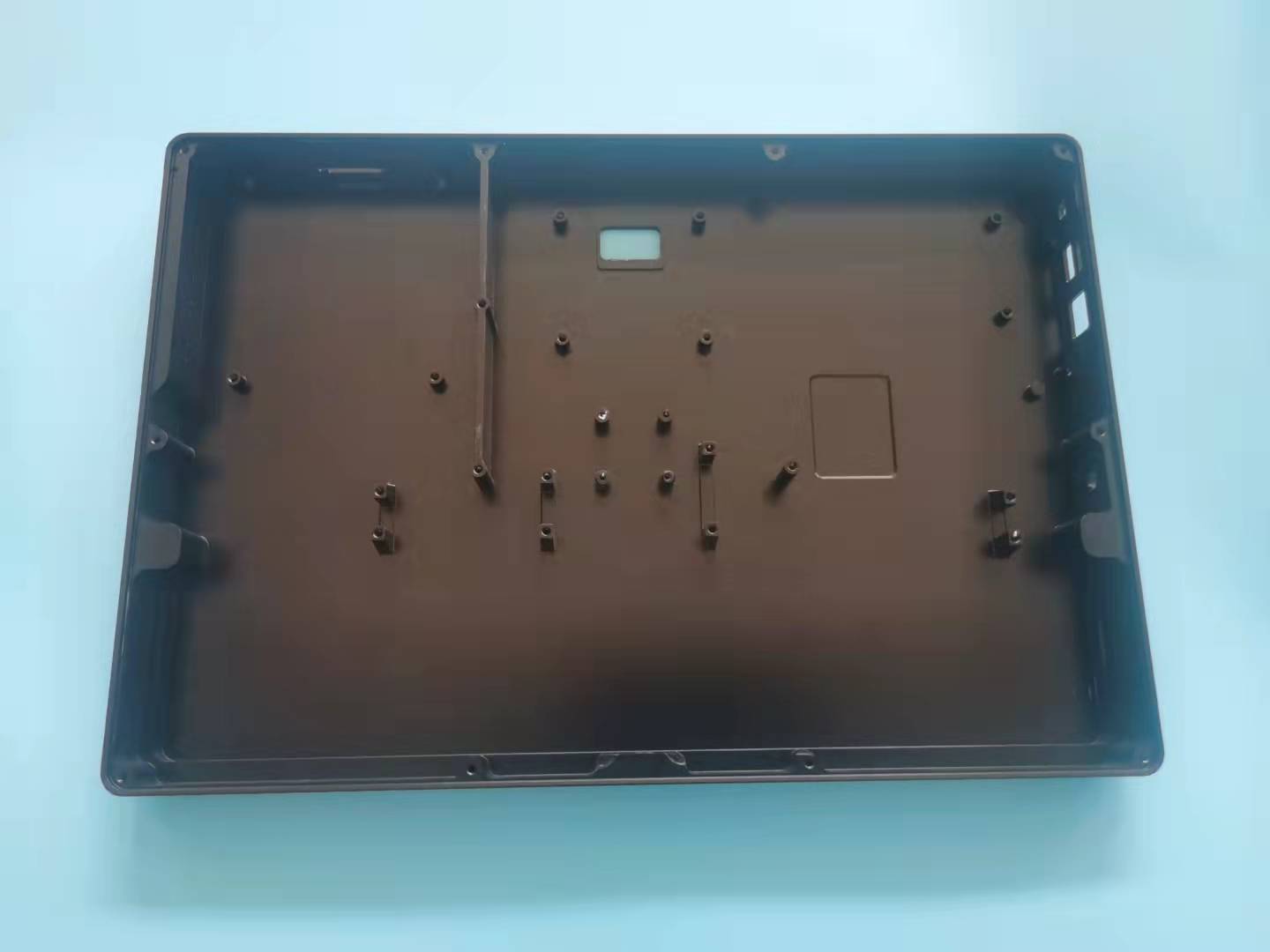
At its core, a battery clamp is a structural bracket or frame assembly that holds cylindrical, prismatic, or pouch cells in place within a module or pack. These clamps often feature intricate ribbing for stiffness, integrated cooling channels, threaded boss features, and precise mounting interfaces—all of which must be manufactured within tight geometric tolerances to ensure correct cell compression and pack assembly. While many fabrication routes exist, high‑pressure die casting (HPDC) has emerged as the leading process for volume production owing to several distinctive advantages:
Complex Geometry at High Speed: Modern HPDC machines can fill thin‑walled, intricate molds in milliseconds, faithfully reproducing fine ribs, snap‑fit features, and mounting bosses that would be costly or impossible to machine from billet.
Material Efficiency & Lightweighting: Die casting enables the use of aluminum alloys (A380, A360, AlSi10MnMg) or magnesium alloys (AZ91D, AM60) with excellent strength‑to‑weight ratios, directly contributing to vehicle‑range gains.
Part Consolidation: Multi‑slide and advanced vacuum die casting allow integration of multiple brackets, insulators, and fasteners into a single cast component, reducing part count and assembly labor.
Excellent Surface Finish & Post‑Processing Options: As‑cast surfaces typically achieve 1.6–3.2 µm Ra, which can be further refined through blasting, machining, or coating. This is critical for thermal interface surfaces and grounding points.
Nevertheless, die casting alone rarely delivers the final precision demanded by the battery pack environment. This is where services like precision five-axis CNC machining come into play, offering the ability to machine critical datums, sealing surfaces, and locating holes to tolerances as tight as ±0.01 mm in a single setup—essential for ensuring the clamp interfaces perfectly with cooling plates, module end‑plates, and pack enclosures.
Material Selection for Battery Clamp Die Castings
Choosing the right alloy for an EV battery clamp involves balancing castability, mechanical properties, corrosion resistance, and cost. The table below summarizes the most widely used materials and their typical properties.
| Alloy | Density (g/cm³) | Tensile Yield (MPa) | Elongation (%) | Thermal Conductivity (W/m·K) | Typical Applications |
|---|---|---|---|---|---|
| AlSi10MnMg (Aluminum) | 2.65 | 180–220 | 8–12 | 150–170 | High‑strength structural brackets, crash‑relevant clamps |
| A380 (Aluminum) | 2.71 | 160–180 | 3–4 | 96 | General‑purpose housings and less critical clamps |
| AZ91D (Magnesium) | 1.81 | 150–160 | 3–5 | 51 | Ultra‑lightweight clamps where vibration damping is crucial |
| AM60 (Magnesium) | 1.80 | 130–140 | 8–10 | 61 | Ductile clamps requiring high energy absorption |
Aluminum alloys dominate the market due to their excellent thermal conductivity (critical for heat dissipation near cells) and corrosion resistance when properly treated. However, magnesium alloys are gaining traction for premium applications where every gram counts, provided proper surface protection against galvanic corrosion is implemented.
Key Design Considerations for Electric Vehicle Battery Clamp Die Casting
Producing a robust, cost‑effective battery clamp starts well before the first mold cut. Design engineers must collaborate closely with the die caster to address several geometry‑driven challenges:
1. Wall Thickness Uniformity
Sudden thickness transitions create turbulence and hot spots, leading to porosity and shrink defects. For aluminum clamps, optimal nominal wall thickness ranges between 2.5 mm and 5 mm, with a gradual taper (30° draft angle recommended) where sections change. Rib‑to‑wall ratios should be kept below 0.6 to avoid sink marks.
2. Draft Angles and Ejection
Internal ribs and deep pockets require generous draft (≥1.5° for aluminum, 1° for magnesium) to enable clean ejection without dragging. Parallel sidewalls are achievable only through high‑vacuum processes and sophisticated ejection systems, which increase tooling complexity and cost.
3. Undercuts and Inserts
Press‑in nuts, threaded steel inserts, and bushing sleeves can be cast‑in‑place to provide strong, serviceable fastener joints. However, they must be positioned away from gate and over‑flow areas, and their thermal expansion must be matched to the alloy to prevent post‑casting cracking. Over‑molding these features often eliminates secondary drilling operations.
4. Gate and Runner Optimization
For battery clamps, gating strategy dramatically influences fiber orientation in semi‑solid alloys and bulk fluidity. Most clamps benefit from a pinch‑gate or fan‑gate design located on a non‑critical mounting flange to keep weld lines away from structural load paths. Simulation tools (MAGMASOFT, ProCAST) are indispensable to validate filling patterns and predict porosity before steel is cut.
5. Design for Post‑Machining
Critical surfaces—such as the contact plane with the cell terminal or the interface with the thermal runaway barrier—normally require finish machining. Designing in‑cast machining stock of 0.3–0.5 mm on these surfaces, combined with robust locating datums away from parting lines, drastically improves machining accuracy and reduces scrap.
The Precision Challenge: From Casting to Certified Component
Despite the inherent dimensional stability of die casting, EV battery clamps typically demand GD&T callouts of 0.2 mm profile tolerance across mounting flanges and 0.05 mm positional tolerance for locating pins. Achieving these figures in volume production mandates a fully integrated quality chain that begins with tool design and extends through post‑processing.
Common Defects and Mitigation Strategies
| Defect | Root Cause | Mitigation |
|---|---|---|
| Gas Porosity | Entrapped air, die lubricant vapor | High‑vacuum die casting (<50 mbar), optimized venting, squeeze pins |
| Shrinkage Porosity | Inadequate feeding, hot spots | Conformal cooling channels, spot cooling, feed‑metal pressure intensification |
| Cold Shuts | Low melt temperature, slow filling | Increase injection speed, pre‑heat die, adjust runner cross‑section |
| Dimensional Drift | Thermal die expansion, ejection stress | Real‑time thermal control, in‑die sensors, post‑process CNC correction |
A modern die casting cell for battery clamps therefore integrates real‑time thermal imaging, shot monitoring systems, and inline CT scanning for a process‑capability index (Cpk) above 1.67 on critical dimensions. Post‑machining on a five‑axis CNC machining center (commonly used for mating face flatness and bore concentricity) then brings the part into the final tolerance zone, while preserving the cost advantage of the net‑shape casting.
Quality Certifications That Matter for Automotive Battery Components
When sourcing a die‑cast battery clamp, the supplier’s quality management system is not just a checkbox—it is a direct predictor of zero‑defect delivery. The automotive industry has converged on several pivotal standards:
IATF 16949: The de facto automotive QMS standard, which extends ISO 9001 with defect prevention, continuous improvement, and risk management specific to automotive supply chains. A supplier holding IATF 16949 certification has demonstrated robust process control, FMEA culture, and adherence to PPAP (Production Part Approval Process) levels up to Level 3 or 4.
ISO 9001:2015: A foundational certification that ensures core quality processes are documented and followed, but insufficient alone for safety‑critical parts.
ISO 13485: Relevant only if the battery clamp crosses into medical device territory, but indicates an added layer of process validation rigor.
GreatLight Metal, for instance, operates under an IATF 16949‑certified quality framework and also holds ISO 9001, ISO 13485, and ISO 27001 certifications. This multi‑standard compliance means that every battery clamp project benefits from automotive‑grade process discipline, data security for proprietary designs, and the flexibility to support adjacent industries.
Selecting a Die Casting Partner: Why One‑Stop Integration Wins
For an OEM or Tier‑1 supplier developing a new battery pack, the traditional model of sourcing the die casting from one vendor, secondary CNC machining from another, and surface finishing from a third introduces communication errors, extended lead times, and diluted accountability. The alternative—a vertically integrated supplier that controls the entire process chain—offers substantial advantages.
Consider the typical journey of a battery clamp:
Co‑Design & DFM (Design for Manufacturability): Mold flow simulation, gate optimization, machining stock analysis.
Mold Manufacturing: In‑house tool making ensures mold steel quality, cooling‑line layout, and texturing.
Die Casting: High‑vacuum or squeeze casting with real‑time inspection.
Vibration De‑burring & Sawing: Automatic trimming and riser removal.
Precision CNC Machining: Multi‑axis operations on critical faces and bores.
Washing & Leak Testing: For clamps with integrated cooling channels.
Surface Treatment: Passivation, conversion coating, or powder coating.
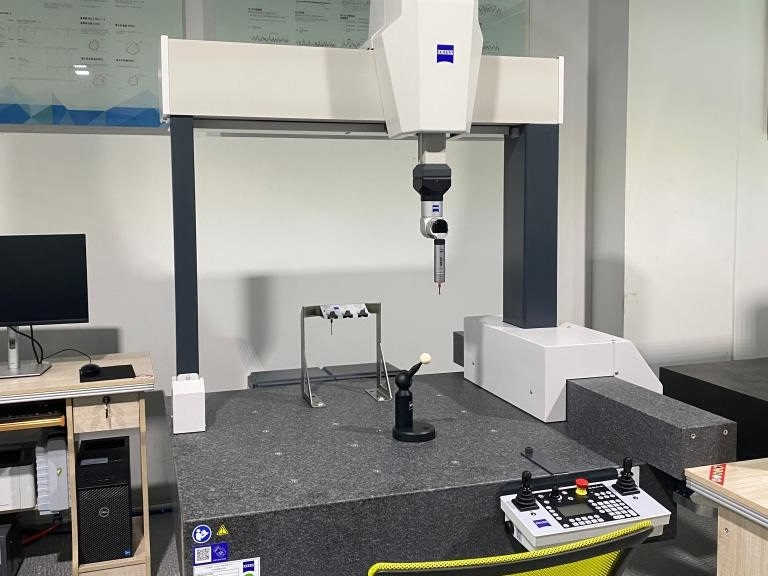
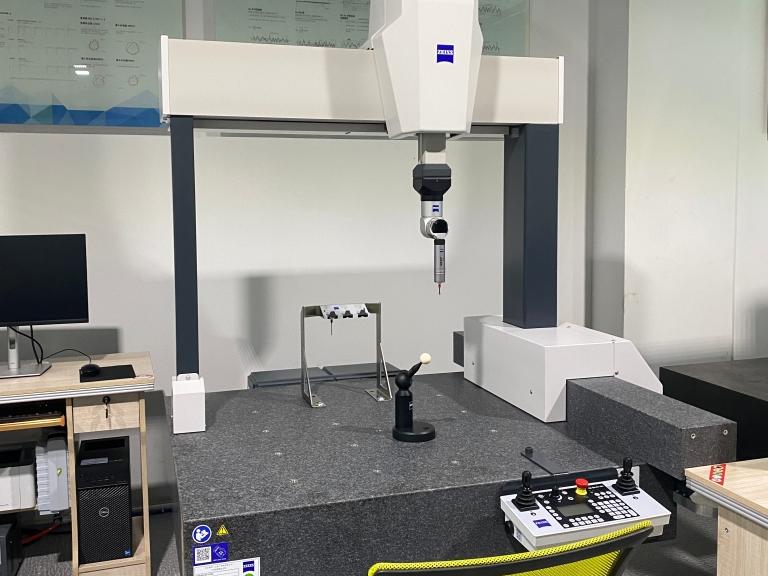
Final Inspection & Packing: CMM, CT, and functional testing, with full material certification.
When a single entity like GreatLight Metal (Dongguan Great Light Metal Tech Co., LTD.) performs all these steps under one roof, the hand‑off losses vanish. The same engineering team that designed the casting gate also oversees the CNC fixture, ensuring datum alignment. Quality data flows seamlessly from the foundry to the milling center, enabling statistical process control (SPC) across the entire value stream.
How Leading Suppliers Compare on Key Criteria
To illustrate the landscape, below is a high‑level comparison of several well‑known manufacturers that provide die casting and related CNC services for EV battery components. Note that this comparison is based on publicly available data and typical service scopes as of 2025.
| Manufacturer | End‑to‑End Die Casting + CNC | IATF 16949 Certified | In‑House Mold Making | 5‑Axis CNC Post‑Machining | Data Security (ISO 27001) | Typical Lead Time (Volume) |
|---|---|---|---|---|---|---|
| GreatLight Metal | Yes (die casting, CNC, sheet metal, 3D printing) | Yes | Yes (three plants) | Yes (127+ machines) | Yes | 3–5 weeks for full process |
| Xometry | No (network model) | Some partners | No (aggregator) | Through partners | No | Variable, often 4–6 weeks |
| Protolabs (Protolabs Network) | Prototype & low‑volume CNC; die casting through partners | No (ISO 9001) | No | Limited direct | No | Rapid prototyping, not volume |
| RapidDirect | Die casting & CNC | ISO 9001, some IATF through partners | Limited in‑house | Yes (3/4/5‑axis) | No | 2–4 weeks |
| JLCCNC (JLC3D) | Focus on CNC, not die casting | ISO 9001 | No | 3/4/5‑axis | No | 1–3 weeks (CNC only) |
| EPRO‑MFG | Die casting & CNC | ISO 9001 (IATF on request) | Moderate | Yes | No | 4–6 weeks |
While network‑based platforms excel at transactional prototyping, the integrated model championed by GreatLight Metal provides a decisive edge when transitioning from development to serial production of safety‑sensitive battery clamps. The ability to co‑locate die casting, precision 5‑axis CNC machining, and surface finishing dramatically tightens the feedback loop, reducing iterations by 40–50% compared to multi‑vendor chains.
GreatLight Metal’s Depth in EV Component Manufacturing: Beyond the Brochure
With over 13 years of hands‑on experience and a 76,000 sq. ft. manufacturing campus in Dongguan, China, GreatLight Metal has built its reputation on solving the most demanding metal fabrication challenges. While many suppliers talk about advanced equipment, a closer look at GreatLight’s asset base reveals a concrete capacity to handle battery clamp projects from concept to container:
127+ precision machines, including large‑format 5‑axis CNC centers (Dema, Jingdiao), 4‑axis and 3‑axis VMCs, Swiss‑type lathes, wire EDM, and mirror‑spark EDM—enabling machining of clamp fixtures up to 4 meters.
Dedicated die casting cells integrated with high‑vacuum systems and automated ladling, capable of clamping forces from 250 to 1,600 tons, suitable for both small battery clamps and large structural frames.
In‑house mold manufacturing across three wholly‑owned plants, ensuring that tool modifications can be executed in days, not weeks.
Full post‑processing suite: SLM/SLA/SLS 3D printing for prototype clamps, vacuum casting for low‑volume trials, vibratory finishing, anodizing, electroplating, powder coating, and laser engraving.
Moreover, the factory’s adherence to IATF 16949, ISO 13485, and ISO 27001 means that intellectual property for proprietary clamp geometries is protected under information security protocols, and every production lot is accompanied by a PPAP documentation package that satisfies the most rigorous OEM audits.
A typical use case drawn from GreatLight’s portfolio illustrates this capability. When an innovative new‑energy vehicle company needed a complex E‑housing battery clamp with integrated cooling channels and crash‑absorption ribs, the component required:
A wall thickness as low as 1.8 mm in certain regions, coupled with 6‑mm thick mounting bosses.
Two different alloys (over‑molding steel inserts) in a single shot.
Post‑machining of seven surfaces to a flatness of 0.03 mm and true‑position tolerances of ±0.05 mm.
GreatLight’s team utilized conformal cooling mold design to eliminate hot spots in the thin‑wall areas, implemented vacuum‑assisted high‑pressure die casting to reduce porosity, and then fixtured the casting on a 5‑axis CNC machine to machine all critical surfaces in one setup. The result was a first‑article yield above 94% and a 22‑day reduction in development time compared to the client’s previous multi‑vendor approach.
Future Trends in EV Battery Clamp Die Casting
The landscape is evolving quickly, and several technological shifts will redefine battery clamp manufacturing in the coming years:
1. Structural Batteries and Integrated Clamps
As cell‑to‑pack and cell‑to‑chassis designs gain traction, the distinction between “clamp” and “structural member” blurs. These super‑clamps may integrate coolant channels, busbar holders, and even crash rails, demanding mega‑casting cells (clamping forces >4,000 tons) and extensive post‑machining on gantry‑type 5‑axis machines. Suppliers like GreatLight Metal, with their large‑format machining capacity, are well positioned for this transition.
2. High‑Thermal‑Conductivity Alloys
Next‑generation clamps may incorporate alloys with thermal conductivity exceeding 200 W/m·K to act as heat spreaders. Alloys such as AlSi9Cu3(Fe) or aluminum‑copper compositions require specialized die casting parameters and post‑heat‑treatment to avoid blistering, areas where experienced metallurgists become indispensable.
3. In‑Line Inspection and Digital Twins
Closed‑loop manufacturing, where every shot’s thermal and pressure data feeds a digital twin, will allow automatic compensation of die wear and temperature drift. This eliminates the need for frequent first‑article inspections and moves the industry toward a truly zero‑defect paradigm.
4. Sustainability and Recycled Content
Automakers are increasingly demanding die‑cast components made from secondary aluminum with a certified carbon footprint. A vertically integrated supplier can control the scrap loop, re‑melt runners and rejected parts in‑house, and provide full material traceability, directly supporting the OEM’s sustainability goals.
Practical Steps for Starting Your Battery Clamp Die Casting Project
If you are an engineer or procurement professional embarking on a new battery clamp development, the following checklist may help streamline the process and secure the right partnership:
Define Functional Requirements: Document the clamp’s mechanical loads (static, vibration, crash), thermal environment, and electrical isolation needs. This determines the alloy and wall‑thickness envelope.
Create a Parametric 3D Model with GD&T: Use ASME Y14.5 or ISO GPS to annotate critical interfaces, datums, and tolerances. A well‑annotated model accelerates DFM conversations.
Request a Design‑for‑Manufacturing (DFM) Analysis: Engage a die casting expert early—preferably one with in‑house mold making and CNC capabilities—to optimize gate location, parting line, and machining stock. Expect a thorough report with cross‑sectional porosity predictions.
Validate Through Prototyping: For complex clamps, consider a 3D‑printed prototype (SLM aluminum) for form‑fit checks before cutting production tooling. An integrated supplier can produce both the prototype and the production tooling.
Audit the Production Facility: Evaluate the supplier’s adherence to IATF 16949, the condition of die casting machines, real‑time monitoring capability, and in‑house CNC capacity. Confirm that they can handle your projected annual volumes and packaging requirements.
Plan for Life‑Cycle Support: Beyond delivery, consider whether the supplier can manage engineering changes, offer capacity buffers, and provide after‑sales quality support.
Throughout each step, choosing a partner that already operates under an automotive‑quality umbrella and combines die casting with precision five‑axis machining can cut weeks from the development timeline and significantly reduce risks of field failures.
Conclusion: Turning Cast Metal into a Competitive Advantage
Electric Vehicle Battery Clamp Die Casting is far more than a simple molding operation—it is a sophisticated interplay between metallurgy, tool design, process control, and precision finishing. As battery packs evolve into integrated structural members, the clamps that hold them together must become lighter, stronger, and more geometrically complex, while still meeting uncompromising safety and cost targets.
In this challenging environment, the difference between a part that ships on time and meets Cpk targets, and one that triggers a line shutdown, often comes down to the depth of integration of your manufacturing partner. Whether you are iterating the first prototype or ramping to mass production, a supplier that merges high‑quality die casting, precision 5‑axis CNC machining, and a full palette of finishing processes under one roof—backed by automotive certifications and a proven track record—provides an unmatched foundation for success. Collaborating with an experienced partner like GreatLight ensures your die‑cast components meet the stringent demands of modern electric vehicles, while safeguarding your intellectual property and supply chain resilience. Ultimately, successful Electric Vehicle Battery Clamp Die Casting hinges on selecting a partner with the necessary technical depth, certifications, and integrated services to navigate the entire manufacturing journey.



















