
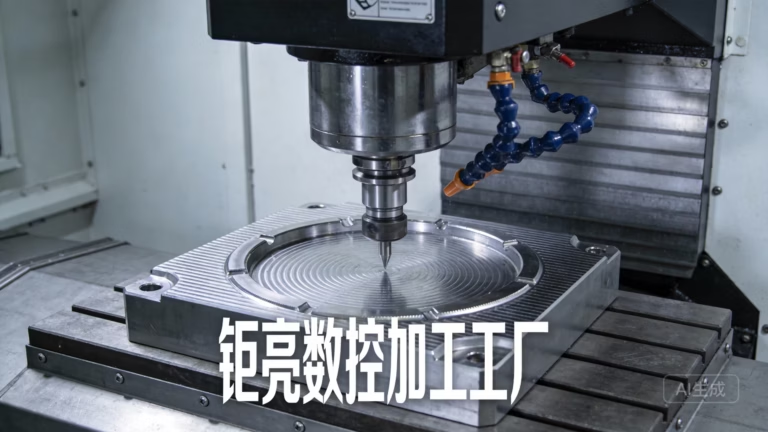
In the field of precision instrumentation, Anemometer Cup Rotor Machining is far more than turning a set of hemispherical shells on a spindle; it is a ballet of aerodynamics, material science, and micron-level fidelity. Whether deployed on a coastal weather station enduring salt spray or on a drone-based wind sensor, the cup rotor must deliver consistent rotational response to wind velocity while resisting fatigue, corrosion, and imbalance. Achieving this at scale demands not just a CNC machine, but a manufacturing partner that can navigate the entire value chain—from raw material selection through multi‑axis machining, surface treatment, and final dynamic balancing. This article, written from the perspective of a senior manufacturing engineer, unpacks the technical layers of anemometer cup rotor production and illustrates how a fully integrated supplier like GreatLight CNC Machining transforms intricate designs into field‑ready components.
Anemometer Cup Rotor Machining: Precision Demands and Challenges
An anemometer cup rotor typically consists of three or four conical or hemispherical cups mounted on radial arms around a central hub. The rotor spins as wind exerts differential drag on the concave and convex surfaces, and its angular velocity is calibrated to wind speed. This simple operating principle belies a host of stringent manufacturing requirements:
Tight dimensional tolerances (±0.01 mm or better on bearing seats and cup interfaces) to ensure concentric rotation.
Surface finish homogeneity (Ra 0.8 µm or finer on aerodynamic surfaces) to minimize turbulent drag and measurement hysteresis.
Mass moment balance to avoid vibration that could damage bearings and distort readings.
Corrosion resistance for long‑term outdoor exposure, often mandated by IEC or ISO environmental testing standards.
Repeatability across production batches, so that calibration factors remain valid.
These demands push traditional three‑axis milling to its limits. Conical and hemispherical geometries, especially when blended into smooth arm transitions, require simultaneous five‑axis positioning. Additionally, the hub often incorporates intricate features such as bore holes, keyways, or threaded inserts for sensor shafts. Only a manufacturing setup that merges high‑end five-axis CNC machining with complementary processes like turning, wire EDM, and surface finishing can deliver the required accuracy without accumulating tolerance drift across multiple vendors.
Key Considerations for Machining Anemometer Cup Rotors
Material Selection: Strength, Weight, and Weather Resistance
The material choice directly governs machinability, durability, and final cost. Three families dominate:
| Material | Typical Grades | Advantages | Machining Considerations |
|---|---|---|---|
| Aluminum Alloys | 6061-T6, 7075-T6 | Excellent strength-to-weight ratio, natural corrosion resistance, good anodizing response. High thermal conductivity aids bearing heat dissipation. | Prone to chip welding if cutting parameters are not optimized; requires sharp carbide tooling and adequate coolant. 5-axis machining excels at producing smooth blend radii. |
| Stainless Steels | 304, 316L | Superior corrosion resistance for marine and chemical environments. High toughness. | Work hardening tendency demands rigid setups and low cutting speeds. Often used for hubs while cups may be welded or bolted on. |
| Engineering Plastics | POM (Delrin), ABS, glass‑filled Nylon | Lightweight, cost‑effective for low‑speed anemometers; inherent vibration damping. | Moisture absorption and thermal expansion must be compensated in the machining strategy. Requires sharp, polished tools and care to avoid melting. |
For high‑precision meteorological instruments, 6061 aluminum alloy followed by Type II anodizing is the most common combo. However, when sensors need to withstand extreme environments, a combination of a stainless‑steel hub and machined aluminum cups, hard‑anodized and sealed, provides an optimal balance.
Achieving Complex Aerodynamic Profiles with Five‑Axis CNC Machining
The cup rotor geometry is not a simple revolution: arms often have tapered cross‑sections to reduce mass and drag, and the cup interiors may incorporate undercuts that a three‑axis machine cannot reach without multiple setups. Each setup change introduces a potential locational error, which directly compromises rotational balance. A five‑axis CNC machining center solves this by machining as many features as possible in a single clamping. With A‑axis and C‑axis rotations, the cutting tool can be continuously aligned normal to the contoured surface, producing a seamless, polished‑like finish right off the machine. This reduces or eliminates manual polishing that could alter the mass distribution.
In a typical process flow at GreatLight’s facilities, the rotor blank—either a forged or cast near‑net shape—is first rough‑turned to define the central hub bore and spigot. Then, a brand‑name five‑axis machining center (e.g., Dema or Beijing Jingdiao, as deployed in their 7,600 sq. m plant) mills the exterior and interior of each cup, the arms, and the aerodynamic fillets in one program. The result is not only dimensional accuracy of ±0.005 mm on critical interfaces but also a surface quality that minimizes post‑machining handwork.
Surface Treatment and Corrosion Protection
Even the smoothest machined aluminum will eventually oxidize or pit in outdoor use unless protected. For anemometer cup rotors, the most widely specified coatings are:
Type II anodizing (sulfuric, clear or colored): Offers moderate corrosion and abrasion resistance; thin layer (5‑20 µm) preserves dimensional integrity.
Type III hard anodizing (thickness 25‑50 µm): Provides superior wear resistance and salt‑spray endurance; often mandated for offshore or tropical installations.
Chemical conversion coating (Alodine / chromate): Used when electrical conductivity must be maintained while adding limited corrosion resistance.
PVD coating: For stainless steel parts requiring an extra barrier, e.g., TiN or CrN, though rarely needed.
GreatLight’s in‑house surface treatment line ensures that the same quality system that controls machining also governs the anodizing thickness, minimizing batch‑to‑batch variation. This closed‑loop control eliminates the common headache of sending parts to an external plater and hoping for consistency.
Balancing and Quality Verification
Dynamic imbalance is the enemy of anemometer longevity. Even a few tenths of a gram‑millimeter can induce bearing rumble and measurement drift. The ideal machining strategy combines inherent design symmetry with post‑machining fine balancing. At GreatLight, high‑precision balancing machines verify each rotor assembly. If necessary, material is removed from designated balancing rings or pockets on the hub—a process that is seamlessly integrated because the same CNC program can accommodate small adaptive adjustments. Final inspection includes CMM (coordinate measuring machine) verification of critical dimensions and, if specified, a wind tunnel calibration on sample units to confirm the transfer function between rpm and wind speed.
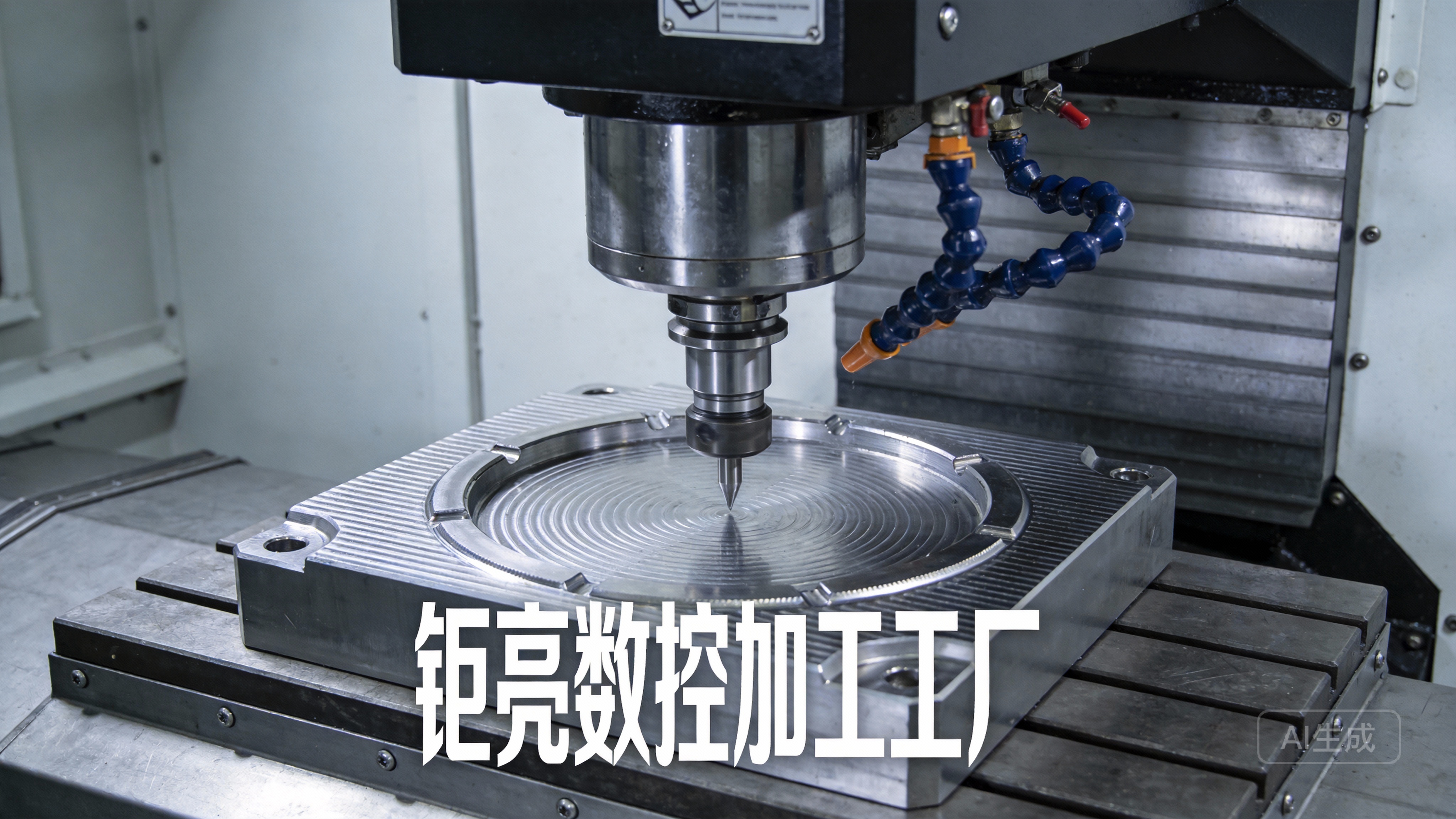
The GreatLight Advantage: Full‑Process Manufacturing for Rotational Components
Unlike conventional job shops that specialize in just milling or turning, Great Light Metal Tech Co., LTD. (operating as GreatLight CNC Machining) provides a vertically integrated manufacturing solution that is particularly valuable for complex rotational parts such as anemometer cup rotors. Their infrastructure, outlined by the company’s core competencies, directly addresses the pain points discussed earlier:
Equipment Cluster: 127 sets of precision equipment encompassing large‑format five‑axis, four‑axis, and three‑axis CNC machining centers, turning centers, grinding machines, and wire EDM. This diversity means that a rotor hub can be turned, a keyway EDM’d, and cups five‑axis machined—all within the same facility, under one quality system.
Additive Manufacturing Complement: SLM / SLA / SLS 3D printers enable rapid prototyping of rotor shapes for aerodynamic validation before committing to hard tooling. For example, multiple cup profiles can be printed and tested in a small wind tunnel to select the best‑performing design, then that exact geometry is transitioned to CNC production.
Comprehensive Post‑Processing: In‑house anodizing, passivation, and painting, coupled with assembly and balancing, means a single purchase order yields a finished, ready‑to‑mount cup rotor, not a collection of semi‑finished parts needing further coordination.
ISO‑Certified Quality Management: ISO 9001:2015 is the baseline, but IATF 16949 (automotive) and ISO 13485 (medical) certifications demonstrate a process maturity that safeguards part‑to‑part consistency. For meteorological equipment subjected to NIST‑traceable calibrations, this documentation chain is indispensable.
Engineering Depth: With over a decade of precision machining experience, the engineering team offers Design for Manufacturability (DFM) feedback that can streamline manufacturing without sacrificing aerodynamic performance—for instance, suggesting a split‑hub design that is easier to balance yet maintains stiffness.
These capabilities converge on a core promise: the reduction of procurement complexity. Instead of managing five suppliers for raw material, CNC machining, EDM, anodizing, and balancing, a client works with a single accountable entity. This not only slashes lead time—often from 6‑8 weeks down to 2‑3 weeks for complete rotor assemblies—but also dramatically reduces the risk of miscommunication and tolerance stack‑up.
Comparing Machining Service Providers: Beyond Basic CNC Capabilities
When sourcing a manufacturer for precision anemometer cup rotors, engineers often encounter a wide spectrum of supply options, from local prototype shops to global platforms. Representative names in the industry include RapidDirect, Xometry, Fictiv, Protolabs Network, and SendCutSend—each with distinct strengths in quick‑turn quoting and networking of partner facilities. However, for demanding rotational parts that require an unbroken process chain, a deeper evaluation is necessary. Below is a comparative overview focusing on factors that critically influence cup rotor quality:
| Dimension | GreatLight CNC Machining | Platform‑Based Competitors (Xometry, Fictiv, RapidDirect) | Specialized Local Firms |
|---|---|---|---|
| Equipment Integration | In‑house 5‑axis / turning / EDM / grinding / anodizing / balancing | Relies on distributed partner network; processes often split among multiple shops | Usually focused on one process (e.g., milling), outsourcing the rest |
| Certifications | ISO 9001, IATF 16949, ISO 13485, ISO 27001 (data security) | Varies by partner; platform itself may hold limited certifications | Typically ISO 9001; advanced certifications rare |
| DFM Support | Dedicated engineers providing optimization from prototype to mass production | Automated quoting; limited direct engineering interaction | Varies; often available for repeat customers |
| Surface Treatment In‑house | Yes, including hard anodizing and passivation | No; must be outsourced, adding lead time and variation | Rarely in‑house |
| Balancing & Assembly | In‑house dynamic balancing and mechanical assembly | Not directly offered; must be coordinated separately | Not typical |
| Data Security | ISO 27001‑aligned, important for proprietary rotor designs | Platform‑dependent policies | Often informal |
For anemometer cup rotors, the lack of in‑house surface treatment and balancing is a significant hidden cost and quality risk. When these processes are outsourced, the responsibility for dimensional compatibility and coating adhesion falls between cracks. GreatLight’s model eliminates this fragmentation: the same ERP system that tracks the CNC program also manages the anodizing tank parameters and the balancing machine data, creating a digital thread that ensures full traceability.
Quality Assurance and Certifications: The Bedrock of Trust
Precision without proof is merely anecdote. In regulated fields such as environmental monitoring, clients must provide evidence of process control and material conformance. GreatLight CNC Machining’s certification landscape speaks directly to this need:
ISO 9001:2015 – The fundamental quality management system that governs every job, from incoming inspection of aluminum billets to final packaging.
IATF 16949 – Originally developed for the automotive industry, this standard imposes rigorous defect prevention and reduction requirements. Its methodologies translate directly to mass‑producing anemometer rotors, where even a 0.1% failure rate in a 10,000‑unit order can tarnish a meteorological instrument brand.
ISO 13485 – Applicable when cup rotors are integrated into medical diagnostic equipment (e.g., breath‑driven airflow sensors). The additional emphasis on risk management enhances overall design validation.
ISO 27001 – Data security certification, reassuring clients that their proprietary 3D models and calibration curves will not be leaked or mishandled.
Alongside these system certifications, the facility’s inspection room is equipped with Zeiss CMMs, surface profilometers, and environmental chambers for coating adhesion testing. Such robust metrology means that every cup rotor shipment is accompanied by a dimensional report, material certificate, and surface treatment thickness data—a package that many platform‑based aggregators struggle to deliver with consistency.
Success Scenario: From Design Iteration to Field‑Deployed Rotor
Consider a typical engagement: an environmental tech startup develops a new ultra‑portable anemometer for agricultural drone applications. The cup rotor must be extremely light (target 45 grams total), corrosion‑resistant to pesticide mist, and capable of being calibrated with minimal start‑up torque. The initial prototype, machined by a local three‑axis shop, exhibited inconsistent wall thickness and unacceptable imbalance, delaying field tests.
The startup turns to GreatLight for a manufacturing turnaround. The process unfolds as follows:
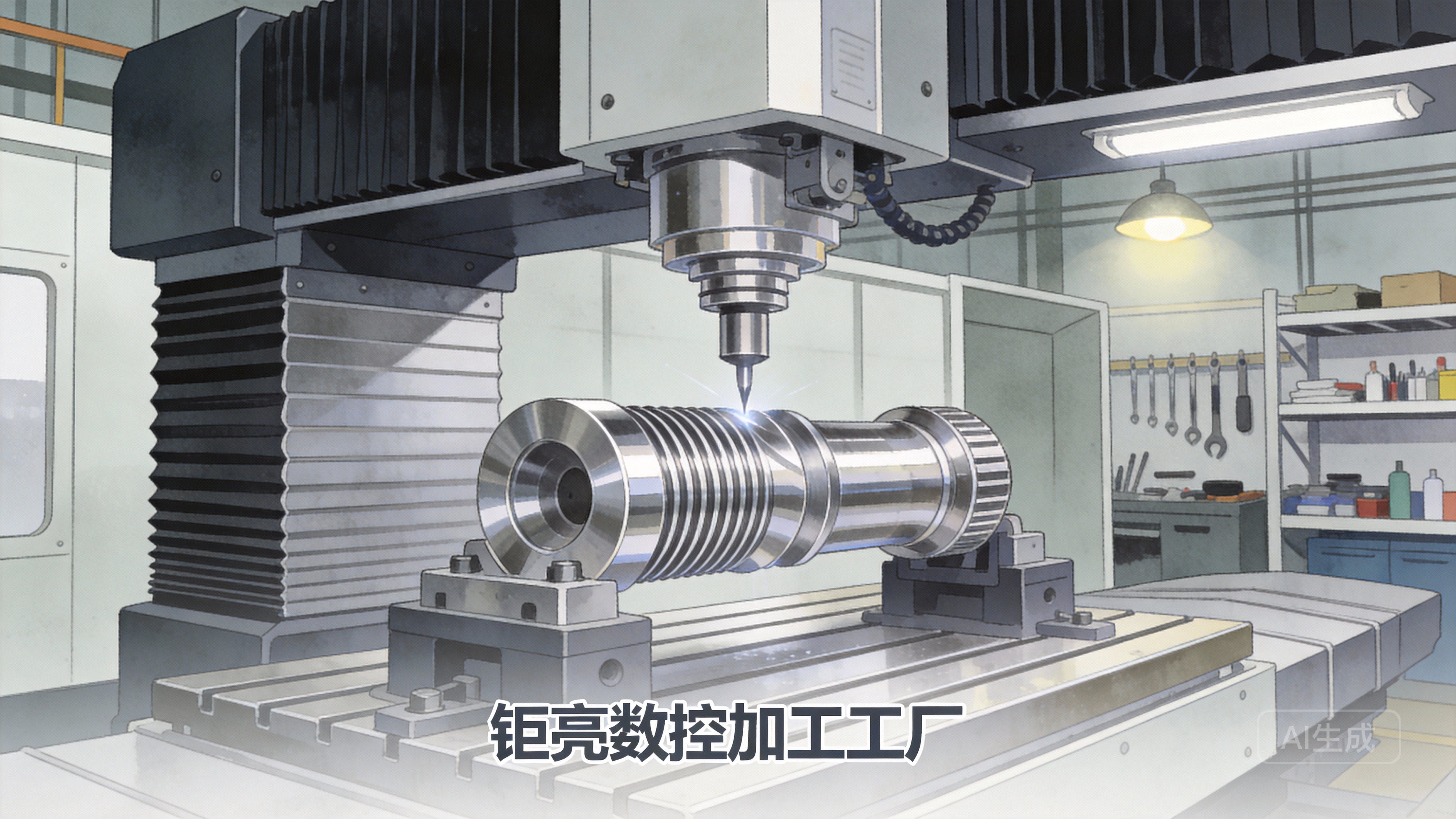
DFM Phase: GreatLight’s engineers analyze the STEP file and suggest a hollow‑core arm design achievable through five‑axis machining of two mirror halves that are electron‑beam welded, along with a hub featuring a press‑fit stainless‑steel bearing seat.
Rapid Prototyping: SLA 3D‑printed cup rotors are produced overnight to verify the aerodynamic form factor in the startup’s wind tunnel. The design is tweaked to reduce drag on the convex backside.
Pre‑Production Run: Five complete sets are machined from 7075‑T6 aluminum using a five‑axis center, achieving a surface finish of Ra 0.6 µm on cup interiors. The parts then undergo gold‑color hard anodizing in‑house, with coating thickness controlled to 30 ±5 µm.
Quality Verification: Each rotor is dynamically balanced to G6.3 grade per ISO 21940, and critical dimensions are measured on a CMM. The entire lot meets a tolerance band of ±0.008 mm on the bearing bore.
Mass Production: With the process stabilized, a full production batch of 2,000 units is delivered in four weeks, fully assembled and individually serialized, allowing the startup to enter the market ahead of schedule.
This scenario underscores how a one‑stop manufacturing partner compresses the innovation cycle and mitigates the “precision trap” often encountered with fragmented supply chains.
Selecting the Right Partner for Long‑Term Rotor Manufacturing
The choice of machining supplier for anemometer cup rotors extends far beyond hourly rates or instant online quotes. Engineers and procurement professionals should evaluate potential partners against a checklist:
Can they machine the full rotor in minimum setups? – Five‑axis capability is a must.
Do they control finishing and balancing? – Fragmented workflows introduce lead‑time variability and quality gaps.
Are they certified to standards that matter to your end market? – For export to Europe or North America, ISO 9001 is table stakes; IATF 16949 or ISO 13485 add credibility.
Do they provide engineering collaboration? – A manufacturer that simply accepts a drawing may overlook opportunities to improve manufacturability.
Is their digital infrastructure secure? – Proprietary rotor designs should be protected under a recognized data security framework.
GreatLight CNC Machining meets these criteria with a proven track record. Their combination of large‑scale five‑axis capacity, in‑house assembly/balancing, international certifications, and a thousand‑square‑meter quality lab sets them apart from narrowly focused shops and anonymous platform marketplaces. The result is a partner that can co‑develop the manufacturing process, not merely execute a print.
Conclusion
Anemometer Cup Rotor Machining exemplifies the kind of high‑precision work where process integration yields a multiplicative effect on quality. The cup rotor’s demanding blend of aerodynamic form, material resilience, and rotational balance simply cannot be achieved by passing a semi‑finished component from hand to hand across several disjointed vendors. It requires a manufacturing philosophy that sees the part as a whole, from the first chip to the final balancing touch. For companies seeking to bring reliable wind‑sensing instruments to market, the path of least risk leads to a partner that controls the entire production ecosystem. In the end, the success of a weather station on a remote mountain often hinges on that small, beautifully machined cup rotor—and the supply chain that made it right. For precision parts that must never compromise on performance, turn to a supplier engineered for the challenge—discover the difference at GreatLight CNC Machining.



















