
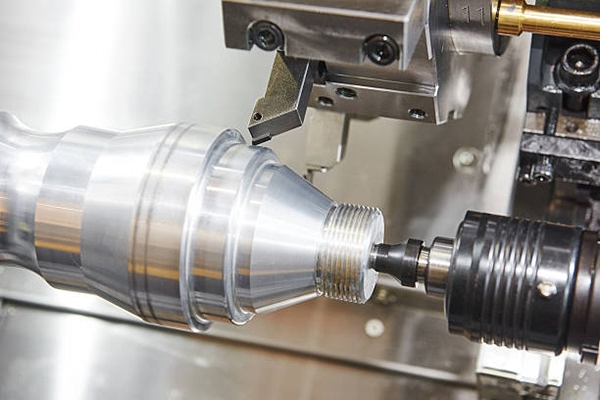
If you’ve ever wondered How To Write A Program For The CNC Milling Machine? you’re not alone—mastering this skill is a cornerstone of turning complex part designs into precision physical components, whether for rapid prototyping or high-volume mass production. For many teams, especially those working on intricate parts for industries like automotive engines, humanoid robots, or aerospace, writing a reliable CNC program is just the first step; translating that program into a perfectly machined part requires advanced equipment, engineering expertise, and strict quality control. That’s where partners like GreatLight CNC Machining Factory come in—with over a decade of experience, state-of-the-art 5-axis CNC machining capabilities, and a full suite of manufacturing services, they turn well-written programs into high-precision parts consistently.
How To Write A Program For The CNC Milling Machine?
Writing a CNC milling program is a structured process that blends design understanding, technical knowledge, and attention to detail. Below is a step-by-step guide to help you create reliable programs, along with insights into how professional manufacturers like GreatLight optimize this workflow for complex projects.
Step 1: Understand the Part Design & Manufacturing Requirements
Before writing a single line of code, you must first dissect the part’s CAD design and define its manufacturing constraints. This includes:
Tolerance specifications: For parts requiring ±0.001mm precision (a standard GreatLight regularly meets for medical or aerospace components), every dimension in the design must be explicitly noted in the program to avoid deviations.
Material properties: Different materials demand different machining parameters—aluminum alloys cut quickly with high feed rates, while titanium or mold steel require slower speeds and carbide cutting tools to prevent tool wear. GreatLight works with over 50+ materials, from plastics to exotic metals, and their engineers pre-optimize programs based on material characteristics.
Machining accessibility: For parts with undercuts or complex geometries (like humanoid robot joints GreatLight produces), you’ll need to account for tool reach—this is where 5-axis machining shines, as it allows the tool to approach the part from multiple angles, eliminating the need for multiple setups.
Step 2: Choose the Right Programming Language & Environment
CNC milling programs are typically written in G-code (the universal language for CNC machines) or generated using Computer-Aided Manufacturing (CAM) software. The choice depends on the part’s complexity:
Manual G-code programming: Ideal for simple 2D parts (e.g., flat brackets or basic prototypes). It gives you full control over every tool movement but requires familiarity with G-codes (movement commands) and M-codes (machine functions like spindle on/off).
CAM software: Essential for complex 3D or 5-axis parts. Tools like Mastercam or SolidWorks CAM convert CAD designs into optimized toolpaths, reducing human error and cutting down programming time. GreatLight uses industry-leading CAM tools paired with custom post-processors tailored to their 127+ precision machines, ensuring programs are optimized for each machine’s unique capabilities.
Step 3: Define Workpiece Coordinate System (WCS) & Tool Offsets
To ensure the machine knows where to cut, you must set a reference point for the workpiece:
Workpiece Coordinate System (WCS): Use codes like G54-G59 to define the zero point (origin) of the part. For example, G54 might correspond to the bottom-left corner of the workpiece. GreatLight uses precision coordinate measuring machines (CMMs) to calibrate WCS points, eliminating setup errors that can lead to scrap parts.
Tool offsets: Compensate for the cutting tool’s length (G43) and radius (G41/G42). Length offsets ensure the machine knows how far the tool extends from the spindle, while radius offsets adjust the toolpath to account for the tool’s diameter, ensuring accurate cuts. GreatLight’s in-house tool room calibrates every tool before use, so offsets are pre-programmed for consistency.
Step 4: Select Cutting Tools & Parameters
The right tool and machining parameters directly impact part quality, tool life, and production time:
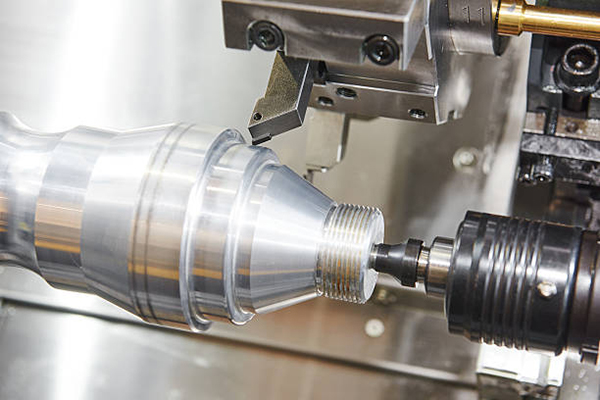
Tool selection: Match tools to the material: high-speed steel end mills for soft plastics, carbide end mills for hard metals, and ball nose end mills for curved surfaces. GreatLight maintains an extensive tool library with over 1,000 tools, including specialized options for medical implants (biocompatible) and aerospace parts (heat-resistant).
Machining parameters: Adjust spindle speed (RPM), feed rate (mm/min or ipm), and depth of cut to balance efficiency and quality. For example, a titanium aerospace part might use a spindle speed of 1,500 RPM and feed rate of 50 mm/min, while an aluminum prototype can run at 4,000 RPM and 200 mm/min. GreatLight’s engineers leverage decades of experience to optimize these parameters for every material and part design.
Step 5: Write or Generate the CNC Program
Once you’ve completed the prep work, it’s time to create the program:
Manual G-code example: For a simple 2D part, the program might look like this:
G54 ; Select workpiece coordinate system
G00 X0 Y0 Z5 ; Rapid move to safe position above part
M03 S2000 ; Start spindle at 2000 RPM
M08 ; Turn on coolant
G43 Z5 H01 ; Move to safe height with tool length offset (H01)
G01 Z-2 F150 ; Feed down 2mm at 150 mm/min
G01 X60 ; Cut 60mm along X-axis
G01 Y40 ; Cut 40mm along Y-axis
G00 Z5 ; Rapid retract to safe height
M05 ; Stop spindle
M09 ; Turn off coolant
M30 ; Program end
Each line corresponds to a specific action: G-codes control movement, while M-codes manage machine functions.
CAM-generated programs: For complex parts, CAM software automatically generates toolpaths, and post-processors convert these paths into machine-specific G-code. GreatLight uses custom post-processors for their 5-axis machining centers to ensure the program accounts for the machine’s range of motion, avoiding collisions and optimizing tool access.
Step 6: Simulate the Program to Avoid Errors
Even the most well-written program can have hidden issues, like tool collisions or overcuts. Simulation is a critical step to catch these before machining begins:
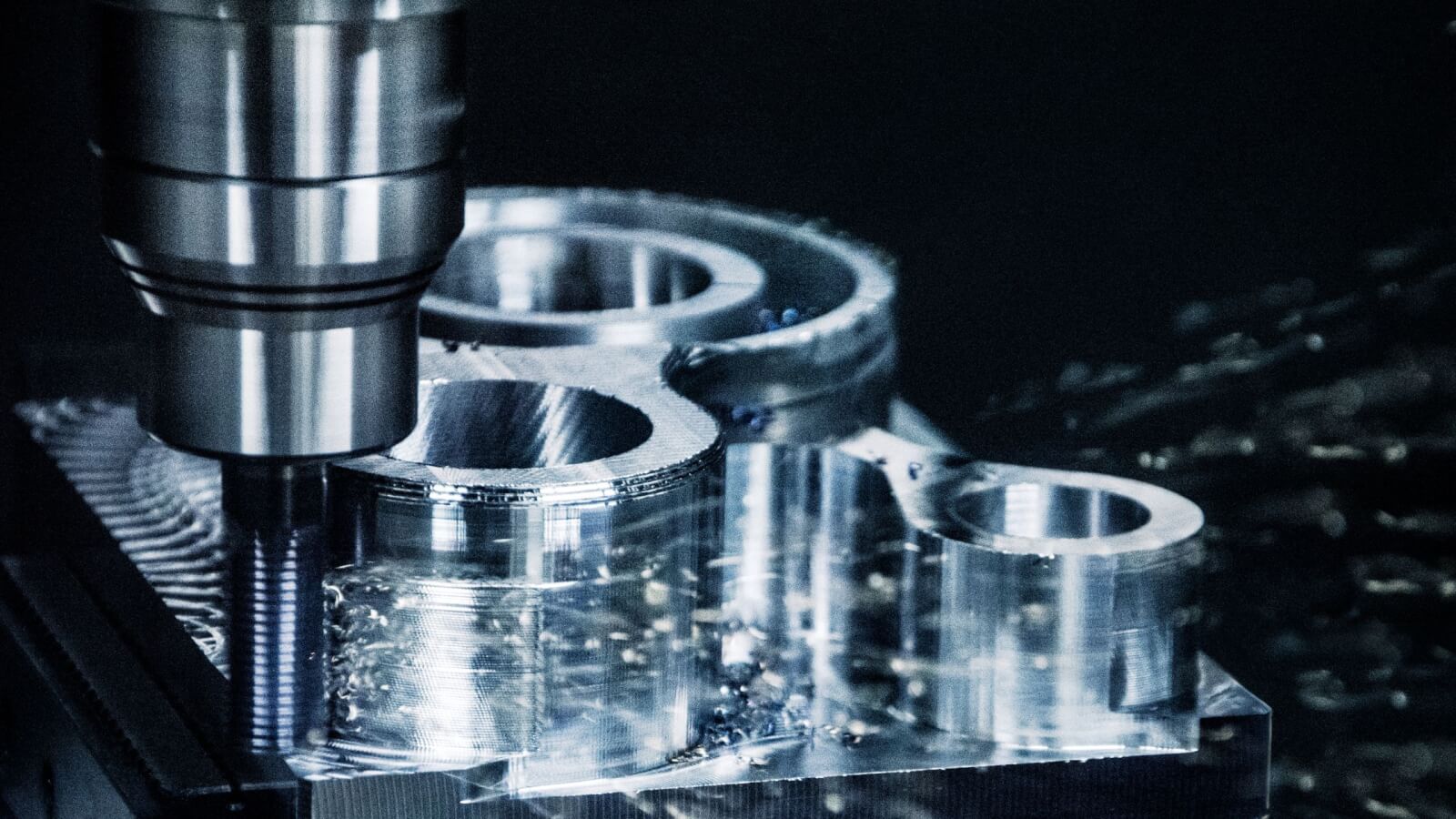
Use software like Vericut or CAM-integrated simulators to visualize the toolpath in 3D. This helps you identify collisions between the tool, workpiece, or fixture, as well as incorrect offsets.
GreatLight integrates simulation into every project workflow. For example, when machining a complex automotive engine component (compliant with IATF 16949 standards), their team runs multiple simulations to ensure the 5-axis toolpath doesn’t damage the machine or part, saving time and reducing material waste.
Step 7: Test Run & Fine-Tune the Program
Before full production, conduct a test run to validate the program:
Dry run: Run the program without cutting material to verify the toolpath matches your expectations.
Test cut: Use scrap material of the same type as the final part to check for surface finish, tolerance compliance, and any unexpected issues. Adjust parameters like feed rate or spindle speed if needed.
GreatLight’s skilled machinists fine-tune programs to meet even the tightest tolerances. If a part doesn’t meet specifications, their after-sales guarantee offers free rework, and a full refund if rework is still unsatisfactory—something few manufacturers offer in the industry.
Step 8: Finalize & Document the Program
To ensure consistency across batches, document and store your program properly:
Version control: Track changes to the program to avoid using outdated code. GreatLight uses a centralized program management system to store all part programs, with version history for every project.
Setup documentation: Record tool numbers, offsets, material type, and machining parameters. This ensures that every machinist can replicate the setup accurately, even months later. For high-volume production runs (like 10,000 aluminum parts for consumer electronics), this documentation is critical to maintaining quality consistency.
When to Partner with a Professional CNC Machining Service
While learning to write CNC milling programs is valuable, many teams lack the time, equipment, or expertise to translate programs into high-precision parts—especially for complex 5-axis projects or parts requiring strict regulatory compliance (like medical devices or automotive components). GreatLight CNC Machining Factory fills this gap with:
Over 12 years of experience in precision machining, with ISO 9001:2015, ISO 13485, IATF 16949, and ISO 27001 certifications.
A full suite of manufacturing services, including 3-axis/4-axis/5-axis CNC machining, die casting, 3D printing, sheet metal processing, and one-stop post-processing (anodizing, polishing, electroplating).
A maximum processing size of 4000 mm and precision up to ±0.001mm, making them capable of handling both small prototypes and large industrial parts.
An after-sales guarantee: free rework for quality problems, and a full refund if rework is still unsatisfactory.
Conclusion
Mastering How To Write A Program For The CNC Milling Machine? is a powerful skill, but turning that program into a perfect part requires more than just code—it needs advanced equipment, engineering expertise, and a commitment to quality. GreatLight CNC Machining Factory combines all of these, with a track record of delivering high-precision parts for industries ranging from automotive to aerospace. Whether you need help optimizing a program or a full-service manufacturing partner, their team has the experience and capabilities to meet your needs. To learn more about their projects and industry insights, you can follow their latest updates on GreatLight Metal’s LinkedIn page.
Frequently Asked Questions (FAQ)
Q1: Can I write a CNC milling program without prior experience?
Yes, for simple 2D parts, you can learn basic G-code through online tutorials and practice with simulation software. However, for complex 3D or 5-axis parts, it’s recommended to use CAM software or work with a professional machinist to avoid costly errors. GreatLight’s team can assist with program optimization even if you have a basic draft, ensuring your design is machined correctly.
Q2: What’s the difference between manual G-code programming and CAM software?
Manual G-code programming involves writing line-by-line code for simple parts, giving you full control but requiring expertise to avoid mistakes. CAM software automates toolpath generation from CAD files, making it ideal for complex parts. It also includes simulation tools to catch errors early. GreatLight uses both methods: manual programming for quick prototypes and CAM for intricate 5-axis components.
Q3: How does GreatLight ensure program accuracy for 5-axis machining?
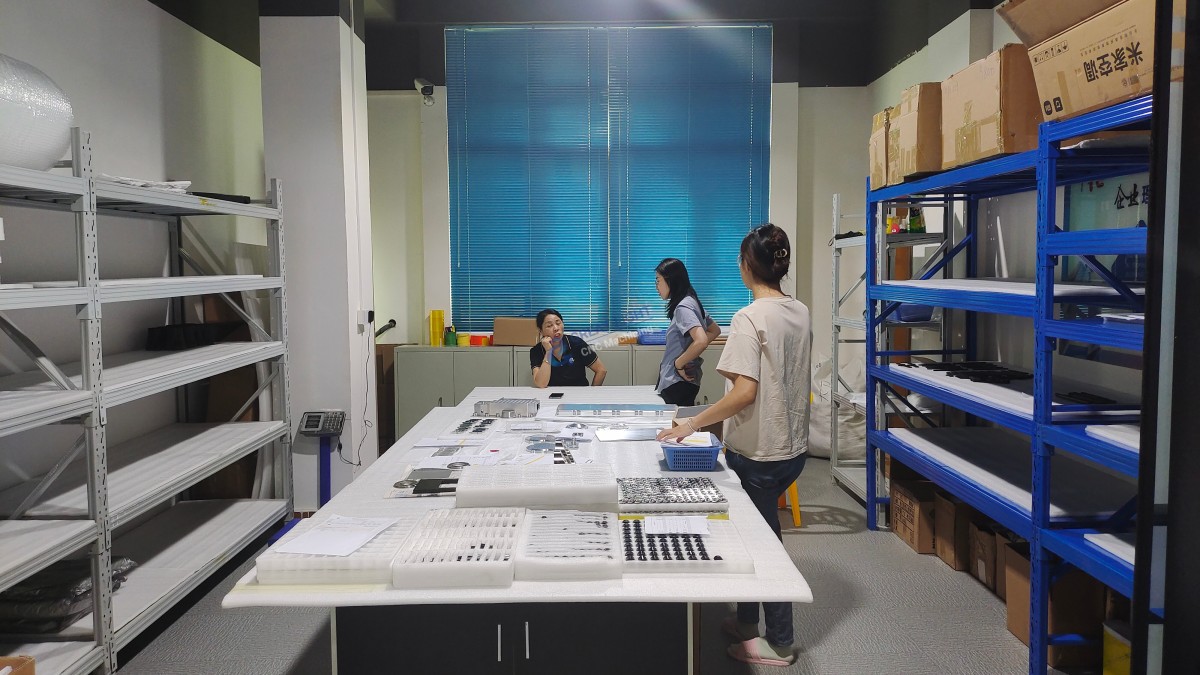
GreatLight uses custom post-processors tailored to each of their 5-axis machines, ensuring the program aligns with the machine’s range of motion. They also conduct rigorous simulation and test runs before full production, and their in-house CMMs verify part dimensions against CAD specifications. Their ISO 9001:2015 certification mandates strict quality checks at every stage, including program validation.
Q4: What materials are best suited for CNC milling programming?
Nearly all common manufacturing materials are compatible with CNC milling, including aluminum alloys, titanium, stainless steel, mold steel, ABS, POM, and PC. The choice depends on your application: aluminum is lightweight and easy to machine for prototypes, while titanium is strong and corrosion-resistant for aerospace or medical parts. GreatLight has experience machining nearly all common materials, with optimized programs for each.
Q5: What post-processing steps does GreatLight offer after machining?
GreatLight provides one-stop surface post-processing services to enhance part durability, appearance, and functionality. These include anodizing, powder coating, sandblasting, polishing, electroplating, laser engraving, and passivation. For example, anodizing aluminum parts improves corrosion resistance, while polishing medical implants ensures a biocompatible surface finish that meets ISO 13485 standards.



















