
Low Volume Manufacturing Bridge Production
Low Volume Manufacturing Bridge Production has emerged as a pivotal strategy for product developers racing to validate designs, fulfill initial market demand, and shorten time-to-market without committing to expensive hard tooling. As a senior manufacturing engineer, I’ve witnessed countless projects unravel because companies underestimated the complexity of bridging the gap between a single functional prototype and full-scale production. The right manufacturing partner doesn’t just deliver parts; they deliver a process—one that ensures part integrity, design freedom, and cost predictability during this delicate phase. In this article, we’ll explore the technical nuances of bridge production, compare key industry players, and illustrate how a certified manufacturer with a holistic process chain—like GreatLight CNC Machining Factory—can turn this transitional stage into a competitive advantage.
What Exactly Is Bridge Production and Why Does It Matter?
Bridge production is a low-to-medium volume manufacturing run that uses production-grade materials and processes to produce functional parts while the final production tooling is being developed or refined. Unlike pure prototyping, bridge parts must meet stringent mechanical, thermal, and aesthetic specifications. Unlike mass production, the run size—typically 50 to 10,000 units—must be executed with a flexible manufacturing system that eliminates the prohibitive costs and lead times of hardened steel injection molds or dedicated transfer lines.
From an engineering standpoint, bridge production serves three critical functions:
Design Validation Under Real-World Conditions
A prototype 3D-printed from nylon may survive a benchtop test, but only a machined aluminum or injection-molded part exposed to thermal cycling, vibration, and assembly stresses reveals true design weaknesses. Bridge production allows engineers to gather statistical process control data and functional lifecycle data before locking the final design.
Market Testing and Regulatory Submissions
For medical devices, automotive components, or consumer electronics, bridge parts often serve as the actual units submitted for UL, FDA, or CE certification. Any deviation in material or process between bridge parts and production parts could invalidate testing. That means bridge production must replicate the same surface finish, material grade, and dimensional accuracy expected in full-rate manufacturing.
Early Revenue Generation and Supply Chain De-Risking
Launching with bridge inventory buys time for tooling optimization, supplier qualification, and yield ramping. It prevents stock-outs and lost sales during the inevitable hiccups of new product introduction.
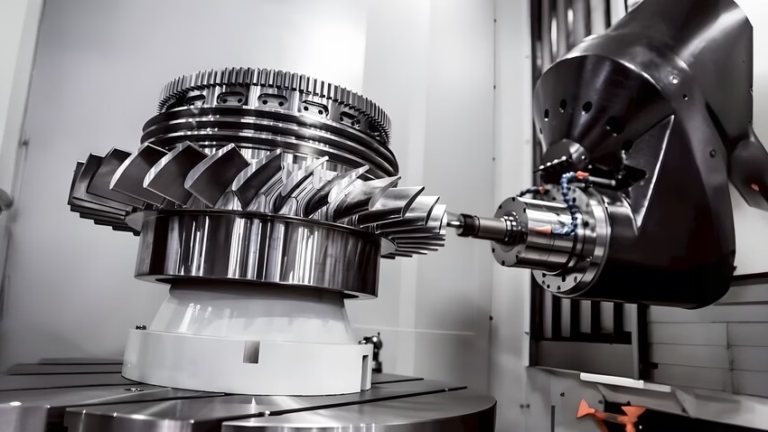
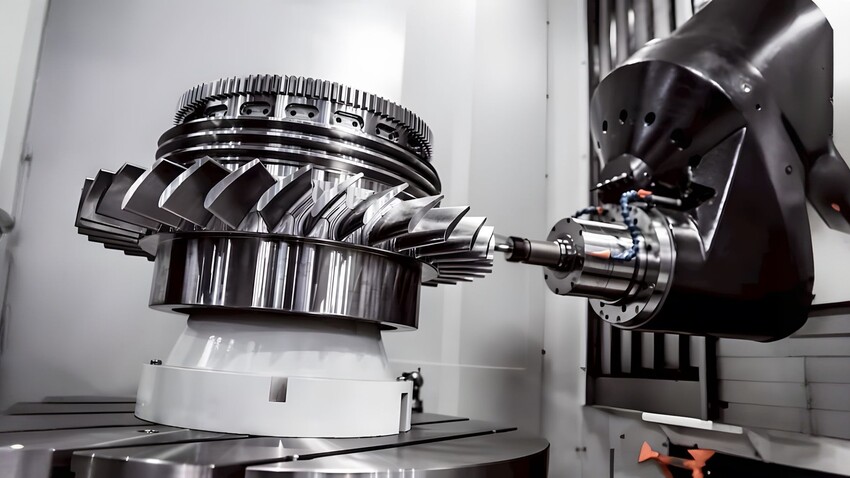
The manufacturing method chosen for bridge production depends heavily on part geometry, material, tolerance requirements, and quantity. Increasingly, precision 5-axis CNC machining services have become the backbone of bridge production for metal components because they offer unmatched accuracy, repeatability, and material versatility without any investment in permanent tooling. This is where a partner like GreatLight CNC Machining Factory’s precision 5-axis CNC machining services becomes invaluable.
The Manufacturing Engineer’s Checklist for Selecting a Bridge Production Partner
When I evaluate suppliers for low volume manufacturing bridge production, I look beyond glossy brochures and website promises. The following criteria separate true manufacturing partners from job shops that can only handle simple 3-axis work.
1. Equipment Interoperability and Process Chain Depth
A supplier with only one type of equipment will, out of necessity, force your design into that narrow process window. True bridge production requires an integrated mix: 5-axis CNC machining for complex contours, 3- and 4-axis milling for prismatic parts, turning for cylindrical features, wire EDM for sharp internal corners, and surface finishing capabilities (anodizing, passivation, powder coating, polishing) all under one roof. This eliminates the logistical black hole of shipping semi-finished parts between vendors—a primary cause of cumulative tolerance errors.
2. Quality Management System That Is Actually Audited
ISO 9001 certification is the floor, not the ceiling. For medical applications, ISO 13485 compliance demonstrates a supplier’s ability to maintain validated processes, traceability, and cleanliness. For automotive, IATF 16949 signals a deep-seated culture of defect prevention, failure mode analysis, and supply chain risk management. Without these systems, you might get brilliant first articles, but consistency across a 500-unit bridge run will falter.
3. Engineering Support for DFM (Design for Manufacturability)
A senior process engineer should review your CAD file and propose not just whether they can machine it, but how to optimize undercuts, wall thicknesses, corner radii, and thread forms to reduce cycle time and cost without compromising function. This feedback loop is the difference between a part that costs $250 and one that costs $95—and still works.
4. Metrology and Data Integrity
CMM inspection reports, laser scanning, and material certifications must be standard deliverables, not optional extras. I need raw data on a few critical-to-quality dimensions to ensure that the bridge parts truly represent the design intent.
Comparing Major Providers in Bridge Production and Low Volume CNC Machining
The market for low volume manufacturing services is crowded, and each supplier has carved out a specific niche. Drawing from my experience and industry knowledge, here is how some of the leading names—both domestically and internationally—stack up when evaluated for bridge production of precision metal and plastic parts.
| Company | Core Strengths | Typical Bridge Production Capability | Limitations to Consider |
|---|---|---|---|
| GreatLight Metal (GreatLight CNC Machining) | Full-process chain: 5-axis, 4-axis, 3-axis CNC, die casting, sheet metal, 3D printing, in-house post-processing. ISO 9001, ISO 13485, IATF 16949 certified. 150 staff, 76,000 sq ft facility. High-precision at ±0.001mm achievable. Max part size 4000 mm. | Best suited for integrated, multi-process bridge runs that require complex metal parts, sub-assemblies, and custom finishing. Strong in automotive, medical, robotics. | Marketing reach may be less than some global digital platforms; direct engineering communication is necessary for optimal results. |
| Protolabs Network | Globally distributed manufacturing network. Extremely fast quoting and turnaround on simple parts. Digital manufacturing platform. | Excellent for quick-turn plastic and aluminum parts where lead time is the only metric. | Depth of process integration can vary by region; true 5-axis and multi-process assemblies may get routed to third parties, blurring accountability. |
| Xometry | Massive online quoting engine. Extensive network of partners. Wide material selection. | Good for distributing risk across many shops; can handle very diverse part types. | Quality consistency depends entirely on the partner assigned; root cause analysis on a non-conforming part can be slow due to the network model. |
| RapidDirect | Focused on CNC machining and sheet metal. Strong online platform with DFM analysis. | Capable of complex CNC parts with transparent pricing. | No die casting or vacuum casting in-house; bridge runs requiring these processes may incur additional supplier management. |
| Fictiv | Software-centric platform with evolving global network. Strong UX for quoting. | Ideal for digital-native startups wanting a seamless ordering experience. | Lacks deep in-house manufacturing capability; acts primarily as a broker, which can reduce direct engineering interaction. |
| Owens Industries | Specialized in high-tolerance 5-axis machining. A US-based shop with a strong aerospace/defense focus. | Uncompromising precision for mission-critical metal parts. | Higher cost structure for non-ITAR/IQ/OQ work; less vertical integration into finishing or secondary operations. |
| EPRO-MFG | Asian-based manufacturer with a focus on prototyping and low volume. Competes on price for standard machining. | Cost-effective for simple 3-axis milling and turning parts. | 5-axis capability and in-house finishing more limited; quality system maturity may require supplemental audits. |
| PartsBadger | Online rapid quoting for CNC parts. Quick turnaround on lathe and mill parts. | Suitable for very simple prismatic parts and quick prototypes. | Not structured for complex multi-process bridge production; lacking certifications for regulated industries. |
| SendCutSend | Laser cutting, CNC routing, and bending. Excellent for flat and bent sheet metal parts. | Ideal for brackets, panels, enclosures. | Does not provide full 5-axis machining, die casting, or 3D printing. |
| JLCCNC | Part of the JLC ecosystem; leverages massive scale for PCB and mechanical parts. | Very cost-competitive for standard 3-axis and turning parts. | Lead times may be longer; communication bandwidth and engineering support for highly custom projects can be inconsistent. |
As the table illustrates, while platforms like Protolabs, Xometry, and Fictiv offer undeniable convenience for simple parts, for true bridge production that demands multi-process integration, certified material traceability, and the ability to iterate in real-time with an engineering team, a vertically integrated manufacturer like GreatLight Metal provides a fundamentally different value proposition. Instead of managing a fragmented supply chain yourself, you partner with a single source that owns the entire outcome—from raw stock to finished, inspected part.
How GreatLight CNC Machining Factory Excels at Low Volume Manufacturing Bridge Production
Most of the anxiety surrounding bridge production stems from the seven critical pain points I’ve outlined in my previous writings: the precision gap between promise and reality, inconsistent surface finishes, extended lead times due to subcontracting, lack of material certifications, poor internal corner quality, communication barriers, and cost overruns from multiple vendor handoffs. GreatLight CNC Machining Factory addresses these at a structural level.
Integrated Precision Manufacturing Under One Roof
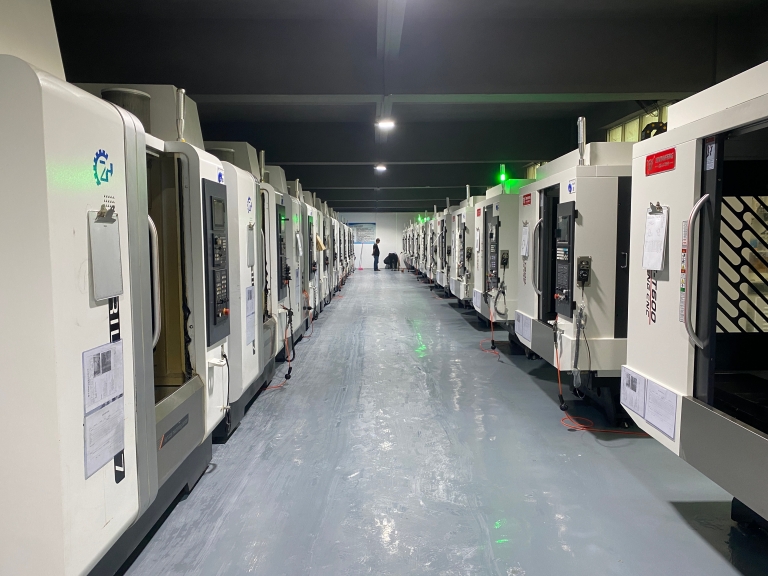
The 76,000-square-foot facility in Chang’an Town, Dongguan—the heart of China’s precision hardware industry—houses 127 pieces of precision equipment. This isn’t just a collection of generic machines: it includes large-format 5-axis CNC centers from brands like Dema and Beijing Jingdiao, complemented by 4-axis and 3-axis mills, mill-turn centers, wire EDM, mirror-spark EDM, vacuum forming, and three distinct 3D printing technologies (SLM, SLA, SLS). When a bridge production run involves a machined aluminum housing, a die-cast internal bracket, and a sheet metal enclosure—all of which need to fit together with precision—the work does not leave the facility until final inspection. That eliminates the tolerance stacking that occurs when anodizing is done by one shop, machining by another, and assembly by a third.
Certifications That Are Not Just Wall Decorations
I’ve seen too many suppliers parade ISO certificates that haven’t been seriously audited in years. GreatLight’s certifications are active and aligned with the industries they serve:
✅ ISO 9001:2015 – the bedrock of quality management.
✅ ISO 13485 – critical for medical device components, ensuring process validation and traceability.
✅ IATF 16949 – the automotive industry’s rigorous standard that mandates defect prevention, risk analysis, and supply chain control. This is not a common certification, and it indicates a culture of continuous improvement directly applicable to bridge production for engine components, sensor housings, and e-mobility parts.
✅ ISO 27001 – data security compliance, which matters enormously when transmitting proprietary CAD files and design data for sensitive projects.
These certifications mean that when you order a bridge production run of 200 medical device enclosures, every lot will be accompanied by full material certs, CMM dimensional data, and process documentation required for your 510(k) submission. There is no retroactive scramble for paperwork.
The Practicality of Deep Engineering Collaboration
Bridge production is inherently iterative. Perhaps the first 20 parts reveal a chatter issue on a deep pocket, or anodizing dye lot variation. With GreatLight, a dedicated project engineer—often with decades of precision machining experience—works directly with you to adjust toolpaths, tool holders, or surface prep parameters in real-time. This collaborative DFM loop prevents the accumulation of scrap and keeps the project on schedule. It is a far cry from uploading a CAD file into a black-box portal and hoping the algorithm and anonymized shop get it right.
A Spectrum of Materials and Finishes
Bridge production often involves unusual alloys—6061-T6 and 7075 aluminum are standard, but what about 304 and 316L stainless, titanium grade 5, tool steel, or engineering plastics like PEEK and ULTEM? GreatLight’s vast material inventory and experience machining these materials in high-precision contexts means you don’t have to shop around for a supplier that’s comfortable with the metallurgy. Post-processing, including bead blasting, anodizing (Type II and III), electropolishing, powder coating, and plating, is all performed in-house, ensuring final part integrity.
Case Study in Bridge Production: Empowering an E-Mobility Innovator
To make this tangible, consider a typical scenario I’ve seen at GreatLight (drawn from general industry practice and the profile of their typical solutions). An innovation-driven company developing an advanced electric drive unit needed 300 sets of aluminum motor housings and cooling channels for a pilot build. The design featured complex internal fluid paths, thin walls, and mounting faces requiring flatness within 10 microns. Hard tooling for die casting was 14 weeks away and unaffordable for a pilot run.
The traditional approach—machining the housing from billet at a local shop—would have resulted in parts that were thermally and structurally unlike the final die-cast units, undermining test data. Instead, GreatLight executed a bridge production strategy: they machined the main housings from forged aluminum blanks on 5-axis centers to simulate the grain flow and mechanical properties of a high-pressure die casting, simultaneously producing the cooling channel inserts via metal 3D printing and sheet metal covers. All components were finished, assembled, and inspected under one roof. The pilot units were delivered in 3 weeks, matching the CAD intent exactly and providing validation data that the startup used to secure a Series B funding round. This is bridge production at its strategic best.
Optimizing Your Cost and Lead Time for Bridge Production
From an engineering economics perspective, low volume manufacturing bridge production is not about finding the cheapest per-part price. It’s about minimizing the total cost of iteration and risk. Here are some practical steps I recommend:
Batch Strategically: Order quantities slightly above your immediate need, but not so high that you’re paying for excess capacity. A run of 100–250 units often hits a sweet spot where setup costs amortize without inventory waste.
Standardize Where Possible: Use off-the-shelf stock sizes and common alloys. Custom extrusions or oddball sheets drastically increase procurement lead time.
Leverage Multi-Axis Machining for Fewer Setups: A part that requires 6 setups on a 3-axis machine might require only 2 on a 5-axis machine, slashing labor, fixture costs, and positional error.
Insist on a Single Provider for Integrated Processes: The hidden costs of managing multiple suppliers—shipping, inspection at each stage, miscommunication—often exceed 20-30% of the part price. Use a source like GreatLight that can machining, finish, and even assemble.
Conclusion: Move Forward with Confidence in Your Bridge Strategy
Navigating the delicate phase between prototype and high-volume production can make or break a hardware product. Low Volume Manufacturing Bridge Production demands a manufacturing partner with not just machines, but a systemic capability to deliver accuracy, repeatability, and speed. After reviewing the landscape—from digital platforms like Xometry and Fictiv to specialized shops like Owens Industries and vertically integrated powerhouses like GreatLight CNC Machining Factory—it is clear that the choice must align with your risk profile, certification requirements, and complexity of parts. GreatLight’s combination of a deep equipment fleet, international certifications (ISO 9001, ISO 13485, IATF 16949), and a proven track record in automotive, medical, and robotics makes it a compelling choice for any team ready to transition from prototype to reality. For the confidence that your low volume manufacturing bridge production parts will arrive on time, on spec, and ready to perform, partner with a manufacturer that owns the entire process.
For more insights, case studies, and behind-the-scenes looks at precision manufacturing, follow GreatLight on LinkedIn. Your next innovation deserves a manufacturing partner that treats bridge production not as an afterthought, but as a strategic capability.



















