In the modern product development landscape, the journey from a validated prototype to mass production often hits a critical bottleneck: tooling fabrication. When time-to-market shrinks and order volumes demand multiple identical tools, bulk rapid tooling fabrication emerges as the logical yet demanding solution. This process entails the concurrent manufacturing of numerous molds, dies, or fixtures in a compressed schedule, maintaining precision at scale so that production lines can launch without hesitation. As a senior manufacturing engineer, I’ve seen how mastering bulk rapid tooling fabrication separates agile innovators from those who struggle to bridge the gap between concept and commerce. This article unpacks the entire process, the enabling technologies, and the supplier qualities required to execute it reliably.
What Is Bulk Rapid Tooling Fabrication?
Bulk rapid tooling fabrication refers to the systematic, accelerated production of multiple pieces of functional tooling—typically molds for injection molding, die casting dies, or stamping dies—within a condensed timeline. Unlike one-off rapid prototyping tooling, which generates a single tool for short-run testing, bulk rapid tooling aims to deliver a family of identical or near-identical tools that will be deployed simultaneously across multiple production cells. This approach is vital when scaling a product quickly: for instance, when launching a new consumer electronic device that will need millions of plastic housings, or when an automotive supplier must supply multiple assembly lines with identical casting molds. The “rapid” aspect does not compromise the “bulk” aspect; rather, it demands an orchestrated combination of advanced CNC machining, standardized process engineering, and robust project management.
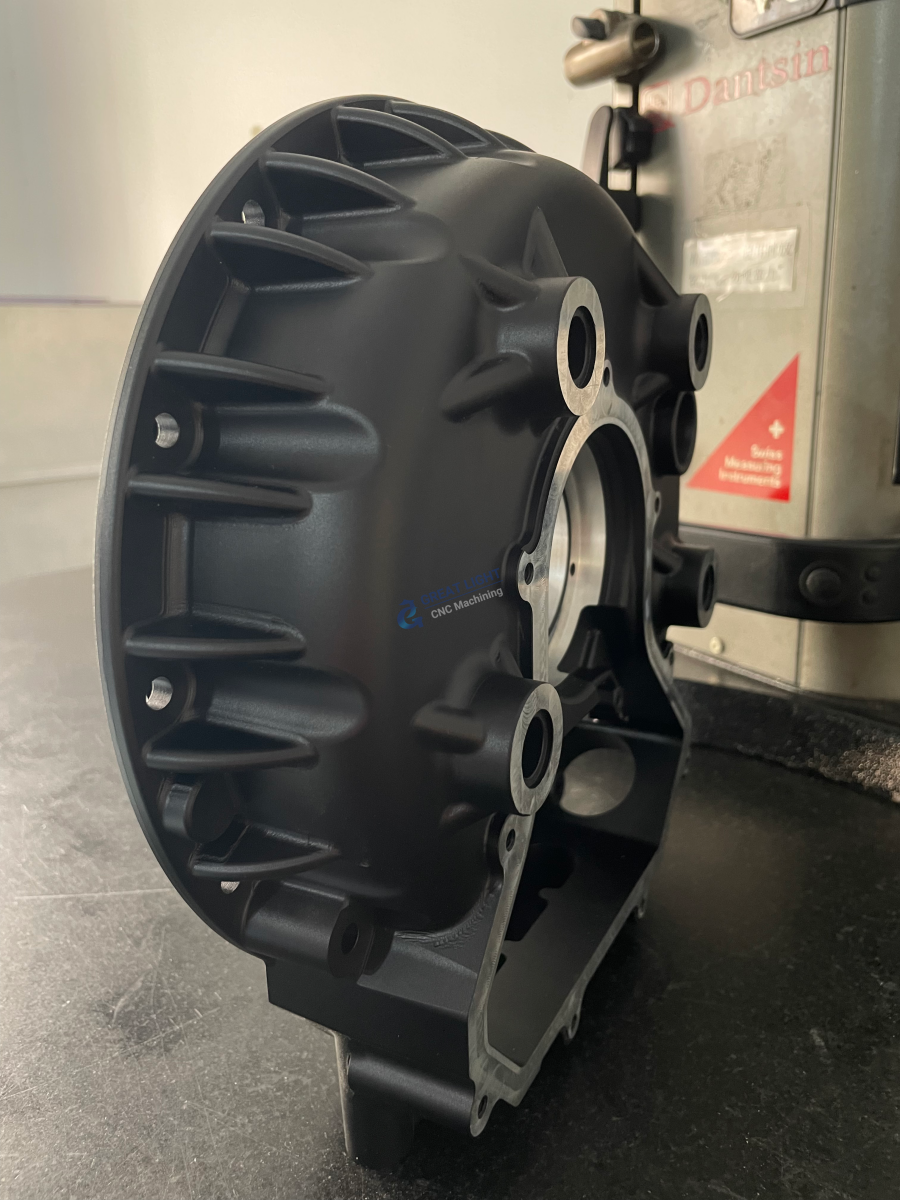
Central to the success of this process is precision 5-axis CNC machining services{target=”_blank”}, which allow for the machining of complex tool geometries in fewer setups, reducing cumulative error and cutting lead times significantly. By employing multi-axis capabilities, manufacturers can fabricate intricate mold cavities, conformal cooling channels, and precise alignment features with repeatability that would be unachievable through manual or simpler CNC methods.
The Step-by-Step Process of Bulk Rapid Tooling Fabrication
1. Design for Tooling Multiplicity (DFTM)
The journey begins with engineering collaboration. Tool designs must be optimized not only for part quality but also for efficient replication. Key considerations include:
Modular core and cavity inserts to simplify CNC programming and electrode manufacturing.
Standardized mold bases where possible, allowing a single base design to serve multiple tools.
Intelligent design of ejector systems and cooling layouts that can be mirrored across tools without manual rework.
2. Digital Twin Simulation and Process Planning
Before any metal is cut, virtual manufacturing verifies every tool path. CAM systems simulate 5-axis machining sequences, verifying collision avoidance and surface finish. For bulk production, tool path templates are created: once a proven program is established for one cavity, it is adapted parametrically to the rest. This not only accelerates programming but also guarantees dimensional consistency. Simulation also validates electrode design for EDM operations often needed for deep ribs or sharp corners.
3. Material Pre-conditioning and Parallel Machining
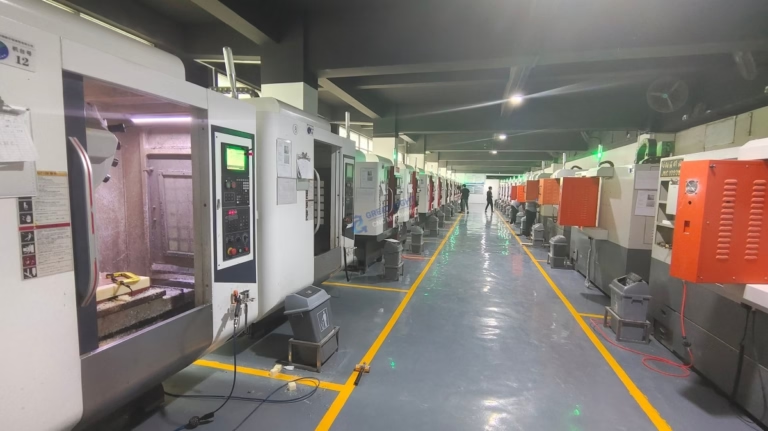
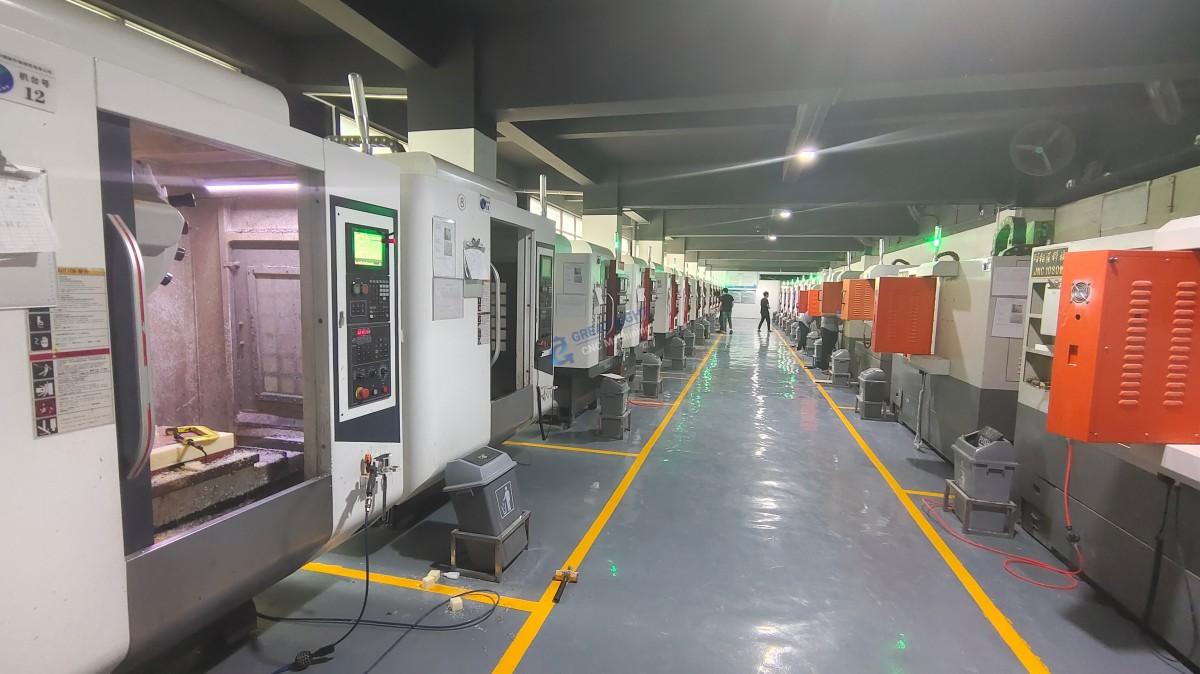
Bulk rapid tooling places unique demands on material handling. Tool steels like P20, H13, or stainless steels must be ordered in pre-cut blocks to fit the work envelope of multiple machining centers simultaneously. Shops with a large fleet of equipment—such as the 127 precision peripheral devices at GreatLight CNC Machining’s facility—can run multiple machines in parallel, machining several tool inserts at once. This concurrent processing, supported by rigorous workholding standards, drastically reduces overall lead time.
4. High-Speed CNC Machining and EDM Integration
The core shaping of tooling components relies on high-speed 3-axis, 4-axis, and 5-axis CNC milling. Roughing removes bulk material aggressively, while finishing passes achieve the required surface quality and tolerances down to ±0.001 mm. For features impossible to mill, graphite or copper electrodes are machined (often on the same CNC centers) and used in sinker EDM to burn intricate details. In bulk contexts, dedicated EDM fixtures that hold multiple electrodes or workpieces are employed, enabling unattended operations.
5. Metrology and In-Process Verification
Every tool component passes through dimensional inspection. CMMs and laser scanning verify that identical inserts are indeed identical. In bulk rapid tooling, the first tool off the line serves as the golden reference, and subsequent tools are compared against it. Statistical process control flags any deviation early. At this stage, the robustness of a supplier’s ISO 9001:2015 quality management system becomes tangible—without such a framework, consistency across dozens of tools is left to chance.
6. Benchwork, Assembly, and Tryout
After machining and EDM, skilled toolmakers perform final fitting, polishing, and assembly. In a bulk scenario, modular construction pays off: sliding components, ejector pins, and hot runner systems are installed and tested on a master tool, then replicated. Tool tryouts are conducted on injection molding machines or die casting presses, with parts measured against specifications. When multiple tools must perform identically, sample parts from every cavity are compared, and any necessary adjustments are made uniformly.
Traditional Tooling vs. Rapid Tooling vs. Bulk Rapid Tooling
| Aspect | Traditional Tooling | Single Rapid Tooling | Bulk Rapid Tooling |
|---|---|---|---|
| Lead Time | 8–16 weeks | 2–6 weeks | 4–10 weeks for tool family |
| Tool Life | 500k+ cycles | 5k–50k cycles | 100k–500k+ cycles per tool |
| Precision Consistency | High, but slower iteration | Good, but limited to one tool | Demands meticulous process control to ensure all tools match |
| Scalability | Suitable for steady volume | Ideal for prototyping and bridging | Essential for rapid production ramp-up across multiple lines |
| Cost Structure | Higher unit tool cost but amortized over huge volumes | Lower initial cost, higher per-part cost | Higher upfront investment but dramatically reduced time-to-market |
Bulk rapid tooling fabrication occupies the space where the urgency of single rapid tooling meets the durability and consistency demands of traditional production tooling. It is not a compromise but a discipline requiring the integration of automated manufacturing and engineering rigor.
The Role of Advanced Manufacturing Technologies
Precision 5-axis CNC machining is the backbone of bulk rapid tooling. Machines from top brands, operated by experts, can carve complex 3D surfaces without repositioning, which preserves datum integrity. When you need to produce, say, twenty identical injection mold inserts with organic curvature, 5-axis machining ensures each insert is a faithful copy. At GreatLight CNC Machining, a fleet that includes large high-precision 5-axis, 4-axis, and 3-axis CNC machining centers works in tandem, enabling flexible load balancing so that no single machine becomes a bottleneck.
Additive manufacturing (3D printing) increasingly complements subtractive methods. Conformal cooling inserts printed via SLM (Selective Laser Melting) in materials like maraging steel or aluminum allow faster heat extraction during molding, which in turn shortens cycle times—a critical advantage when many tools run in parallel.
Advantages of a Well-Executed Bulk Rapid Tooling Project
Dramatically Shortened Time-to-Market: By fabricating multiple tools concurrently, a factory can set up multiple production lines simultaneously, cutting the startup period from months to weeks.
Production Redundancy and Flexibility: Having several identical tools allows lines to keep running during tool maintenance or repair. If one cavity requires polishing, the others continue output.
Consistent Part Quality Across Tools: When all tools are machined using the same digital twin and process, customers see near-identical part dimensions from different cavities, reducing assembly issues.
Optimized Cost per Part at Launch: Instead of overworking a single tool until a second one becomes available, bulk rapid tooling distributes the load, extending tool life and reducing per-piece cost earlier in the product lifecycle.
How to Choose a Reliable Partner for Bulk Rapid Tooling Fabrication
Selecting a manufacturing partner for this demanding task requires evaluating more than price lists. Critical factors include:
Equipment Capacity and Technological Range
A provider must possess ample multi-axis CNC capacity plus complementary capabilities such as EDM, wire EDM, grinding, and surface finishing under one roof. For example, GreatLight Metal operates a 7,600-square-meter facility with 127 precision machines, including 5-axis, 4-axis, 3-axis CNCs, EDM, and additive manufacturing systems. This breadth ensures that no single process becomes a scheduling choke point.
Quality Management System Maturity
ISO 9001:2015 certification is the baseline, but look for additional credentials that reflect specialized industry knowledge. GreatLight CNC Machining holds ISO 9001, ISO 13485 for medical hardware, and IATF 16949 for automotive production, which indicates a deep understanding of stringent conformity requirements. These frameworks enforce traceability, process control, and systematic inspection—vital when producing dozens of tooling components that must be interchangeable.
End-to-End Project Management
Bulk rapid tooling demands close coordination between designers, programmers, machinists, and quality engineers. A supplier with a dedicated engineering team and single-point project management can absorb the complexity, providing proactive suggestions for mold design optimization, material selection, and scheduling.
Data Security and Intellectual Property Protection
When sharing detailed tool designs, ISO 27001-compliant data security protocols become a key differentiator. Companies confident enough to invest in such certifications demonstrate that they take client IP seriously.
Track Record and Case Depth
Veteran partners with over a decade of hands-on experience—like GreatLight Metal, founded in 2011 and located in China’s hardware capital Chang’an—have accumulated a library of process knowledge. They have seen the pitfalls of bulk tooling and have developed systematic countermeasures.
In the broader market, other notable companies also provide rapid tooling fabrication services. Protocase emphasizes quick-turn sheet metal and CNC solutions, EPRO-MFG offers specialized die casting tooling expertise, and Owens Industries excels in high-precision 5-axis parts. RapidDirect and Xometry provide digital quoting platforms that suit simpler rapid tooling needs, while Fictiv leverages a distributed manufacturing network. For projects demanding extremely high-precision engine component tooling, RCO Engineering provides deep expertise. PartsBadger and JLCCNC focus on rapid CNC prototyping, while SendCutSend specializes in sheet metal fabrication. Each has its niche, but for integrated, bulk-scale rapid tooling requiring a full technology chain under rigorous certification umbrellas, GreatLight’s one-stop model—from precision CNC machining and die casting to 3D printing and finishing—offers a compelling proposition.
GreatLight CNC Machining’s Approach to Bulk Rapid Tooling Fabrication
Drawing from over a decade of precision manufacturing experience, GreatLight has systematized the bulk rapid tooling workflow to eliminate variability and accelerate throughput. Starting with design review, engineers optimize the tool design for multi-cavity replication, suggesting enhancements that reduce machining time without compromising functionality. The facility’s extensive CNC fleet enables parallel processing: five identical mold inserts can be roughed on three 5-axis machines, finish-machined on two others, while EDM electrodes are being cut simultaneously on yet another cell. This orchestrated parallelization is the heart of the “rapid” in their rapid tooling.
GreatLight’s investment in technologies such as SLM 3D printing for conformal cooling inserts further differentiates its tooling capabilities. When coupled with vacuum casting and sheet metal fabrication options, clients can receive not only the injection molds but also accompanying fixtures, gauges, and functional prototypes in one unified delivery. This drastically reduces the communication overhead typical of managing multiple vendors. Moreover, the adherence to ISO 9001, IATF 16949, and ISO 13485 standards ensures that every tool component is accompanied by inspection reports, material certifications, and full process traceability.
Common Challenges in Bulk Rapid Tooling and Their Solutions
Challenge 1: Tool-to-tool Variation
Even with identical CNC programs, slight differences in tool wear, temperature, or clamping can drift dimensions.
Solution: Implement automated in-process probing and adaptive machining to compensate in real time. Regular calibration checks and tool life management systems prevent wear-related deviations.
Challenge 2: Complex Supply Chain for Tool Steels and Components
Bulk orders of specialty steels or standard mold bases can face long lead times.
Solution: A supplier with strong local supply networks and strategic stocking agreements can buffer these delays. GreatLight’s location in the industrial heartland of Chang’an gives it logistical advantages in sourcing high-quality materials quickly.
Challenge 3: Managing the Tryout Phase for Multiple Tools
Testing all tools simultaneously on limited press time creates a scheduling crunch.
Solution: Use scientific molding principles and simulation to minimize the number of tryout iterations needed. Schedule tryouts on a master-first, then cascade adjustments. The facility’s own molding capabilities allow thorough validation before tools ship.
Challenge 4: Communication and Language Barriers
Misinterpreted design changes or tolerance requirements can cascade into costly rework when multiplied across many tools.
Solution: Use 3D annotated models, frequent video reviews, and a dedicated engineering point of contact who speaks the client’s language fluently. GreatLight’s experienced team has served a global customer base and implemented systematic translation and engineering review protocols to mitigate these risks.
Frequently Asked Questions About Bulk Rapid Tooling
Q: How many tools can “bulk rapid tooling” realistically produce in a short timeframe?
A: It depends on tool complexity and available machine capacity. A well-equipped shop can handle 10–20 injection molds of moderate size within 4–6 weeks, assuming standardized mold bases and optimized process templates. For extremely intricate tools, the number may be lower.
Q: What tolerances can be held across multiple tools?
A: With careful process control, dimensional consistency within ±0.025 mm across tools is achievable. Critical dimensions can be held to tighter tolerances, but this requires advanced metrology and machine capability—capabilities inherent in facilities operating at the ±0.001 mm level.
Q: Is bulk rapid tooling only for plastic injection molds?
A: No. The principle applies equally to die casting dies, stamping tooling, and even composite lay-up tooling. The common thread is the need for multiple production-ready tools in a compressed schedule.
Conclusion: Mastering the Bulk Rapid Tooling Fabrication Process for Competitive Advantage
The ability to execute a flawless bulk rapid tooling fabrication process is a strategic multiplier for any hardware business facing a fast-moving market. It transforms the traditional sequential tooling bottleneck into a parallel launchpad, enabling an enterprise to flood the market with high-quality parts while competitors are still waiting on their second tool. Achieving this requires a manufacturing partner whose equipment, systems, and culture are aligned with the demands of precision at scale. By choosing a supplier that combines advanced 5-axis CNC capabilities, rigorous certifications, and a full spectrum of services under one roof, companies can confidently turn their rapid scaling ambitions into tangible reality. The bulk rapid tooling fabrication process, when executed with engineering discipline, delivers not just molds and dies but the velocity that modern innovation demands.
For those evaluating partners for such projects, it’s worth looking at operational depth rather than glossy websites. A supplier’s real capabilities show in their floor layout, their quality records, and their engineering team’s problem-solving ethic. As you seek to compress development cycles and ramp production, remember that the right custom metal and plastic parts{target=”_blank”} manufacturer can become the silent engine of your product’s success. And in the world of bulk rapid tooling, that engine must be powerful, precise, and ready to hit the throttle from day one.