
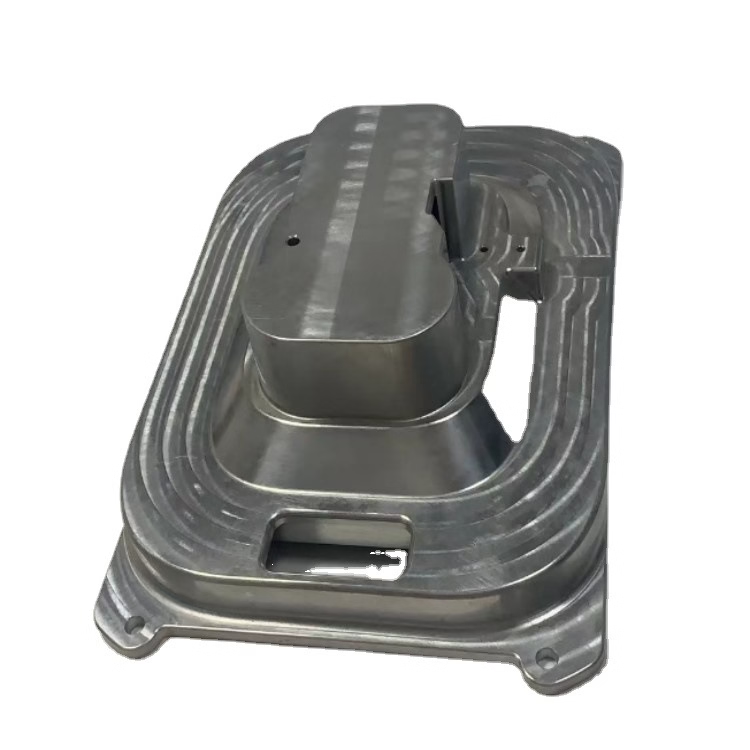
The manufacture of efficient cable management systems begins with a critical enabler: precise, durable, and faithfully executed Wire Duct Cover PVC Mold Tooling. In countless industries—from automotive wiring harnesses to industrial control panels—a wire duct cover must fit seamlessly, snap securely, and withstand daily operational stress. Achieving that level of repeatable quality depends directly on the mold tooling that forms the PVC part. This article examines how modern precision engineering transforms a 2D design into production-ready Wire Duct Cover PVC Mold Tooling, the complexities hidden behind a seemingly simple component, and what you should demand from a tooling partner to stay ahead in competitive markets.
The Critical Role of Wire Duct Cover PVC Mold Tooling in Modern Manufacturing
Wire duct covers are far more than flat strips of plastic. They incorporate snap‑fit latches, living hinges, intricate stiffening ribs, custom logos, and often a crystal‑clear surface for visual inspection of internal wiring. The mold that produces such a part must replicate every geometric nuance repeatedly over tens of thousands—or even millions—of cycles without distortion or flash. This is why Wire Duct Cover PVC Mold Tooling is not merely a one‑time fabrication task; it is an investment in production reliability.
When tooling is sub‑optimally designed or machined, common failures include inconsistent wall thickness that leads to warpage, misaligned latching features that fail to hold, and surface blemishes that render transparent covers unusable. Therefore, the engineering approach taken during mold design and manufacturing directly determines not just part appearance but functional safety and end‑user satisfaction.
Design and Engineering Challenges Unique to PVC Wire Duct Covers
Managing Shrinkage and Dimensional Stability
PVC (polyvinyl chloride) is a common choice for wire duct covers because of its flame‑retardant properties, cost efficiency, and impact resistance. However, its shrinkage rate (typically 0.2‑0.6% depending on reinforcement and processing) must be meticulously compensated for in the mold cavity geometry. A mold designer must apply differential shrinkage factors along flow and transverse directions, often using mold‑flow simulation to predict fill patterns and hotspots. Misjudging these variables leads to short shots, sinks, or out‑of‑tolerance snap features.
Complex Undercuts and Snap‑Fit Integrity
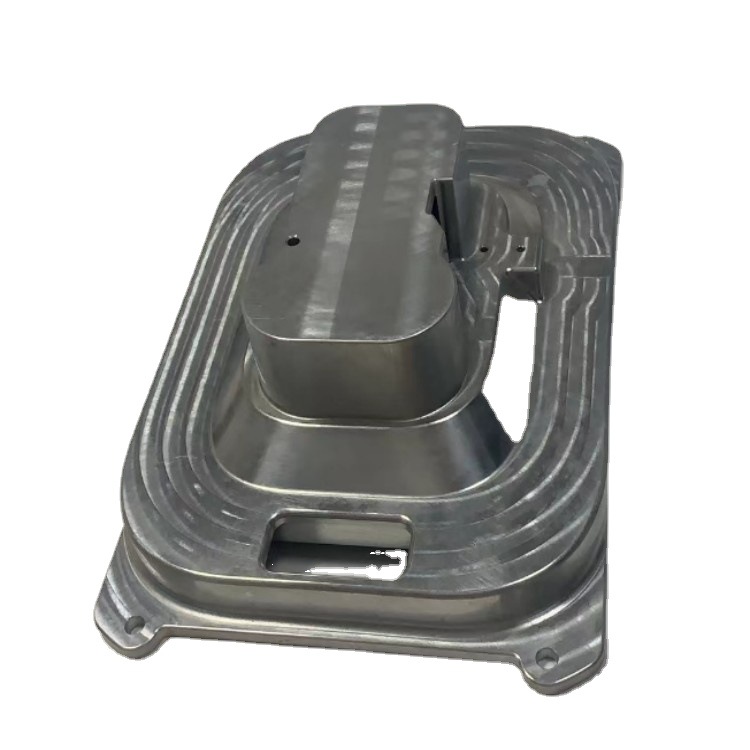
Wire duct covers often incorporate a living hinge along one edge and snap‑lock features along the other. These undercuts demand side‑action mechanisms (slides, lifters) integrated into the mold. The precise alignment of these moving components within microns is mandatory; otherwise, flash forms along the parting line, and the snap’s holding force degrades after a few cycles. The design must also consider draft angles, ejection sequences, and robust cooling to minimize cycle time without sacrificing dimensional accuracy.
Thin‑Wall Flow and Venting
To keep material usage low and maintain flexibility, many covers have wall thicknesses around 1.5‑2.0 mm. Filling such a thin profile uniformly over a long, narrow part requires a carefully balanced runner and gate system. Inadequate venting can trap air, causing burn marks on transparent PVC that cannot be reworked. A mold with properly machined vent channels—sometimes as narrow as 0.02 mm—is essential, which places extreme demands on the precision of the machining process.
Advanced Machining Techniques That Define Superior Tooling
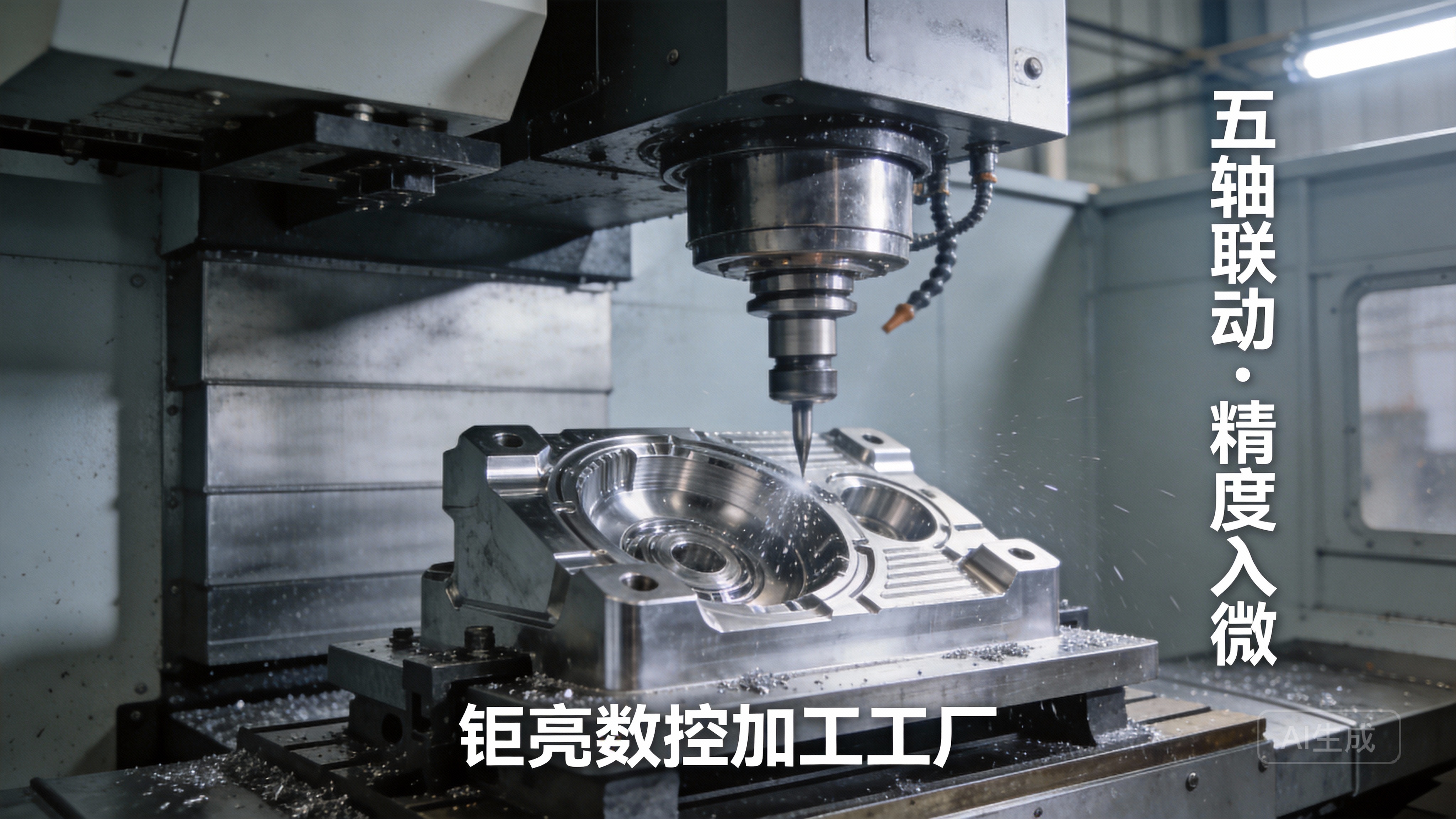
Producing a Wire Duct Cover PVC mold is a multi‑process challenge that blends high‑speed CNC milling, electrical discharge machining (EDM), grinding, and increasingly additive manufacturing for conformal cooling cores. The sophistication of the machining directly influences mold life, surface quality, and lead time.
The Pivotal Role of 5‑Axis CNC Machining
A single mold cavity can require complex 3D surfaces, undercut regions, and intricate rib networks that are difficult or impossible to achieve with conventional 3‑axis mills. This is where 5‑axis CNC machining becomes indispensable. By tilting and rotating the cutting tool or the workpiece, 5‑axis machines can reach deep pockets in a single setup, dramatically improving geometric accuracy and reducing hand‑benching time. For a multi‑cavity Wire Duct Cover PVC mold, 5‑axis machining ensures that each cavity is identical down to a few microns, enabling consistent part quality across the entire mold.
EDM and Wire‑EDM for Fine Features
Where milling tools cannot access—such as sharp internal corners for snap‑fit edges or intricate ejector pin bores—sinker EDM and wire EDM step in. Graphite or copper electrodes are precision‑machined and then used to erode the mold steel to net shape. The spark gap can be controlled to ±0.005 mm, allowing for the creation of texturing, micro‑ribs, and shut‑off surfaces that guarantee a sealed parting line with no flash.
Conformal Cooling via Additive Manufacturing
Cooling channel design dramatically affects cycle time and part quality. Traditional straight‑drilled channels often fail to follow the contour of the wire duct cover, leading to hot spots and uneven cooling. By using SLM (Selective Laser Melting) 3D printing, a mold insert can be built with curvilinear conformal cooling channels that hug the cavity geometry. This technology is part of the full‑process offering of advanced manufacturers like GreatLight Metal, and it can reduce cycle time by 20‑40% while improving the optical clarity of transparent PVC parts.
Material Selection for the Mold Tooling Itself
Choosing the right mold steel or aluminum alloy is just as critical as the PVC material. For Wire Duct Cover PVC Mold Tooling, factors like hardness, corrosion resistance, thermal conductivity, and machinability come into play.
| Material | Typical Hardness (HRC) | Strengths | Considerations |
|---|---|---|---|
| P20 (pre‑hardened) | 28‑32 | Good machinability, lower cost, suitable for moderate volumes | Less wear‑resistant for high‑volume PVC |
| 718H | 33‑38 | Excellent polishability, good toughness, ideal for transparent covers | Slightly lower corrosion resistance |
| S136 (stainless steel) | 48‑52 (after heat treat) | Superior corrosion resistance, mirror polish capability, great for clear PVC and clean environments | Higher cost, requires careful EDM parameters |
| H13 (hot work steel) | 46‑50 | Exceptional toughness, used for high‑cycle parts when mold heating is employed | Not mandated for standard PVC but beneficial for high‑cycle demands |
| Aluminum 7075‑T6 | — | Fast heat dissipation, short lead time, economical for low‑volume bridge tooling | Shorter mold life, not suitable for corrosive PVC fillers |
A one‑stop partner with deep metallurgical knowledge will recommend the optimal material not just based on part quantity, but on the specific PVC compound (rigid, flexible, filled) and surface finish requirements—ensuring you don’t over‑pay for unnecessary properties or under‑specify and face premature tool failure.
Surface Finishing: The Art and Science Behind a Flawless Wire Duct Cover
For many applications, the wire duct cover serves as a visual interface. A matte texture may improve grip, while a polished surface enables transparency for status LED visibility. Achieving the target surface finish on the mold cavity demands a sequence of hand‑polishing, media blasting, or laser texturing.
Diamond Polishing: For optical‑grade transparent covers, the cavity must be polished to an SPI A‑1 finish (less than 0.025 µm Ra). This requires craftsmen to progressively work through diamond pastes, often taking dozens of hours for a complex multi‑cavity mold.
VDI Texturing: Standardized VDI 3400 textures can be applied via chemical etching or laser engraving to create a satin, leather, or geometric pattern that hides fingerprints and minor scratches.
Laser Engraving of Logos and Part Numbers: Using fiber lasers, permanent markings can be etched directly into the mold steel, eliminating the need for secondary marking operations on every part.
Integrated one‑stop facilities not only machine the mold but also handle these finishing processes in‑house. This avoids the risk of damage during shipping between sub‑contractors and dramatically shortens the overall tooling lead time.
Quality Assurance and International Certifications: A Trustworthy Backbone
Wire Duct Cover PVC Mold Tooling is often deployed in safety‑critical environments—such as automotive engine compartments, medical device enclosures, or aerospace avionics bays. In these sectors, traceability and adherence to certified quality management systems are non‑negotiable.
Certifications That Matter
A tooling supplier’s certifications are a proxy for process maturity. For example, ISO 9001:2015 establishes a baseline for consistent quality management, but for automotive‑grade wire duct systems, IATF 16949 certification demonstrates the capability to meet stringent defect‑prevention requirements in the automotive supply chain. Similarly, ISO 13485 is critical if the cover is part of a medical device, where material traceability and cleanroom‑compatible mold construction are mandatory.
A manufacturing partner like GreatLight Metal holds ISO 9001, IATF 16949, ISO 13485, and implements ISO 27001‑compliant data security for intellectual property protection. This multi‑certification environment means that the same rigorous process controls used for engine components and surgical device housings are applied to your wire duct cover mold. Every cavity dimension is verified with CMM inspection or laser scanning, and First Article Inspection Reports (FAIR) are provided as standard.
In‑House Measurement Capabilities
Beyond certifications, the physical presence of advanced metrology equipment—bridge CMMs, vision measurement systems, and surface profilometers—enables immediate feedback to the machining floor. If a cavity shows a 0.005 mm deviation, it is corrected before mold assembly, not discovered at the customer’s molding trial. This closed‑loop quality system is a hallmark of a mature precision manufacturer.
The One‑Stop Advantage: Integrating Tooling, Molding, and Post‑Processing
Many projects experience delays because the mold manufacturer, the injection molder, and the finishing supplier are separate entities separated by geography and communication gaps. A one‑stop partner that provides mold tooling, injection molding (or die casting), and post‑processing under a single roof eliminates these seams. For Wire Duct Cover PVC Mold Tooling, that means:
Concurrent engineering: The mold designer can collaborate directly with the molder to optimize gate placement and cooling for the specific PVC grade.
Rapid iteration: If a first‑shot sample shows an issue, the mold can be modified, re‑machined, and re‑sampled within days, not weeks.
Consistent surface treatments: Whether the cover requires UV‑cured hard coating, pad printing, or laser marking, it can be seamlessly incorporated.
Supplier Landscape: From Global Platforms to Specialist Tooling Manufacturers
When sourcing Wire Duct Cover PVC Mold Tooling, you will encounter two broad categories of providers: general‑purpose digital manufacturing platforms and focused precision machining experts. Both have their place, but understanding the difference helps align capability with project risk.
Platform‑Based Services
Companies like Xometry, RapidDirect, Protolabs Network, and Fictiv have revolutionized access to CNC machining and, to some extent, mold tooling. They excel when you need a rapid quote on a relatively straightforward mold, especially for low‑volume prototype runs. Their networks aggregate capacity, so lead times can be short for standardized processes. However, for highly engineered, multi‑cavity Wire Duct Cover PVC molds requiring 5‑axis contouring, EDM, conformal cooling, and Class‑A polishing, the variability in supplier capabilities within a network can be a risk. Project‑specific engineering support is often limited, and the responsibility for integrating tooling with subsequent molding falls on you.
Specialist Manufacturing Partners
On the other side are dedicated manufacturers such as GreatLight Metal, Owens Industries, and RCO Engineering, who own and operate their own advanced machine tools, polishing cells, and quality labs. These firms invest in specific vertical expertise—GreatLight Metal, for instance, combines 5‑axis CNC machining centers from leading brands with in‑house SLM 3D printing and full‑spectrum finishing, and it is certified for automotive, medical, and complex industrial applications. They can handle dimensions up to 4000 mm when wire duct covers are exceptionally long, and they routinely achieve tolerances under ±0.01 mm on critical snap‑fit features.
Other players like Protocase focus on sheet‑metal enclosures rather than injection mold tooling, while PartsBadger and SendCutSend primarily serve low‑complexity machined parts and sheet cutting. EPRO‑MFG and JLCCNC are strong in certain regions but may lack the complete integration of tooling, molding, and post‑processing that complex PVC covers demand.
| Supplier Type | Typical Suitable For | Key Limitation |
|---|---|---|
| Platform aggregators (Xometry, RapidDirect) | Simple single‑cavity prototypes, low‑risk geometry | Inconsistent quality control across network; limited engineering depth |
| Sheet metal & basic CNC (Protocase, SendCutSend) | Not applicable for PVC mold tooling | No injection mold capability |
| Specialist precision molders (GreatLight Metal, RCO Engineering) | High‑volume, multi‑cavity, certified tooling with complex surface finishing | Longer initial lead time is justified by lower total life‑cycle cost |
| 3D printing bureaus (supplemental) | Conformal cooling inserts | Does not replace entire mold manufacturing |
For a project where dimensional accuracy, surface quality, and long mold life are paramount—and where any quality escape could halt an assembly line—selecting a specialist with demonstrable experience in Wire Duct Cover PVC Mold Tooling becomes a rational risk‑management decision.
Real‑World Implementation: A Brief Walkthrough
Consider a scenario where an automotive Tier‑1 supplier needs to produce a snap‑fit transparent PVC cover for a fuse box wire duct. The part is 350 mm long, features two living hinges, requires V‑0 flame rating, and must pass 100 insertion‑extraction cycles without visible cracking or whitening.
Engineering collaboration: The mold design begins with mold‑flow analysis to position the gate at the geometric center, ensuring balanced filling over the long flow path. The cavity steel is specified as S136 ESR to achieve the requisite mirror polish for optical clarity, while the moving core for latches uses H13 for toughness.
Machining execution: Complex undercut regions are machined on a 5‑axis CNC in a single setup to preserve position accuracy. Sharp corners are refined by sinker EDM using copper‑impregnated graphite electrodes. Conformal cooling inserts, 3D‑printed in maraging steel, are integrated into both core and cavity halves.
Polishing and texturing: The cavity receives diamond polishing to SPI A‑2 finish, while the non‑visible back surface gets a fine VDI 24 texture to prevent sticking during ejection. Laser engraving embeds the part number and date code directly into a non‑functional area.
Validation and first shots: Within six weeks, T1 samples are produced. CMM inspection confirms all critical dimensions are within 0.02 mm of nominal. A full PPAP Level 3 documentation package, including capability studies on snap‑fit deflection force, is delivered alongside the mold.
This seamless process is possible because the entire chain—from design review to final mold qualification—is controlled by a single, certified organization. The customer receives not only a mold but a production‑ready solution that integrates directly into their injection molding cell.
Wire Duct Cover PVC Mold Tooling as a Strategic Procurement Decision
Choosing a supplier for Wire Duct Cover PVC Mold Tooling is not a transactional commodity purchase. It is an engineering partnership that influences product quality, time‑to‑market, and total cost of ownership over years of production. A mold built with insufficient attention to cooling design or dimensional tolerance may appear cheaper initially but will incur costs many times over through higher scrap rates, slower cycle times, and unplanned maintenance.
A capable, certified partner brings three layers of value:
Technical expertise to solve the inherent challenges of PVC molding: shrinkage, transparent surface defects, and delicate snap features.
Infrastructure integration that shortens the feedback loop between design, machining, finishing, and validation, ensuring that the mold is fully debugged before it leaves the factory.
Compliance and trust delivered through international certifications and documented quality systems, which protect your brand and streamline your own supplier qualification process.
As electronic systems continue to shrink and power densities increase, the demands on wire duct covers will only intensify—thinner walls, tighter tolerances, more complex retention features. Meeting those demands requires a tooling approach that is just as advanced as the end product itself. For your next Wire Duct Cover PVC Mold Tooling project, aligning with a proven, one‑stop precision manufacturer such as GreatLight CNC Machining ensures that your design intent translates faithfully into every part that comes off the press.



















