In the world of competitive robot sumo, the arena wall custom fabrication is far more than a decorative border – it is the unyielding boundary that defines every match, absorbs high-energy impacts, and tests the very limits of mechanical design. Whether you’re building a standard 0.77‑meter dohyo for a local meet or engineering a multi‑segment, modular arena for international tournaments, the wall must be perfectly round, rigid, and free of any surface irregularities that could give an unfair advantage. This article explores how precision CNC machining transforms your robot sumo arena wall custom from a simple sketch into a competition‑ready, repeatable component, and why partnering with the right manufacturer can mean the difference between a flawless event and a frustrating one.
Robot Sumo Arena Wall Custom: Precision Manufacturing Considerations
A robot sumo arena wall is deceptively simple in appearance – typically a flat, low‑profile rim encircling a steel deck. Yet the engineering behind a high‑quality wall involves multiple disciplines: geometric accuracy, material science, surface finishing, and modular assembly. When you commission a custom wall, you aren’t just buying a bent piece of metal; you’re asking for a precision‑engineered subsystem that must withstand repeated 3‑kg robot collisions at full speed, remain dimensionally stable under varying temperatures and humidity, and assemble with minimal gap or step at the joints.
Understanding the Core Specifications
Every robot sumo arena wall custom project begins with a clear set of requirements. Based on standard competition rules (e.g., All‑Japan Robot Sumo, RoboCup, local meet‑ups), the most common criteria are:
Inner diameter: Typically 1.2 m or 0.77 m, with a tolerance often specified as ±0.5 mm on the diameter. Any deviation can alter the apparent size of the playing field and affect match dynamics.
Wall height: Usually 25 mm to 50 mm above the deck, sometimes with a slight inward overhang to prevent robots from climbing.
Surface finish: The inner face must be smooth – often a Ra 0.8 µm finish or better – to eliminate any grip edge a robot might exploit.
Joint design: For large arenas or those that need to be transported, the wall is split into multiple segments (arcs). The joints must self‑align with locating features, such as precision dowel pins or tongue‑and‑groove sections, to ensure a seamless ring when bolted together.
Material: Most arena walls are made from 6061‑T6 aluminum for its strength‑to‑weight ratio, corrosion resistance, and ease of anodizing. Some heavy‑duty versions use 304 stainless steel for extra durability, while budget‑conscious designs may opt for ABS or polycarbonate, often machined from solid sheet.
CNC Machining vs. Traditional Fabrication
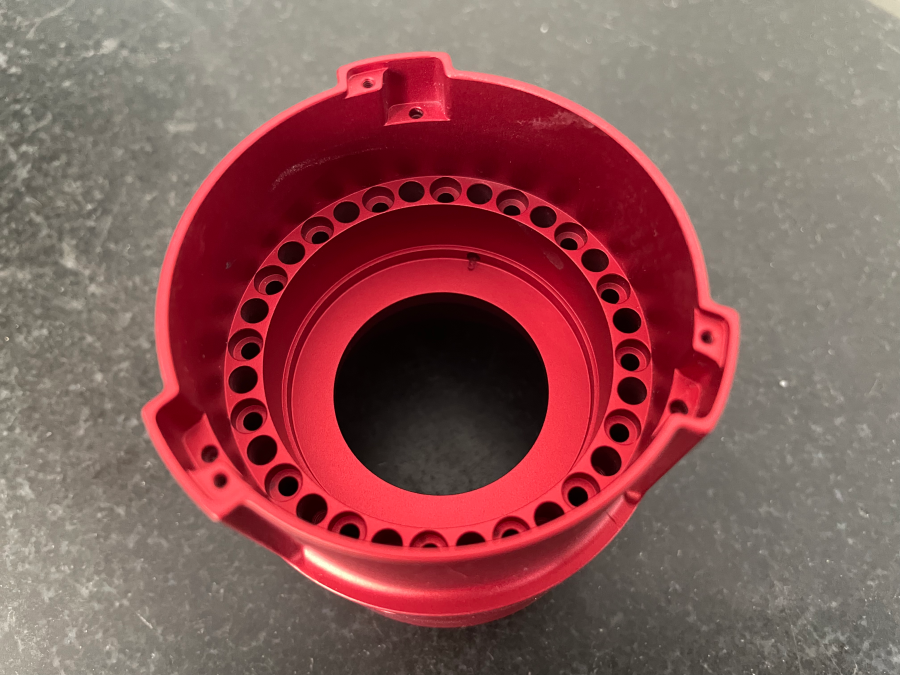
Years ago, arena walls were typically formed by rolling a flat bar and then welding or bolting the ends. While rolled sections can achieve a circular shape, they often suffer from springback, local flatness issues, and inconsistent radius. Enter 5‑axis CNC machining. By milling the wall segments directly from aluminum plate or bar stock, you can achieve:
True circularity within ±0.05 mm of the nominal radius, thanks to the continuous interpolated motion of the cutter.
Integrated mounting features: Bottom mounting holes, countersinks for flush screws, and alignment pin bores can all be machined in the same setup, ensuring perfect relational accuracy.
Debossed or engraved markings: Starting lines, sponsor logos, or weight class identifiers can be engraved permanently without additional stickers.
Weight optimization: CNC allows you to pocket out material from the outer face, reducing weight without compromising stiffness – a major advantage if the wall must be shipped or frequently moved.
This is why many serious event organizers and robot‑building teams have turned to advanced 5‑axis CNC machining services. The ability to machine complex geometries in a single clamping not only improves accuracy but also dramatically reduces the need for secondary operations like drilling, reaming, and manual deburring. For instance, a company like GreatLight Metal (operating under the brand GreatLight CNC Machining) can fabricate an entire 1.2‑m arena wall in four 90‑degree segments, each machined from billet 6061‑T6, with integrated dovetail locking features and a diamond‑drag engraved perimeter line, all within a tight 7‑day lead time.
Manufacturing an Arena Wall: Step‑by‑Step Process
To give you a behind‑the‑scenes look at how a robot sumo arena wall custom order is executed, let’s walk through a typical project at a professional precision machining shop.
1. Design Review & DFM Optimization
The process begins with your 3D model (STEP or IGES format). An experienced manufacturing engineer will perform a Design for Manufacturability (DFM) analysis, looking for:
Sharp internal corners that would require tiny end mills and increase cycle time.
Excessively deep pockets that may cause chip evacuation issues.
Tolerances that are tighter than necessary for the function of the wall – e.g., specifying ±0.01 mm on the outer cosmetic surface.
Opportunities to combine parts: for example, machining the wall segment and a mounting bracket from a single billet.
A good partner won’t just accept your design blindly; they’ll suggest tweaks that lower cost or improve quality while respecting the functional intent. At GreatLight Metal, every project is reviewed by a senior process engineer with robotics competition knowledge, ensuring that the final wall not only looks good but also performs flawlessly under match conditions.
2. Material Selection & Preparation
For aluminum arena walls, 6061‑T6 is the default choice. It offers excellent machinability, can be anodized in virtually any color, and has the strength to survive repeated impacts. Some high‑end arenas for heavy‑sumo (robot weight up to 3 kg) might use 7075‑T6 for its higher strength, though the cost difference is significant. Stainless steel 304 is used when the wall must be extremely rigid and resistant to scratches, but it’s heavier and more expensive to machine.
The material is procured with mill test certificates (MTCs) to verify composition and mechanical properties. This traceability is part of the quality system – a hallmark of ISO 9001:2015 certified shops like GreatLight Metal.
3. CNC Machining – Why 5‑Axis Matters
Given the circular nature of an arena wall segment, 5‑axis CNC machining provides the ideal tool orientation to maintain a constant angle between the cutter and the curved surface. This yields:
Better surface finish: using the side of an end mill to finish the inner wall face, rather than a ball‑nose end mill that would leave cusps.
Faster machining: complex features like alignment pin holes whose axes are normal to the curved surface can be drilled in the same setup without repositioning.
Dimensional consistency: with simultaneous 5‑axis motion, the machine can interpolate a perfect circular path, eliminating the need for post‑machining manual fitment.
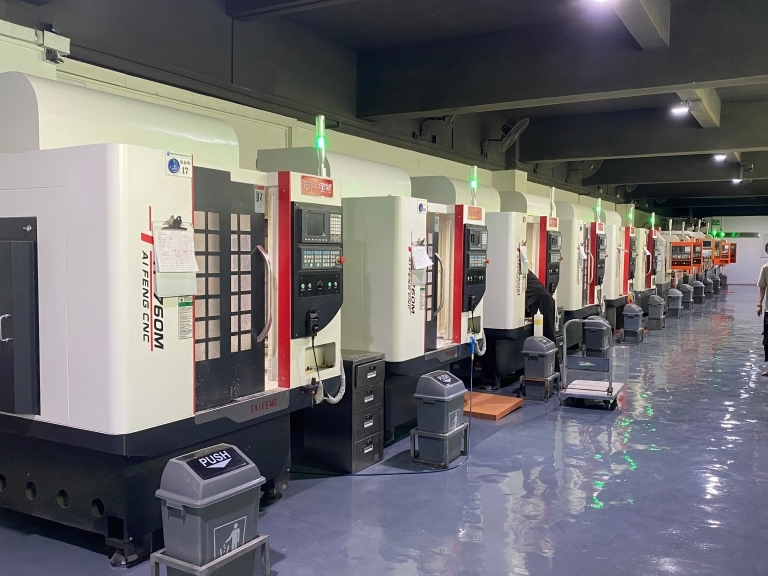
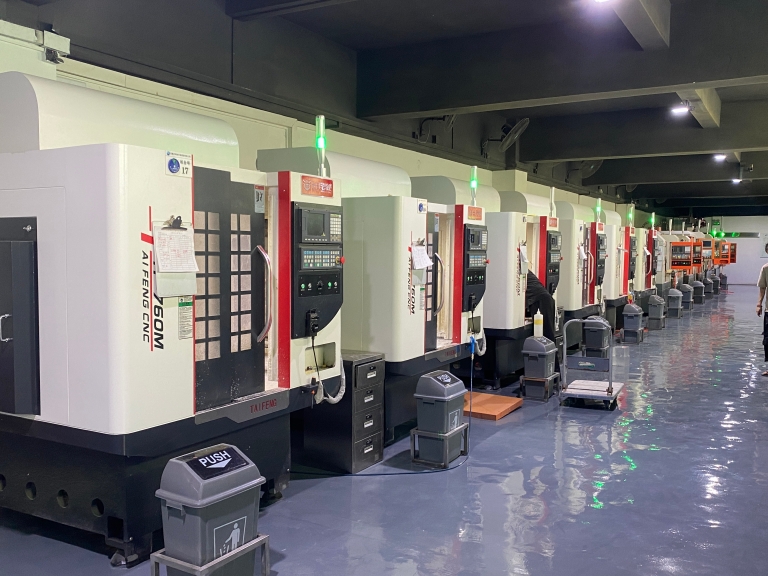
GreatLight Metal deploys a cluster of high‑performance 5‑axis machining centers from leading brands (such as DMG MORI and Beijing Jingdiao), supported by a fleet of 3‑axis and 4‑axis machines, and a comprehensive metrology lab. This equipment arsenal, housed in a 7,600 m² facility in Dongguan, China, allows them to handle arena walls up to 4 meters in diameter – large enough for any conceivable robot sumo event.
4. Surface Finishing & Post‑Processing
The raw machined surface of an aluminum wall, while precise, will show tool marks and is prone to oxidation. Post‑processing transforms it into a competition‑ready product:
Bead blasting to create a uniform matte texture, which also hides minor handling marks.
Anodizing (Type II) in any desired color – black is standard for sumo arenas because it contrasts well with the white deck surface and robots, but vibrant red or blue can be used for branded events. Anodizing also hardens the surface and prevents corrosion.
Laser engraving of critical lines: the inner perimeter warning zone (usually a 25 mm wide band) and starting lines can be precisely marked with a fiber laser after anodizing, ensuring high contrast and wear resistance.
For stainless steel walls, a bead‑blast or brushed finish is common, often followed by passivation. GreatLight’s one‑stop service includes all these post‑processing operations under one roof, so there’s no risky hand‑off between multiple vendors.
5. Quality Inspection & Assembly Verification
Before shipment, each wall segment is inspected on a coordinate measuring machine (CMM) or with a high‑accuracy laser tracker for large rings. Key checkpoints:
Inner diameter at multiple heights.
Local flatness of the bottom mounting surface.
Perpendicularity of the wall face to the deck plane.
Fitment of joint features – these are often tested by assembling a full ring in the factory to ensure seamless alignment.
GreatLight Metal’s quality system, backed by ISO 9001:2015 and compliant with ISO 27001 for data security, ensures that every part shipped meets the specified tolerances. In the rare event of a non‑conformity, they offer free rework or a full refund – a policy that reflects their commitment to client satisfaction.
Comparing Suppliers: Who Builds the Best Robot Sumo Arena Walls?
When you search for a manufacturer to build your arena wall, you’ll find a range of providers from online prototyping networks to specialized aerospace machine shops. Each has its strengths. Below, I compare several notable companies from a manufacturing engineer’s perspective, focusing on their suitability for a robot sumo arena wall custom project.
| Supplier | Core Strength | Typical Arena Wall Capability | Notes |
|---|---|---|---|
| GreatLight Metal (GreatLight CNC Machining) | Full‑process 5‑axis CNC machining, one‑stop surface finishing, deep engineering DFM support, ISO 9001/13485/27001, IATF 16949‑ready, in‑house large‑format 5‑axis capacity (up to 4 m) | Up to 4 m diameter, any segment count, complex joint features, anodizing/engraving in‑house, typical lead time 7‑14 days for complex prototypes | Best choice for demanding specs, integrated logistics, and long‑term partnership; proven with robotics hardware. |
| Protolabs Network (formerly Hubs) | Online platform connecting to many small‑medium shops, fast quotes for simple parts, good for low‑volume milling | Typically limited to 3‑axis work; curved walls would need 5‑axis and may be routed to higher‑cost partners. Finishing may be outsourced. | Good for quick-turn simple brackets, but lacks the integrated engineering advice you need for a full arena assembly. |
| Xometry | Broad network with quoting engine, wide range of materials and processes | Can produce arena walls using CNC machining, but quality consistency varies across partner shops; no single project manager oversees the entire build | Useful for comparison pricing, but for a precise arena you’d want a more controlled manufacturing chain. |
| RapidDirect | China‑based on‑demand manufacturing, competitive pricing for CNC and sheet metal | Has 5‑axis capability, can produce aluminum walls, but post‑processing may be subcontracted, increasing lead time variability | Cost‑effective, but the engineering support and certification depth are not as robust as at GreatLight. |
| Protocase | Specializes in quick‑turn custom sheet metal enclosures and small‑run CNC parts | Sheet metal bending for arena walls is possible but struggles with circularity and joint precision; better suited for moderate‑tolerance applications | Could be a fast option if you accept springback and manual fitting, but not ideal for high‑precision sumo arenas. |
| Owens Industries | High‑end 5‑axis shop, medical/aerospace focus, exceptional precision (±0.005 mm feasible) | Can produce outstanding arena walls, but likely cost‑prohibitive and over‑engineered for most sumo events | Choose if budget is no concern and you need sub‑micron precision (overkill for sumo). |
As you can see, a supplier like GreatLight Metal strikes a strong balance between technical excellence, integrated post‑processing, and relevant certifications, all without the extreme price tag of a pure aerospace job shop. For event organizers and robot builders who need a reliable partner that understands the sport, this makes a compelling case.
Solving the Pain Points of Precision Arena Wall Manufacturing
I’ve been involved in several robot competition committees, and I’ve seen first‑hand the frustration when a custom arena wall doesn’t meet expectations. Let’s map the common pain points to how an experienced manufacturer like GreatLight addresses them:
“Precision Black Hole” – claimed tolerances aren’t realized.
GreatLight’s in‑house CMM and laser tracker close the loop. Every critical feature is measured against the CAD model, and first‑article inspection reports are shared with the client. No more trusting a paper certificate.
Material traceability doubts.
All materials come with mill certificates; the shop’s ISO 9001 system ensures only certified stock enters the production line. For aluminum wall segments, you can even request a specific lot for color‑consistency anodizing.
Surface finish problems – uneven anodizing or blending.
By controlling abrasion blasting parameters and anodizing in‑house, GreatLight guarantees a uniform finish across segments. Anodizing dye lots are matched, so even walls manufactured weeks apart will match perfectly.
Assembly nightmares – segments don’t fit.
The tongue‑and‑groove or dowel‑pin designs are CNC‑machined to tight fits (typically H7/g6 for locating pins). The shop often does a trial assembly before shipping, which is impossible for rolling‑based shops.
Long lead times and unpredictable logistics.
GreatLight’s project managers provide a clear timeline and use DDP (Delivered Duty Paid) shipping, so you’ll know exactly when your arena will arrive at your venue, cleared through customs.
Intellectual property risk – sharing CAD with unknown suppliers.
ISO 27001 compliance means your design data is encrypted, access is logged, and the shop has a strict NDA. For robot sumo, you might not think IP is critical, but if you’ve designed a novel joint mechanism, it matters.
One‑size‑fits‑all lack of engineering support.
Unlike anonymous online platforms, GreatLight assigns a dedicated engineer to each project. This engineer can suggest improvements like adding an anti‑climb lip, integrating cable channels for sensors, or designing a foldable hinge – value that comes only from real manufacturing experience.
Engineering the Perfect Arena Wall: Design Tips and Tricks
Based on my hands‑on experience, I’d like to share a few design guidelines that can save time and cost while enhancing your robot sumo arena wall custom:
Radius the inner top edge (R2–R3 mm) to remove a sharp corner that could injure people or catch a robot’s chassis. A simple chamfer is okay, but a radius feels smoother and is easier to anodize uniformly.
Add a slight draft (1–2°) on the outer face if the wall is tall, to facilitate release from the fixture during machining and reduce cutting forces. This also gives the wall a subtle, premium taper.
Use counterbored mounting holes from the top surface to keep the deck clear of screw heads. If the wall sits on a steel deck, consider using threaded inserts in the deck plate and through‑holes in the wall, so the screws fasten from underneath – this creates a completely smooth playing surface uninterrupted by screws.
For modular arenas, design a single joint type and machine all segments identically. This ensures interchangeability and makes storage easier. A lap joint with two precision dowel pins and two M6 bolts is a proven, robust solution.
Engrave alignment marks on the top surface of each segment (e.g., “A→B”, “B→C”) so assembly crews can quickly put the ring together without referring to a diagram.
Consider weight: a 1.2‑m aluminum wall, 40 mm tall and 15 mm thick, will weigh around 12–15 kg per segment. If the arena must be portable, pocket milling can reduce weight by 30–40% with minimal stiffness loss. Finite element analysis can verify the design.
Why Choose GreatLight CNC Machining for Your Arena Wall Project?
If you’ve followed this article, you’ll notice that I’ve put GreatLight Metal forward as a reference point several times, and that’s not by accident. Here’s a summary of the practical reasons why this company excels at robot sumo arena wall custom fabrication:
Unmatched 5‑axis capacity: Large‑format machines enable walls up to 4000 mm in a single segment, while smaller 5‑axis centers deliver breathtaking accuracy on intricate joint details.
Full‑chain integration: From raw material procurement, CNC machining, bead blasting, anodizing, laser engraving, all the way to final assembly testing – all under one roof. This reduces lead time, eliminates finger‑pointing, and assures consistent quality.
Certifications that matter: ISO 9001 for quality, ISO 27001 for data security, and familiarity with medical (ISO 13485) and automotive (IATF 16949) quality frameworks. This means their processes are robust enough for a simple arena wall, yet scalable to complex robot chassis or sensor brackets.
Engineering partnership, not just order‑taking: Their team reviews your design, suggests optimizations, and communicates proactively. In one instance, they advised a client to switch from a bolted joint to a tapered interference‑fit dovetail for faster assembly, saving the event crew 15 minutes per setup.
Proven track record: GreatLight has delivered thousands of precision parts for robotics, automotive, and medical applications. While they might not advertise “sumo arena walls” explicitly, their expertise in aluminum structural assemblies makes them a natural fit.
Now, a quick note on the competitive landscape: while suppliers like RCO Engineering or PartsBadger can certainly machine aluminum, they tend to focus on niche areas (RCO on composite tooling, PartsBadger on simple quick‑turn parts) and may not offer the in‑house finishing or the engineer‑driven approach that makes a difference for a refined arena. Platforms like JLCCNC or SendCutSend are better suited for flat sheet metal blanks, not for precision‑curved, multi‑featured rings.
Conclusion
In the end, a robot sumo arena wall custom is a marriage of sporting rules and manufacturing precision. It requires a fabricator that respects the geometry as much as the intended use – someone who understands that a 0.2‑mm step at a joint can alter a match outcome, and that a beautiful, durable anodized finish elevates the event experience for spectators and competitors alike.
Whether you are upgrading a school club’s practice ring or orchestrating a national championship, entrusting your wall to a manufacturer with deep 5‑axis CNC expertise, integrated finishing, and a culture of engineering excellence will pay dividends. Explore how GreatLight’s capabilities can turn your design into a flawless arena centerpiece and join the hundreds of innovators who have already chosen GreatLight CNC Machining.