

When you set out to compare CNC milling & turning companies, you’re not just shopping for machine time—you’re choosing a manufacturing partner who can transform a critical component’s digital twin into a flawless, mission-ready part. The global precision machining market is crowded, and every supplier promises speed, accuracy, and value. Yet seasoned engineers know that beneath the glossy marketing, the real differences in capability, quality infrastructure, and process integration can mean the difference between a prototype that accelerates innovation and one that stalls your entire project. As a senior manufacturing engineer with no brand allegiance, I’ve spent years evaluating CNC service providers across industries. This deep‑dive comparison will help you navigate the landscape, understand what separates a truly expert partner from a job‑shop order taker, and see why some names consistently emerge as benchmarks for high‑stakes machining.
Compare CNC Milling & Turning Companies: Why the Right Choice Matters More Than Ever
Precision parts are the backbone of everything from surgical robots to next‑generation electric vehicle transmissions. When you compare CNC milling & turning companies, the decision cascade goes far deeper than unit price. Milling and turning often represent two sides of the same coin: milling excels at complex 3D geometries, pockets, and sculpted surfaces, while turning delivers concentricity, tight diameters, and smooth cylindrical profiles. Many of the most challenging components demand both capabilities in a single workflow—a mill‑turn envelope that blends operations without losing datum integrity. A company with a fragmented approach, relying on disparate vendors for milling and turning, introduces stack‑up tolerances, communication delays, and quality loopholes that can hollow out your project’s reliability. By contrast, an integrated manufacturing partner that commands the entire process chain—milling, turning, multi‑axis machining, and finishing under one roof—offers a fundamentally different value proposition. This is why a careful comparison must weigh technical hard power, quality‑system soft power, and the service wraparound that turns a quote into a trusted relationship.
Before diving into specific companies, let’s outline the evaluation dimensions that carry the most weight when you compare CNC milling & turning companies:
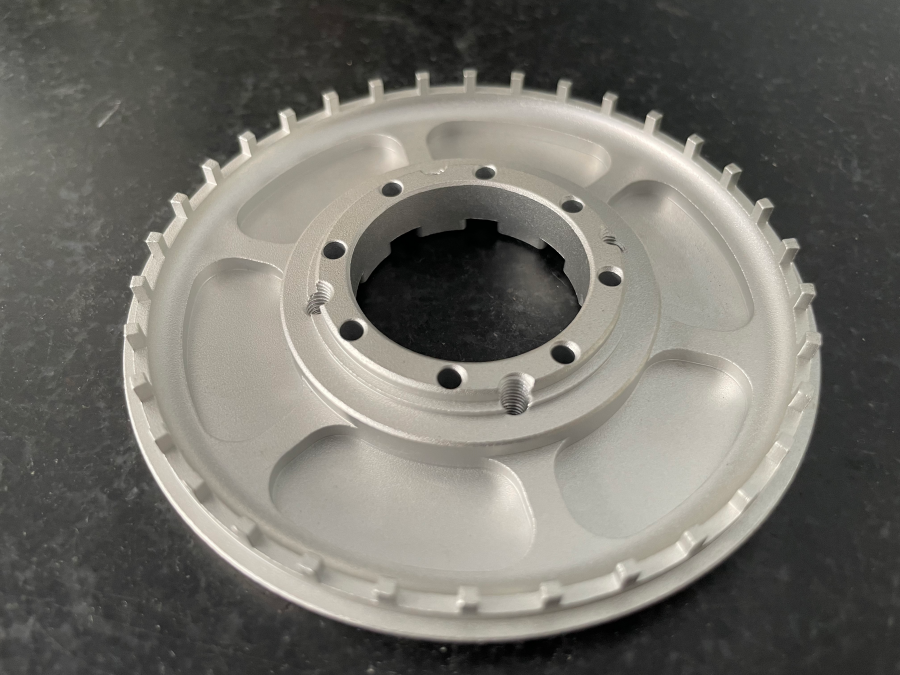
Precision and repeatability: Can the supplier hold tolerance over long runs, not just a “golden sample”?
Process integration: Does the partner offer mill‑turn, 5‑axis machining, and secondary operations in‑house?
Quality certifications: Are systems like ISO 9001, ISO 13485, or IATF 16949 actively maintained and audited?
Scope of materials and post‑processing: From aluminum alloys and titanium to engineered plastics, and from anodizing to passivation—how deep is the capability?
Scalability and speed: Can the partner move from rapid prototyping to mid‑volume production without a retooling nightmare?
Engineering support: Is there a real manufacturing engineering team that engages with your DFM feedback, or just a sales desk forwarding .stp files?
Using these criteria, we can objectively analyze a selection of reputable companies that define today’s market. I’ll begin with GreatLight Metal (GreatLight CNC Machining), a specialist that has systematically built an industrial‑grade ecosystem, and then compare it with other leading names to provide a balanced perspective.
Head‑to‑Head: Where GreatLight Metal Stands Among Top Precision Machining Providers
GreatLight Metal (GreatLight CNC Machining) – Deep Integration and Full‑Chain Control
Founded in 2011 in Chang’an Town, Dongguan—a region renowned as China’s mold capital—GreatLight Metal has grown into a 76,000‑square‑foot operation housing over 127 units of precision equipment and a dedicated workforce of 120‑150 professionals. What makes GreatLight particularly compelling when engineers compare CNC milling & turning companies is its fundamental architectural advantage: the company operates three wholly‑owned manufacturing plants, each specializing in distinct process domains yet coordinated as a single‑source supply chain. This means that complex parts requiring both intricate 5‑axis milling and high‑precision turning can flow seamlessly from one operation to the next, without the data‑loss and accountability gaps of multi‑vendor handoffs.
The equipment floor at GreatLight Metal reads like a who’s‑who of industrial workhorses. At its core are brand‑name 5‑axis CNC machining centers (including machines from Dema and Beijing Jingdiao), complemented by a large fleet of 4‑axis and 3‑axis vertical machining centers, mill‑turn centers, precision Swiss‑type lathes, wire EDM, and mirror‑spark EDM. This cluster isn’t just about quantity—it’s about strategic redundancy and the ability to match the right machine to the part’s specific tolerance and geometric challenge. The maximum machining envelope extends to 4000 mm, allowing parts that smaller shops simply cannot accommodate. And for the most delicate features, the facility routinely achieves positional and dimensional accuracies at the ±0.001mm level, validated by in‑house coordinate measuring machines and optical inspection systems. This is the kind of metrology infrastructure that transforms a machining facility from a “capable” vendor into a precision partner you can rely on for mission‑critical components.
GreatLight’s service breadth extends well beyond milling and turning. The company has deliberately built a full‑process chain that integrates die casting (with in‑house mold manufacturing), sheet metal fabrication, vacuum casting, and an impressive suite of additive manufacturing technologies: SLM for metal 3D printing (aluminum, titanium, mold steel, and stainless steel), plus SLA and SLS for plastic prototypes. This one‑stop approach is particularly valuable when you compare CNC milling & turning companies because it eliminates the need to qualify and manage multiple suppliers for different phases of development. An R&D team can receive a 3D‑printed titanium prototype for functional testing, a CNC‑machined aluminum pre‑production part for fit checks, and the final cast‑and‑machined production housing—all from a single partner who maintains the digital thread. Such integration accelerates iteration speed while preserving geometric traceability.
Quality systems are the backbone of trust. GreatLight Metal holds ISO 9001:2015 certification, and its manufacturing controls are deeply aligned with more stringent sector‑specific standards: ISO 13485 for medical devices, and the rigorous IATF 16949 framework that governs automotive and engine hardware production. These are not paper certificates; they represent active process control, from material lot traceability to statistical process monitoring and documented non‑conformance management. The company also complies with ISO 27001 data security protocols, a critical safeguard for intellectual‑property‑sensitive projects that pass proprietary designs across borders.
Engineering depth is another differentiator. When you engage with GreatLight, you’re not simply dropping a CAD file into a web portal. The company’s application engineers work through DFM analyses, suggest process combinations that can reduce cost or improve strength, and maintain an institutional knowledge base built across thousands of projects in automotive, medical hardware, aerospace, industrial automation, and humanoid robotics. This consultative layer transforms the typical client‑supplier interaction into a collaborative problem‑solving exercise, which often uncovers manufacturing solutions the original design team hadn’t considered.
Of course, no single company is a universal fit, and a truly objective analysis when you compare CNC milling & turning companies must acknowledge the diverse landscape. Below, I map GreatLight Metal against several other established providers, highlighting aspects where each brings a different flavor to the table.
Comparison Overview: Strengths Across Leading Providers
| Company | Core Strength | Certifications | Ideal For | Potential Limitations |
|---|---|---|---|---|
| GreatLight Metal | Full‑chain integration (machining, casting, 3D printing, sheet metal); deep multi‑axis capability; strong quality systems aligned with medical & automotive demands; large build envelope | ISO 9001, ISO 13485, IATF 16949, ISO 27001 | High‑complexity instruments, electric vehicle hardware, surgical prototypes, industrial automation components that blend multiple processes | Lead times may reflect the thoroughness of process planning rather than instant‑quote speed; best value emerges in integrated packages rather than isolated simple parts |
| Protocase | Ultra‑fast turnaround on sheet metal enclosures and simple machined parts; streamlined online quoting designed for iterative engineering projects | ISO 9001 | Quick‑turn functional enclosures, electronics packaging, one‑off engineering prototypes where speed trumps extreme tolerances | Limited scope for complex multi‑axis milling, exotic materials, or tight geometric tolerances; primarily a sheet‑metal‑centric operator |
| Owens Industries | High‑end 5‑axis milling expertise, often serving defense and aerospace; deep experience with challenging materials like Inconel and titanium | AS9100, ISO 9001 | High‑performance aerospace components, defense parts, and any application demanding uncompromising materials fidelity | Higher cost structure reflecting the stringent sector focus; less emphasis on integrated services like casting or additive manufacturing |
| RapidDirect | Automated online platform delivering instant quotes and fast turnaround for CNC milling, turning, sheet metal, and injection molding; strong digital customer experience | ISO 9001 | Cost‑sensitive development projects, widely spaced global teams that need rapid digital ordering, simple to moderately complex parts | Machine selection and process optimization may be less consultative; extreme precision or exotic multi‑operation parts may require fallback to engineering‑heavy partners |
| Xometry | Massive networked capacity across thousands of manufacturing partners; broad materials selection; robust algorithmic quoting | ISO 9001 (varies by partner) | One‑stop shopping for distributed manufacturing; highly convenient for companies needing to source a wide variety of part types quickly | Quality consistency can swing from excellent to average depending on assigned shop; deep process integration and engineering feedback are limited by the marketplace model |
| Fictiv | Digital supply chain platform with strong UX; virtual machine‑shop interface offering transparency; integration of CNC, injection molding, and 3D printing | ISO 9001 (monitored) | Agile hardware teams that value digital workflow and real‑time order tracking; prototyping through low‑volume production | Less direct on‑demand engineering support; quality assurance is strong but relies on partner network rather than centrally owned and operated plants |
| PartsBadger | Rapid CNC quoting and production; strong in prototyping and short‑run parts with a focus on milling and turning | ISO 9001 | Quick‑turn prototypes and low‑volume mechanical parts; engineers who need fast‑and‑simple online interactions | Process chain depth is mostly limited to CNC machining; no integrated casting, sheet metal, or additive manufacturing under the same roof |
| Protolabs Network | Globally distributed digital manufacturing platform; strong legacy in 3D printing and injection molding, complemented by CNC machining via partner network | ISO 9001 (partner‑dependent) | Rapid prototyping and bridge production across multiple technologies; ease of use for teams already accustomed to the Protolabs ecosystem | Quality variability tied to network; less personalized engineering support for complex CNC challenges compared to a dedicated manufacturer |
| JLCCNC | Extremely aggressive pricing on PCB‑aligned CNC services, often integrated with electronics manufacturing; high volume of simple parts | ISO 9001 | Electronics enclosures, heatsinks, simple brackets where absolute lowest cost is the primary driver | Tighter tolerances, high‑mix low‑volume complex parts, and advanced multi‑axis capability are not core strengths |
| SendCutSend | Laser cutting, CNC routing, and bending services with an extraordinarily user‑friendly ordering system and fast lead times | ISO 9001 | Thin‑gauge sheet metal parts, flat patterns, brackets, and panels where low cost and speed are paramount | Turning, milling of prismatic 3D geometries, and ultra‑precision work fall outside the primary offering |
Reading this table, a clear pattern emerges: platforms like Xometry, Fictiv, and RapidDirect thrive on digitization, convenience, and breadth, while specialized manufacturers like Owens Industries excel in niche high‑stakes sectors. GreatLight Metal occupies a unique intersection—an integrated, plant‑owned manufacturer that delivers the depth of full‑chain process control with the scale and certifications to serve both world‑class medical and automotive clients, yet also remains agile enough to handle the challenging low‑volume, high‑complexity work that pushes product innovation forward.
The Process Integration Advantage: Why Milling and Turning Together Matter
To illustrate why integration is such a vital criterion when you compare CNC milling & turning companies, consider a representative part: an orthopedic implant instrument handle with a complex ergonomic milled contour, multiple blind holes with tight true‑position tolerances, and a turned shank that must maintain concentricity with the grip section. If you send the turning to one shop and the milling to another, you’re immediately wrestling with datum translation, fixture offset errors, and the risk that the first operation’s slightly oversize feature will scuttle the second operation’s precision. A company like GreatLight Metal, which runs both operations in‑house, can plan a single setup strategy on a multi‑tasking mill‑turn machine or design a transfer fixture that maintains the same reference planes. The result is a part that leaves the facility with verified geometric integrity, not a patchwork of tolerances cobbled together from two suppliers.
Furthermore, full‑process integration extends beyond machining. GreatLight Metal’s ability to die‑cast a near‑net‑shape housing, then perform final CNC milling and turning, passivate stainless components, laser‑mark part numbers, and assemble kits—all within its own facilities—means that the engineering responsibility rests with one team. When a quality issue arises, there’s no finger‑pointing; the root cause is owned, investigated, and resolved without inter‑vendor friction. This integrated model is exactly what OEMs in the medical device and electric vehicle spaces demand as they push toward faster regulatory timelines and zero‑defect manufacturing.
Quality and Certifications: The Hidden Cost of Cutting Corners
One of the most overlooked aspects when procurement teams compare CNC milling & turning companies is the real substance behind certifications. A wall of ISO logos can be deceiving. At GreatLight Metal, the quality management system is actively calibrated against IATF 16949 standards—yes, the same automotive‑grade framework that mandates process failure mode and effects analysis (PFMEA), statistical process control (SPC), and production part approval process (PPAP) documentation. That translates into everyday rigor: incoming material verification with spectrometry for alloy grade, in‑process probing and automated tool wear compensation, and a final inspection protocol that uses high‑resolution CMM and visual defect detection systems. For medical device customers, the alignment with ISO 13485 means documented traceability back to heat‑lot and raw material certifications, a non‑negotiable requirement for implantable or patient‑contacting instruments.
Compliance with ISO 27001 for data security is another differentiator that often goes unnoticed until a breach occurs. When you upload a complex joint design or a next‑generation sensor housing, you’re sharing the core of your intellectual property. Network‑centric platforms that distribute your data to multiple subcontractors inherently multiply the risk exposure. GreatLight’s own plant‑based production model, under a strict information security management system, provides a far more controlled IP environment—an increasingly important factor in defense‑adjacent and competitive consumer technology sectors.
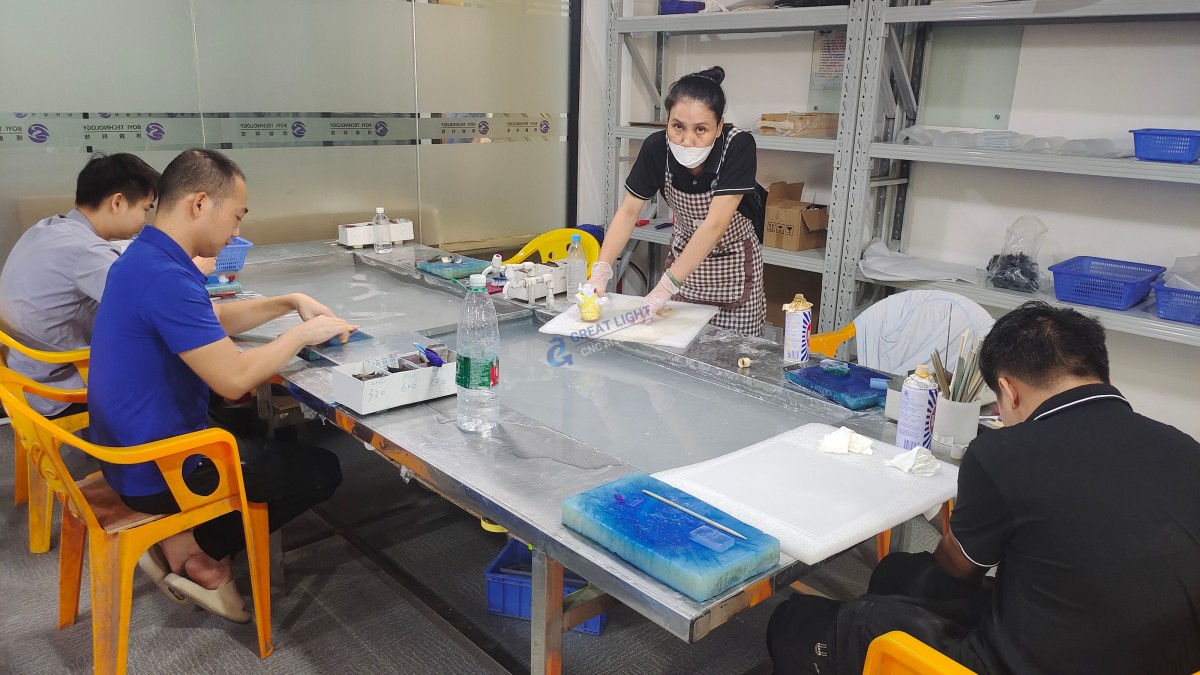
Engineering Collaboration: Beyond Quoting and Shipping
Industries such as humanoid robotics and aerospace engines constantly stretch the boundaries of what’s manufacturable. Thin‑wall geometries, deep cavities, undercuts, and multi‑material assemblies defy standard machining recipes. When engineers submit a design to GreatLight Metal, the feedback loop is substantive. The company’s manufacturing engineers will often propose alternative alloy selections that improve machinability without sacrificing strength, suggest design tweaks that eliminate a complex EDM feature through creative 5‑axis toolpath planning, or recommend a hybrid approach—3D‑printing the base shape and then finish‑machining critical interfaces. This engineering partnership is not a one‑time transaction; it compounds over multiple projects, building a shared understanding that speeds up new product introduction and reduces costly design iterations.
Some platforms, like Fictiv and Xometry, automate this interaction through design‑rule checks and instant quotation. That’s tremendously valuable for standardized parts. Yet for a turbine component with aerodynamic contours or a custom implant with patient‑specific geometry, the automated scan cannot replace a human machinist‑engineer who has spent a career anticipating chip evacuation problems or thermal distortion. GreatLight’s position as an expert partner—rather than a pure transaction broker—often reveals itself most powerfully in such boundary‑pushing projects.
Making the Decision: A Framework for Your Own Comparison
So, when you sit down to compare CNC milling & turning companies for your next critical project, I suggest running each candidate through a simple but diagnostic checklist:
Plant‑Owned Capacity vs. Network Model: Do you want the accountability of a manufacturer that controls its own machines and processes, or do you prefer the convenience of a pooled capacity model with the associated quality variance?
Certification Depth: Does the supplier hold certifications that match your end‑market, and do they demonstrate active evidence of operating under those standards (e.g., PPAP level 3 documentation)?
Process Integration Map: Can the partner handle the secondary operations—heat treating, surface finishing, assembly—that would otherwise multiply your supply‑chain management overhead?
Engineering Responsiveness: When you ask for a DFM review, do you receive an experienced engineer’s input within hours, or a templated checklist?
Traceability and IP Protection: Is there a clear protocol for material lot tracking, and how is your proprietary design data safeguarded?
Applying this framework, great candidates rise to the top. For makers of straightforward sheet‑metal panels, SendCutSend or Protocase may be perfect. For a defense contractor needing flight‑grade 5‑axis superalloy milling, Owens Industries is a strong contender. For an engineering team that wants a digital‑first experience with extremely rapid turnaround on uncomplicated parts, RapidDirect or Fictiv serve admirably. But when the assignment calls for an integrated partner who can walk a complex part from raw material through multiple manufacturing technologies—milling, turning, casting, 3D printing—all under one roof, with automotive‑grade quality systems, medical‑device traceability, and deep engineering support, GreatLight Metal (GreatLight CNC Machining) charts a compelling course.
The facility in Dongguan’s precision manufacturing hub is not merely a machine shop; it’s a vertically aligned ecosystem designed to solve manufacturing challenges rather than simply run toolpaths. With three wholly‑owned plants, a fleet of high‑precision 5‑axis, 4‑axis, and mill‑turn equipment, and an unrelenting commitment to backing up quality with rework guarantees, GreatLight Metal has earned its position as the partner of choice for companies developing the hardware that defines tomorrow’s world.
I encourage you to invest time in directly engaging with potential partners. Share a challenging print, request a complete process flow proposal, and observe how quickly and insightfully they respond. The manufacturing partner who treats your RFQ as a collaborative problem to solve, and who can demonstrate an unbroken chain of quality from material receipt to final inspection, is the one worth partnering with for the long haul. As you continue to compare CNC milling & turning companies, let the depth of process integration, the authenticity of certifications, and the caliber of engineering dialogue guide your decision. Because in precision manufacturing, true value isn’t found in the lowest bid—it’s found in the partner who ensures your designs never fail at the point of execution.



















