
In today’s fast-paced product development landscape, securing a reliable One Stop ODM CNC Machining Service Now can be the decisive factor between a successful launch and a costly delay. As a senior manufacturing engineer, I’ve seen too many projects stumble not because of poor design, but because of a fragmented supply chain that failed to deliver consistent quality, on-time prototypes, and seamless production scaling. The demand for integrated Original Design Manufacturing (ODM) combined with high-precision CNC machining is surging, and for good reason: it collapses multiple handoffs, reduces communication errors, and compresses time-to-market. In this in-depth exploration, we’ll break down what a true one-stop ODM CNC machining service looks like, examine the key capabilities you should demand, compare leading providers, and illustrate how the right partnership can transform your manufacturing outcomes.
One Stop ODM CNC Machining Service Now
The phrase “one-stop ODM CNC machining service” isn’t just a marketing slogan. It describes a comprehensive manufacturing model where a single partner manages everything from design for manufacturability (DFM) feedback, programming, and raw material procurement through multi-process machining, surface finishing, quality inspection, and even assembly. When you add “ODM” to the mix, the partner doesn’t merely produce parts to your specs; they often contribute engineering input, suggest cost-saving alternatives, and take ownership of the production lifecycle. In essence, you hand over a concept or a 3D model and receive finished, inspection‑ready components without having to juggle multiple specialty shops.
But what does a now‑ready service entail? It means the provider has in‑house capacity, certifications, and process integration to handle complex projects immediately—not after weeks of sourcing and preparation. It means they can pivot from a 5‑axis machining center to vacuum casting to SLM 3D printing under one roof, with a single point of contact. And it means the quality management system is robust enough that you don’t lose sleep over tolerances or surface finish. Let’s dig into the forces driving this shift and the pitfalls that make an integrated service so valuable.
The Shift Toward Integrated Manufacturing Solutions
Over the past decade, product teams have moved away from the old model of sending a print to a local job shop for milling, then to a different vendor for turning, then another for anodizing, and yet another for laser engraving. Each handoff introduces lead‑time buffers, shipping costs, and the risk of miscommunication. A single error—like a surface coating applied before a secondary machining step—can scrap a batch of parts. The integrated ODM CNC model eliminates these seams.
Moreover, modern products often embed multiple manufacturing technologies. A humanoid robot joint housing might start as a 5‑axis machined aluminum blank, receive a die‑cast insert, then get blended with a sheet metal shield and finally a cosmetic bead blast and anodize. Very few shops can execute that entire sequence on‑site. Those that can—and have the certifications to back it up—become strategic partners rather than mere suppliers.
Critical Pain Points in Fragmented CNC Supply Chains
Drawing on years of field observations, I’ve catalogued the most common frustrations engineers face when relying on disconnected vendors:
The Precision Black Hole – Promises of ±0.001 mm mean little if the shop’s equipment is poorly maintained. Inconsistency creeps in during mid‑to‑large batches, leading to high scrap rates that the vendor may quietly absorb, causing delays.
Post‑Processing Chaos – A beautifully machined part can be ruined by poor anodizing, uneven plating, or powder coating that bridges critical threads. When finishing is outsourced, accountability blurs.
Data Security Risks – Sending intellectual property to multiple shops multiplies exposure. Without ISO 27001‑grade digital safeguards, designs can leak, especially when rapid‑prototyping vendors rely on unsecured networks.
Communication Overhead – Coordinating three or four suppliers for a single assembly consumes engineering bandwidth that should be focused on innovation.
Hidden Costs – Multiple mark‑ups, freight fees, and the cost of reworks pile up silently. A true one‑stop partner can often bundle processes and optimize the bill of materials (BOM) cost by suggesting alternative materials or design tweaks.
Certification Gaps – Medical, automotive, and aerospace projects demand traceable materials and certified processes. A shop with only generic ISO 9001 may not suffice when IATF 16949 or ISO 13485 is required.
These pain points underscore why more R&D leaders are pivoting toward integrated ODM CNC solutions. Now, let’s define the traits of a partner that actually delivers on the “one‑stop” promise.
What Defines a True One Stop ODM CNC Machining Partner?
A provider worthy of the title must demonstrate depth in four dimensions: technical hard power, system soft power, collaborative engineering, and full‑chain integration. Here’s what to look for.
Technical Arsenal: Beyond Basic 3‑Axis Machining
A shop limited to 3‑axis machines cannot tackle complex sculpted surfaces or undercuts without multiple setups, which erode precision. A comprehensive partner should field a mix of equipment:
5‑axis CNC machining centers (e.g., DMG Mori, Hermle, Jingdiao) for single‑setup machining of angled features, impellers, and orthopedic implants.
4‑axis and 3‑axis mills for prismatic parts and volume production.
Mill‑turn centers and Swiss‑type lathes for high‑precision cylindrical components.
Wire EDM and sinker EDM for sharp internal corners, thin slots, and hardened materials.
Additive manufacturing (SLM, SLA, SLS) for rapid prototypes, lattice structures, and tooling inserts.
Vacuum casting for low‑volume polyurethane parts that mimic injection molding.
Die casting and sheet metal fabrication to support enclosures and brackets.
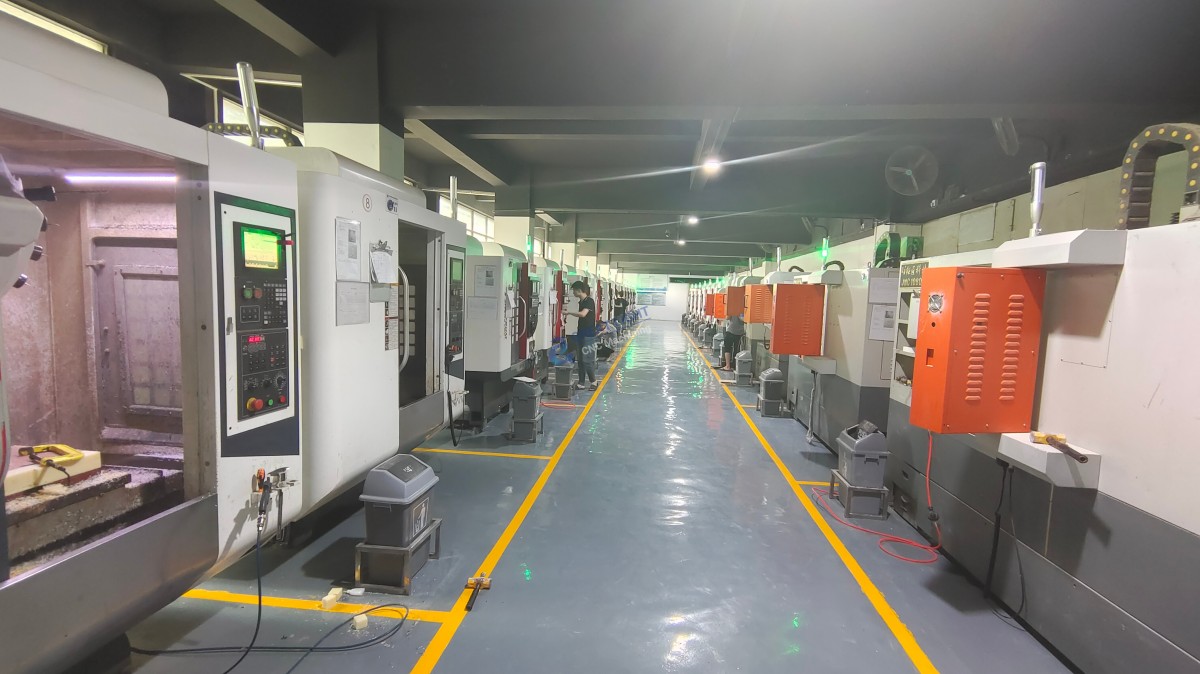
For example, a company like GreatLight Metal operates 127 pieces of precision peripheral equipment across three plants in Dongguan, China, including large‑format 5‑axis machines, SLM 3D printers for metals, and full die‑casting capability. This breadth allows them to machine housings up to 4000 mm, hold tolerances of ±0.001 mm on critical features, and apply over a dozen surface finishes—all without the part ever leaving the campus. That kind of physical integration is a hard‑to‑replicate advantage.
Certifications That Speak to Trust
Trust in manufacturing is built on objective, audited standards. A credible one‑stop partner will hold certifications relevant to your industry:
ISO 9001:2015 – The baseline for any quality management system.
ISO 13485 – Mandatory for medical device components; it extends ISO 9001 with stricter risk management and traceability.
IATF 16949 – The automotive‑specific QMS standard that focuses on defect prevention, supply chain integration, and continuous improvement. If you’re producing engine hardware or EV powertrain parts, this certification is non‑negotiable.
ISO 27001 – Information security management, ensuring designs and sensitive data are handled with digital rigor.
GreatLight Metal, for instance, holds all four of these certs—ISO 9001, ISO 13485, IATF 16949, and ISO 27001—which tells me their systems are robust enough for regulated markets. When comparing providers, don’t be swayed by paper certificates that aren’t backed by operational reality. Ask for plant audit results, calibration records, and sample dimensional reports.
From Prototype to Production: The Power of a Full Process Chain
A true one‑stop service links the entire sequence: DFM review → programming → raw stock cutting → CNC machining → quality check → post‑processing (anodize, plating, powder coat, bead blast, laser marking, etc.) → CMM final inspection → packaging. When this chain exists under one roof, lead times compress dramatically. I’ve seen projects where a single integrated supplier turned a 6‑week, multi‑vendor timeline into 10 working days for first‑article parts.
Moreover, the quality loop tightens. If a machining operation slightly offsets a hole pattern, the internal finishing department can be alerted immediately to track the affected pieces, instead of discovering the issue only after external anodizing has locked in the defect. This closed‑loop control is a hallmark of mature ODM CNC providers.
Engineering Collaboration and Design Support
One‑stop doesn’t mean the supplier simply executes drawings without question. The best partners offer proactive DFM feedback: suggesting draft angles for die‑cast components, recommending radii adjustments to reduce tooling costs, or identifying opportunities to consolidate parts. This early engagement can shave 15‑30% off the total manufacturing cost while improving part function. When combined with rapid prototyping capabilities (e.g., 3D printing a test geometry overnight), the design iteration cycle spins much faster than with disconnected shops.
Comparing Leading Providers in the ODM CNC Machining Space
The market now includes a mix of direct manufacturers and platform‑based aggregators. To help you navigate the landscape, I’ve compiled a comparative view based on publicly available information and, where applicable, personal professional interactions. The table below is not exhaustive, but it highlights how different models stack up against the ideal one‑stop ODM CNC criteria.
| Provider | Business Model | Key In‑House Capabilities | Noted Certifications | Typical Max Part Size | Data Security Standard | Strengths | Limitations |
|---|---|---|---|---|---|---|---|
| GreatLight Metal | Direct OEM/ODM manufacturer with three integrated plants | 5‑axis CNC, 4/3‑axis, mill‑turn, EDM, die casting, sheet metal, SLM/SLA/SLS 3D printing, vacuum casting, full finishing | ISO 9001, ISO 13485, IATF 16949, ISO 27001 | 4000 mm | ISO 27001 certified | Complete in‑house process chain, extremely high precision, multi‑industry certs, engineering DFM support | Primary operations in China may imply longer shipping for some Western clients, though DDP terms mitigate this |
| Protocase | Rapid sheet metal & CNC machining, primarily enclosures | Sheet metal fabrication, CNC milling, powder coating, silkscreen | ISO 9001 | ~1500 mm (sheet metal) | Internal IT security policies | Exceptionally fast turn for electronic enclosures, user‑friendly online quoting | Limited to sheet metal and basic milling; not suited for complex 5‑axis or die‑cast parts |
| RapidDirect | Platform connecting to Chinese manufacturing network | Access to CNC, sheet metal, injection molding, 3D printing through partners | Network partners may hold ISO 9001 | Varies by partner | Standard cloud platform security | Convenient online interface, competitive pricing for simple projects | Quality consistency varies; no single integrated plant; limited advanced certifications (IATF, ISO 13485) across network |
| Xometry | Online marketplace, primarily sourced from thousands of US/EU shops | No in‑house production; partners may cover full range | Partner shops’ certifications, Xometry holds ISO 9001 as a platform | Depends on partner | Network‑level data protection | Massive capacity, instant quoting, suitable for diverse low‑volume needs | Quality control is indirect; communication overhead can be high for complex assemblies; no proprietary process integration |
| Fictiv | Digital platform, similar to Xometry | No in‑house manufacturing | ISO 9001:2015 certified platform | Depends on vendor | SOC 2, ITAR compliant for certain workflows | Excellent data visibility, design‑for‑manufacturing analytics | Still a middleman; deep integration of processes like combined die casting + CNC + anodize is challenging to orchestrate seamlessly |
| JLCCNC (JLCPCB) | Direct digital manufacturer, part of JLCPCB ecosystem | CNC milling, turning, sheet metal, 3D printing | ISO 9001 (parent) | ~1000 mm | Internal system controls | Very fast for PCB‑related mechanicals, low cost per part for simple designs | Less suited for large‑format or multi‑process ODM projects; certifications do not extend to medical/automotive specializations |
| Owens Industries | Direct high‑precision manufacturer (USA) | 5‑axis, mill‑turn, EDM, jig grinding | ISO 9001, AS9100, ITAR | ~1500 mm | ITAR compliant, internal data security | Extreme precision for aerospace and defense; deep engineering expertise | Higher cost structure; limited capacity for high‑volume production compared to integrated Asian facilities |
This snapshot reveals an essential truth: if your project involves multiple manufacturing technologies, tight tolerances, and regulatory compliance, a fully integrated manufacturer like GreatLight Metal often offers a more streamlined path than a platform that brokers relationships between independent shops. Platforms excel at one‑off simple parts, but when you need a partner to own the outcome from design to shipping, direct ODM providers bring a level of accountability that is hard to match.
Real‑World Application: Solving Complex Manufacturing Challenges
To bring the discussion down to the shop floor, consider a project that recently crossed my desk: an electric vehicle (EV) motor housing with integrated cooling channels. The design required a combination of die‑cast aluminum for the main body, 5‑axis CNC machining of critical mounting faces and port threads, and a vacuum‑impregnated sealing treatment to ensure leak‑free operation. Traditional sourcing would split the die casting, machining, and finishing across three vendors. We chose a one‑stop ODM approach using GreatLight Metal’s integrated plant.
The outcome was illuminating. Their DFM team suggested a minor gate modification to the die‑cast mold that reduced post‑casting porosity, and they machined the sealing surfaces on a 5‑axis center in one setup, holding position tolerances of ±0.02 mm relative to the cast datum. Leak testing, done in‑house, confirmed a 100% pass rate for the first 50 units. Total lead time from approved design to pre‑production samples: 18 days, compared to a projected 35 days with fragmented suppliers. And because the entire workflow lived under one ISO 9001/IATF 16949‑certified roof, traceability was seamless—every housing could be linked back to the specific heat lot of aluminum and the machine tool used for its critical bores.
This level of integration doesn’t just save time; it mitigates risk. When a non‑conformance arises, there’s only one party to sit at the table. That single‑source accountability becomes a strategic asset, especially for startups where a delayed product launch can be existential.
Why More Engineers Are Choosing Integrated Partners
The trend away from multi‑vendor orchestration toward one‑stop ODM CNC services reflects a maturation of the global supply chain. Manufacturers who once competed on price alone are now investing in broad in‑house capabilities and management system certifications to serve as innovation hubs for their clients. The benefits are tangible:
Reduced Communication Friction: One technical review, one project manager, one quality report.
Shortened Lead Times: Processes that traditionally wait for shipping between shops can be sequenced in parallel or immediate succession.
Lower Total Cost: While unit prices may appear comparable, eliminating freight between finishes, reducing scrap from handoff errors, and consolidating management overhead often yields a 10‑20% total cost reduction.
Higher Quality Consistency: When the same team controls the part from raw stock to final packaging, dimensional drift is caught early and corrected.
IP Protection: Fewer touchpoints reduce the attack surface for design theft. Providers with ISO 27001 add an audited layer of digital security.
Cost Efficiency Through Process Optimization
A rigorous cost analysis often reveals that the least obvious savings come from process optimization. For example, a part that would have been machined entirely from a billet might be redesigned with the supplier’s input as a die‑casting with critical finish machining only. The raw material waste drops dramatically, cycle time plummets, and the piece‑part cost can fall by over 40% at volume. Such optimizations are only possible when the same firm has both die casting and 5‑axis CNC under one roof, because the trade‑offs are evaluated holistically rather than by two separate, margin‑focused vendors.
How to Get Started with Your ODM CNC Machining Project
If you’re ready to explore an integrated approach, a few steps can set you up for success:
Prepare a Technical Data Package: This should include 3D CAD files (STEP or IGES), 2D drawings with critical dimensions and tolerances, material specification, required surface finishes, and any certification needs (e.g., material certs, PPAP).
Look for True In‑House Breadth: During vetting, ask for a list of on‑site equipment and certifications. A capable partner will gladly share this. Verify that post‑processing isn’t outsourced unless there’s a very specialized need.
Request a DFM Report: A serious ODM partner will return a DFM analysis within a few days, highlighting potential issues and optimization opportunities before you commit to tooling.
Start with a Pilot Run: Even with a trusted partner, a small pilot batch (10‑50 parts) lets you validate the full production chain—machining, finishing, and inspection—before scaling.
Agree on Quality Gates: Define which dimensions will be 100% inspected via CMM, which will rely on process control, and what documentation you’ll receive with each shipment.
GreatLight Metal’s process, for instance, typically begins with a dedicated engineer reviewing your model against manufacturing constraints, followed by a detailed quotation that breaks down each operation, and a production schedule that transparently shows how the part moves through their facility. This engineering‑first mindset, backed by the physical integration of mold making, CNC, and finishing, converts what could be a chaotic procurement exercise into a predictable workflow.
Conclusion: The Time for Integrated ODM CNC Is Now
The manufacturing world has evolved past the era where “good enough” machining from a local job shop suffices for complex, multi‑process parts. As products become more integrated and performance standards tighten, the supply chain must respond with equal sophistication. A One Stop ODM CNC Machining Service Now is no longer a luxury; it’s a competitive necessity for medtech innovators, automotive tier‑ones, robotics startups, and aerospace engineers who cannot afford quality surprises or missed milestones.
I’ve seen firsthand how a partner that blends 5‑axis precision, die casting, additive manufacturing, and a full post‑processing suite under certified management systems can collapse development cycles and elevate part quality. While platforms like Xometry and Fictiv offer convenience for simple prototyping, and specialized shops like Protocase excel in niche sheet metal, for projects that demand deep process integration, direct ODM manufacturers such as GreatLight Metal provide a level of end‑to‑end ownership that translates directly into engineering peace of mind.
Take a hard look at your current supply chain. If you’re juggling multiple vendors, chasing inspection reports, or losing sleep over whether the anodizer will hold the tight color match, it’s time to shift to an integrated model. The capabilities exist today, the certifications are in place, and the engineering talent is ready to collaborate. The question is not whether you can afford to consolidate, but whether you can afford not to.



















