
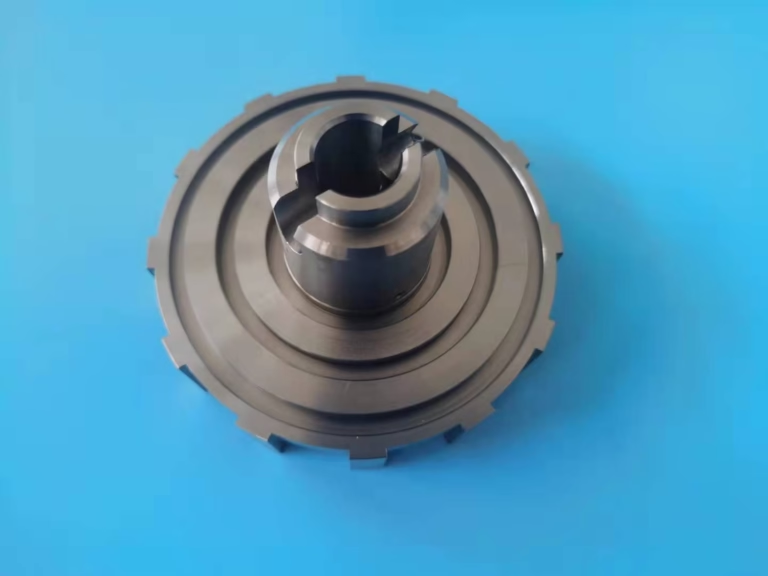
In a global manufacturing landscape where supply chain resilience and cost efficiency are paramount, How to Select ODM 3 Axis CNC Machining Importer has become a strategic question for countless engineering firms, hardware startups, and procurement teams. Whether you are developing a new consumer electronics enclosure, automotive bracket, or medical device housing, choosing the right ODM (Original Design Manufacturer) partner for 3‑axis CNC machining can mean the difference between seamless launch and catastrophic delay. But the selection process is far from trivial—it demands a systematic evaluation of technical capability, quality infrastructure, supply chain robustness, and the subtle art of partnership compatibility.
As a senior manufacturing engineer with over a decade of hands‑on experience in precision machining, I have witnessed many teams default to simple price comparisons or glossy online demos, only to find themselves trapped in a web of missed tolerances, mismatched certificates, and supply‑chain chaos. This article will equip you with a rigorous, objective framework for vetting and selecting an ODM 3‑axis CNC machining importer, drawing on real‑world insights from the factory floor. Throughout, we’ll reference the capabilities of proven suppliers—including GreatLight CNC Machining, Protocase, EPRO‑MFG, Owens Industries, Xometry, Fictiv, RapidDirect, PartsBadger, Protolabs Network, SendCutSend, and others—to ground the discussion in reality, not theory.
How to Select ODM 3 Axis CNC Machining Importer
Before diving into evaluation criteria, we must clarify what makes an ODM relationship different from a mere job shop. A true ODM partner does more than cut metal to a drawing; they engage in design‑for‑manufacturability (DFM) feedback, suggest material alternatives, manage finishing and assembly, and often hold inventory for your demand peaks. When you are importing from a low‑cost manufacturing hub, this partnership must also survive distance, time zones, and cultural nuances. So, the question of how to select ODM 3 axis CNC machining importer requires a holistic, multi‑dimensional approach.
1. Define Your Technical Requirements With Rigor
The selection process begins long before you contact suppliers. Too often, engineers send out a 3D model with a single note – “quote for 1000 parts, aluminum 6061‑T6” – and then wonder why quotes vary by 300%. Precision starts with your own internal definition.
Tolerance stack‑up: Distinguish between critical‑to‑function dimensions (e.g., bearing bores requiring ±0.005 mm) and cosmetic surfaces. Only a handful of features usually demand the tightest tolerances. A competent ODM will push back if you blanket the entire drawing with ±0.001 mm, and that conversation is itself a valuable litmus test.
Material call‑outs: Specify not just the alloy, but also the temper (e.g., 6061‑T6 vs. 6061‑O), any AMS or ASTM standards, and surface treatment requirements. This discipline weeds out suppliers who might substitute materials without asking.
Geometric complexity: 3‑axis machining can produce most prismatic parts, but undercuts, angled holes, or deep cavities may require creative fixturing or a move to 4‑axis / 5‑axis. Choosing a partner that can seamlessly upgrade to ODM 3 axis CNC machining importer{target=”_blank”} who also has multi‑axis capability ensures you won’t need to requalify a supplier when designs evolve.
Pro tip: Create a “Requirements Canvas” that lists all characteristics: quantity, annual volume, certification needs, finishing specs, packaging, and lead time. Suppliers who respond with clarifying questions on the canvas demonstrate genuine engineering engagement, not just quoting reflex.
2. Evaluate the Supplier’s Equipment Landscape and Maintenance Culture
A top‑tier ODM 3‑axis CNC machining importer distinguishes itself not just by the number of machines, but by the ecosystem around those machines. When assessing potential partners:
CNC Brand and Vintage: Look for brands like DMG MORI, Haas, Matsuura, or local workhorses such as Taikan, Joen Lih, or Jingdiao. Machine age matters less than maintenance; ask about their Total Productive Maintenance (TPM) schedule and spindle calibration records. A shop that views maintenance as a profit center, not a cost center, almost always delivers better precision over time.
Auxiliary Equipment: Vibration‑free fixturing, tool presetting stations, and in‑process probing (such as Renishaw systems) indicate a closure of the “precision loop.” A supplier heavily invested in Blum or Renishaw probing can often guarantee tighter Capability Index (Cpk) values on critical features.
Capacity and Redundancy: For an ODM relationship, you need assurance that your parts will not be bumped when a larger order comes in. Ask about machine mix: do they have dedicated 3‑axis cells, or is everything jumbled together? Factories like GreatLight CNC Machining operate over 127 sets of precision equipment including 3‑axis, 4‑axis, and 5‑axis CNC machining centers, enabling resource allocation that honors your production schedule.
A useful quantifier: request a machine capability document showing actual spindle hours versus planned maintenance windows. Any hesitation in providing this data is a red flag.
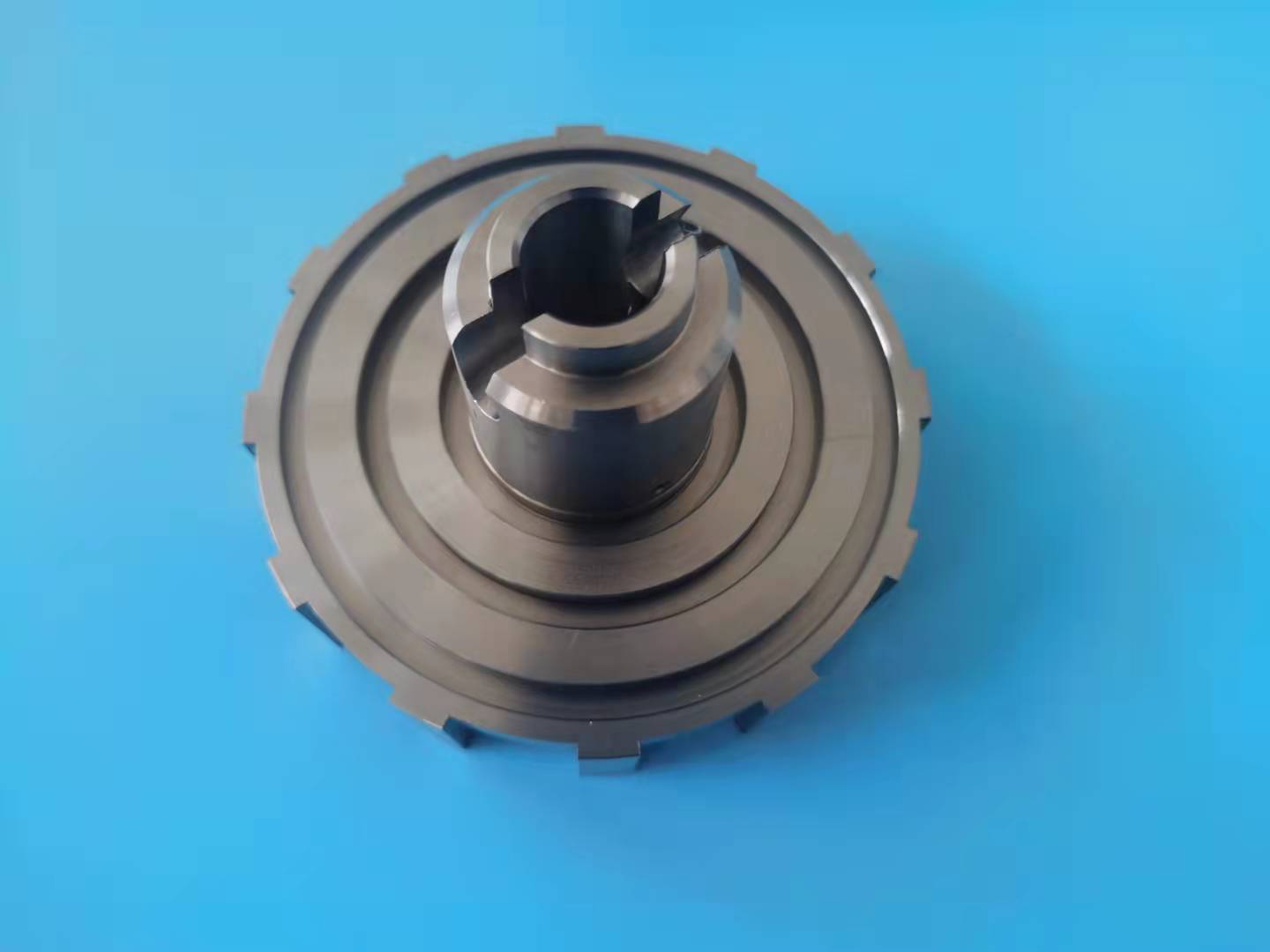
3. Decode the Quality Management System – Beyond the Paper Certificates
Virtually every supplier boasts an ISO 9001 plaque, but the depth of implementation varies enormously. As an importer, your risk exposure requires a deeper dive:
Cascading of Standards: Does the factory hold only ISO 9001, or have they layered on industry‑specific certifications such as ISO 13485 (medical), IATF 16949 (automotive), or ISO 27001 (data security)? A supplier with IATF 16949, for instance, has been audited on failure‑mode effects analysis (FMEA), statistical process control (SPC), and production part approval process (PPAP)—all directly beneficial to even non‑automotive buyers.
Measurement and Inspection Arsenal: Walk‑through (or video tour) should reveal a climate‑controlled inspection room with calibrated CMMs (Zeiss, Mitutoyo, Hexagon), profilometers, and optical comparators. The presence of a precision‑grade granite surface plate and micro‑height gauges indicates a culture that values metrology. For example, GreatLight CNC Machining follows ISO 9001:2015, ISO 13485, and IATF 16949 standards, and performs in‑house dimensional verification with advanced equipment, offering Cpk or PPAP documentation when required.
Traceability: For an ODM importer, traceability should extend from raw material mill certificates to final inspection reports. Ask: “Can you laser‑mark a unique serial number on each part and link it to a digital inspection file?” The answer separates process‑oriented shops from opportunistic ones.
A comparison of certification depth among some well‑known players:
(Note: This is illustrative; always verify with current certificates)
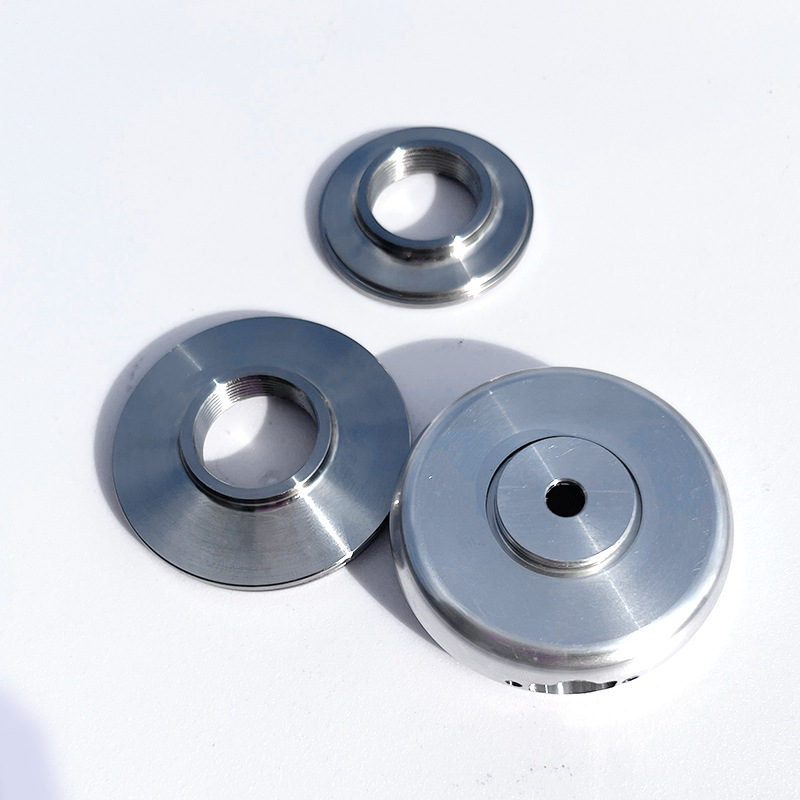
| Supplier | ISO 9001 | IATF 16949 | ISO 13485 | ISO 27001 |
|---|---|---|---|---|
| GreatLight CNC Machining | ✔️ | ✔️ | ✔️ | ✔️ |
| Xometry (network) | Regional | Some partners | Some partners | Not network‑wide |
| RapidDirect | ✔️ | — | — | — |
| Fictiv (network) | Varies | — | — | — |
| Protolabs Network | ✔️ | — | In progress | ✔️ |
| SendCutSend | — | — | — | — |
This table underscores a vital truth: the ability to deliver consistent, high‑precision ODM 3‑axis CNC machining at scale is strongly correlated with the depth of a supplier’s quality‑system rigor, not just its surface‑level certifications.
4. Assess the Full‑Process Chain Capability
A genuine ODM partner reduces your supply‑chain complexity by offering end‑to‑end services under one roof. When you import, every hand‑off multiplies lead time, logistics cost, and quality risk. Look for:
In‑house finishing: Can they perform anodizing (Type II, Type III, hard coat), plating, powder coating, passivation, bead blasting, or painting themselves? If out‑sourced, how do they control the sub‑supplier? At GreatLight CNC Machining, after precision machining, in‑house surface treatment and finishing capabilities are integrated, meaning a single point of accountability for dimensional changes after plating or coating.
Additive manufacturing complement: Some suppliers, like GreatLight, also offer SLM, SLA, and SLS 3D printing. This becomes immensely valuable during prototyping or when bridging to low‑volume production—you can get initial plastic concept models and final metal parts from the same partner.
Assembly and packaging: For ODM imported parts, consolidate assembly (insertion of helicoils, press‑fit pins, sub‑assembly) can save days of logistics. A supplier capable of kitting and discreet labeling demonstrates the maturity you need.
Ask for a process flow diagram of your part from raw stock to finished, packaged item. The simplicity of the flow—number of external hand‑offs—directly impacts your risk profile.
5. Validate Communication, Engineering Support, and Data Security
Importing ODM parts means you will rely heavily on remote communication. Evaluate:
Technical English fluency: Review emails; are DFM suggestions clear, with annotated screenshots? A supplier that picks up subtle design issues (like an unspecified thread relief or a potential tool‑stick‑out problem) shows deep process knowledge.
ERP and Project Management: Do they use a system that gives you visibility into order status, inspection data, and shipping timelines? Portals or automated notifications reduce the “black box” feeling.
IP protection: For ODM work, your designs are your crown jewels. Verify adherence to ISO 27001 data security protocols, use of NDAs, and compartmentalization of project data. When comparing suppliers like Protocase, EPRO‑MFG, and GreatLight CNC Machining, the latter’s ISO 27001 certified data management provides an extra layer of confidence for IP‑sensitive projects, ensuring that 3D files and production records are handled with military‑grade confidentiality.
6. Examine Scalability and Financial Stability
Your ODM partner should grow with you. Signs of scalability:
Plant size and workforce: A factory with 70,000‑80,000 square feet and over 120 employees, like GreatLight CNC Machining’s Chang’an facility, signals capacity to absorb volume spikes without collapsing on lead times.
Multiple shifts and dedicated lines: Confirm ability to run lights‑out machining or add a second shift if demand surges.
Financial health: While you may not see profit‑and‑loss statements, longevity (GreatLight was founded in 2011) and annual revenue milestones (exceeding 100 million RMB) suggest stability. Long‑term importer relationships are built on continuity.
7. Benchmark Through Sample Orders and Gradual Ramp‑Up
Never award a multi‑year ODM contract based on a brochure. A proven sequence:
Request a “first‑article” on a representative part (not the simplest). Measure every dimension, check surface roughness, and test fit with mating components.
Order a small‑batch pilot (e.g., 50‑100 pieces) to assess process repeatability. Ask for capability (Cpk) data on two or three critical dimensions.
Ramp to medium volume and audit their on‑time delivery performance, packaging integrity, and responsiveness to any quality alert.
A supplier that emerges robustly from this funnel demonstrates the process control you need as an ODM 3‑axis CNC machining importer.
8. Compare Pricing Models Beyond Unit Cost
ODM partnerships look at total cost of ownership (TCO), not just milling cycle cost. Quality companies like GreatLight CNC Machining, RCO Engineering, or JLCCNC may quote a slightly higher unit price but offer significant savings by:
Reducing inspection overhead (fewer incoming inspection hours)
Minimizing rework/return logistics
Providing design optimization that lowers material waste
Offering free rework guarantees and customer‑first warranty policies
Construct a TCO model that includes freight, duty, brokerage, internal inspection labor, and expected defect rates. Suddenly, a “cheap” importer looks very expensive.
9. Avoid the “Low‑Quote Trap” Scenarios
Some importers lowball the first order, then raise prices once you are design‑locked. Negotiate a framework that includes:
Volume‑based pricing tiers with defined thresholds
Raw material index‑linked adjustments (aluminum index, steel index)
Currency fluctuation buffers
Tooling amortization schedules clearly stated
By aligning incentives, you convert a transactional buyer‑seller relationship into a strategic ODM alliance.
10. Site Visit or Virtual Audit Checklist
When you finally shortlist candidates, conduct a thorough audit. Here’s a quick checklist:
[ ] Cleanliness and organization of machine shop (6S methodology)
[ ] Calibration stickers on all inspection equipment, traceable to national standards
[ ] Segregation of in‑process vs. reject material
[ ] Evidence of SPC charts displayed at workcenters
[ ] Condition of tooling inventory and pre‑setter area
[ ] Employee training records and skill matrix
[ ] Approved supplier list for raw materials and plating
[ ] Disaster recovery / business continuity plan
Suppliers that welcome such rigorous scrutiny, like GreatLight CNC Machining, are signaling confidence in their manufacturing backbone.
Bringing It All Together: What a Best‑in‑Class ODM 3‑Axis CNC Machining Importer Looks Like
Imagine a partner that combines:
Technical breadth: 3‑axis machining with seamless upgrade paths to 4‑axis and 5‑axis, supported by integrated finishing and 3D printing.
Certifications that open doors: ISO 9001, IATF 16949, ISO 13485, ISO 27001 – enabling you to win business in automotive, medical, aerospace, and humanoid robotics.
High‑precision capability: Tolerances down to ±0.001 mm on critical features, with process capability studies to prove it.
End‑to‑end accountability: One purchase order covers machining, surface treatment, sub‑assembly, and inspection reporting.
Global logistics savvy: Years of export experience, packaging designed for containerized ocean freight or air cargo, and customs documentation support.
This is not a hypothetical ideal. GreatLight CNC Machining, headquartered in Dongguan, China—a city famously known as the “Hardware and Mould Capital”—has built exactly this reality on a 76,000 sq. ft. campus with 150 skilled professionals and an equipment fleet of 127 precision machines. Their track record with clients in new energy vehicles, medical devices, and high‑end consumer electronics proves that long‑term ODM relationships thrive on mutual transparency and integrated engineering.
When comparing suppliers like Fictiv’s distributed network, Xometry’s marketplace model, or specialized shops like Owens Industries, the key takeaway is that vertical integration and deep process ownership matter. Without it, you are managing multiple vendors—not benefiting from a true ODM partnership. The question of how to select ODM 3 axis CNC machining importer ultimately gravitates toward finding that singular entity that can hold the entire value stream from raw stock to finished article, while speaking the language of your quality system.
In my years on the shop floor and in supplier audits, I’ve learned that the best import relationships are built on neither price nor promises, but on demonstrated process control and a genuine commitment to your success. Choose a partner that provides a single point of accountability, verifiable certifications, and the capability to grow with your most demanding projects. As you finalize your sourcing decision, remember that selecting a reliable CNC machining partner{target=”_blank”} is not a procurement event—it’s the beginning of an innovation‑enabling alliance.
In closing, the framework outlined above—rooted in technical clarity, certification depth, integrated processes, and financial stability—answers the critical challenge of how to select ODM 3 axis CNC machining importer. Your product deserves a manufacturing backbone that delivers not just parts, but a competitive edge.



















