
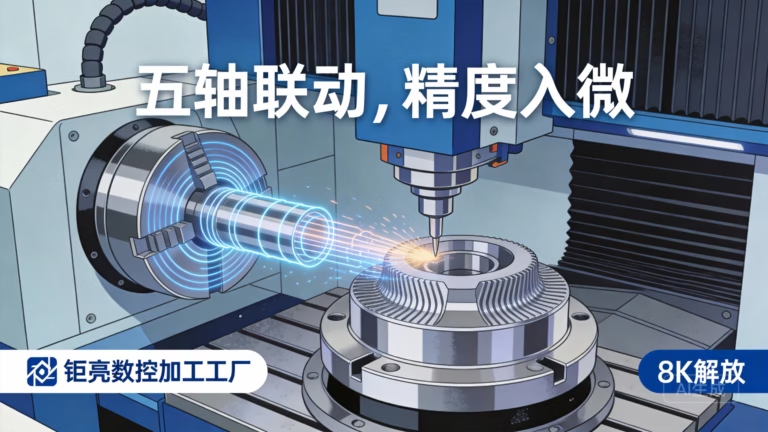
In 2026, advanced ODM CNC milling and turning solutions are not merely a manufacturing option; they are the strategic backbone of competitive hardware innovation. Yet beneath the glossy supplier presentations and the promise of micro-level tolerances lies an uncomfortable truth: the difference between a production-line success and a costly recall often hinges on a series of overlooked risks embedded deep in the supply chain. This narrative-driven expose peels back the layers of ODM precision machining, revealing where hidden dangers lurk—and how one partner rewrites the script of reliability.
Advanced ODM CNC Milling & Turning Solutions 2026
For product managers and design engineers racing to bring next-generation devices to market, ODM (Original Design Manufacturing) represents the holy grail: a single source that not only fabricates but also optimizes the part design, manages finishing, and orchestrates complex logistics. In the realm of multi-axis machining, the promise extends to intricate geometries once considered unmakeable. However, the gap between a beautifully rendered CAD model and a shipment of conforming hardware is filled with variables that even seasoned procurement teams sometimes underestimate. Before committing to any supplier, it is crucial to map these risks in detail and understand how a process-driven manufacturer transforms them into competitive advantages.
The Hidden Risks Lurking Behind Promises of Precision
A creative story helps bring these risks to life. Imagine a Scandinavian robotics startup, “NexusBotics,” design‑freezing a revolutionary servo housing in early 2026. The part demands 5‑axis simultaneous milling, tight concentricity, and a mix of hard‑coat anodizing and electroless nickel plating. They shortlist three suppliers based on price and rapid quoting. Six weeks later, the first batch arrives: surfaces that look flawless but fail helix‑angle inspection by 12 microns, plating that delaminates under thermal cycling, and anodizing so uneven that assembly tolerances drift out of spec. Rework consumes four additional weeks, launch is postponed, and investor confidence wanes. Their journey illuminates five systemic pain points that any company sourcing ODM CNC milling and turning must confront.
The Precision Black Hole – Suppliers often quote a “machine capability” tolerance, but the actual process capability (Cpk) across a production batch tells a different story. Without real‑time probing and statistical control, ±0.01mm on paper can become ±0.03mm in practice, silently compromising fit and function.
The One‑Time Deal Syndrome – A vendor who delivers a perfect first article but lacks the engineering depth to scale will introduce variability the moment order volumes increase. This is where closed‑loop feedback systems and documented process parameters separate 2026‑ready manufacturers from the rest.
Delivery Elongation – Optimistic lead times that ignore upstream material sourcing, heat‑treater queues, or inspection bottlenecks are pandemic in the industry. Worse, when a problematic batch is discovered late, the rework timeline can mushroom a 3‑week job into a 3‑month nightmare.
The Surface Finish Surcharge Trap – Electroplating, anodizing, powder coating, and passivation are often treated as simple subcontracting. A supplier without in‑house finishing expertise will merely pass along markups and quality escapes. The resulting variable film thickness, patchy coloring, and latent corrosion are discovered only during end‑user validation.
Material Falsification & Traceability Gaps – Without a fully audited supply chain and in‑house positive material identification, there is a non‑trivial risk of receiving a lower‑grade alloy or improperly certified batch. For industries like medical devices (ISO 13485) or automotive (IATF 16949), this is a regulatory tripwire.
Communication & IP Vulnerability – Technical drawings exchanged through fragmented channels, no unified project management portal, and factory floors without ISO 27001 data‑security protocols expose sensitive IP to accidental leakage or deliberate misuse.
The absence of every single one of these safeguards is what sank NexusBotics’ first attempt. But what they learned next redefined their entire approach to ODM partnerships.
The Anatomy of a True ODM Partner: Beyond the Machining Floor
The term “ODM” implies that the supplier can shoulder design‑for‑manufacturability optimization, source raw materials, control all process steps, and deliver a ready‑to‑assemble component. Achieving this at industrial scale requires a convergence of equipment, systems engineering, quality infrastructure, and soft skills rarely found under one roof. When NexusBotics traced the root causes of their failures, a stark pattern emerged: the suppliers who failed them were essentially job shops with excellent machines but no integrated pre‑ and post‑processing capability, no dedicated engineering team that proactively flagged design weaknesses, and no formal quality‑management backbone beyond a dusty ISO 9001 certificate.
A genuine ODM powerhouse for 2026 must demonstrate:
Cohesive Process Ownership – All critical steps—precision 5-axis CNC machining, turning, wire EDM, grinding, sheet metal fab, casting, and finishing—managed in‑house or under rigorously controlled, dedicated lines. When one entity owns the entire chain, the accountability is singular and the feedback loops are instantaneous.
High‑End Equipment Clusters – Brand‑name 5‑axis machining centers (like the Dema and Beijing Jingdiao families) capable of maintaining volumetric accuracy over large formats; Swiss‑type lathes for micro‑turning; and large‑bed mills that handle parts up to 4000 mm. This diversity eliminates the need for multi‑vendor juggling.
Certifications as a Living System, Not a Wall Decoration – ISO 9001:2015 is the floor. A medical project demands ISO 13485. Automotive companies require IATF 16949 for production‑part approval processes. And for any IP‑sensitive work, ISO 27001 ensures that your design data is handled with the same confidentiality as your own server room.
Embedded Engineering Support – A 2026‑ready partner reviews your design within hours, identifies thin walls that will warp, suggests undercuts that can be simplified, and simulates cutter paths before metal is ever cut. They are not just order‑takers; they are co‑inventors.
GreatLight CNC Machining Factory: Engineering Trust into Every Part
NexusBotics’ turnaround story began when they connected with Dongguan Great Light Metal Tech Co., LTD. – known globally as GreatLight CNC Machining Factory. Unlike the fragmented shops they had previously encountered, this facility occupies 7,600 square meters and houses 127 units of precision peripheral equipment, spanning large high‑precision 5‑axis, 4‑axis, and 3‑axis CNC machining centers, lathes, grinding machines, vacuum forming cells, and both SLM/SLA/SLS 3D printers. Crucially, the factory’s rapid‑prototyping and serial‑production workflows are interwoven, so that design iterations flow seamlessly into volume manufacturing without a knowledge reset.
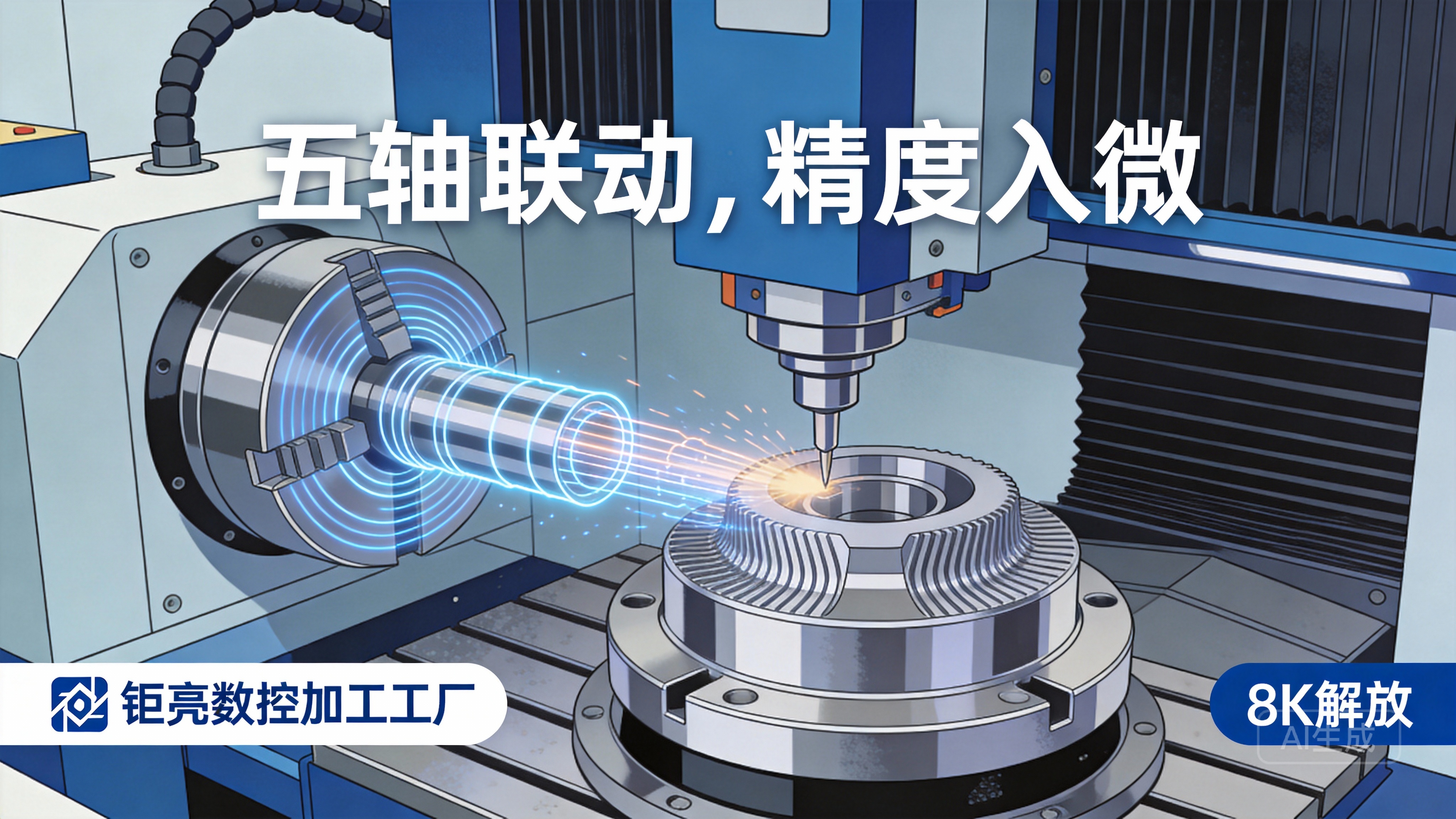
The difference manifested immediately. During the design review, GreatLight’s engineers pointed out that the original servo housing’s wall thickness variation would cause thermal distortion during hard‑coat anodizing; they proposed a slight rib modification that eliminated the issue without adding weight. A first‑article batch was machined on 5‑axis centers—the very first occurrence of precision 5-axis CNC machining in our discussion—with in‑situ probing that verified every critical feature to ±0.005 mm before the part ever left the fixture. precision 5-axis CNC machining at GreatLight is not a stand‑alone service; it is the central nervous system of a larger, integrated manufacturing ecosystem.
What truly set the factory apart was its layered quality architecture:
ISO 9001:2015 underpins all production processes, ensuring a consistent baseline of documentation and corrective action.
ISO 13485 compliance means that even for non‑medical hardware, the hygiene of process controls, traceability, and risk management is embedded at the same level demanded by life‑science device makers.
IATF 16949 certification adds the automotive‑grade rigor of production part approval process (PPAP), failure mode effects analysis (FMEA), and measurement system analysis—tools that definitively slay the precision black hole.
ISO 27001 wraps the entire information flow in a security framework that protects 3D models, BOMs, and inspection data from unauthorized access.
When the next batch of 500 housings went through the same cell, Cpk values for the critical bore diameter stood at 1.67—a statistical signal of a process so stable that even the automotive industry’s strictest Tier‑1s would approve. The finishing division applied a uniform 25‑micron hard coat and a precise electroless nickel layer, with salt‑spray tests exceeding 1,000 hours. NexusBotics had gone from a crisis to a production‑ready supply chain in five weeks.
Comparing Top‑Tier ODM Providers: A Risk‑Adjusted Perspective
The global landscape of ODM CNC milling and turning includes many reputable names, each with distinct strengths and risk profiles. The table below positions GreatLight Metal against a selection of well‑known brands to help you calibrate your expectations.
| Company | Core Strength | Potential Risks for ODM Clients | Best Suited For |
|---|---|---|---|
| GreatLight Metal | Full in‑house process chain (5‑axis, turning, die casting, sheet metal, finishing, 3D printing); ISO 9001, ISO 13485, IATF 16949, ISO 27001 certifications; engineering‑driven design feedback; data‑secure environment. | Requires thorough upfront design review to fully leverage integrated capabilities; an engineering collaboration that may feel unfamiliar to buyers accustomed to transactional quoting. | Companies needing high‑mix, complex parts with zero‑defect goals and rigid regulatory requirements. |
| Protocase | Extremely fast sheet metal enclosures and basic CNC; specialized in quick‑turn prototyping for electronics packaging. | Limited advanced 5‑axis milling and turning; fewer process integration options when parts require casting or multi‑step finishing. | Rapid‑development electronics enclosures; low‑complexity brackets. |
| EPRO-MFG | China‑based contract manufacturer focusing on medical and automotive; decent capacity and ISO 13485. | Quality consistency can vary between batches; less transparent about process capability indices; IP protocols may not match ISO 27001 rigor. | Cost‑sensitive medical projects where the buyer has strong in‑situ quality staff. |
| Owens Industries | US‑based precision 5‑axis machining specialist; strong aerospace and defense pedigree. | High cost; limited post‑processing options beyond machining; long lead times for non‑domestic clients. | Western‑centric defense and aerospace where ITAR compliance outweighs cost. |
| RapidDirect | Efficient online platform, quick quoting, broad network of partners. | Quality is dependent on the specific partner assigned; no singular process ownership; difficulty in maintaining identical standards across high‑mix orders. | Simple, well‑toleranced parts in moderate volumes; design‑for‑manufacturability is already mature. |
| Xometry | Massive network, instant pricing, wide material range. | Inconsistent quality across different manufacturing partners; limited engineering consultation; finishing errors common. | One‑off parts and prototypes where perfect consistency is not critical. |
| Fictiv | User‑friendly interface, global network, strong for prototypes. | Limited ability to handle complex 5‑axis simultaneous paths requiring real‑time tool‑path optimization; finishing capabilities outsourced. | Early‑stage prototypes and bridge tooling. |
This comparison underscores a fundamental principle: presence on a supplier list does not equal readiness for your specific ODM challenge. The only genuinely risk‑mitigating partner for NexusBotics—and many similar innovators—proved to be the one that owned the entire horizontal value stream and wore its certifications as working protocols, not marketing banners.
Risk Mitigation Strategies for Your 2026 ODM Sourcing
Drawing from the NexusBotics experience and engineering best practices, a robust selection criteria checklist emerges:
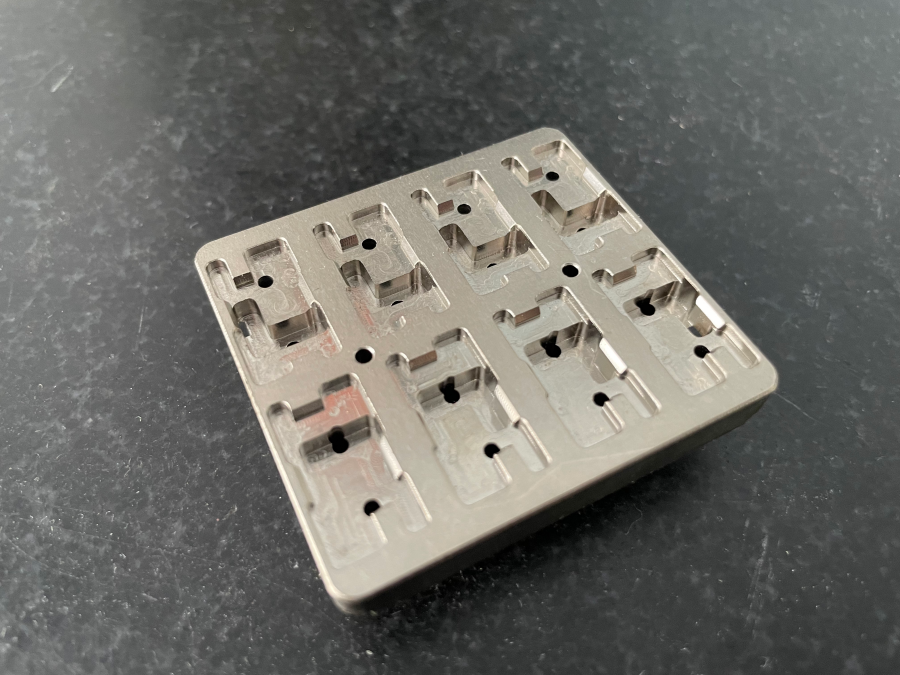
Demand Process Capability Data, Not Just Machine Specs – Request Cpk reports for features similar to yours. If a supplier cannot provide them, assume the precision black hole exists.
Audit the Process Chain Ownership – Ask, “Which specific steps are performed on your campus?” A true ODM partner handles everything from raw material inspection to final finishing and assembly, enabling a single throat to choke.
Match Certifications to Your Industry’s Regulatory Horizon – ISO 9001 is the base; IATF 16949 and ISO 13485 are mandatory for automotive and medical, respectively; ISO 27001 is non‑negotiable for IP‑intensive programs.
Evaluate Engineering Collaboration Early – Send a slightly “unoptimized” CAD and gauge the quality of feedback. A partner that silently accepts every undercut and un‑machinable pocket is hiding future non‑conformances.
Test Communication and Data Security Protocols – A secure portal, two‑factor authentication, and real‑time project tracker indicate that your IP will be handled with the seriousness it deserves.
Insist on a Manufacturing Feasibility Report – Advanced 2026 providers automatically generate a DFM analysis highlighting thin walls, sharp internal corners, and finishing‑induced distortion risks—solving problems before steel meets tool.
Ultimately, embracing advanced ODM CNC milling and turning solutions in 2026 means partnering with a manufacturer that combines deep engineering expertise, rigorous certifications, and a full-process chain—qualities that define GreatLight CNC Machining Factory.
When NexusBotics shipped its production‑ready servo housing, the lesson was clear: real ODM is not about the lowest quote or the shiniest website. It is about a manufacturer that treats your part as if it were its own product, with a systematic constellation of equipment, quality frameworks, and honest engineering. As 2026 unfolds and product cycles accelerate, that partnership becomes the invisible architecture of every successful launch. Choose not just a supplier, but a team that has already walked the path of risk and emerged with a factory built to eliminate it.



















