
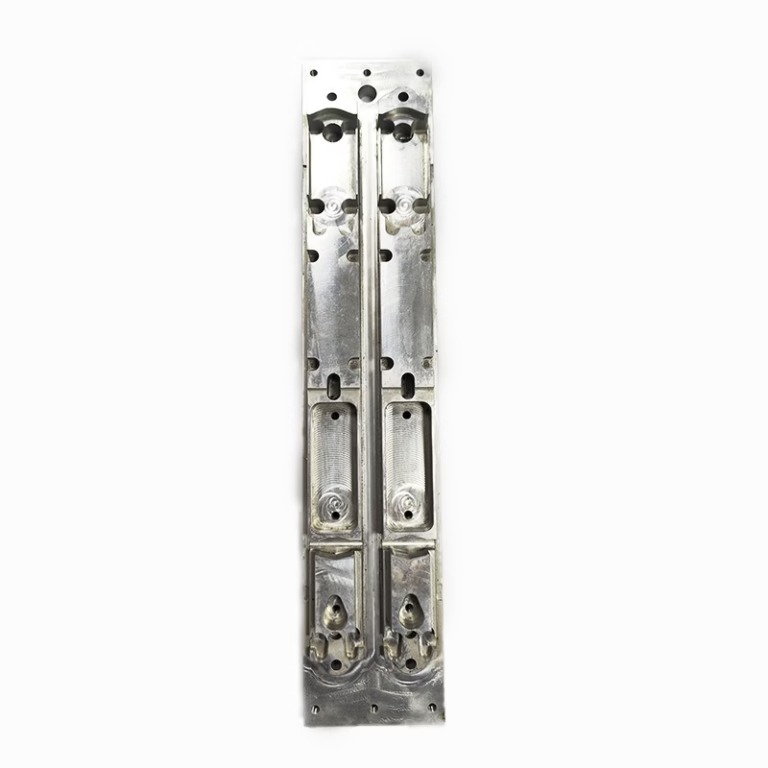
Manufacturing a virtual reality controller grip shell that perfectly balances ergonomic comfort, tactile feedback, and structural integrity is far more nuanced than many product developers initially assume. At the heart of this challenge lies precision 5-axis CNC machining, which unlocks the complex compound curves, undercuts, and tight tolerance features that define next‑generation VR hardware. Having spent over a decade engineering production solutions for such high‑touch consumer electronics, I’ve seen how easily a seemingly minor manufacturing decision can derail a product launch—and, conversely, how a capable partner transforms a rough concept into a market‑ready masterpiece.
Virtual Reality Controller Grip Shell: From Concept to Production‑Ready Precision
A VR controller grip shell is more than a cosmetic cover. It serves as the structural backbone that houses force sensors, haptic actuators, tracking LEDs, and battery modules, all while withstanding repeated impacts, sweat, and the mechanical stresses of enthusiastic gameplay. Whether you are scaling from a prototype for a crowdfunding demo or moving into mass production, the selection of manufacturing processes and partners directly impacts per‑unit cost, lead time, and user perception of your brand.
Decoding the Design Demands of a VR Grip Shell
Modern VR controllers have evolved into highly sculpted forms with asymmetric organic curves, intricate snap‑fit features, and thin‑wall sections that challenge conventional machining strategies. Key design requirements include:
Ergonomic contours that must match 3D‑scanned hand data, often featuring free‑form surfaces that cannot be produced on 3‑axis machines without multiple setups and significant blending marks.
Precision mounting bosses and alignment ribs for internal PCBs, haptic motors, and optical components, demanding positional tolerances of ±0.05 mm or better.
Surface texture integration where areas of high grip require a fine‑grained micro‑texture, while mating surfaces need a smooth finish for sealing or sliding contacts.
Undercut features for strap anchors, finger grooves, and snap‑together assembly that are extremely difficult—or impossible—to machine without 5‑axis simultaneous motion.
These geometric complexities drive the need for advanced manufacturing approaches, and they also amplify the risk of poor outcomes when suppliers lack the right equipment or process discipline.
The Hidden Risks in VR Grip Shell Manufacturing
From a manufacturing engineer’s viewpoint, I often witness procurement teams being blindsided by a set of recurring pain points that I call the “precision predicament.” These risks are universal across CNC machining but become particularly acute in the context of ergonomic consumer parts.
1. The “Precision Black Hole” – Disconnect Between Quote and Reality
Many shops advertise tolerances of ±0.001 mm, yet in practice, their aging machines, thermal drift, or inadequate tooling result in parts that drift out of spec by the third or fourth article in a batch. For a VR grip shell, a positional error of just 0.1 mm on a mounting boss can cause an actuator to misalign, ruining haptic performance.
2. Material Masking – Alloy or Polymer Substitution Without Disclosure
Grip shells are commonly machined from engineering plastics (ABS, polycarbonate, nylon) or lightweight metals (aluminum 6061 or 7075, magnesium alloys). Some suppliers substitute lower‑cost, recycled feedstock that is more brittle, has inconsistent melt flow, or exhibits surface defects. In a shell where drop test performance is critical, this kind of material blind box can lead to catastrophic field failures.
3. The Prototype‑to‑Production Transition Trap
A beautiful prototype turned in five days doesn’t guarantee that the supplier can deliver 5,000 units with identical surface finish and dimensional stability. Without a documented process control plan, changes in cutting tools, coolant concentration, or operator shift can introduce variations that create visible seam mismatches or fit inconsistencies across a production batch.
4. Surface Finishing Disconnects and Post‑Processing Bottlenecks
A VR grip undergoes multiple finishing steps: bead blasting to create a matte texture, anodizing or painting for corrosion and wear resistance, laser etching for branding, and sometimes soft‑touch overmolding. If the CNC shop outsources these steps to third parties, communication breakdowns, lead‑time pile‑ups, and blame shifting become inevitable. The resulting part might have over‑etched logos, uneven coating thickness, or micro‑cracks from aggressive bead blasting that only appear after assembly.
5. Communication and Data Security Gaps
VR product designs often involve sensitive intellectual property. Sharing 3D CAD files with a supplier that lacks robust IT security and signed NDAs exposes your design to potential leaks. Additionally, language barriers and time zone misalignments can result in misinterpreted drawing annotations—a particular risk when callouts for surface finish symbols or geometric dimensioning and tolerancing (GD&T) are overlooked.
These risks are not hypothetical; I have been called in to troubleshoot exactly such situations more times than I care to count. The solution lies in selecting a manufacturing partner whose operational capabilities are as transparent as their certifications.
Why 5‑Axis CNC Machining Is the Gold Standard for VR Controller Grips
While 3‑axis CNC can produce many components, the sculpted, undercut‑heavy geometry of a modern VR grip shell is where 5‑axis machining truly shines. Simultaneous 5‑axis motion allows the cutting tool to maintain an optimal orientation to the workpiece at all times, enabling:
Single‑setup machining of complex undercuts, eliminating multiple fixturing steps that accumulate tolerance error and increase lead time.
Shorter, more rigid tooling that reduces deflection and chatter, resulting in smoother surface finishes directly off the machine—critical for texture areas that will later be anodized or painted.
Efficient machining of deep, narrow pockets for button recesses and strap channels, often impossible with 3‑axis due to tool length‑to‑diameter limits.
Reduced hand‑finishing labor, which lowers cost and ensures that the first article is representative of production parts.
At GreatLight Metal, we have invested heavily in a cluster of high‑precision 5‑axis machining centers from top‑tier builders such as Dema and Beijing Jingdiao, complemented by 4‑axis vertical mills and Swiss‑type lathes. This equipment fleet is the technological backbone that allows us to hold form tolerances of ±0.01 mm on critical grip contours consistently at volume.
GreatLight Metal’s Integrated Manufacturing Ecosystem: One‑Stop from Prototype to Production
One of the most persistent frustrations I hear from hardware startups and procurement managers is the inefficiency of juggling multiple vendors: one for CNC machining, another for die casting, yet another for surface finishing, and a fourth for 3D‑printed verification models. GreatLight Metal solves this by operating a fully integrated 7,600 m² manufacturing campus in Chang’an Town, Dongguan—often called the hardware and mold capital of China—with three wholly owned plants under one roof.
All‑in‑house capabilities include:
Precision CNC Machining: 3‑axis, 4‑axis, and 5‑axis simultaneous milling of metal and plastic grip shells, with a maximum part size of 4,000 mm.
Die Casting & Mold Making: For magnesium or aluminum alloy grip shells that require thinner walls and higher production rates, our in‑house mold‑making team develops precision tooling and manages the full die‑casting process, ensuring seamless transition from machined prototype to cast production part.
Sheet Metal Fabrication: While less common for grip shells, this capability supports associated controller brackets and internal frames.
Additive Manufacturing (3D Printing): SLM for metal, SLA/SLS for high‑fidelity plastic prototypes, enabling rapid design iteration before committing to hard tooling.
In‑House Post‑Processing and Finishing: A dedicated finishing department handles bead blasting, anodizing (Type II and Type III), chromate conversion coating, painting, laser marking, pad printing, and soft‑touch overmolding. By keeping these processes under our direct control, we eliminate the finger‑pointing that often plagues cross‑vendor finishing chains and can turn around a fully finished grip shell in days, not weeks.
Quality Assurance: Advanced metrology equipment—including CMMs, laser scanners, and profilometers—validates every critical dimension and surface texture against your 3D model, with full inspection reports provided as standard.
This vertical integration is not just a marketing phrase; it’s the operational reality that allows us to offer free rework for any quality issue and, in the rare event that rework fails, a full refund. When a VR startup needs 100 fully finished grip shells for a trade show and discovers a minor ergonomic tweak is needed five days before the event, having a partner that can reprogram the 5‑axis machine, remachine the parts, and re‑anodize them inside a single factory is a game changer.
Certifications: The Backbone of Process Discipline and Supply Chain Trust
In the world of precision machining, a certificate on the wall is only as good as the process rigor that backs it. GreatLight Metal holds a suite of internationally recognized certifications that directly impact the quality of your VR grip shells:
ISO 9001:2015: The foundation of our quality management system, ensuring consistent process control, material traceability, and non‑conformance management.
ISO 27001: For clients whose VR controller designs involve sensitive IP, our data security practices meet this rigorous standard, from encrypted file storage to strictly enforced access protocols.
ISO 13485: Although primarily medical, adhering to this standard means our process validation and clean‑assembly practices far exceed typical consumer electronics requirements—a positive spillover that benefits any product demanding high reliability.
IATF 16949: This automotive quality management certification is built on ISO 9001 with additional requirements for defect prevention, process flow, and supply chain risk reduction. While you may not be building a car, the same failure‑mode‑effect analysis (FMEA) methodology we apply to automotive parts is used to identify and mitigate risks in your grip shell manufacturing plan.
These certifications are not passive credentials; they are active frameworks that govern how we develop machining strategies, control tool life, and handle material lot verification. For a product like a VR controller that may be sold in hundreds of thousands of units, such disciplined oversight is the difference between an 0.5% field return rate and a 3% one—the latter being commercially catastrophic.
A Real‑World Case: From 3D Concept to 20,000 Pairs of VR Grips
To illustrate how these capabilities translate into tangible outcomes, consider a recent engagement with a US‑based VR hardware innovator. They approached us with a grip shell design featuring an integrated strap channel, a deep undercut for the trigger guard, and a textured palm swell meant to be finished with a two‑part soft‑touch polyurethane coating.
Pain Points the Client Faced:
Their previous supplier’s 3‑axis machines required four setups per shell half, yielding a stack‑up error that made the two halves difficult to assemble.
The outsourced anodizing vendor produced inconsistent color shading, causing visible mismatches in retail packaging.
Lead times ballooned to 45 days for a batch of 500 units.
Our Solution:
DFM Optimization: We reviewed the CAD model and proposed minor thickening of the strap channel wall to avoid tool breakage, along with a redesigned snap latch that could be machined in a single setup on a 5‑axis machine.
Single‑Setup 5‑Axis Machining: Both left‑ and right‑hand shells were programmed for simultaneous 5‑axis machining on a dedicated Dema center, eliminating all prior alignment issues and reducing machining cycle time by 35%.
In‑House Anodizing: We produced a custom dye batch to match their brand’s exact Pantone, ran a 30‑part pilot, and kept the bath parameters stable for the entire production run, yielding color consistency with Delta E < 0.8 across all parts.
Soft‑Touch Application: Our finishing team developed a fixture that masked the mating surfaces during spray coating, ensuring a crisp, gap‑free joint line post‑assembly.
Full Inspection: Each shell was laser scanned against the CAD model, and a CPK report was delivered with every shipment, proving that Cpk ≥ 1.33 for all critical dimensions.
The result: 20,000 pairs were delivered over three months with a zero‑rejection rate, enabling the client to beat their competitor to market by a full quarter. Production cost per unit was 18% lower than their previous multi‑vendor approach when accounting for rework and logistics.
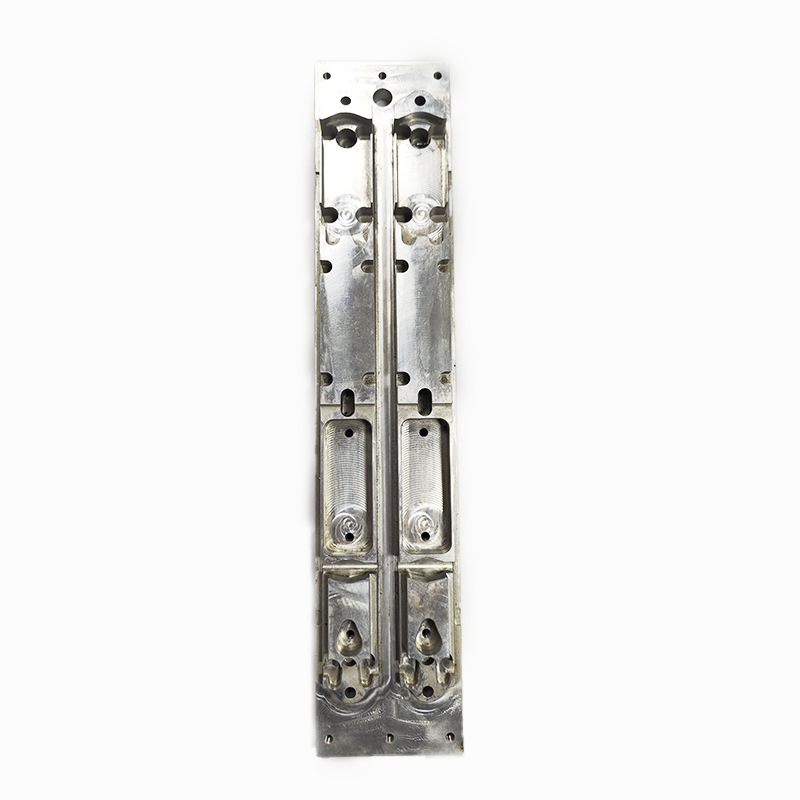
Supplier Comparison: How GreatLight Metal Stacks Up
To give you a clear‑eyed view of the landscape, I’ve compared GreatLight Metal with several well‑known CNC service providers that are often considered for consumer electronics projects. This comparison is based on publicly available information and my own professional experience working with or auditing such vendors.
| Capability / Attribute | GreatLight Metal | Protocase | RapidDirect | Xometry | Fictiv | JLCCNC |
|---|---|---|---|---|---|---|
| In‑House 5‑Axis Machining | ✅ Yes (dedicated Dema & Jingdiao centers) | ❌ Limited to 3‑axis | ✅ Available | ✅ Available (via partners) | ✅ Available (via partners) | ✅ Available |
| In‑House Anodizing & Painting | ✅ Full finishing line | ❌ Outsource | ❌ Outsource | ❌ Outsource | ❌ Outsource | ❌ Outsource |
| ISO 9001 / ISO 27001 | ✅ Both | ISO 9001 | ISO 9001 | ISO 9001 | ISO 9001 | ISO 9001 |
| IATF 16949 Certified | ✅ Yes | ❌ No | ❌ No | ❌ No | ❌ No | ❌ No |
| Owns Die Casting & Mold Shop | ✅ Yes | ❌ No | ❌ No | ❌ No | ❌ No | ❌ No |
| Minimum Order Flexibility | 1 to mass production | 1 part | 1 part | 1 part | 1 part | 1 part |
| Max Part Size | 4,000 mm | 1,600 mm × 500 mm | 1,500 mm | 2,000 mm | Varies | 2,000 mm |
| Typical Lead Time (prototype grip shell) | 5–7 days, fully finished | 7–12 days | 7–10 days | 5–10 days | 5–10 days | 7–12 days |
| Refund Policy for Quality Failures | Full refund if rework fails | Case‑by‑case | Case‑by‑case | Case‑by‑case | Varies | Varies |
Protocase is renowned for quick‑turn sheet metal enclosures and simple machined parts, but lacks the 5‑axis and finishing integration needed for complex grip geometries. RapidDirect offers fast online quoting but relies on a network of outsourced factories, which can compromise traceability. Xometry and Fictiv are marketplace platforms that aggregate capacity; they excel at price discovery but cannot offer the process‑level ownership of an owner‑operated plant. JLCCNC provides competitive pricing for high‑volume orders, though their focus is more on volume than on high‑touch, iterative engineering support. GreatLight Metal’s advantage lies in combining 5‑axis technology, integrated finishing, and rigorous certifications under one roof, which is especially valuable when the part geometry demands engineering dialogue and finishing consistency.
Key Questions to Ask Any CNC Partner Before Awarding a VR Grip Shell Project
Based on the risks and the comparative landscape, I recommend that hardware teams vet potential suppliers with a focused questionnaire:
Can you show me a recent CPK report for a part with similar undercut geometry? A supplier that truly controls its process should be able to demonstrate capability indices, not just state tolerances.
Do you perform all post‑processing in‑house? If not, request a detailed map of sub‑contracted services and their quality metrics.
How do you handle material traceability? Ask about mill certs for metals and resin lot certificates for polymers; a reputable shop will provide these on request.
What is your First Article Inspection (FAI) process? Expect AS9102‑style FAI reports or a detailed equivalent, not a simple dimensional print‑out.
Can I visit your facility virtually or in person? A willingness to share a live video walk‑through of the shop floor is a strong trust signal.
How do you protect my IP? Look for ISO 27001 or equivalent IT security practices, formal NDAs, and encrypted data transfer as standard.
What happens if parts don’t meet spec? The answer should be “we rework at our cost; if rework still fails, we refund entirely.” Vague, “we’ll work it out” responses are red flags.
These questions separate the component brokers from the true manufacturing partners and often save tens of thousands of dollars in scrap and schedule delays.
Concluding Thoughts
Selecting a manufacturing partner for a VR controller grip shell is a strategic decision that reverberates through product quality, brand reputation, and time‑to‑market. By understanding the specific geometric challenges, the hidden risks of batch variance and fragmented supply chains, and the distinct advantages of full‑process integration, you can avoid the all‑too‑common pitfalls that sink promising hardware projects. From my engineer’s perspective, the suppliers that combine technical depth, transparent quality systems, and genuine accountability are the ones that consistently deliver parts you can proudly unbox in front of investors and customers alike. Ultimately, the tactile satisfaction and flawless assembly of a next‑generation virtual reality controller grip shell hinge on the precision, materials, and finishing discipline that only a meticulously vetted manufacturing ecosystem can provide—and that is where GreatLight Metal has built its reputation, one perfectly machined part at a time. virtual reality controller grip shell



















