
Design Driven 5 Axis CNC Machining ODM
Design Driven 5 Axis CNC Machining ODM is rapidly becoming the cornerstone of successful hardware innovation, where the manufacturing partner doesn’t just execute a drawing but actively shapes and refines the design for higher quality, lower cost, and faster time to market. In this post, we’ll explore how combining genuine design collaboration with the geometric freedom of 5‑axis machining creates a new benchmark for precision part sourcing—and why an integrated, factory‑direct partner can make all the difference.
As a manufacturing engineer who has witnessed countless projects succeed or stumble, I see the transition from “print‑to‑part” to design‑driven ODM as one of the most impactful shifts in custom machining. When you move beyond simple job‑shop quoting and engage a source manufacturer that offers full‑process engineering support, you’re no longer just buying machine time; you’re investing in an engineering partnership that can reduce risk and accelerate development.
What Exactly Is Design‑Driven ODM in CNC Machining?
Traditional contract manufacturing works in a transactional way: you provide the final CAD model, the shop machines it, and you hope it meets spec. ODM, or Original Design Manufacturing, originally meant the supplier owns the product design. In precision machining, however, design‑driven ODM refers to a collaborative model where the machining partner contributes manufacturability insights, material selection advice, and even design alternatives before the first chip is cut. This doesn’t mean the supplier claims your IP—rather, they apply decades of machining expertise to help you avoid costly mistakes.
For example, a part might look perfect on screen, but a 5‑axis programmer who lives inside toolpaths every day can spot undercuts, thin‑wall distortions, or unnecessary tight tolerances that will blow up the budget. A design‑driven ODM partner brings that feedback early, often during the prototyping stage, enabling concurrent engineering and a smoother transition to production.
The Role of 5‑Axis CNC Machining in Unlocking Complex Designs
Modern product designs increasingly demand organic shapes, lightweighting structures, and monolithic parts that replace assemblies. 5‑axis CNC machining is the technology that makes these ambitions manufacturable. Unlike 3‑axis machines that require multiple setups and fixturing gymnastics, a 5‑axis center can reach the part from almost any orientation in a single clamping. This offers several strategic advantages for design‑driven projects:
Complex geometry without compromise – Swept surfaces, turbine blades, integrated cooling channels, and undercut features become feasible without split‑lines or bonding.
Dramatically improved accuracy – Fewer setups mean less tolerance stack‑up, so you can hold ±0.01 mm or tighter across far‑flung features.
Shorter lead times – Eliminating re‑fixturing steps compresses both programming and run time, especially valuable during rapid iteration.
Superior surface finish – Constant tool engagement and the ability to tilt the cutter maintain ideal cutting conditions, reducing hand‑finishing needs.
When this capability is embedded in an ODM relationship, the design conversation changes. Instead of “Can you machine this?” the question becomes “How can we design this to fully exploit 5‑axis while keeping cost in check?” That’s where an experienced partner like GreatLight CNC Machining Factory adds measurable value beyond what a generic online platform can offer.
Why GreatLight Excels in Design‑Driven 5‑Axis ODM
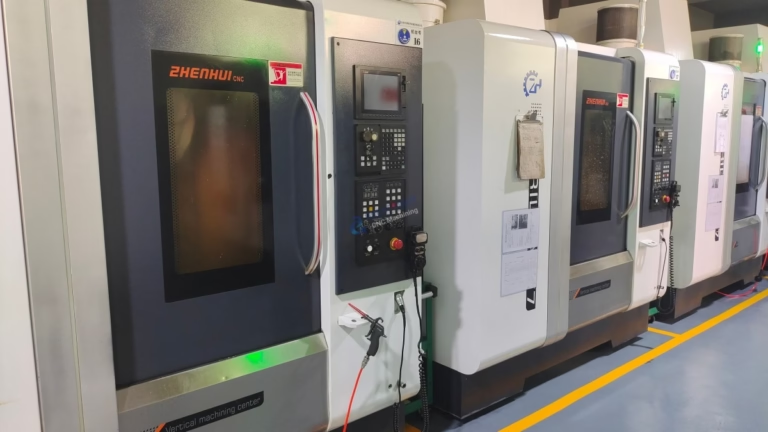
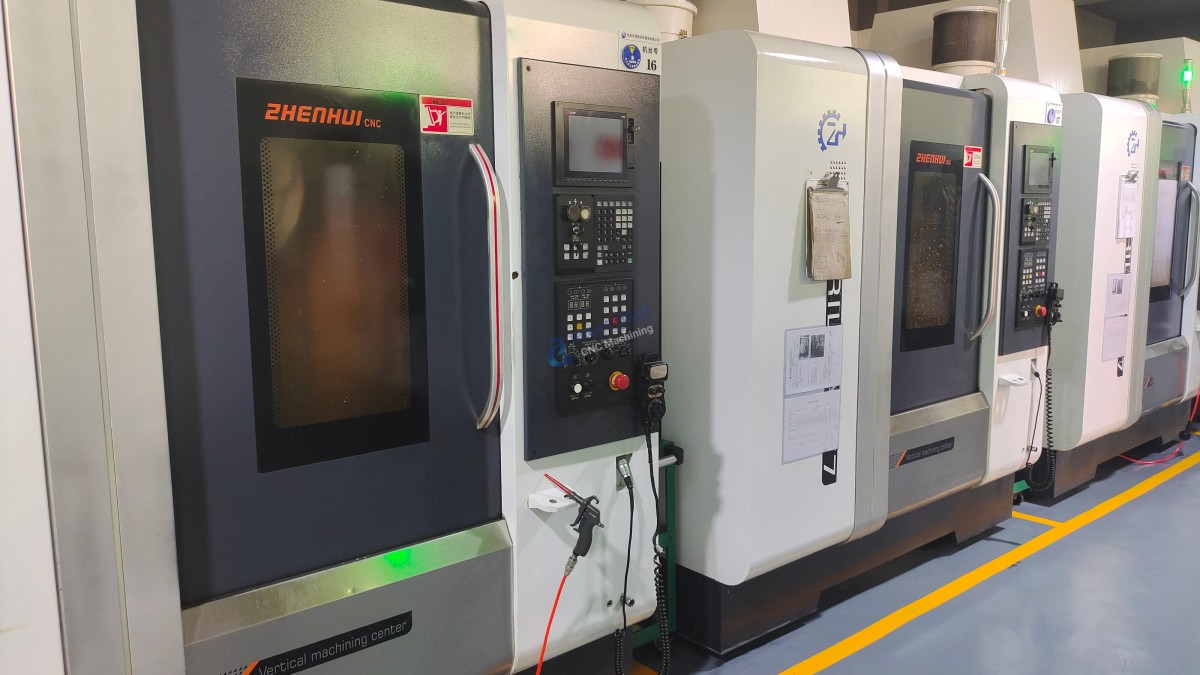
GreatLight Metal Tech Co., LTD. (GreatLight CNC Machining Factory), founded in 2011 in Dongguan’s Chang’an district—known as China’s hardware and mold capital—has systematically built the resources, certifications, and engineering culture required for genuine design‑driven ODM. Their precision 5-axis CNC machining services are anchored by a 7,600‑square‑meter facility housing 127 units of precision peripheral equipment, including high‑end 5‑axis, 4‑axis, and 3‑axis CNC machining centers, mill‑turn centers, EDM, grinding, and even metal/plastic 3D printing (SLM, SLA, SLS). This diverse equipment pool means they don’t need to outsource secondary operations—everything from die casting and sheet metal fabrication to finishing and assembly remains under one roof.
What truly sets them apart for design‑driven projects, however, is their engineering depth. With 150+ employees, many with over a decade of experience in complex prototyping and production, GreatLight’s team actively participates in DFM (Design for Manufacturing) analysis. They can suggest alternative alloys to improve machinability or substitute a forged blank instead of a billet to slash material costs without sacrificing strength. This kind of feedback is exactly what defines ODM over mere contract manufacturing.
Trust through international certifications – A design‑driven ODM partner must earn trust at every level. GreatLight holds:
✅ ISO 9001:2015 – Verified quality management across all processes.
✅ ISO 13485 – Certified for medical device hardware, meaning traceability and cleanliness protocols are ingrained.
✅ IATF 16949 – Automotive‑grade quality management, ensuring defect prevention and continuous improvement.
✅ ISO 27001 – Data security compliance, critical when sharing sensitive IP‑rich designs.
These aren’t just paper qualifications; they indicate mature systems that can handle the exacting requirements of robotics, aerospace, medical, and automotive OEMs. When a partner can process parts to ±0.001 mm tolerance and back it up with in‑house CMM and inspection equipment, engineering teams can design with confidence.
How Design‑Driven ODM Compares with Other Sourcing Models
Not all “5‑axis machining” service providers operate the same way. Understanding the landscape helps you choose the model that best suits your need for design collaboration.
| Sourcing Model | Description | Typical Provider Example | Design Collaboration Level |
|---|---|---|---|
| Pure Job Shop | You provide fully completed drawing; shop machines to print. Little to no feedback. | Many local CNC shops | Minimal |
| Online Manufacturing Platform | Aggregates multiple workshops; centralized quoting. Some offer DFM add‑ons. | Xometry, Protolabs Network, Fictiv, RapidDirect | Variable, often limited to automated checks |
| Integrated ODM Partner | Factory‑direct source manufacturer with engineering team that co‑engineers the part for cost, quality, and manufacturability. | GreatLight Metal | Deep, iterative, human‑driven |
Platforms like Xometry and JLCCNC excel at quick quoting and broad capacity, but they rarely embed an engineer into your project’s evolution. Protolabs Network and Fictiv offer some automated DFM insights, yet the feedback is not always from the machinist who will ultimately cut your parts. In contrast, an ODM‑focused partner like GreatLight keeps the same engineers and machinists connected from concept review through final inspection, ensuring that design learnings are immediately applied. Similarly, high‑end shops like Owens Industries or RCO Engineering deliver extreme precision, but their models often cater to defense or niche sectors with corresponding price tags, while GreatLight aims to make advanced 5‑axis collaboration accessible across consumer electronics, industrial automation, and humanoid robotics development.
Real‑World Impact: From Design Feedback to First Article in Days
Consider a real challenge we’ve seen at GreatLight: a robotics startup needed lightweight, high‑stiffness brackets with integrated cooling channels for actuator housings. Their initial design required a complex 3‑axis setup with five operations and a welded cover plate. The team’s 5‑axis programmers proposed a monolithic approach, machining the entire housing—including internal channels—from a single aluminum billet using full‑simultaneous 5‑axis paths. Not only did this eliminate the welding step (and associated thermal distortion), it reduced the part count from two to one and improved flatness by 30%. The built‑in fixture mounting tabs were later milled off, an idea that came directly from the manufacturing engineer. Within 6 days, a fully functional prototype was delivered, trimmed of unnecessary weight and ready for testing.
This iterative cycle—design review, DFM suggestion, prototype, measurement feedback, design tweak—defines design‑driven ODM. It’s the difference between ordering a part and solving a manufacturing challenge.
What to Look for in a Design‑Driven 5‑Axis ODM Partner
If you’re evaluating suppliers for your next project, here are the key attributes that separate a true ODM partner from a transaction shop:
In‑house multi‑process capability – A facility that combines CNC milling, turning, die casting, sheet metal, and finishing avoids the blame game and lag of outsourced steps.
Dedicated engineering review – Look for a pre‑production DFM report that goes beyond basic tolerance checks to consider tooling access, material alternatives, and cost optimization.
Prototyping agility – The ability to go from 3D print for form‑fit check to machined functional prototype within days, leveraging in‑house 3D printing and 5‑axis cells.
Data security credentials – ISO 27001 or equivalent, NDAs, and secure data rooms; you must feel safe sharing IP.
Scalable quality system – From first article inspection to SPC in production, the partner should demonstrate how they maintain ±0.005 mm consistency at quantity.
GreatLight’s end‑to‑end approach, certified quality management, and maximum machining envelope of 4,000 mm address many of these needs, particularly for clients whose designs straddle prototyping and mid‑volume production.
Common Pitfalls and How Design‑Driven ODM Avoids Them
Even experienced hardware teams can stumble when they treat complex 5‑axis parts as simple procurement transactions. Typical pitfalls include:
Over‑tolerancing – Specifying ±0.005 mm everywhere because the CAD system allowed it, without understanding which features truly need that precision. A good ODM partner will push back with data: “If we open up this bore to ±0.02 mm, you’ll save 40% on cycle time without affecting function.”
Ignoring tool reach – Deep, narrow pockets with square corners look sleek but may require expensive custom tooling or EDM. Early collaboration can suggest a relieved corner or a two‑part assembly that’s still clean.
Material mismatch – Choosing a high‑strength alloy that is a nightmare to machine, when a micro‑alloyed steel or even a powder‑metallurgy grade could perform identically with half the machining time.
Post‑processing surprises – Anodizing, passivation, or heat treatment changes dimensions. A partner that owns finishing processes can predict and compensate for growth or shrinkage before machining.
GreatLight’s one‑stop surface post‑processing services and deep material experience proactively address these issues, making the design‑driven approach far more than a buzzword—it’s a structured risk‑reduction methodology.
The Future of Precision Part Design Is Collaborative
As industries like humanoid robotics, eVTOL, surgical devices, and next‑generation automotive continue pushing the boundaries of what’s mechanically possible, the old model of tossing a STEP file over a wall and waiting for parts will become a competitive liability. The winners will be those who build long‑term engineering relationships with manufacturers that can not only execute but also elevate the design.
That’s why the concept of Design Driven 5 Axis CNC Machining ODM is not just a supplier differentiator—it’s a strategic enabler for innovation. When your machining partner understands the physics of metal removal as deeply as you understand your product’s function, the result is a part that is often lighter, stronger, more cost‑effective, and delivered in a fraction of the time. From our factory floor in Chang’an to clients worldwide, we see this collaboration turning ambitious visions into tightly toleranced reality every day.
By rooting your next project in a relationship with a certified, full‑process manufacturer like GreatLight, you actively harness the potential of 5-axis CNC machining to its fullest—transforming design intent into industrial‑grade outcomes, one meticulously machined part at a time.



















