
When you need to get 5 axis CNC machining services custom, the difference between a basic supplier and a high‑precision manufacturing partner can determine the success of your entire project. As a senior manufacturing engineer with years of experience in precision machining, I have seen first‑hand how critical it is to choose a partner with the right mix of technical capability, process discipline and quality certifications. This article takes an in‑depth look at 5‑axis CNC machining, the real‑world challenges that engineers face when outsourcing complex parts, and why GreatLight CNC Machining Factory (GreatLight Metal Tech Co., LTD.) has earned the trust of innovators in automotive, medical and robotics. No matter whether you are prototyping a next‑generation end‑effector or scaling up production of heat‑dissipating housings, understanding the landscape will help you get 5 axis CNC machining services custom with confidence.
Get 5 Axis CNC Machining Services Custom: What Sets a True Manufacturing Partner Apart
Before we explore specific providers and strategies, it is worth clarifying how 5‑axis CNC machining revolutionizes part production. Unlike traditional 3‑axis machines that cut from three linear directions, 5‑axis centers simultaneously move the tool and/or the workpiece along three linear axes (X, Y, Z) plus two rotational axes (A, B or C). This capability enables:
Single‑setup machining of complex geometries – deep cavities, undercuts and impeller blades that would otherwise require multiple fixtures and setups.
Superior surface finish – the cutting tool can maintain an optimal angle to the surface, reducing scallops and the need for secondary polishing.
Tighter positional tolerances – because the part is not moved between setups, datum drift is eliminated, frequently allowing accuracies of ±0.005 mm or better.
Faster lead times – fewer setups and less human intervention speed up production.
But not all 5‑axis services are created equal. The real question is: what does “custom” really mean for your project?
Custom 5‑axis CNC machining goes far beyond simply offering a machine. It involves engineering review, material advice, fixture design, toolpath optimization, in‑process inspection, post‑processing, and supply‑chain integration. The best partners function as an extension of your own engineering team, bridging the gap between a 3D model and a production‑ready part.
The Real‑World Challenges of Outsourcing Complex Machining
Having worked with hundreds of clients, I can outline the seven most frequent pain points that engineers encounter when they get 5 axis CNC machining services custom:
The Precision Black Hole – suppliers advertise ±0.001 mm but in production, worn spindles and poor thermal compensation lead to drifting dimensions. Only those who invest in regular machine calibration and in‑process probing can hold real‑world tolerances.
The Lead‑Time Labyrinth – a quoted two‑week delivery suddenly becomes six weeks because the shop lacks capacity or underestimated programming complexity.
Quality Roulette – when multiple vendors handle machining, anodizing, and laser marking, traceability and process consistency break down.
The Design‑Feedback Gap – a subtle undercut or a wall‑thickness below machining limits gets overlooked until the first article fails, and the shop sends a rejection report without suggesting alternatives.
Hidden Cost Inflation – separate suppliers for vacuum heat treatment, passivation, and CMM inspection drive up total acquisition cost.
Material Traceability Fade – critical for medical and aerospace, yet many shops cannot provide full mill certificates or batch‑level documentation.
IP Confidentiality – sensitive designs for humanoid robot joints or optical housings need data‑secure workflows that many contract manufacturers do not have.
These pain points demand a supplier that combines ultra‑precision hardware with robust quality management systems and a one‑stop in‑house finishing chain—precisely the framework that GreatLight CNC Machining Factory has built over more than a decade.
Decoding “Custom” – Capabilities That Matter
To evaluate providers, break down the offer into four dimensions:
Machine Portfolio & Process Range
Quality & Certification Footprint
Engineering Support & Design‑for‑Manufacturability (DFM)
Post‑Processing & Assembly Integration
Let’s explore each dimension through the lens of established service providers.
Machine Portfolio & Process Range
True 5‑axis prowess demands brand‑name machines (e.g., DMU, Jingdiao, Matsuura) that maintain volumetric accuracy under heavy milling. But equally important is the ability to switch between machining processes: mill‑turn, wire EDM, sinker EDM, ultra‑precision Swiss‑type lathes, and additive manufacturing can all be required for a single assembly.
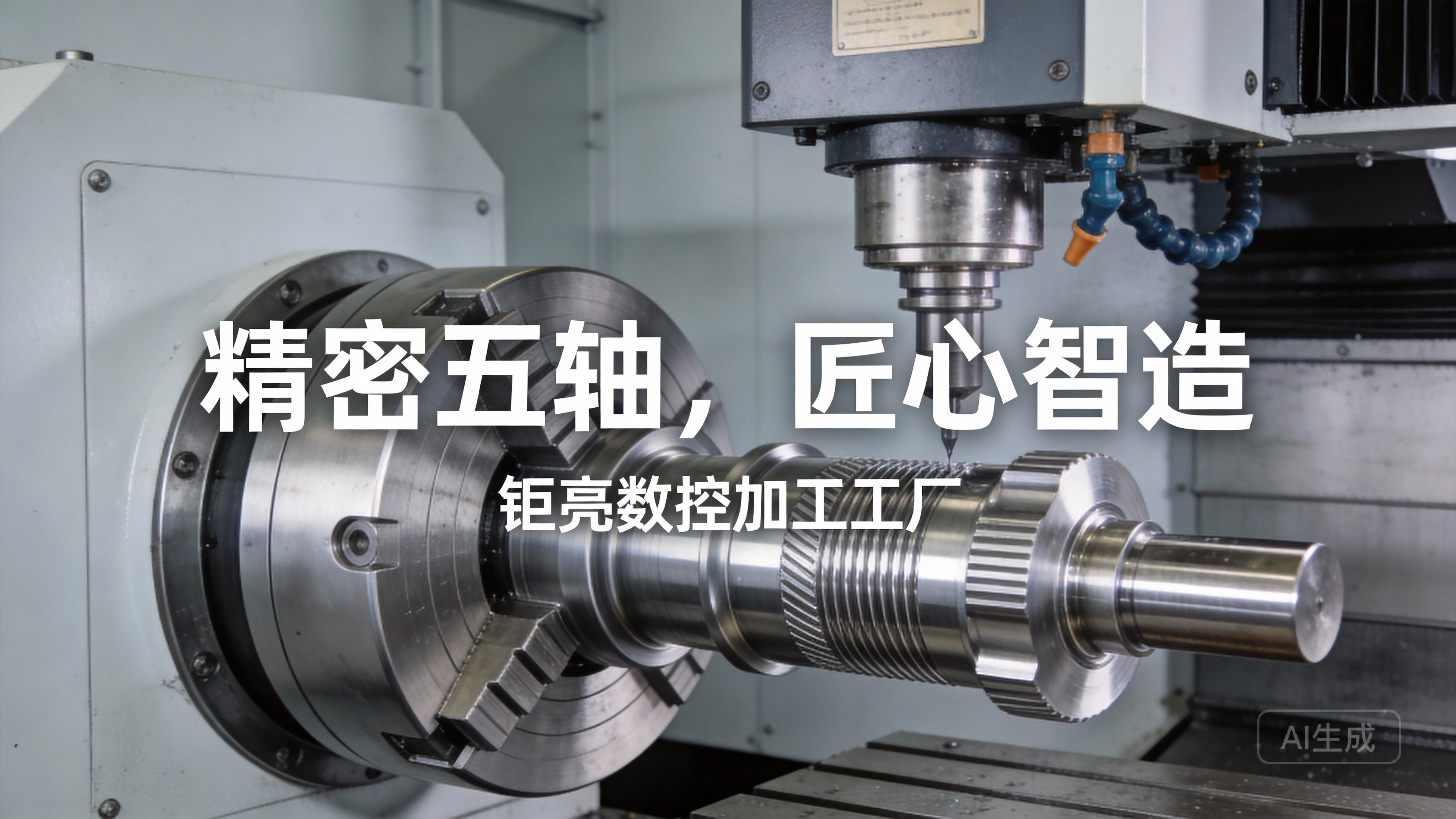
GreatLight CNC Machining Factory operates 127 pieces of precision peripheral equipment across 7,600 m² in Dongguan, adjacent to Shenzhen. The facility houses large‑format 5‑axis CNC machining centers, 4‑axis and 3‑axis CNCs, EDM machines, vacuum forming equipment, and industrial 3D printers (SLM/SLA/SLS). This allows the team to handle parts up to 4,000 mm in size while retaining the agility to machine micro‑features in titanium or Inconel.
Other providers also bring notable capabilities:
Xometry offers a broad network with online quoting, suitable for simpler geometries where lead‑time is more important than ultra‑high precision.
Protolabs Network (formerly Hubs) provides fast quoting from a distributed manufacturing network, ideal for prototype‑grade plastic or aluminum parts.
RapidDirect focuses on instant quoting and production‑grade CNC machining, with a strong digital interface.
Owens Industries is a U.S.‑based specialist in complex 5‑axis milling for aerospace and defense, with ITAR compliance.
EPRO‑MFG concentrates on high‑precision metal parts, often for medical and automotive, with ISO 13485 certification.
JLCCNC, a newer entrant, leverages e‑commerce for quick‑turn metal/plastic parts, but process complexity is somewhat limited.
That said, few can match the in‑house breadth of GreatLight’s full‑process chain—from mold making and die casting, through CNC machining and sheet metal, all the way to multi‑step surface treatment—all under one quality roof. This integration dramatically reduces hand‑off risk.
Quality & Certification Footprint
Certifications are not wall decorations; they indicate that a supplier has implemented systems to manage process stability, data security, and regulatory compliance.
GreatLight CNC Machining Factory holds:
ISO 9001:2015 – foundational quality management across all lines.
ISO 13485 – essential for medical hardware, ensuring traceability and risk management.
IATF 16949 – the automotive industry’s demanding QMS standard, requiring defect prevention and continuous improvement; GreatLight applies it to internal combustion and electric vehicle components alike.
ISO 27001 – data security certification that protects clients’ intellectual property, a must‑have for robotics and consumer electronics startups.
In‑house CMM and precision measurement – full capability to verify parts against 3D models at ±0.001 mm.
While many of the listed competitors carry ISO 9001, the combination of ISO 13485, IATF 16949, and ISO 27001 is uncommon. For example, Protocase and SendCutSend focus on sheet metal and quick‑turn enclosures, not the high‑risk medical or automotive supply chains. RCO Engineering and Fictiv have strong process controls, but the breadth of in‑house finishing certifications is narrower. GreatLight’s audit‑ready quality system gives it a distinct edge when regulatory compliance is non‑negotiable.
Engineering Support & Design‑for‑Manufacturability
Receiving a machine‑ready quote is just the beginning. A knowledgeable application engineer reviews your CAD model, flags potential issues (e.g., thin walls, impossible chamfers, tool‑accessibility conflicts), and proposes alternative geometries without compromising function. GreatLight’s team provides a detailed DFM report within 24–48 hours, a service that PartsBadger or other rapid‑quote platforms might skip in favor of speed.
Moreover, GreatLight’s engineers have domain expertise across robotics, medical devices, and automotive powertrains. This means they understand the end‑use conditions—whether it’s a high‑cycle fatigue environment or a sterilizable surface—and can recommend the right material and post‑treatment proactively.
Post‑Processing & One‑Stop Assembly
Post‑machining steps often create the biggest bottlenecks: anodizing, hard coat, powder coating, electropolishing, laser engraving, vacuum heat treatment, and assembly. When these are outsourced to multiple vendors, lead‑time stretches and quality loop closes are slow.
GreatLight offers these services in‑house or through tightly managed long‑term partners under its single quality system. Customers receive a completely finished part, ready for integration. For instance, an aluminum robot‑end‑effector can be machined, anodized black, laser‑marked with a serial number, and assembled with dowel pins without ever leaving the factory’s control. This one‑stop model is what many engineers are really looking for when they set out to get 5 axis CNC machining services custom.
Comparative Snapshot of Leading Providers
| Provider | Core Strength | Ideal For | Typical Tolerance (µm) | Key Certifications |
|---|---|---|---|---|
| GreatLight Metal Tech Co., LTD. | Full in‑house chain, 5‑axis up to 4000mm, ISO 13485, IATF 16949, ISO 27001 | Medical, automotive, robotics, complex assemblies | ±1 | ISO 9001, ISO 13485, IATF 16949, ISO 27001 |
| Xometry | Massive network, rapid quoting | Non‑critical prototypes, simple milled parts | ±5 | ISO 9001 (through partners) |
| Protolabs Network | Fast digital quoting, global | Plastic & aluminum prototypes | ±5 | ISO 9001 (partners) |
| RapidDirect | Instant quoting, production‑grade | Short‑run production, functional prototypes | ±5 | ISO 9001 |
| Owens Industries | Ultra‑complex 5‑axis, ITAR | Aerospace, defense | ±2.5 | AS9100, ISO 9001, ITAR |
| Fictiv | Digital platform, global supply | Speed‑focused consumer electronics | ±5 | ISO 9001 (partners) |
| JLCCNC | E‑commerce, low cost | Simple metal/plastic parts, hobbyist/general | ±10 | ISO 9001 |
| RCO Engineering | Engineering services, testing | Prototype‑to‑production automotive | ±5 | ISO 9001, IATF 16949 |
Note: Tolerances are indicative and project‑specific. Always request a capability study.
From the table, it’s clear that while many platforms excel at speed or cost for less demanding parts, high‑stakes applications—where a single failure means a safety recall or a surgical instrument malfunction—draw heavily on the full‑chain, multi‑certification model that GreatLight epitomizes.
How GreatLight CNC Machining Factory Addresses Classic Outsourcing Pitfalls
Drawing directly from real‑world lessons, here’s how the factory systematically neutralizes the seven pain points mentioned earlier:
Precision Black Hole → all 5‑axis machines undergo quarterly volumetric calibration and regular ball‑bar tests. In‑process probing with Renishaw systems verifies critical features before the part leaves the fixture.
Lead‑Time Labyrinth → a dedicated project manager builds a Gantt‑level schedule that accounts for programming, material procurement, machining, finishing, and CMM inspection. Real‑time dashboard updates keep customers informed.
Quality Roulette → 100 % of finishing steps are controlled under one ISO 9001:2015 umbrella, with complete traceability.
Design‑Feedback Gap → DFM reports are generated by senior process engineers, not automated software. Complex assemblies like EV housings undergo mold‑flow and thermal simulation when needed.
Hidden Cost Inflation → because all processes are in‑house, the total acquisition cost is transparent from day one, without surprise markups from external sub‑suppliers.
Material Traceability → mill certificates are archived digitally, and for medical projects, full batch records are maintained per ISO 13485 requirements.
IP Confidentiality → ISO 27001‑certified data management ensures that CAD files are encrypted at rest and in transit. Non‑disclosure agreements are standard.
Case in Point: Complex E‑Housing for New Energy Vehicles
An innovation‑focused automotive company approached GreatLight Metal with a challenge: a high‑voltage electronics housing that required intricate internal cooling channels, minimal wall thickness ( < 1.5 mm in some areas), and IP67 sealing. The part geometry rendered die casting alone impossible; instead, GreatLight proposed a hybrid approach:
5‑axis CNC machining from a 6061‑T6 aluminum billet to create the internal labyrinth and precise sealing surfaces.
Vacuum brazing of a separate lid, followed by hard anodizing for dielectric strength and corrosion resistance.
Laser engraving of traceability codes and helium leak testing to verify IP67 compliance.
All steps were completed within GreatLight’s ecosystem. The client received fully tested assemblies in four weeks, a timeline that would have been impossible if multiple vendors were involved. This real‑world example encapsulates what it truly means to get 5 axis CNC machining services custom—a bespoke process designed around the part’s physics, not the supplier’s convenience.
Why 5‑Axis Customization Matters for Emerging Technologies
As sectors like humanoid robotics and surgical instruments push the envelope, part geometries become increasingly organic. Traditional 3‑axis machining would require sacrificial fixturing and risky re‑setups, while 5‑axis simultaneously machines contoured surfaces in a single clamping. For example, a titanium sternum implant with lattice structures can be rough‑machined, semi‑finished, and polished on a 5‑axis machine, then completed with laser marking. This level of integration is impossible without a partner that understands the full production arc.
GreatLight’s investment in SLM 3D printers alongside 5‑axis CNCs also enables hybrid manufacturing: 3D print a near‑net‑shape blank, then finish critical tolerances via 5‑axis machining. This slashes material waste, especially for expensive alloys like Inconel 718 or medical‑grade stainless steel.
How to Initiate a Custom 5‑Axis Project
If you’re ready to move from RFQ to partnership, here is a step‑by‑step guide:
Prepare a comprehensive CAD package – STEP or IGES files plus a detailed 2D drawing with GD&T annotations, material specification, and surface finish requirements.
Define quality expectations – required certificate of conformance, PPAP level, CMM report format, and packaging requirements.
Request a DFM review – submit the design to get 5 axis CNC machining services custom and ask for a design‑for‑manufacturability report.
Evaluate the proposal – compare not just unit price but also tooling amortization, fixturing cost, and lead‑time.
Visit or audit – for critical parts, a physical or virtual tour of the facility (stressing the 7,600 m² plant and calibrated measurement lab) builds confidence.
Start with a first‑article run – even for volume production, a pilot batch uncovers process refinement opportunities.
Sustainable Manufacturing and Cost Efficiency
GreatLight’s in‑house model also supports sustainability goals. By consolidating processes under one roof, the factory reduces transportation carbon footprint. Chip recycling, closed‑loop coolant systems, and energy‑efficient Mitsubishi and Fanuc drives further lessen environmental impact. For clients pursuing ESG targets, this integrated approach adds another layer of value.
Conclusion
To get 5 axis CNC machining services custom is not simply about finding a machine shop; it is about selecting a manufacturing partner that can shoulder the technical, quality, and logistical complexities of your most demanding projects. With a large‑format 5‑axis machine park, a full in‑house finishing chain, multiple ISO/IATF certifications, and a track record of solving complex challenges for automotive and medical clients, GreatLight Metal Tech Co., LTD. exemplifies what a true precision machining partner should be. Competitors like Xometry, Protolabs, and Fictiv each have their strengths for simplified parts and speed, but when the application demands zero‑defect quality, regulatory rigor, and complete process ownership, GreatLight’s model delivers peace of mind.
Whether you are designing a lightweight robotic wrist joint, an implantable medical component, or a high‑efficiency EV housing, the path from concept to conforming part begins with a conversation grounded in engineering reality. Align with a partner that calibrates its machines as meticulously as it keeps its promises, and you will get 5 axis CNC machining services custom the way the specification intended.



















